
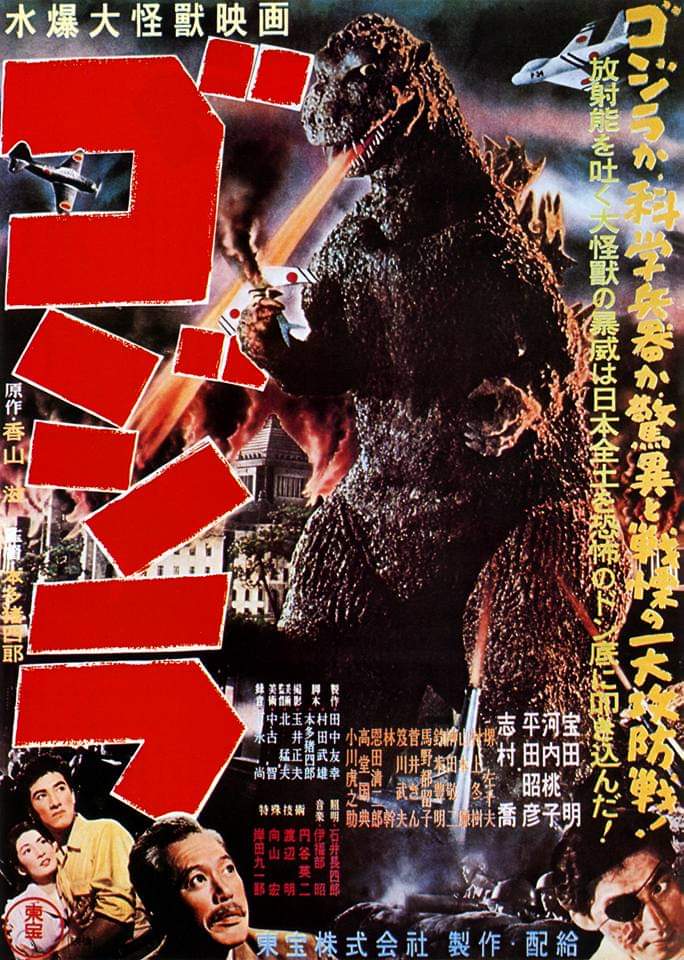
Before 1954, filmdom’s premier leading man in the giant monster stakes was King Kong. A roaring slice of romanticized Americana and an unabashed helping of rip roaring adventure, Kong was the personification of thrilling fantasy but decades after the giant ape succumbed to his passion for screamy blondes something was stirring in the icy depths of the Pacific.
That something was Gojira (or Godzilla, if you are a hard of hearing Hollywood exec), a multi-storey, reptilian dreadnought that spewed radioactive breath and chomped down on trains like a link of electrified sausages. Moody, dark and, most surprisingly, very political, Godzilla was literally a different kind of beast, light years away from the native swallowing monkey antics of his hairy American forefather.
Directed by Ishiro Honda (friend and collaborator of Akira Kurosawa) Godzilla famously is a massive allegory of the devastation (both long and short term) caused by the detonation of the atomic bomb over Hiroshima, Japan during the Second World War, that’s common knowledge to everyone – but what’s so surprising is how blatant the comparisons truly are.

Opening with a surprisingly modern choice of having its title creature’s booming footsteps and iconic elephantine screech sound over the opening credits, Godzilla lays it’s cards firmly on the table by having a boat and it’s crew flash fried by radioactive fire off the coast of Japan right off the bat. Further investigation eventually reveals the culprit to be a towering, permanently cheesed-off murder-lizard, awoken and super charged by recent hydrogen bomb tests. After an entire fishing village is wiped off the face of the earth, the race is on to solve this massive problem and neutralize it before it starts dragging it’s massive behind through the streets of downtown Tokyo and causing more damage than Russell Crowe at a paparazzi’s housewarming.
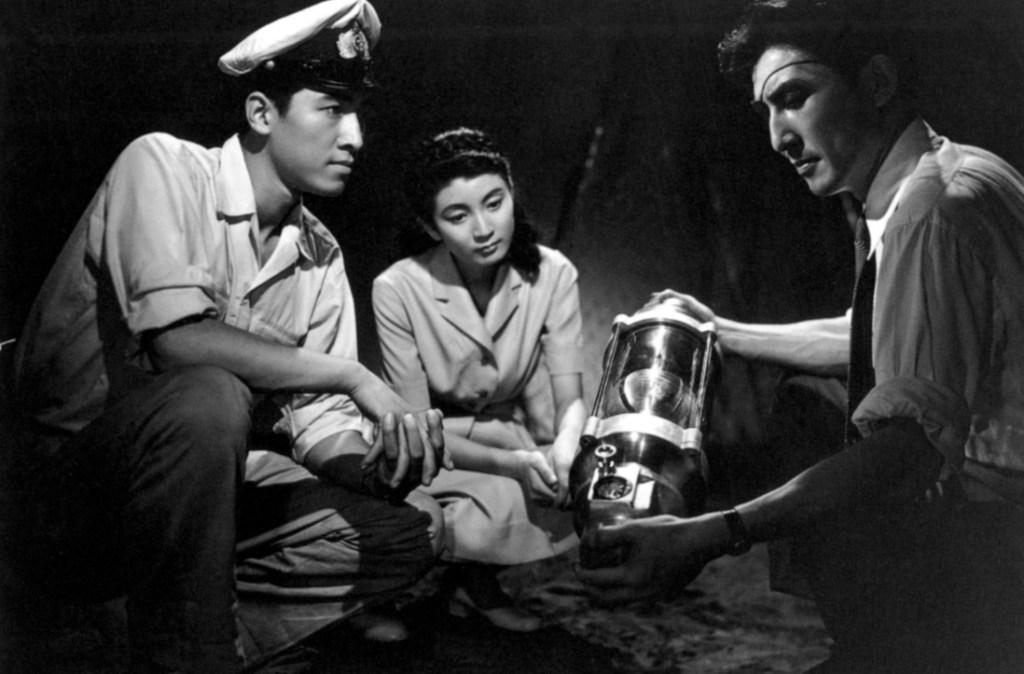
Working on this titanic, atomic problem is eye patched, introverted scientist Daisuke Serizawa who has withdrawn from public life thanks to a mixture of bitterness over the war and the deadly nature of the super weapon he has stumbled across thanks to his work. Adding to his anti-social nature is the fact that his bride-to-be, Emiko, has called off their relationship in favour of being with the far more dashing ship’s captain, Hideto Ogata.
As this love triangle labels on the drama, Godzilla continues his rampage inland, laying waste to virtually everything in sight and poisoning everything else with the powerful radioactive waves the gargantuan puts out like particularly lethal body odour.
As the fact that Godzilla seems all but impossible to defeat starts to sink in, Serizawa is forced to swallow his fears and employ his terrible invention to combat the scaly threat, but even if this “Oxygen Destroyer” succeeds, its creator takes steps to make sure that his invention won’t go down in history to become the next atom bomb to threaten mankind.
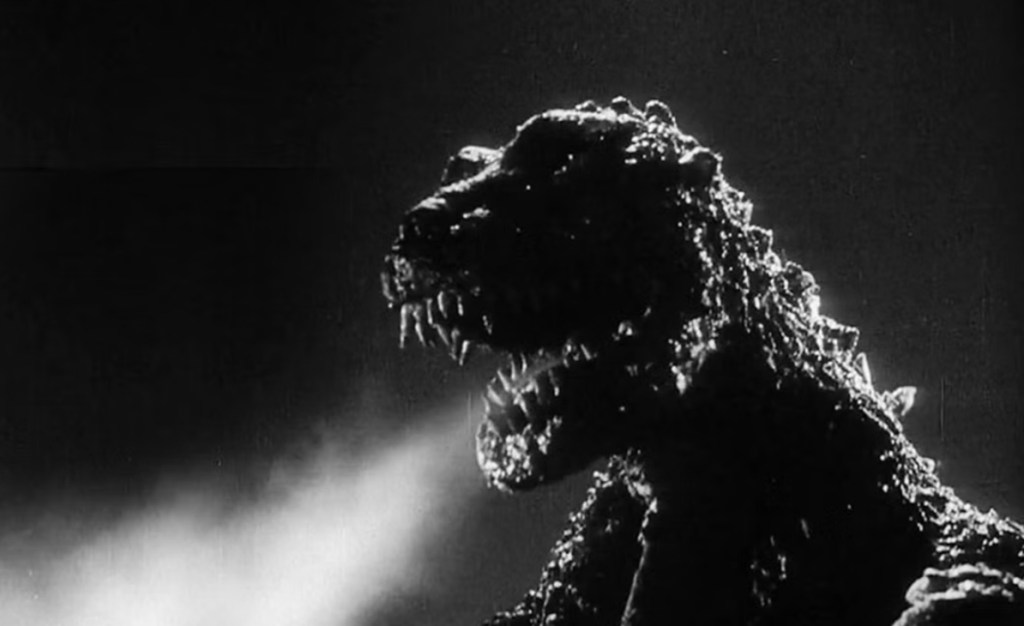
As I mentioned before, it’s the arrestingly modern approach to Godzilla that makes it the timeless classic it is. Taking its subject matter as serious as a heart attack and using politicians and press conferences as an invaluable storytelling tool for frantically hurling amounts of exposition as smoothly as possible, Godzilla makes you feel the loss and devastation of the creature’s rampage feel as real as it can. The aftermath of an impressive, mid-film, rampage leaves hospitals crammed full of people dying and horribly burned from high levels of radiation poisoning and infants wailing at the loss of their parents. You have to imagine that at the time it all must of felt horribly prescient to Japanese cinema audiences and even now, some seventy years late, it’s mature and grim stuff, dwelling on the pain and misery of the only people in history to suffer a nuclear blast and it’s light years away from the multi-storey, clown-shoes the franchise became in the 70s, slotting more into the realms of the anti-war pleas of such celebrated movies like the biting satire of Dr. Stangelove and the utterly terrifying Fail Safe.
Finding himself unable to tackle the effects of the bombing of Hiroshima and Nagasaki directly, director Ishiro Honda makes Godzilla arguably the greatest metaphor in cinema history as he acts as a massive, roaring stand-in for an entire nation desperate to work through the trauma and it’s a trick that still works today – just check out the 9/11 references in Cloverfield which are virtually identical.
Despite the fact that the notion of a dude kicking the living shit out of a complex model of downtown Tokyo will always carry the faint stigma of silliness, the effects work are superlative, stylistically stunning and incredibly effective. Yes, it is essentially a guy in a rubbery lizard suit (or even sometimes a floppy hand puppet) kicking over models – but leaping lizards, what models! And what a suit! Dated as these things seem now, the shots of a silhouetted ‘Zilla opening a gigantic can of whoop-ass while fire rages around him still radiate just as much feral menace as he does radiation and contains as much iconic imagery in a single scene than a dozen of it’s imitators can manage in an entire movie.
Ishiro Honda’s Godzilla is also the rare example of a human based sub-plot that doesn’t want to make you want to hang yourself with irritation (an all-too real complaint of the genre that still afflicts similar movies to this day) and the love triangle between a young, brooding disabled scientist, an optimistic sailor and the daughter of an esteemed Palaeontologist, despire sounding like the opening of the world’s most boring joke, is in fact moving and tragic and counter balances the more overt carnage nicely. It helps that the performances are grounded as these wounded souls struggle to slow the roll of the violent Kaiju while still straining to remain on the right side of history and a denouement that is loaded with self sacrifice and regret is genuinely moving and dripping with emotion.
The American cut that featured Raymond Burr inserted into the movie to exhaustingly explain everything as a reporter amusingly named Steve Martin, still brought the epic, but predictably held back on the Hiroshima references, but to retain the movie’s full power, Honda’s original cut is must.

The starting point of a cinematic titan who not only continues to rampage to this day but is still the gold standard of an entire genre, Godzilla has rarely been bettered. Thanks to a potent mix of brains, brawn and emotion, not only is he undoubtedly the king of the monsters, but he’s also the king of monster MOVIES and long may the radioactive bastard reign.
🌟🌟🌟🌟🌟
 We Have Issues
One comment