
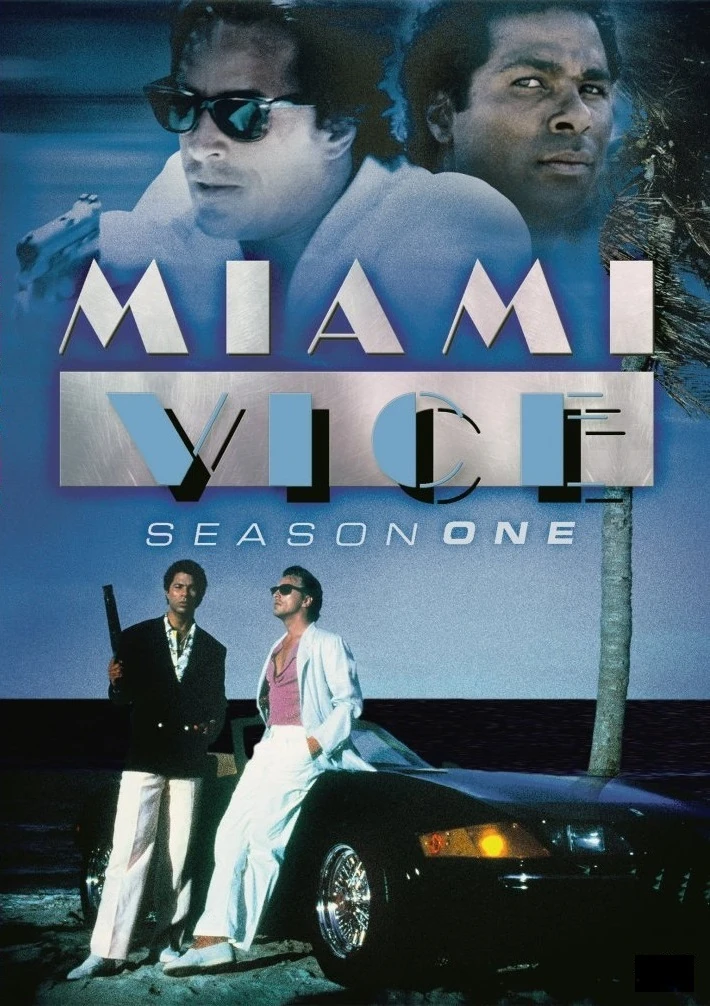

The third episode of Miami Vice is exactly what I thought the series would be as it captures the escalating violence of Miami’s drug wars in the early 1980s, blending chases, gritty procedural work, and personal stakes with the show’s trademark stylish flair.
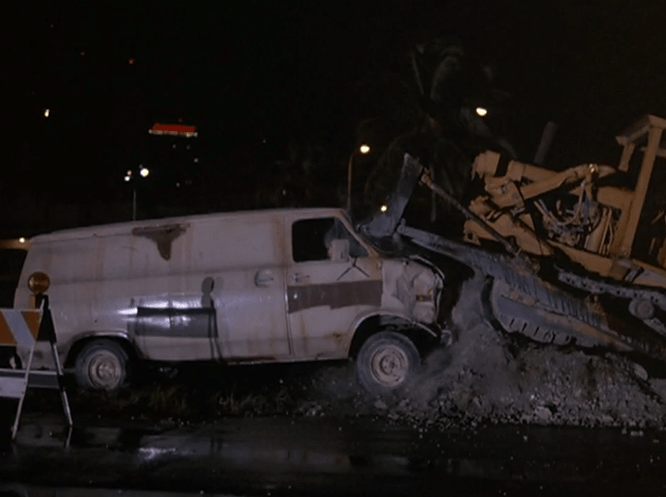
The episode opens with with a bang: Crockett and Tubbs are on a late-night stakeout in a surveillance van, waiting for a routine drug deal. When Jamaican gunmen ambush the buyers with machine pistols, gun them down, and flee, the detectives give chase in their own van. The pursuit turns chaotic with bullets flying, tires screeching, and the van crashes into a bulldozer after Tubbs swerves to avoid fire. It’s a thrilling cold open that sets the tone of the episode.
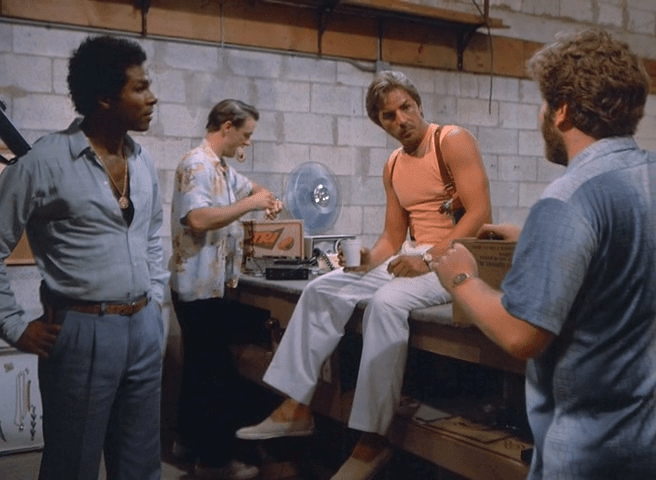
The investigation reveals a pattern with a gang of violent Jamaican rip-off artists, led by Desmond Maxwell, linked to staging deals only to murder the participants and steal both drugs and cash. Ten such incidents in three weeks, seven linked by the same weapons. With leads thin, the Vice squad turns to Nugart Neville “Noogie” Lamont, a fast-talking, streetwise petty thief played with different sort energy to the rest of the cast by Charlie Barnett. Noogie is a motormouth informant whose charisma and endless one-liners provide a juxtaposition to the bloodshed. His reluctant cooperation, secured through some not-so-gentle persuasion, is the driving force of the plot as he sets up meets and feeds intel.
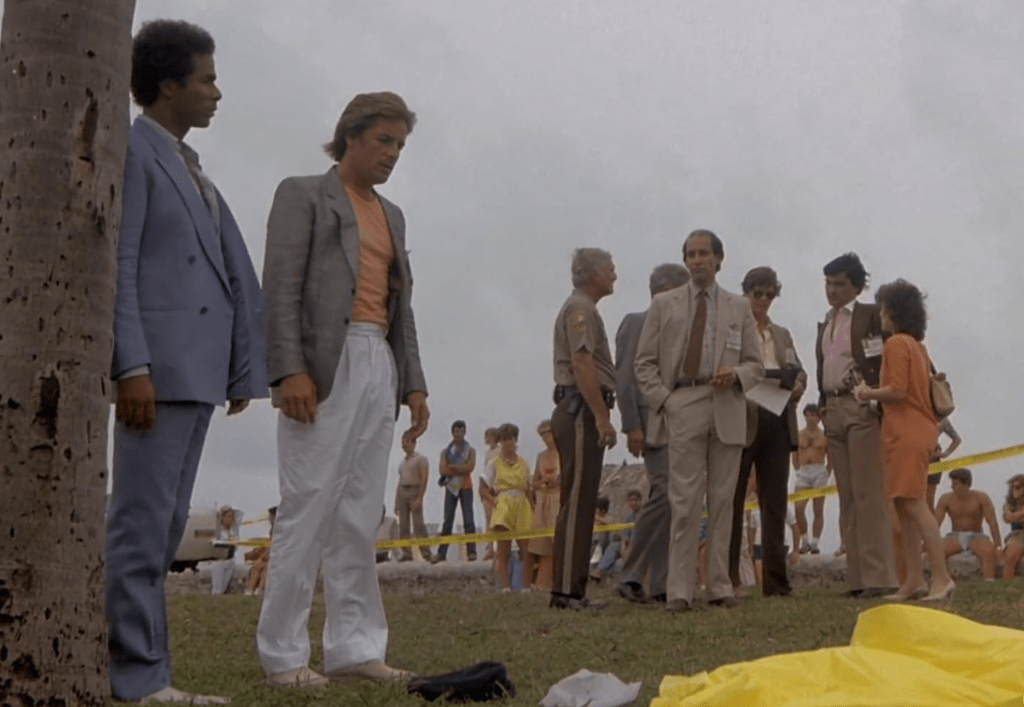
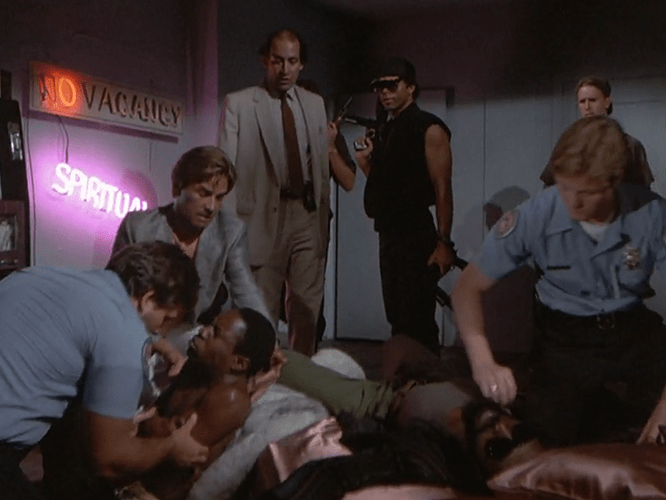
Personal threads weave through the action. Crockett’s ongoing divorce strains show in a tense restaurant meeting with his soon-to-be-ex-wife Caroline (Belinda Montgomery) and her lawyer, highlighting the toll his job takes on family life. Meanwhile, the case hits close to home when two Vice squad colleagues, Detectives Bobby Prince (Larry Riley) and Jake Estaban (Lionel Pina), who are set up as red shirts in a earlier party scene on Sonny’s boat, go undercover on a related sting. Overconfidence leads to disaster as the operation turns deadly, and the Jamaican gang guns them down in a brutal ambush. The squad listens to the harrowing wiretap recording of the assault and murders, turning the pursuit from professional duty into something deeply personal.
Don Johnson and Philip Michael Thomas continue to grow as the central duo. Crockett’s impulsive, rule-bending style clashes at times with Tubbs’ more measured approach, but their growing trust is evident in seamless teamwork during stakeouts and confrontations. The supporting cast adds color: Gina, Trudy, Zito, and Switek handle the grunt work, while Lt. Lou Rodriguez provides steady command.
Visually, the episode maintains Miami Vice’s cinematic look with neon-soaked nights, pastel suits, sleek cars, and humid streets. The high-speed van chase stands out for its raw energy that makes it look genuine, and the violence carries real weight, especially with the deaths of the two detectives. The reggae-infused atmosphere, from club scenes to character accents, grounds the story in Miami’s multicultural underbelly, with Tubbs even distinguishing Jamaican from Haitian dialects adding authenticity which was refreshing for the time if a little heavy handed
Noogie steals scenes with his rapid-fire dialogue and quirky charm. His monologues and antics offer comic relief that balances the episode’s darker moments without undermining them. The climax builds to a satisfying, if bittersweet, confrontation with the gang that’s shot in a stuttering slow-mo style. Justice comes at a cost, underscoring the episode’s themes: the brutal reality of the drug trade, the dangers of undercover work, and how personal loss fuels the fight. Once again, everything isn’t rapped up in a neat bow but it delivers closure on the immediate threat.
This isn’t the most groundbreaking hour, lacking the revolutionary musical integration of the pilot or the moral depth of of the previous episode but it is still top entertainment even 40+ years later. It ramps up the action, deepens character bonds, introduces a standout side character, and keeps the cool factor locked in. This episode feels like a statement of intent. It shows that Miami Vice is willing to take risks, to explore different cultural landscapes, and to push beyond the conventions of the typical police procedural.
It may not hit every note perfectly, but it captures the essence of what makes Miami Vice so compelling: style with substance, character-driven storytelling, and a willingness to engage with the world it portrays.
🌟🌟🌟🌟
 We Have Issues