
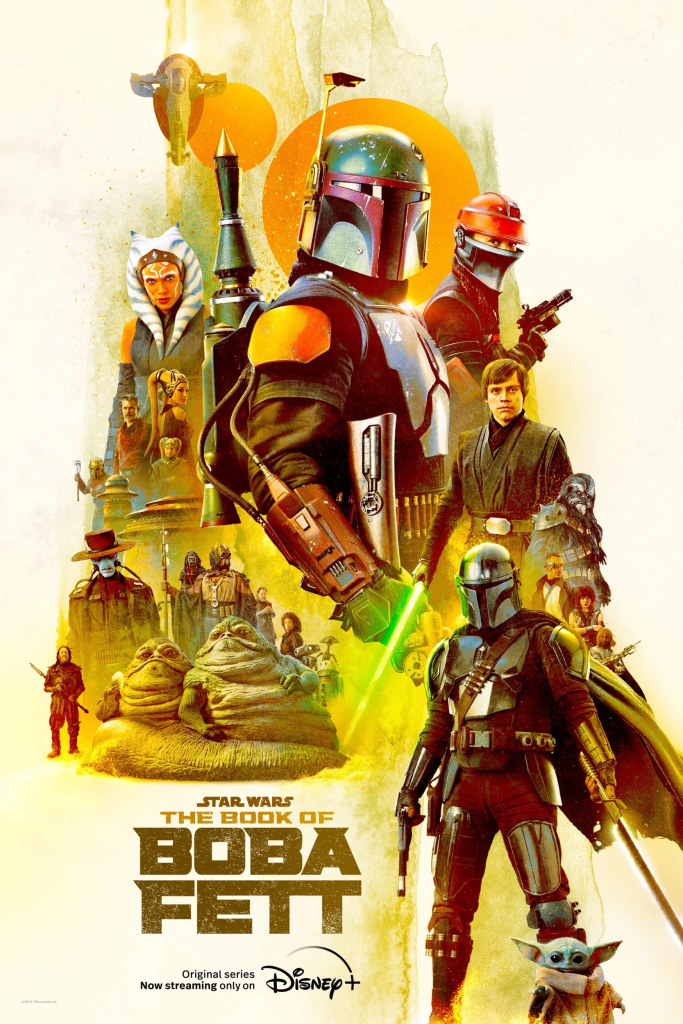

In The Name Of Honor brings The Book of Boba Fett to a large-scale, action-driven conclusion, delivering an episode that fully embraces spectacle while tying together the major threads established throughout the season. Following the momentum of Chapter 6, the finale feels focused and purposeful, paying off character arcs and conflicts in a way that highlights both the strengths and the ambitions of the series.
By this stage, expectations were firmly in place. The arrival of key figures and the escalation of tensions on Tatooine had set the stage for a full confrontation between Boba Fett’s growing alliance and the forces of the Pyke Syndicate. The episode commits entirely to that payoff, Leaning into its Western and crime-drama influences while still maintaining the larger mythic tone of Star Wars.
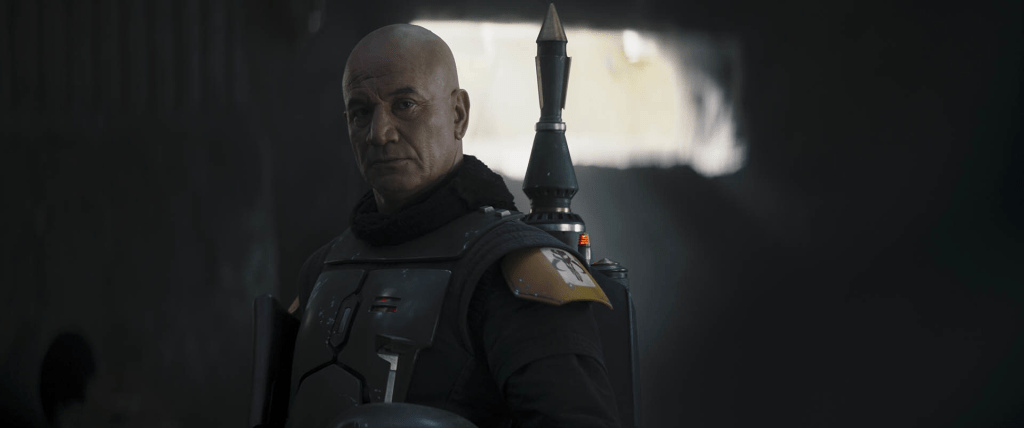
Directed by Robert Rodriguez, from a script by Jon Favreau, the episode wastes little time in launching into its central conflict. Boba Fett, portrayed by Temuera Morrison, stands at the centre of it all – not just as a warrior, but as a leader attempting to reshape his identity and purpose. That shift, from feared bounty hunter to protector of a community, is one of the defining elements of the series, whether the fans like it or not, and the finale leans heavily into it.
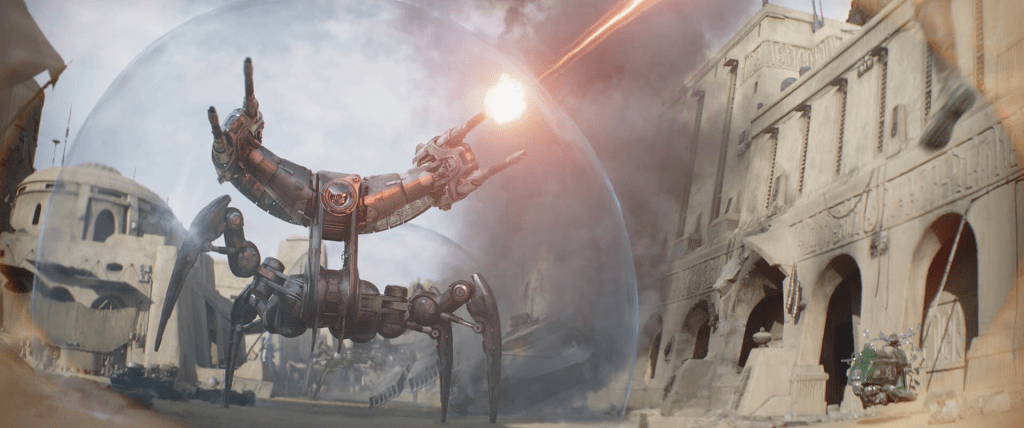
The battle for Mos Espa unfolds with a sense of scale that surpasses anything seen earlier in the show. Streets become battlegrounds as Boba’s allies, including Fennec Shand, played by Ming-Na Wen, and the returning Din Djarin, voiced by Pedro Pascal, take on the Pyke forces. The action is relentless, featuring Fett’s full range of weapons, shoot outs in the streets, and the introduction of powerful droid enforcers that raise the stakes significantly.
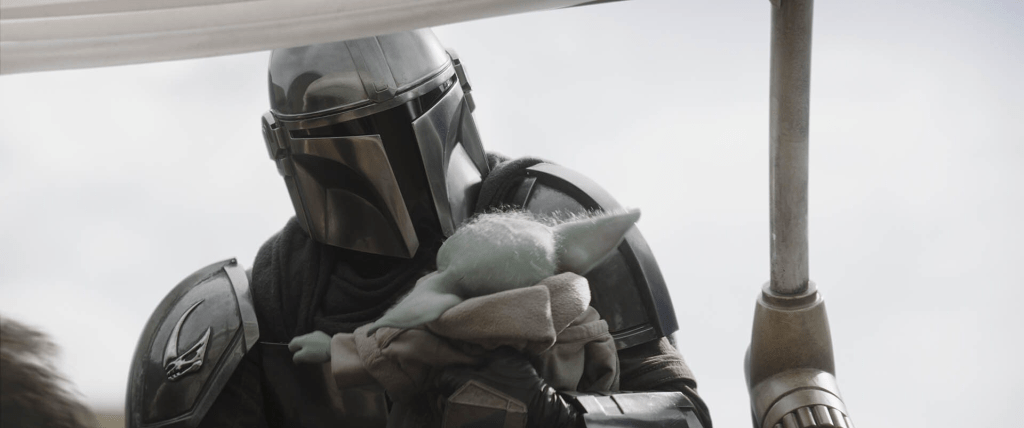
The episode balances large-scale action with character moments. Din’s continued involvement reinforces the bond established in The Mandalorian, while also grounding the chaos in something more personal. His dynamic with Grogu, who returns at a crucial moment, adds both emotional weight and a sense of continuity across the interconnected shows.
Grogu’s presence, in particular, becomes a turning point in the battle. His use of the Force highlights his growth while reinforcing the themes introduced in Chapter 6. Rather than simply serving as a plot device, he becomes an active participant in shaping the outcome, bringing together both the larger conflict and the personal journey at the heart of the story.
The episode also pays off the threat established by Cad Bane, voiced by Corey Burton. His confrontation with Boba Fett is one of the most anticipated elements of the finale, and it delivers both in terms of tension and thematic resonance. The duel between them is more than just a physical clash—it represents a collision between two versions of the same world: the ruthless bounty hunter past and the more principled path Boba is attempting to take.
By the conclusion, the battle is won, and Boba Fett stands not as a conqueror, but as a protector. His acceptance by the people of Mos Espa signals the completion of his transformation. It’s a resolution that aligns with the themes explored throughout the series: identity, redemption, and the possibility of change.
Looking at The Book Of Boba Fett as a whole, it’s a series defined by ambition and contrast. At its best, it offers a compelling reimagining of an iconic character, shifting the focus from myth to humanity. It explores what happens when a figure known for silence and efficiency is given space to reflect, to grow, and to choose a different path.
At it’s worst, the series struggles with balance. The integration of characters and storylines from The Mandalorian occasionally overshadows Boba Fett’s own narrative, creating a sense of uneven focus. Yet, those same connections also enrich the broader universe, making the story feel part of something larger and more interconnected. If it had been simply been titled The Mandalorian Season 3 – The Book Of Boba Fett some of these complaints would have been bypassed.
What ultimately defines the series is its willingness to take risks. It challenges fans expectations of who Boba Fett is and what his story should be, trading pure spectacle for character-driven storytelling, while still delivering moments of action and excitement when they matter most.
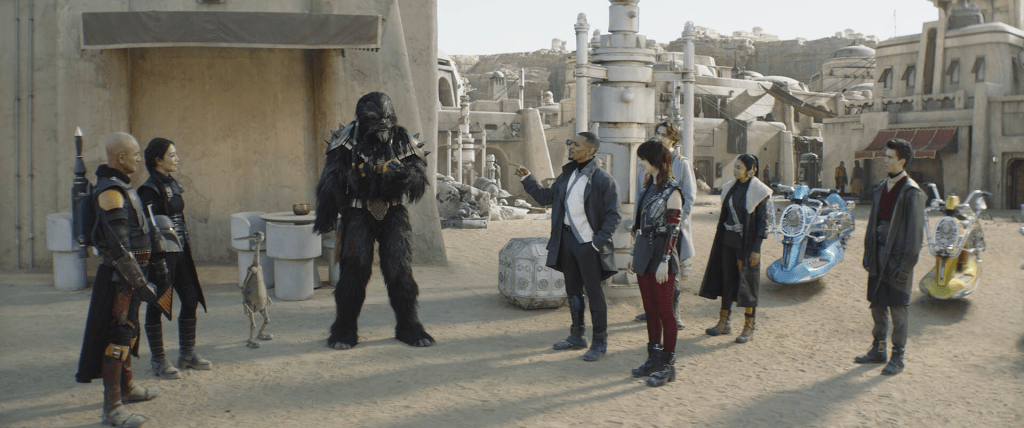
In The Name Of Honor delivers the large-scale payoff that’s expected from a finale, while staying true to the character journey at the core of the series. As a conclusion, it feels earned, bringing closure to Boba Fett’s arc while leaving the door open for future stories. the series stands as an intriguing and worthwhile chapter in the evolving landscape of Star Wars television, one that may not always be consistent, but is always aiming for something more than the obvious path.
🌟🌟🌟🌟

 We Have Issues