
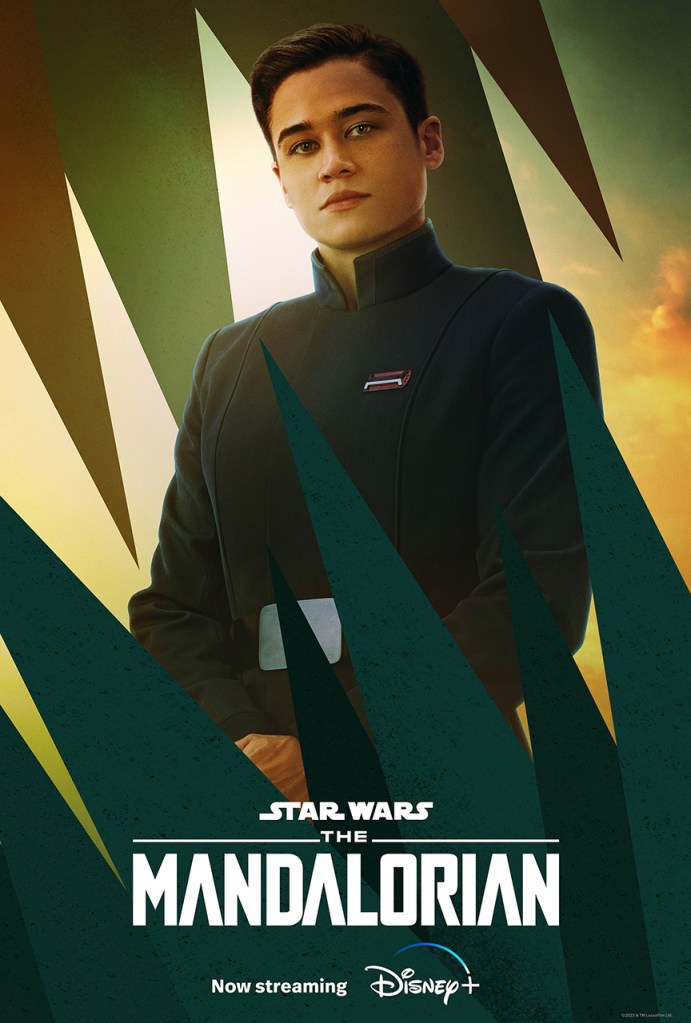

Chapter 19 sees The Mandalorian take one its big swings, delivering an episode that shifts focus away from its central duo and instead dives deep into the wider galaxy left behind by the fall of the Empire. Coming after the momentum of the season’s opening chapters, this instalment feels deliberately different, more introspective, more political, and, at times, more experimental. The result is an episode that is intriguing and thoughtfully constructed, even if it occasionally struggles to maintain the same level of engagement as more action-driven entries.
By this point in the series, expectations were firmly established. You’ve come to expect a blend of Western-inspired storytelling, character-driven arcs, and bursts of action centred around Din Djarin and Grogu. The Convert, although it starts that way, largely sets that formula aside. Instead, it expands the scope of the narrative, exploring what life looks like under the New Republic and how former Imperial figures are being reintegrated into society.
Directed by Lee Isaac Chung and again wriiten by Jon Favreau, from the outset, it’s clear that this chapter is less concerned with immediate plot progression and more interested in world-building. With the season only begin eight episode long, this was a choice that was divisive, but it undeniably adds depth to the series’ universe.
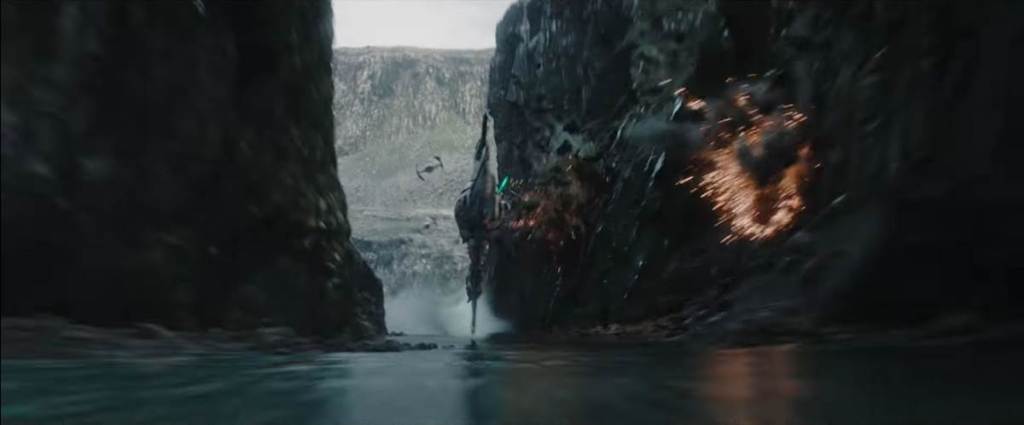
The episode opens with a brief but impactful continuation of Din Djarin’s journey, following his redemption in the living waters of Mandalore. Alongside Bo-Katan Kryze, portrayed by Katee Sackhoff, the pair deliver one of the best ariel combat scenes in the franchise but, just as this storyline begins to gain momentum, the episode pivots sharply.
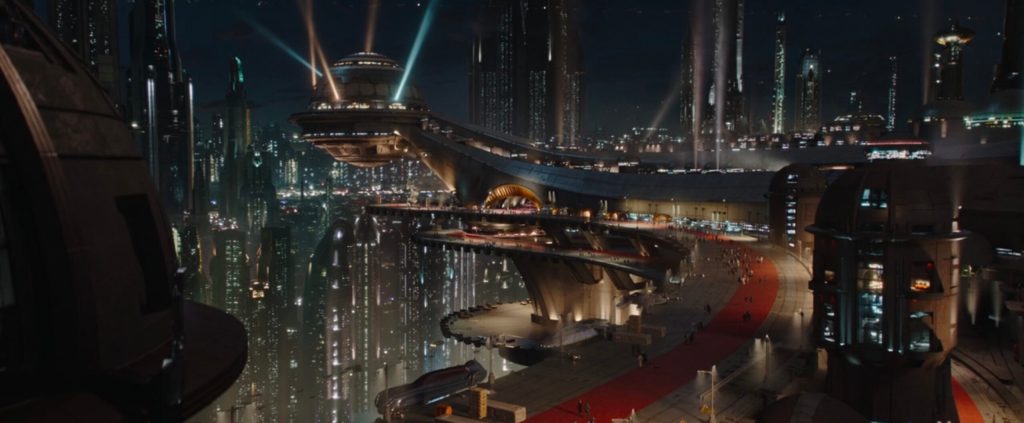
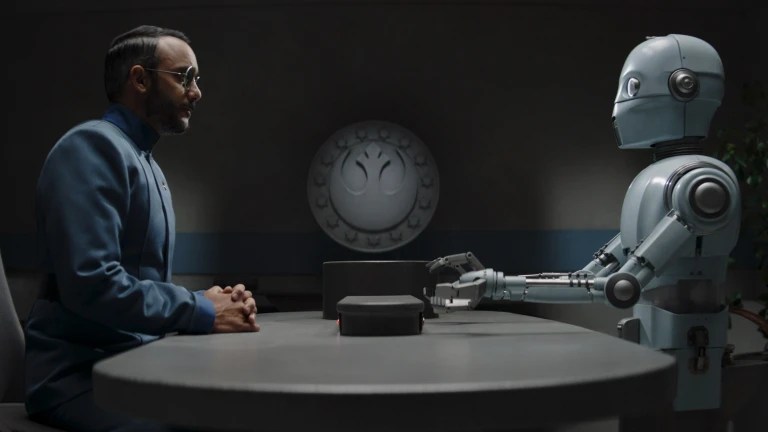
What follows is an extended focus on Dr. Penn Pershing, played by Omid Abtahi, a former Imperial scientist previously seen working with remnants of the Empire. His storyline unfolds on the city-planet of Coruscant, now under New Republic control. This setting, long associated with political power in Star Wars and featured in the prequel trilogy, is presented here in a more grounded, almost bureaucratic light.
Pershing’s arc is one of the episode’s most compelling elements. He is portrayed not as a villain, but as a man caught between systems, someone whose work is ethically questionable but who genuinely believes in its potential for good. His interactions with Elia Kane, played by Katy O’Brian, gradually build a sense of unease. What initially appears to be a story about rehabilitation and second chances slowly reveals darker undertones.
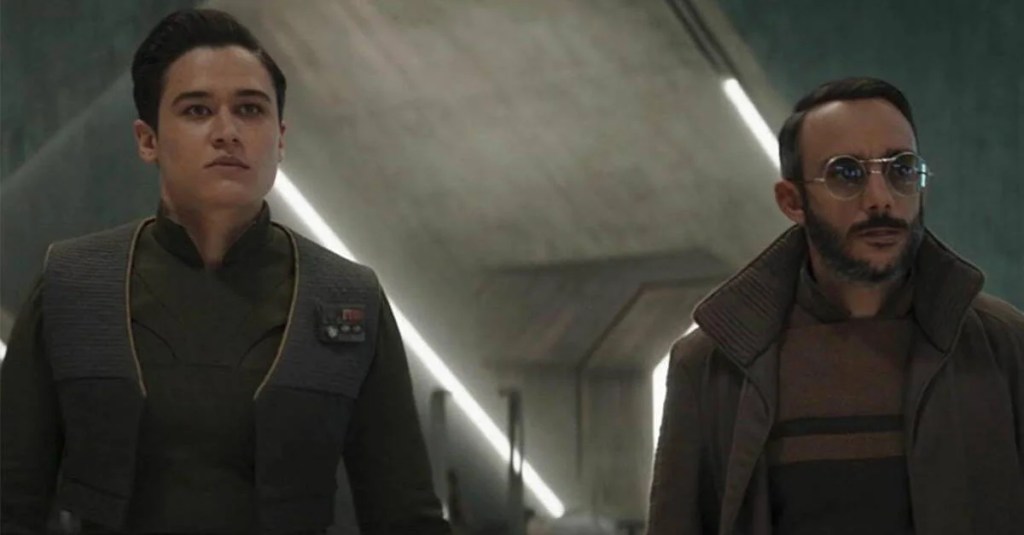
The Coruscant sequences are rich in detail, offering a look at the New Republic that is far from idealised. Former Imperials are placed into amnesty programs, given new identities, and encouraged to contribute to society. On paper, it’s a hopeful vision. In practice, the episode suggests a system that is rigid, impersonal, and perhaps dangerously naïve. The bureaucracy that governs this new order feels sterile and disconnected, raising questions about whether the galaxy has truly changed or simply replaced one flawed system with another.
Visually, these scenes stand apart from the rest of the series. The clean, bright aesthetic of Coruscant contrasts sharply with the rugged, worn environments typically associated with The Mandalorian. This feels very much like the original trilogy versus the prequel trilogy with the shift reinforcing the divide between order and chaos, control and freedom. It’s choice that helps the episode stand on its own, even as it risks feeling disconnected from the main narrative.
The tension in Pershing’s story builds gradually, culminating in a betrayal that recontextualises everything that came before. His attempt to continue his research, motivated by a belief in its potential benefits, leads him into a trap orchestrated by Kane. The final sequence, involving a mind-flayer device repurposed by the New Republic, is particularly unsettling, blurring the line between justice and cruelty, suggesting that even well-intentioned systems can unknowingly cause harm.
While this storyline is compelling in its own right, it does come at a cost. The absence of Din and Grogu for much of the episode creates a sense of detachment, particularly as that is the driving force of the series. it’s also noticeably slower, prioritising atmosphere and character over momentum.
The episode eventually returns to its core characters in its closing moments, reconnecting with Din and Bo-Katan. These scenes, while brief, serve as a reminder of the story’s central arc and help re-anchor the narrative. Bo-Katan’s growing involvement, in particular, continues to add an intriguing layer to the season, hinting at larger developments to come.
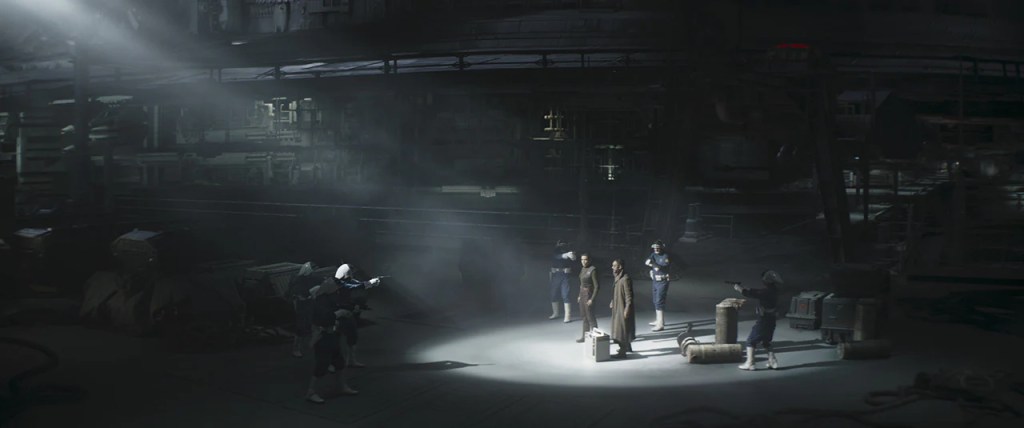
The Convert is an ambitious episode that expands the scope of The Mandalorian. It offers a deeper look at the galaxy’s political landscape and challenges the idea that the fall of the Empire automatically led to a better world. However, its detour from the main storyline and slower pacing prevent it from fully matching the impact of the series’ strongest episodes.
Still, as part of the larger season, it adds valuable context and texture, enriching the world in ways that may pay off later. It’s not essential in the moment, but it feels important in hindsight, paving the way for the likes of Andor.
🌟🌟🌟🌟

 We Have Issues