
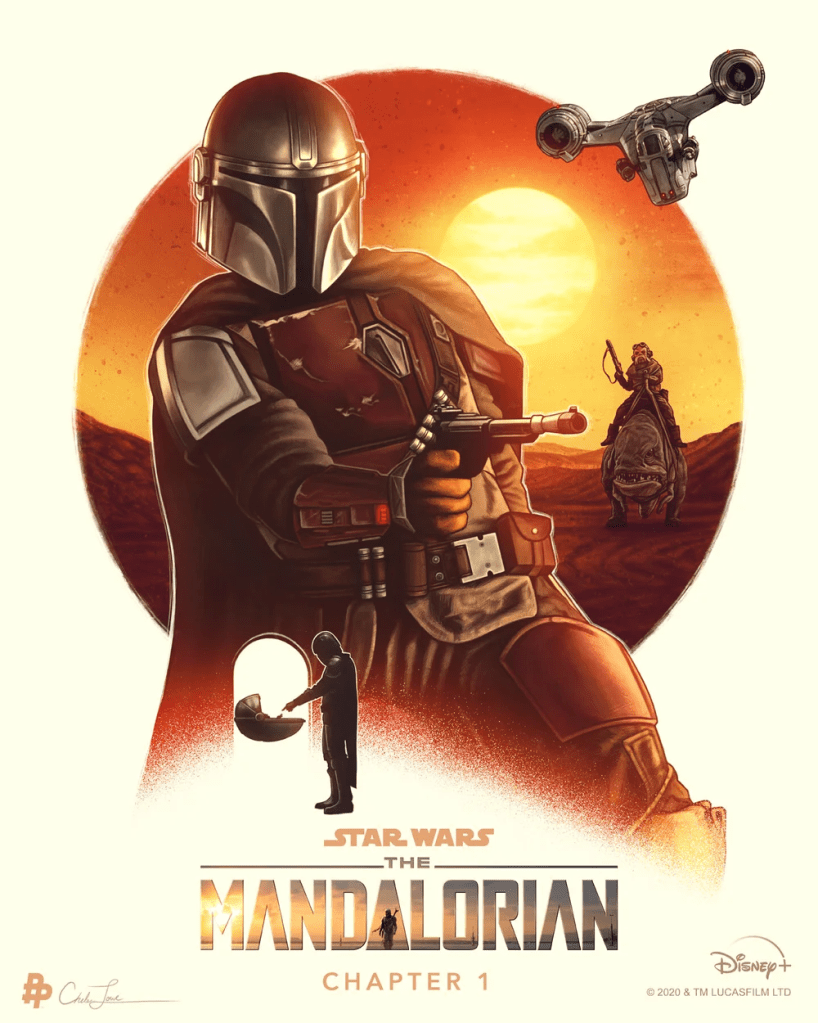

When The Mandalorian debuted its first episode, it arrived under a weight of expectation that few television shows have ever faced, especially as the franchise’s previous forays into live-action TV were much maligned Holiday Special and a pair of very much of kids Ewok movies. This was not simply a new Star Wars story; it was the franchise’s first live-action television series, something that fans had been dream about since the original trilogy finished in ’83. For decades, Star Wars had been synonymous with cinema—big screens, event releases, and generational hype. The move to television felt both risky and liberating, offering the chance to build out the universe in a more detailed way rather than the tip of the iceberg storytelling the films were famous for.
The excitement surrounding the show was heightened by the creative team behind it. Series creator Jon Favreau brought credibility and trust, having proven his ability to balance spectacle with heart as one one the principle architects of the MCU. He encouraged Dave Filoni, Lucasfilm’s animation mastermind and Lucas’ personal acolyte, to join him for the ride. Together, they positioned The Mandalorian as a project that respected the past while daring to do something different and made it clear the the show would be inspired by Star Wars’ inspirations.
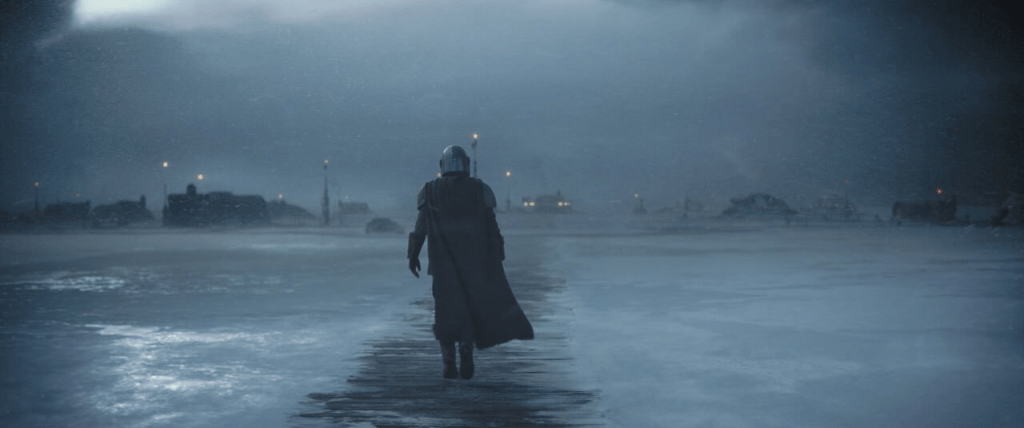
There was also a hunger for a tonal reset from the fanbase. With the sequel trilogy dividing audiences, many fans yearned for a story that felt closer to the grit and mythic simplicity of the original trilogy. The Mandalorian promised a stripped-down approach: no Jedi, lower galaxy-spanning stakes, and more focus on the fringes of society. As the flagship launch title for Disney+, the show wasn’t just debuting an episode—it was tentpole for the streamer and mapping out the future of Star Wars storytelling.
From its opening moments, the first episode makes clear that this is a different kind of Star Wars. It introduces the series’ protagonist, voiced with quiet intensity by Pedro Pascal, as a masked bounty hunter navigating the lawless outer reaches of the galaxy. His first appearance in a cantina is familiar yet refreshing: a classic Star Wars setting shot through with Western/Samurai sensibilities. The Mandalorian speaks little, relying instead on posture, movement, and presence to establish his character. It’s a confident choice that trusts the audience to get it rather than be spoon-fed exposition.
The episode builds its world economically. On the planet Nevarro the Empire is gone, but its scraps remain. The Mandalorian works for the local branch of Bounty Hunter guild run by Carl Weathers’ Greef Karga. Karga is only offering small jobs but he wants some thing larger. This leads him to an Imperial client portrayed by Werner Herzog, whose eerie calm and philosophical menace add gravitas to what could have been a stock villain role. His presence suggests darker forces still at work in the galaxy, even after the fall of the Emperor.
We are also introduced the Mandalorian culture itself—an enclave of warriors living in secrecy, bound by ancient codes. Flashbacks hint at the protagonist’s childhood trauma during the Clone Wars, grounding his stoicism in pain rather than mystery. These glimpses are brief but effective, suggesting a long emotional arc without interrupting the forward momentum of the episode.
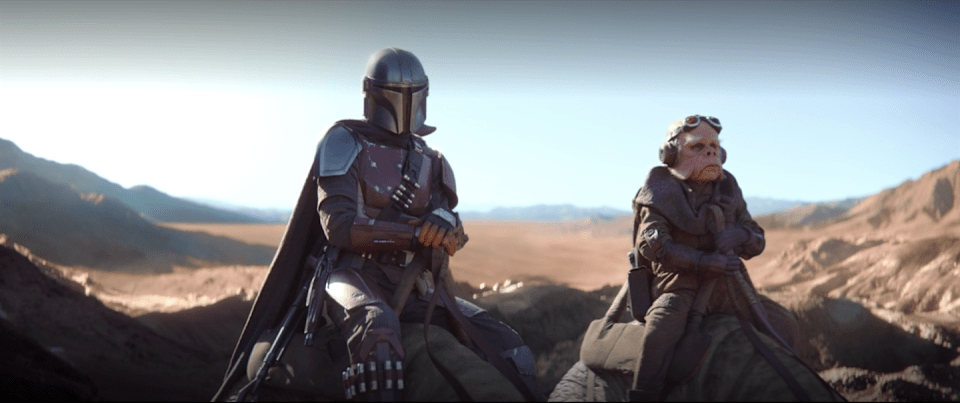
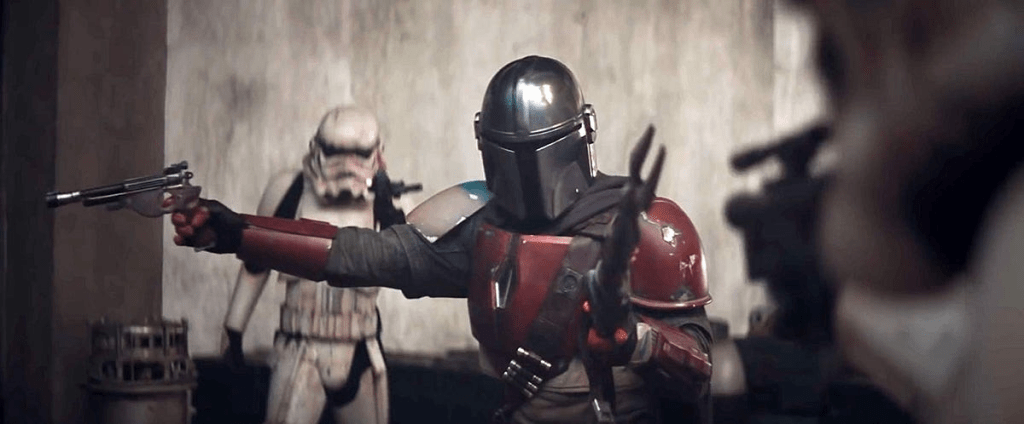
The episode also sets up the shows adventure of the week style with the client assigning the hero a high-value bounty of unknown identity. On his quest, first he meets Kuiil, voiced by Nick Nolte’s gravelly tones, a plainspoken ugnaught who has survived through hard-earned wisdom rather than violence. Kuiil immediately establishes himself as a moral counterweight, offering practical help while subtly challenging the Mandalorian’s worldview with his calm insistence that peace is the only way. Eventually he teams up with a droid, IG-11, voiced with manic efficiency by Taika Waititi, who is chasing the same bounty, at a fortified compound he has tracked the target to. The resulting action sequence is measured and tactile, favouring gunfights and practical effects over overwhelming CGI. It feels grounded, reinforcing the show’s commitment to scale and restraint.
One of the episode’s most defining elements is its music, which becomes a series staple. Composer Ludwig Göransson delivers a score unlike anything previously heard in Star Wars. Eschewing the sweeping orchestral dominance of John Williams, Göransson has composed a haunting, minimalist main theme. The music immediately signals that this is a frontier story, blending sci-fi with Western and samurai influences. The score defines the show’s identity, making even quiet moments feel purposeful and tense.
The episode’s final reveal is now iconic: the target is a small, green child of the same mysterious species as Yoda and will forever be called Baby Yoda, no matter how much the creatives push against it. The moment is handled with restraint, allowing the reveal to register without melodrama. The Mandalorian’s instant connection with the child creates a powerful emotional beat. It changes the entire episode and sets up the central moral conflict of the series. The cliffhanger doesn’t rely on spectacle, but on empathy.
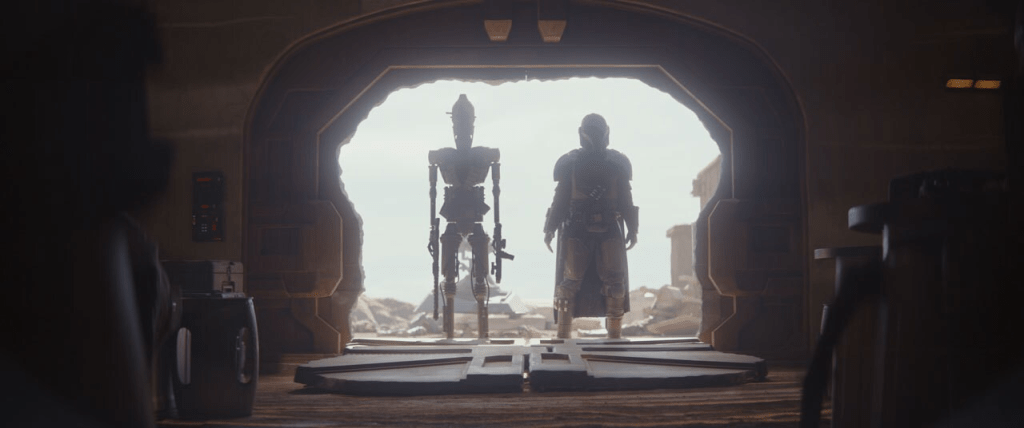
As a premiere, Chapter 1 excels because it knows exactly what it wants to be. It doesn’t rush to explain the galaxy or connect every thread to existing lore. Instead, it focuses on tone, character, and atmosphere. The result is a Star Wars story that feels simultaneously fresh and familiar, grounded in genre tradition while confidently forging a new path.
By the end of the episode, The Mandalorian has justified the enormous anticipation surrounding its release. It proves that live-action Star Wars television isn’t just viable—it’s fertile ground for some of the franchise’s most compelling storytelling. With a strong creative vision, a memorable lead performance, and a bold musical identity, Chapter 1 resets the Star Wars landscape and lays a foundation that feels sturdy, intriguing, and full of promise.
🌟🌟🌟🌟

 We Have Issues
It was much ado about nothing from the very start. Star Wars is dead. They just rape the corpse.
LikeLike