
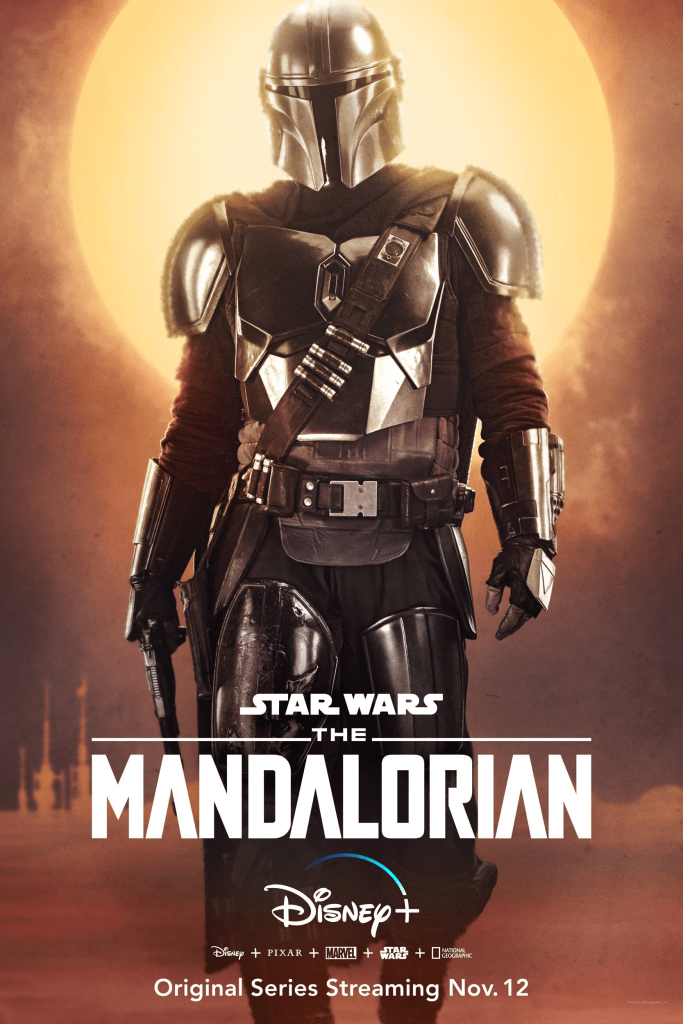

Chapter 3 marks the moment when The Mandalorian truly finds its identity. By the time the third episode screened, the series had already established itself as something special within the Star Wars universe. The first episode generated huge excitement by proving a live-action Star Wars show could work, while the second hooked the world by revealing the child’s mysterious Force abilities. With audiences now fully invested, Chapter 3 had to show that the series could sustain its momentum while pushing the story into new territory.
At this point, the cultural conversation around the show was massive. The child, instantly dubbed “Baby Yoda” by fans, had become an overnight sensation. Memes, merchandise discussions (strangely for Star Wars there wasn’t any as part of the effort to keep the reveal secret), and fan theories flooded the internet within days of the previous episode airing. That kind of reaction is rare even for major franchises, and it proved that Disney+ had struck gold with its flagship series. But popularity also created pressure. The show needed to demonstrate that it had more to offer than a cute character and nostalgic atmosphere.
Fortunately, series creator Jon Favreau continues to guide the overarching narrative, writing all the episodes, while this episode itself was directed by Deborah Chow. Chow would later go on to direct Obi-Wan Kenobi, and The Sin already shows why she earned that trust. Her approach balances quiet character work with bursts of kinetic action, maintaining the show’s deliberate pacing while delivering some of the best action of the season.
The episode begins with the Mandalorian returning to Nevarro to collect his reward for delivering the child to the Imperial client. The as yet unnamed bounty hunter appears outwardly cool and calm, but the episode quickly hints at inner conflict. The Mandalorian has always presented himself as a professional, someone who completes the job and asks no questions, yet his interactions with the child during the journey back suggest that something has already changed.
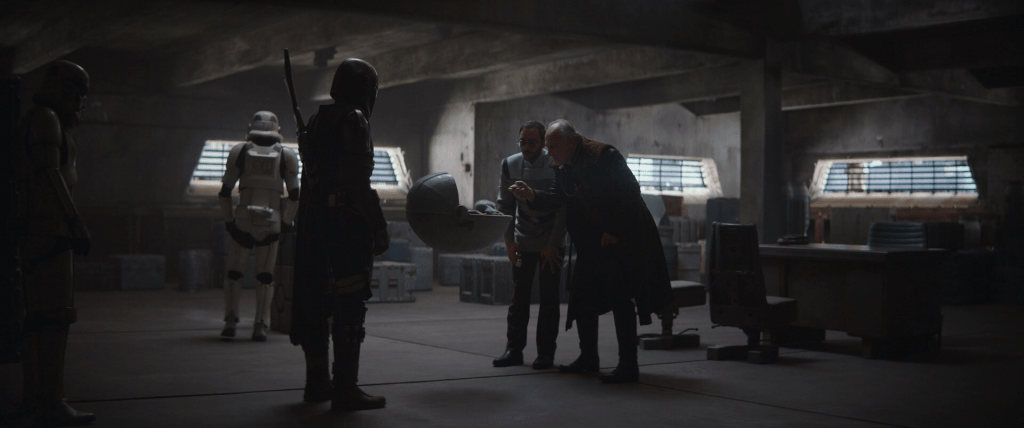
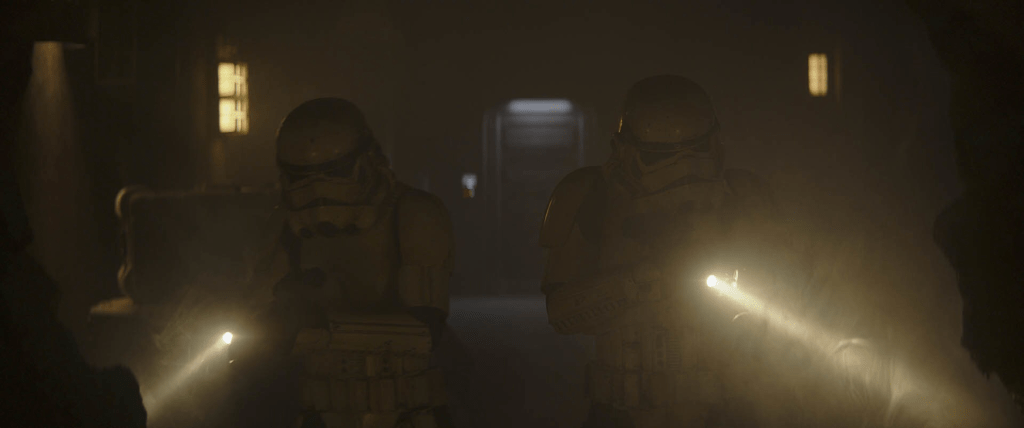
When he finally hands over the child to the Imperial client, played with unsettling calm by Werner Herzog who makes every interaction feel uncomfortable. Herzog’s character oozes an ominous energy, speaking about the restoration of order while surrounded by remnants of the fallen Empire. The battered stormtroopers guarding the facility reinforce the idea that the Empire may be fractured but is still lurking in the shadows.
The Mandalorian receives his reward in the form of beskar steel, an indestructible metal sacred to Mandalorian culture. He brings it back to the hidden enclave of Mandalorians, where it is forged into new armour by the Armourer, played by Emily Swallow. These scenes provide some of the richest world-building in the episode, exploring the traditions and values of the Mandalorian people while flashing back to the heroes defining moments during the Clone Wars. The beskar isn’t merely payment, it represents survival, heritage, and identity.
Yet even as his armour is upgraded piece by piece, the Mandalorian grows increasingly uneasy. The turning point arrives when he learns that the child is being experimented on by the Imperials. Though he had tried to remain detached, the knowledge that the infant might be harmed becomes impossible to ignore. In a series built around a man who rarely speaks, this moral struggle is conveyed through subtle body language and pacing rather than lengthy dialogue.
What follows is one of the defining sequences of the first season. The Mandalorian decides to break into the Imperial facility and rescue the child he had just delivered. The infiltration is swift and brutal, showcasing the character’s combat skills while emphasizing his desperation as he fights his way toward the laboratory.
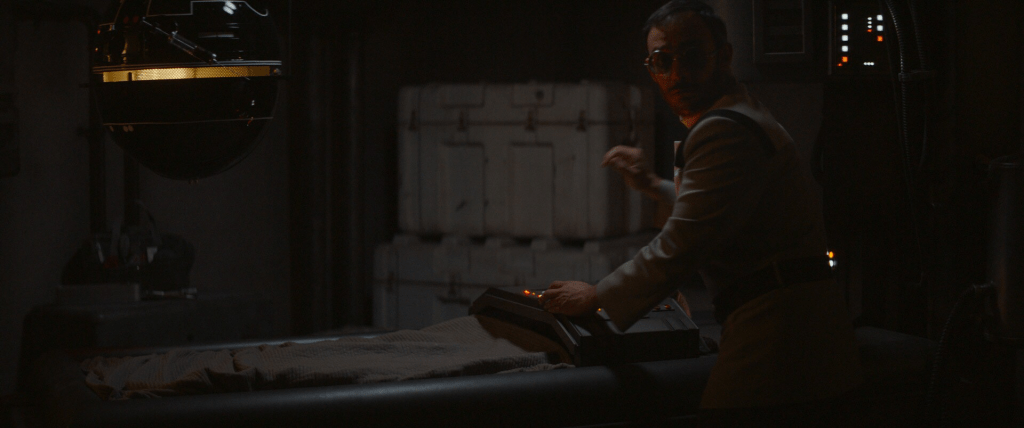
During the rescue, we gets a brief glimpse of the scientist studying the child, played by Omid Abtahi. The details of the experiment remain unclear, but the implication is chilling. The show wisely keeps the mystery intact, allowing our imagination and knowledge of Star Wars lore to fill in the dark possibilities.
Once the Mandalorian retrieves the child, the episode shifts into full pursuit mode. The bounty hunter’s betrayal triggers an alert across the entire guild, and suddenly every tracker in the city is pointing toward him. The once-professional community of bounty hunters turns into a hostile mob, each member eager to claim the valuable target.
The shoot out through the streets of Nevarro is exciting, but the episode saves its biggest moment for the finale. Just when it seems the Mandalorian will be overwhelmed, members of the Mandalorian covert arrive to help him escape. One by one, armoured warriors emerge from hiding, or drop out of the sky in jet packs, engaging the bounty hunters in a spectacular firefight.
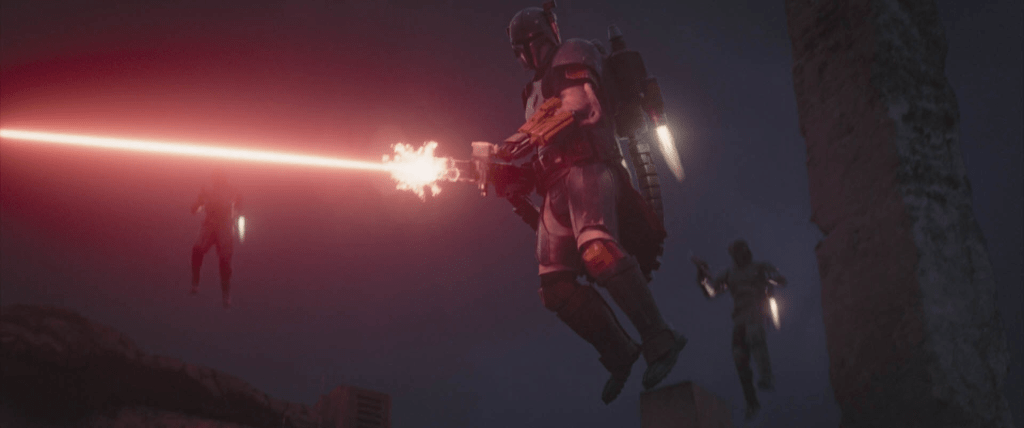
This moment carries enormous weight. The Mandalorians have spent years living in secrecy since the destruction of their planet, hiding their numbers to survive in a hostile galaxy. By revealing themselves to protect one of their own, they risk everything. It’s a powerful demonstration of loyalty and shared identity, reinforcing the code that binds them together.
The Mandalorian ultimately escapes with the child aboard his repaired ship, leaving chaos behind on the ground. Yet the victory feels complicated rather than triumphant. By breaking the guild’s code and turning against the Empire, he has effectively become a fugitive. The life of a quiet bounty hunter is over.
The episode represents a defining point for the entire series. It changes the show’s premise from what everyone thought it was going to be, a straightforward bounty-of-the-week format, into something much more personal and morally driven. The Mandalorian is no longer simply completing jobs, he is making choices that will define who he is.
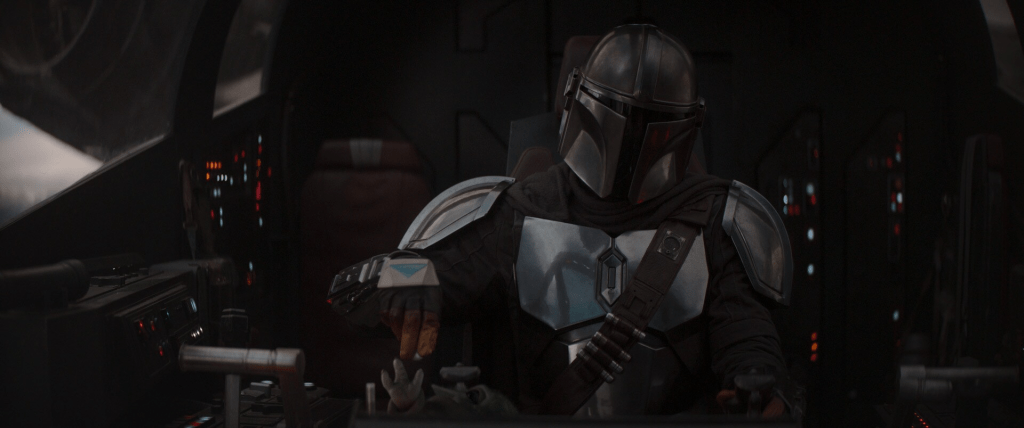
The episode captures the essence of what makes The Mandalorian compelling. Favreau had promise the show would be inspired by George Lucas’ inspirations for Star Wars and that is what we get. It combines classic Western and Eastern storytelling with the mythology of Star Wars, placing a lone warrior at a crossroads between duty and compassion. The action is thrilling, but it’s the emotional decision at the centre that drives the show forward.
By the time the credits roll, the series has firmly established its direction. The Mandalorian and the child are now bound together, like Lone Wolf and Cub, traveling through a galaxy that suddenly feels far more dangerous. With this choice, the show raises the stakes and ensures that the journey ahead will be about far more than collecting bounties, it will be about redemption, responsibility, and the possibility of change. This is the way
🌟🌟🌟🌟🌟

 We Have Issues