
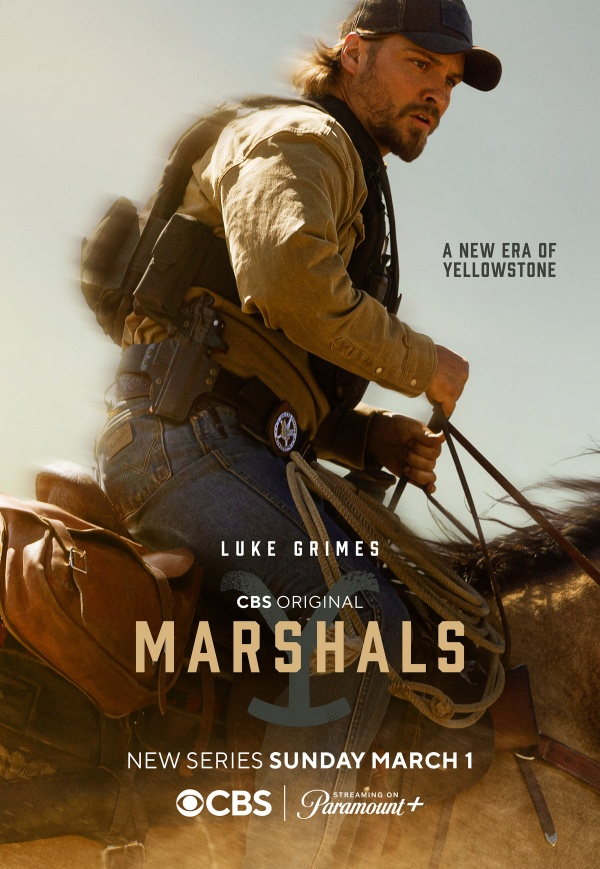

Seven episodes in and we are getting some character work as focus shifts shifts from high-stakes chases and reservation conflicts to something more intimate: the messy intersections of romance, grief, loyalty, and legacy. This has the feel of a deliberate breather mid-season breather as we watch how the Marshals team navigates personal lives amid their dangerous jobs, while Kayce Dutton continues wrestling with life the direction of his life after losing Monica. The result is a solid, but predictable, episode that leans heavily on conversations rather than action.
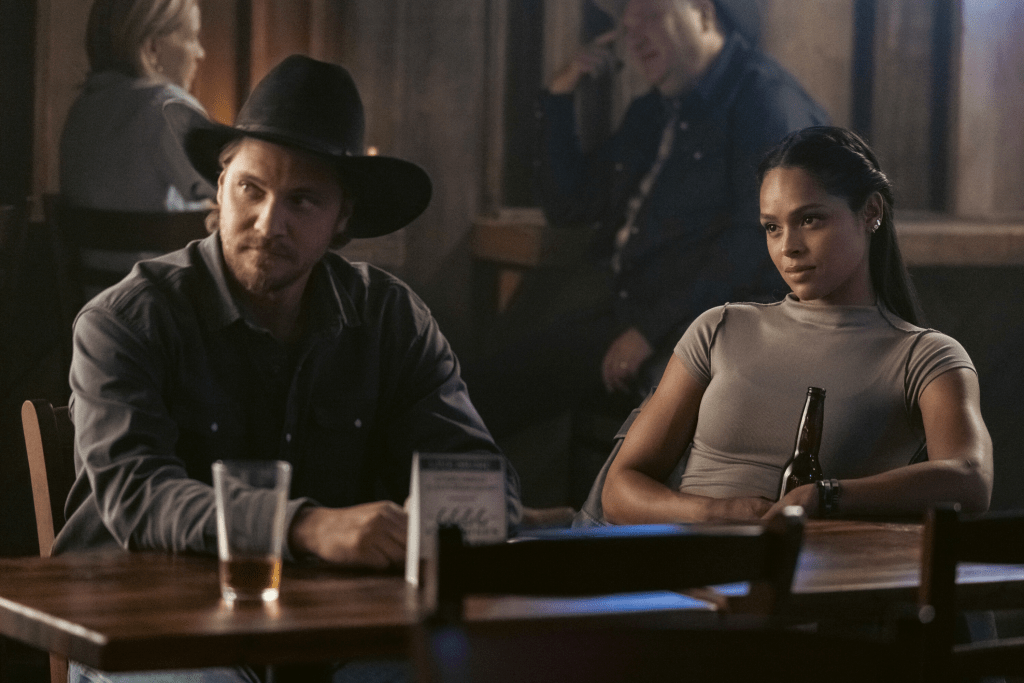
The episode opens at East Camp, where Dolly Weaver, who was introduced a few episodes ago, unexpectedly arrives while Kayce is working with Monica’s stallion in the pen. The symbolism is heavy-handed: Kayce, like the horse, is struggling to move forward. Dolly (Ellyn Jameson), daughter of wealthy rancher Tom Weaver, presses Kayce to honor his half-promise of a backcountry tour. Their horseback ride through the Montana wilderness is one of the Yellowstone franchises staples – scenic, quiet, and charged with tentative chemistry. Luke Grimes brings his usual stoicism, letting small moments (a shared story about skinny-dipping with his brother Jamie as kids, a rare half-smile) convey Kayce’s lingering guilt and cautious openness. Dolly is forward and charming, and their interactions feel refreshingly light for the ranch scenes.
Back at headquarters, the team catches a new case: a car bomb targets federal judge Pauline Ayers (Christine Dunford) and her family. Pete Calvin (Logan Marshall-Green) and Belle take protection detail at the judge’s home, while Kayce and Andrea track down a potential suspect—an ex-con named Clint Gallo whom the judge sent away years earlier. The procedural elements unfold as expected: interviews, surveillance, a tense moment when the attacker strikes again at the house. The twist, that the real target is the judge’s husband Blake (Christopher Stanley), not Pauline, adds a layer of family intrigue that echoes the episode’s title. Revelations about Blake’s secret life create moral complications for the team and mirror the personal dilemmas facing the Marshals themselves.
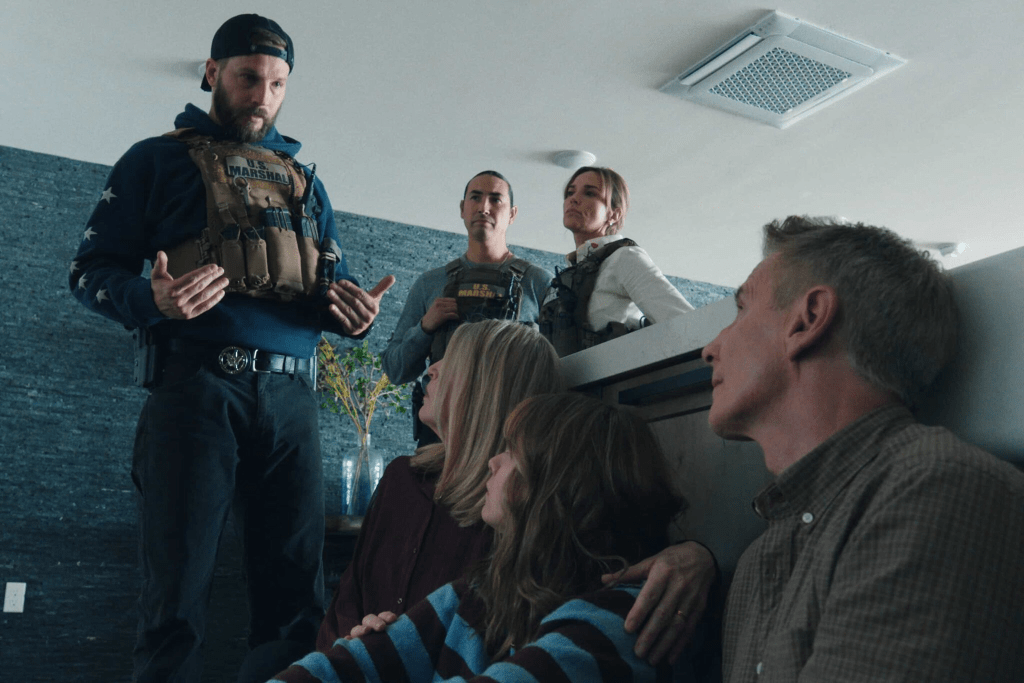
All the cast are given something do do. Calvin and Belle share charged glances and a kiss that hints at deepening feelings, complicated by their own spoken and unspoken baggage. The rookie dynamics and team banter feel more natural here than in earlier episodes, suggesting the unit is gelling as both professionals and makeshift family. Tom Weaver (Chris Mulkey) joins Dolly for dinner at East Camp, ostensibly to repay Kayce for a previous rescue, but he has an ulterior motive: offering to buy the ranch. The proposal, that Kayce sell East Camp yet continue running it under Weaver’s expanding operation, lands like a gut punch. Kayce’s reaction is pure Dutton: offended pride mixed with practical temptation, a callback to the original series’ land wars without feeling forced. Everything with Kayce is still underscored by grief, with residual anger toward his father John surfaces during reflective moments, and his guilt over potentially moving on from Monica adds emotional weight to the Dolly scenes. Unfortunately, once again Tate is absent in this episode as the show hasn’t worked out what to do with him yet.
The case-of-the-week resolution feels rushed, and some dialogue borders on on-the-nose when characters spell out their emotional states, but it compensates with stronger character work and a welcome slowdown in pacing that lets relationships simmer. The judge’s family secrets parallel the Marshals’ budding romances and Kayce’s land dilemma: Can old wounds heal enough for new bonds to form? Can loyalty to the past coexist with practical survival in the present? These questions linger without tidy answers, leaving the door open for messier developments ahead.

By the end, Kayce is left contemplating Tom’s offer and his growing connection with Dolly, while the team deals with the fallout of the judge’s case and their own interpersonal shifts. It deepens the ensemble and gives Kayce space to evolve beyond the grieving widower introduced in the first episode. It’s starting to feel a bit more like Yellowstone with themes of family, land, and reluctance change.
🌟🌟🌟

 We Have Issues