
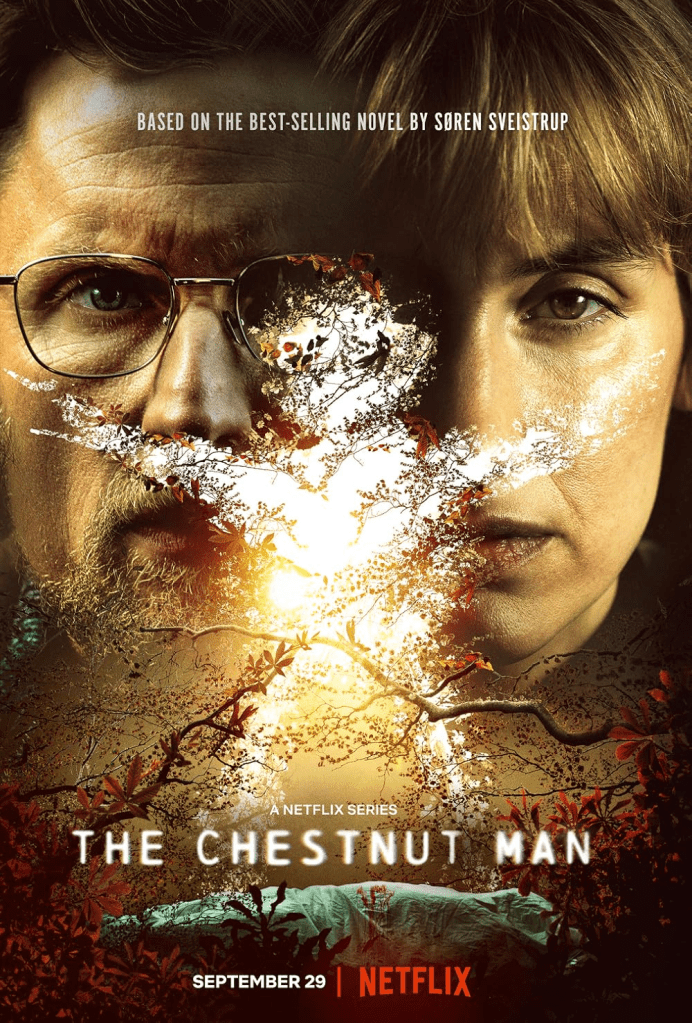

The first episode of The Chestnut Man opens with a tense and chilling prologue set in 1987 on the quiet island of Møn. A local police officer responds to a mundane call about loose cows at a remote farm, only to stumble upon a horrific scene. Blood-soaked rooms, ax wounds, and a family slaughtered in their own home create an atmosphere of pure dread right from the kick off. In the basement, amid rows of eerie little figurines made from chestnuts and matchsticks, a terrified young girl hides. This cold open is masterfully executed, slow-building tension gives way to horror without relying on cheap jump scares. It perfectly sets the tone for a dark, atmospheric Nordic noir thriller.
Fast-forward to present-day Copenhagen, and we meet to cops that have just been partnered up. Detective Naia Thulin, played by Danica Curcic, is a sharp, ambitious single mother eager to transfer out of homicide into cybercrime. She wants more time with her young daughter, who is the only light in the darkness. Thulin’s no-nonsense professionalism contrasts with her reluctant new partner, Mark Hess (Mikkel Boe Følsgaard), a burned-out Europol investigator who seems more interested in wrapping things up quickly than diving deep. Hess brings a cynical, almost arrogant edge that clashes with Thulin’s methodical approach, signposting tensions to come.
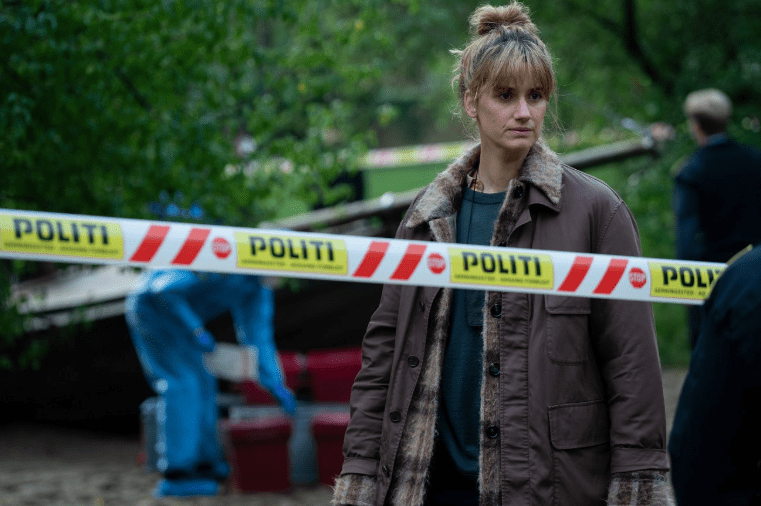
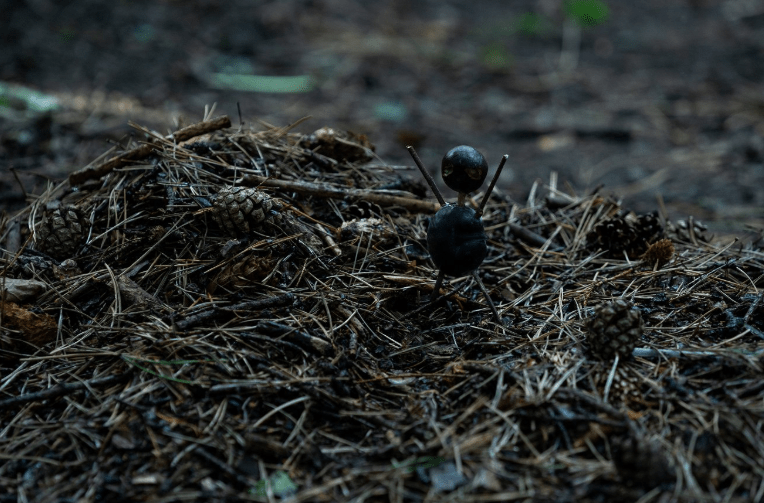
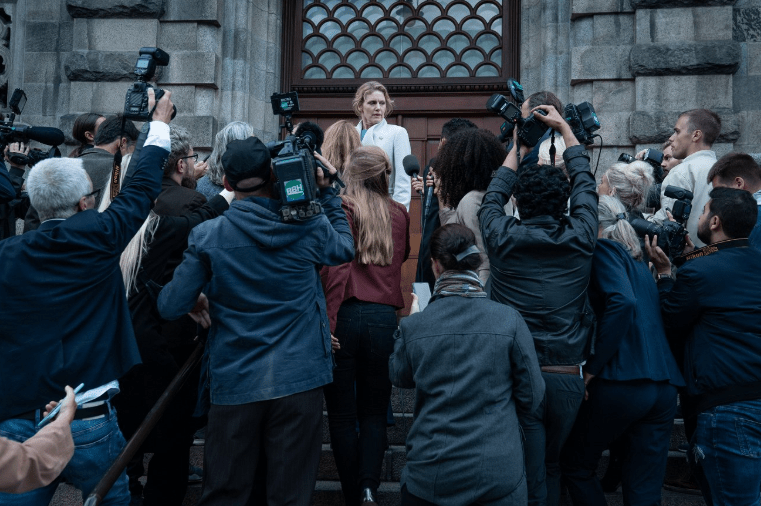
The main plot kicks off when a young mother, Laura Kjær, is discovered brutally murdered in a playground. Her body shows signs of extreme violence, including a missing severed hand, and beside her, planted in the ground, is a small chestnut man figurine, the same kind seen in the 1987 prologue. The discovery of a fingerprint on the chestnut belonging to Kristine Hartung, the daughter of prominent politician Rosa Hartung who disappeared and was presumed murdered a year earlier, turns what might have been a straightforward case into something far more twisted and personal. Rosa’s return to parliament on the very day of the murder adds layers of political tension and conspiracy.
The episode is heavy on atmosphere. The grey, rainy Danish autumn landscapes feel oppressive and isolating, amplifying every moment of unease. There isa sense of creeping dread through long, deliberate shots that give a voyeuristic feel. The crime scene investigation sequences are gritty and realistic, showing the detectives methodically piecing together clues while forensic details, like the significance of the chestnut doll, unfold naturally. There’s a palpable sense that something deeply disturbed is at play, and the connection between past and present murders raises intriguing questions without giving too much away.
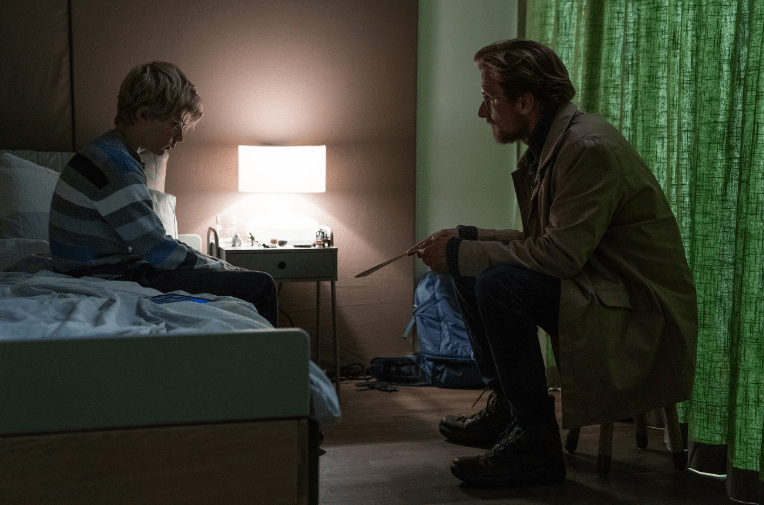
Adapted from Søren Sveistrup’s novel (the creator of the acclaimed series The Killing), this feels confident and layered. It balances investigative elements with personal stakes effectively. Thulin’s home life, her strained but caring dynamic with her daughter, and a near forgotten dinner date with her boyfriend add a break from the darkness. Meanwhile, there are hints that there is something dark in Hess’s backstory as he sits in an empty apartment alone. Their partnership, though rocky from the outset, show potential when they interview the victim son, Thulin can’t get throughto him but Hess know how to speak to him on his level.
The episode is very well shot. The brutal farm massacre in the opening is filmed with restraint that somehow makes it more disturbing, focusing on aftermath and implication rather than gratuitous gore. The modern crime scene in the playground, with its ordinary suburban setting turned nightmarish, heightens the terror by suggesting that evil can invade even the safest spaces. Cinematography captures the damp chill of Copenhagen and, in Nordic true noir style, makes the environment itself feel like a character.
The pacing is spot on for an introduction. The episode establishes the multiple threads of the killings in 1987, the Hartung family tragedy, Thulin wanting out of homicide, and new murder investigation. These are woven together effectively and you are left with a hook: the fingerprint link suggests the killer is playing a deliberate, horrifying game, possibly tied to events from decades ago. It’s the kind of setup that makes you want to binge the entire season immediately.
The only drawback is that the story is very dense from the get go. The political angle with Rosa Hartung and her family, while intriguing, feels slightly secondary, though it is clearly set up for what is to come. Additionally, it all does lean very heavily into familiar Nordic noir tropes of gloomy weather, dysfunctional detectives, traumatized families, although there are no Nazis yet, but it does it all to a very high standard as to not feel derivative.
Fans of dark, intelligent crime dramas like The Killing (obviously), The Bridge, or even the more recent Detective Hole will find much to appreciate here. It’s gripping without being exploitative, character-driven without sacrificing story, and visually interesting. After watching, I found myself think how creepy chestnuts can look.
An atmospheric opener that hooks you with its brutal prologue and a genuine mystery. If the rest of the series maintains this level, this could be one of those show that really gets under your skin.
🌟🌟🌟🌟

 We Have Issues