
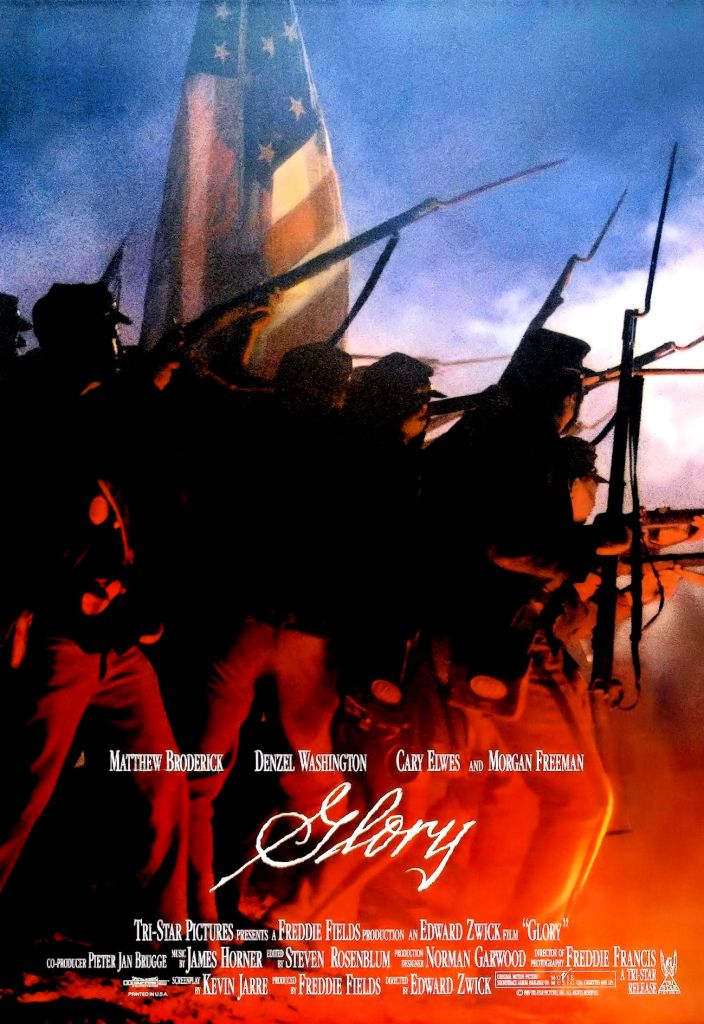
All the good intentions in the world can’t hide the fact that sometimes, movies are seen through the wrong eyes and in many cases, it’s an unavoidable fact that some films made before a certain time that focus on matters of race through the point of view of the whitest characters in the cast. It doesn’t necessarily mean that the film in question is bad or poorly made; Candyman, for example, is a magnificent film that touches on life the run down projects of Chicago, it just happens to feature Virgina Madsen as the lead.
Another glowing example of this is Glory, Edward Zwick’s, Civil War epic that tells the story of the 54 Massachusetts Infanty Regiment, one of the first all black regiments that fought in the American Civil War – a movie that treats its subject matter with all the misty-eyed, quivering lipped respect such a matter demands but then makes its main focus a white colonal played by Ferris B. However, we probably shouldn’t be too hard on it, especially when you take into account that the movie was made in 1989 and we should be grateful that it’s as respectful as it is. We should also recognize that, despite telling the story through white eyes, Glory is still one of the finest Civil War movies ever made.

After being carted home after being wounded in the battle of Antietam, Captain Robert Gould Shaw is subsequently promoted to colonal thanks to his well-connected father and before you know it, he’s leading an all-black regiment. Appointing his friend, Cabot Forbes as his second-in-command, the volunteers soon start rolling in, with such recruits as Thomas Searles, the Shaw family’s bookish secretary; fatherly grave digger, John Rawlins; the simple Jupiter Sharts and the volatile Silas Trip making up the numbers.
However, while Shaw tries his best to maintain discipline and fairness throughout training and beyond, he faces an uphill battle when it comes to overcoming the racism that still exists both sides of the Mason/Dixon line. There’s dissension within the ranks too as not only does Forbes first mistake Shaw’s style of command as harshness, but there’s also infighting among the various troops, usually incited by Trip’s combative nature.
Finally, after battling such interior battles as the infantry being denied decentvshoes and receiving wages less than the white soldiers, the 54th finally heads into battle – only to find that no one has any interest in letting the black troops actually see battle and instead recruits them for manual labour.
Maneuvering his way into letting he and his men finally enter the fray, Shaw volunteers the 54th into leading an assault on Morris Island in an attempt to capture Fort Wagner and gain a foothold at Charleston Harbour. With extreme casualties expected, can the 54th win a vital battle and the respect that they are fighting so hard for?

So, with the elephant in the room addressed, there’s a few aspects to remember when watching Glory, these days. With so much to get through, a lot of the characters, especially the main ones of the 54th, are simplified down into specific tropes, such as “angry black soldier”, “educated black soldier” and so on. Similarly, all the issues and hardships faced by the 54th are usually met with an underplayed, yet obviously horrified reaction by Shaw who then goes to prove that not all white boys are bad by doing something selfless, thus building up the trust and respect of his troops.
A more cynical viewer, regardless of colour, may roll their eyes at such a thing and it pays to remember that Zwick has been accused of playing the white saviour card since after having the Japanese embrace Tom Cruise in The Last Samurai.
However, taken as a classic war film, loaded with some superlative performances, Glory wisely plays to its strengths to win you over with said strengths being some beautifully shot battle sequences and a typically commanding performance by Denzel Washington that also managed to score him an Oscar win for best supporting actor. Washington, as deeply cynical ex-slave, Silas Trip, obviously delivers an absurdly watchable, powerhouse performance to the point that dubbing it a “supporting” performance seems hideously inaccurate – especially considering that he gets all the best scenes. Be it taking lashings across a back already adorned with scars from a slave master’s whip while barely uttering a sound for a crime he didn’t commit or turning down the honor of carrying a the flag because he truly isn’t sure if winning this war will genuinely guarantee a better life for people like himself, Washington essentially acts everyone off the screen. It’s no mean feat once you realised that he’s surrounded by such talents as Morgan Freeman – who was apparently was playing the Morgan Freeman roles in movies before even such a term existed – Cary Elewes, Andre Braugher and of course, Matthew Broderick.

Those primarily used to seeing Broderick dancing to “Twist and Shout” in a parade as he epically skips school, witnessing him portraying a Civil War colonel is a sight you never truly get used to. However, to give him his due, he gives it his all and the fact that his character is a young man thrown into situations he’s not truly prepared for benefits that terrified look that lurks in the actor’s eyes at all times.
While Glory plays some familiar notes, you can’t deny that it plays them extraordinarily well, with the battle scenes being as appropriately rousing as the numerous speeches designed to illicit a lump in the throat. In fact, if your face (and composure) doesn’t crumble during the final battle – especially during the moment when Trip picks up that flag – then something may seriously be wrong with you and you should probably should look into getting some sort of help. In fact, the ending is almost so cruel and tragic – even for a war movie – it almost makes you lose the message the film is trying to put across entirely, but a swift title card informing you of the 54th’s legacy manages to to keep things on track while you sniffle your way through the end credits.
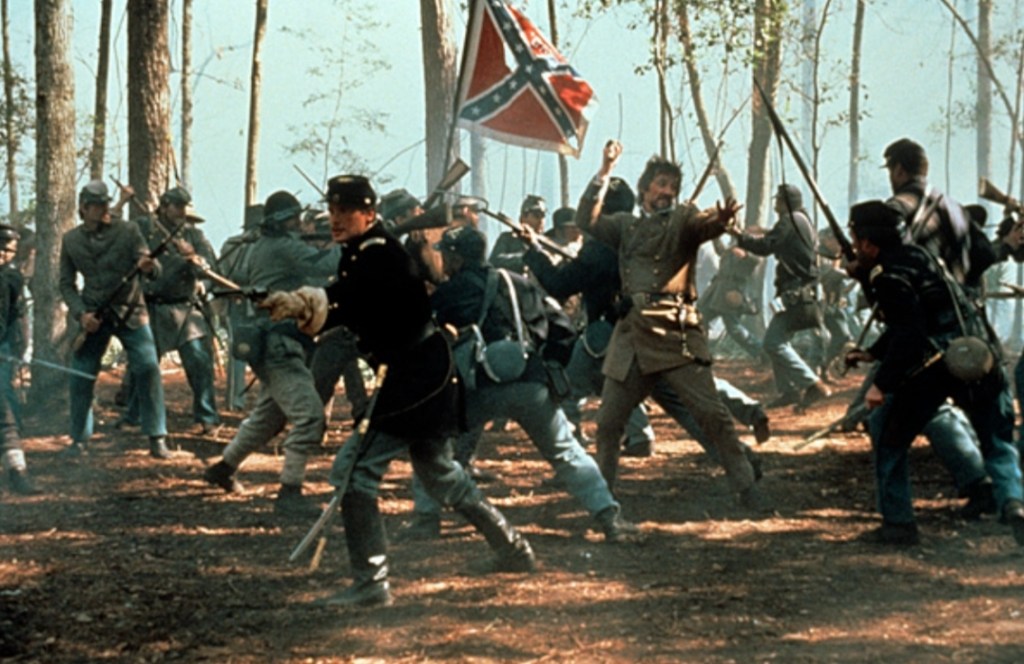
While Glory’s focus could have been more on its soldiers struggle rather on the face of a man shocked at the racism on display in 1863, the sheer defiance of Denzel Washington’s performance ensures that the movies balance and its ability to move you is still glorious.
🌟🌟🌟🌟
 We Have Issues