During the Stephen King explosion of the 1980s, the majority of the gaggle of filmmakers who lined up to translate the author’s words onto the screen – Stanley Kubrick aside, of course – usually remained fairly faithful to the source material. However, once all of King’s best stuff had been used up (not to mention a fair chunk of his B grade stuff too), producers had something of a conundrum as what to do next.
Enter low budget, satirically-minded, high-concept renegade Larry Cohen; a filmmaker who specialized in infusing his outrageous B-Movie output with street smart, tongue in cheek social commentary who had a rather simple solution: simply ditch the author entirely and produce sequels to existing King movies.
Thus we got A Return To Salem’s Lot; a movie that sees Cohen tackle the vampire genre by trading on the name of Tobe Hooper’s infamous 1979 TV movie that made us shit our pants at the sight of pale kids hovering outside our window. But could it match the potent bite of the original?
Blunt anthropologist Joe Webber reluctantly has to leave the tribe he’s studying in South America and head back to the States when he hears that his dysfunctional teen son, Jeremy, will be committed to a psychiatric ward if he doesn’t return and take charge of the situation.
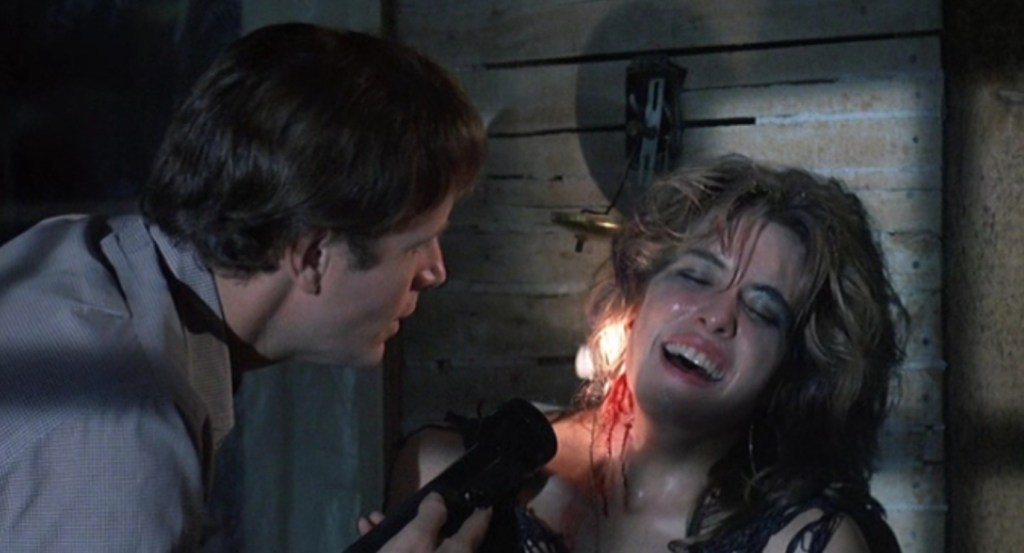
Meeting his hostile son at the airport and suddenly finding himself with full custody of a kid with a vocabulary fouler than a warm up comedy act at a strip club, Joe desides to take Jeremy back to Salem’s Lot, the town he grew up in, and try to fix up the ramshackle farm house left to him by his late Aunt. However, not long after arriving, the anthropologist finds out that the entire town is populated by a vampire colony who have mostly renounced their human killing ways due to our hedonistic lifestyles of drugs, alcohol and AIDS and get the majority of their sustenance from cows. Joe is understandably rocked by this and many other revelations that seem to all pop up with the express reason to get him to stay in town; but as he tries to process that his dead aunt is not only still alive, but is a bloodsucker and his high school crush is still a very nubile eighteen, Jeremy begins to become seduced by the town.
It turns out that the town’s mayor, Judge Axel, has planned all this, hoping that bringing an anthropologist into town and using his analytical skills to not only give vampirism mainstream exposure, but eventually help them create a religious text for their kind, but while watching tribes sacrifice each other for religious beliefs is one thing, watching vampires slowing turning his son into one of them is completely another.
Teaming up with Van Meer, a blustering, eccentric Nazi hunter, Joe vows to save his son and put the entire town to rest, but can he manage to successfully stake an entire town?
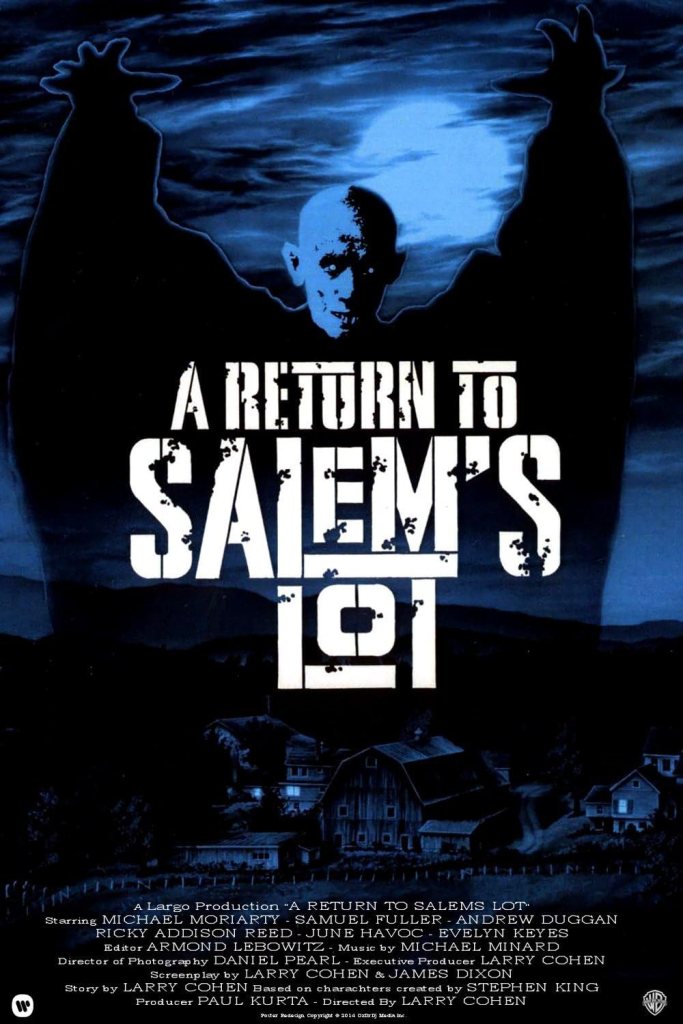
Usually, I’m a sucker for Larry Cohen’s peculiar brand of rough-around-the-edges satire, with Q: The Winged Serpent and The Stuff being strange, esoteric delights, however, with A Return To Salem’s Lot, his style simply doesn’t work. While all his usual jabs at society and class struggle are present and correct, it butts up awkwardly against the previous trip to the Lot that was so stylishly delivered by Tobe Hooper. The orginal Salem’s Lot redefined vampirism in a way that was both familiar and starkly radical, casting an infestation of bloodsuckers in a burg in Maine as metaphorical virus that infects the townsfolk one at a time, like cells. However, Cohen does away with all that, opting to reboot the whole mythos as a riff on small white town high society and making the vampires a far more civilised breed than the feral, snarling bastards that sprung from the fangs of the terrifying Mr. Barlow. While I wouldn’t usually complain too much about a writer/director trying to put his own stamp on an existing property (Kubrick again), the fact that Warner Bros. actually had the nerve to stick the looming image of Barlow on the poster leads you to believe we’re in for more of the same, instead of the pointy-toothed melodrama on show here.
Maybe if Cohen’s script had been directed with someone with a more, distinct, directorial flourish, then A Return To Salem’s Lot might not have been so grating as it is – but as a result, Cohen’s stripped back style of actors awkwardly finding their marks while blankly yelling their lines at one other feels less like an exercise in terror and more like a high school play that hasn’t been properly rehearsed. As a result, a lot of the subtler points of Cohen’s satire fail to land at all and his regular muse, Michael Moriarty (something of an acquired taste at the best of times) seems horribly miscast as he alternates between bellowing his lines and simply just whining. However, even Moriarty at his most stricken can’t even hope to match the unrestrained yelling of Samuel Fuller’s deranged Nazi hunter who overacts so much (at one point he evades capture by pretending to shoot himself point blank in the stomach!), he inadvertently ends up being the best thing here.
Cohen himself once noted that he himself wasn’t actually a fan of the vampire mythos and actually found movies about them rather tedious and while the movie constantly and wittily references Thornton Wilder’s play, Our Town (everyone has a “drinking problem”) his quaint view of vampires trying to adapt to modern living had been effortlessly eclipsed by the flashier, far more entertaining like of Fright Night and The Lost Boys which urged that vampires would take to 80s life like a mosquito to a blood bank.
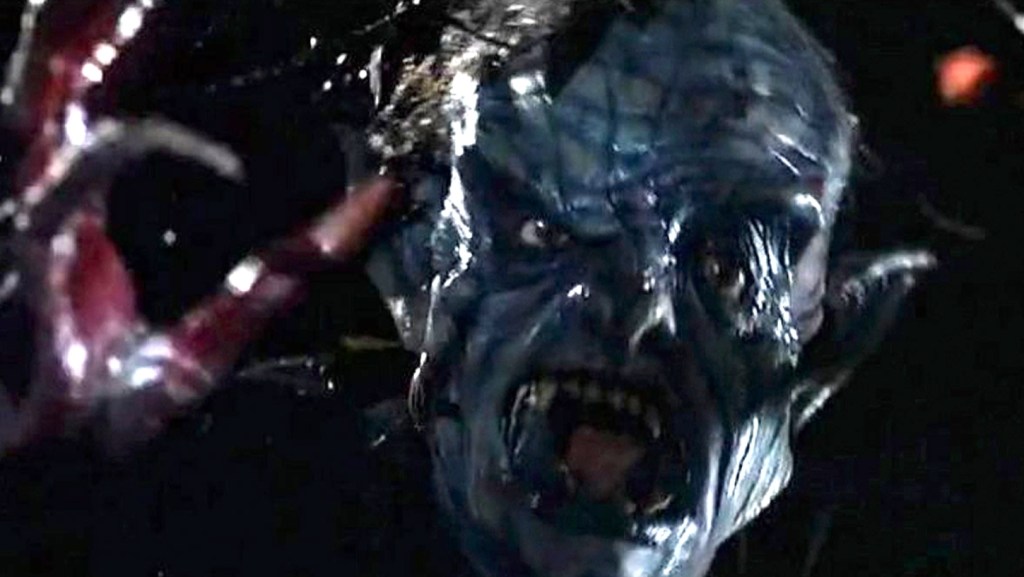
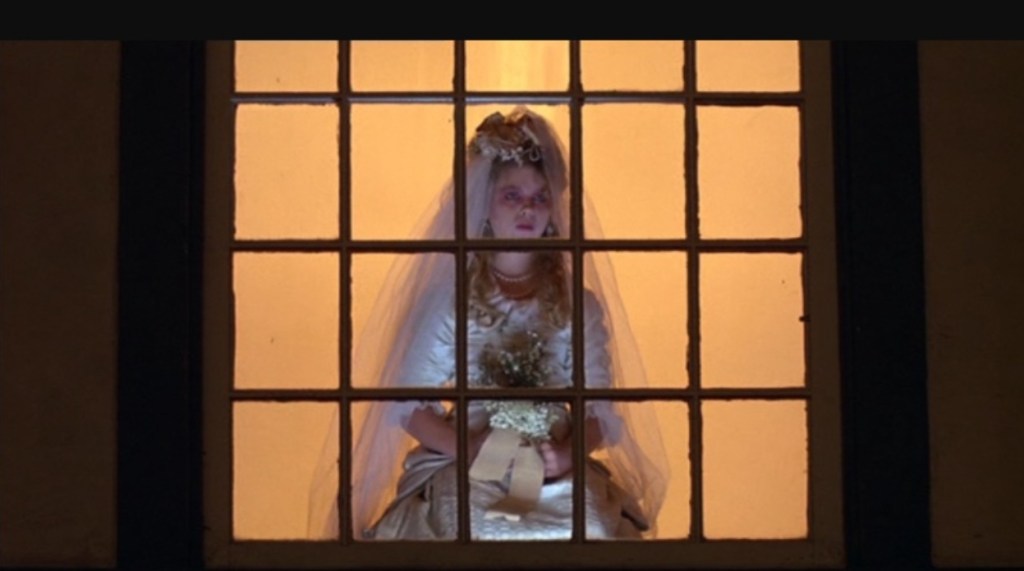
However, among the bad performances and flat direction, the real problem that A Return To Salem’s Lot faces is that it is rarely truly interesting or scary. The Nosferatu-esque visage of Barlow in Tobe Hooper’s miniseries was incredibly creepy, here, however, the transformed, rubbery visage of Judge Axel is more likely to induce stifled chuckles rather than gasps of horror and even though Cohen tries to callback that infamous moment with a child tapping on a pane of glass, levitating an infant Tara Reid in a wedding dress outside a window simply doesn’t have the same effect.
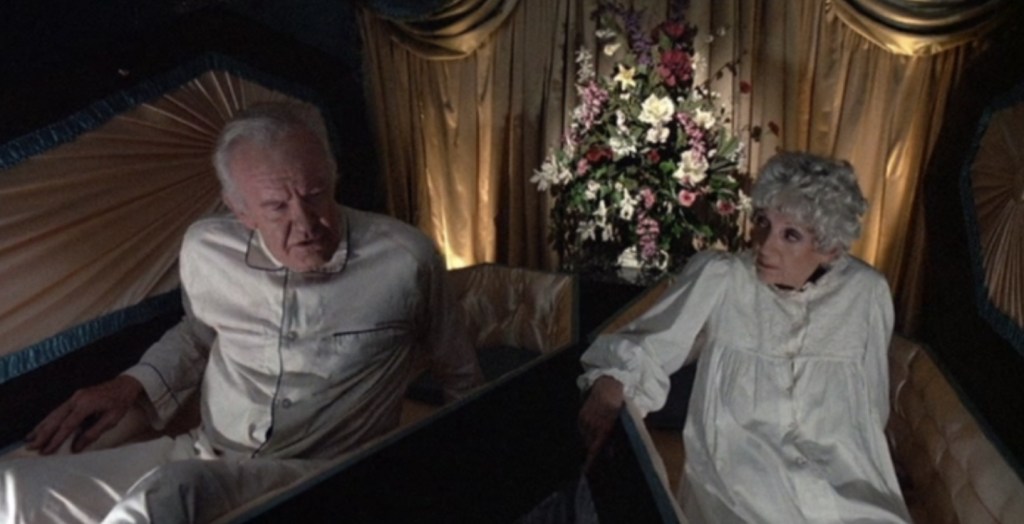
While its good concepts float frustratingly out of reach thanks to multiple plot holes (if the vampire children are internally old enough to marry, why do they still go to school? Why would having sex with a vampire produce a half breed baby? Why is there only two half-human “drones” working protection for an entire town? Why are all the vampires as athletic and spry as an arthritic sloth?), A Return To Salem’s Lot let’s itself down on multiple points as this strange, meandering tale takes its sweet time going nowhere fast. Would worse sequels to King adaptations soon follow? Brother, we hadn’t see anything yet as multiple follow ups to Children Of The Corn, The Mangler and Sometimes They Come back would make Cohen’s efforts feel like Michael Flanagan or Frank Darbont in comparison. But as one of the first attempts to sequelize King, it proves to be a fittingly draining experience.
🌟🌟
 We Have Issues