
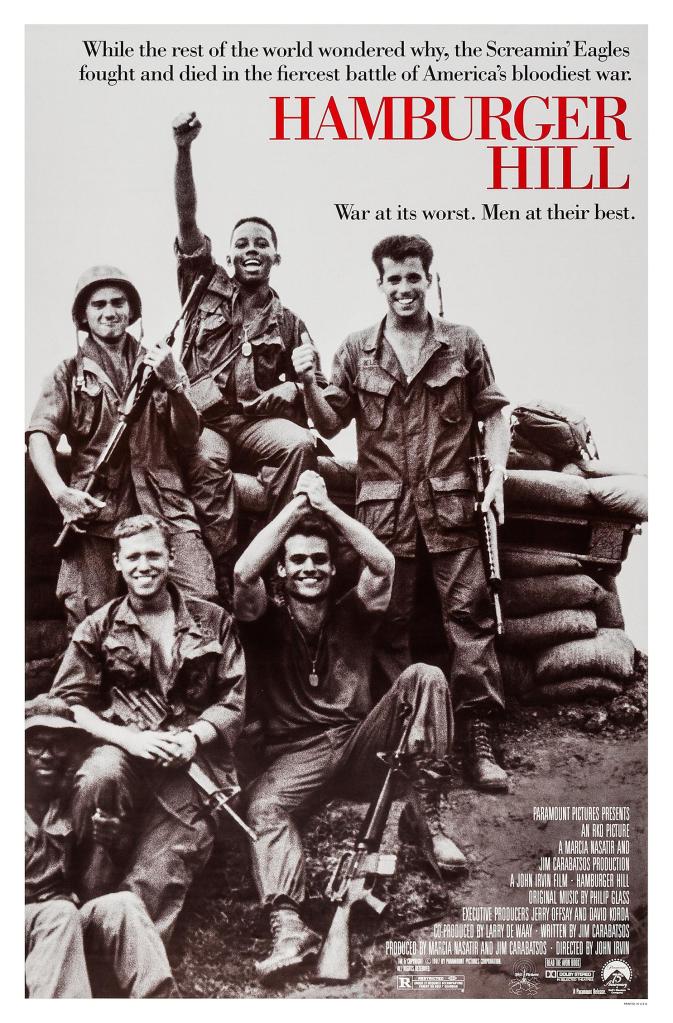
Of the three Vietnam movies released virtually on top of each other near the end of the 80s, two have seemed to have somewhat eclipsed its third for various reasons. First out the block in 1986 was Oliver Stone’s provocative Platoon, a grueling first hand account of the brutal war filmed by somebody who was actually there and who added themes of salvation and corruption to the hellish experience. Next up was Stanley Kubrick’s numbing Full Metal Jacket which took the notoriously penickity director’s typically cold lens and showed the dehumanizing effects of not just war, but the personality erasing training that’s breaks young men and hones them into blunt instruments of death. Along with Francis Ford Coppola’s 1979 classic, Apocalypse Now – undoubtedly the big daddy of Vietnam flicks – you simply could not hope to find such a comprehensively perfect trilogy concerning one of the most controversial wars ever fought. However, amidst the smoke and napalm stands a fourth member of the squad – John Irvin’s Hamburger Hill; a ‘Nam film that gets way less plaudits than its brothers in arms.
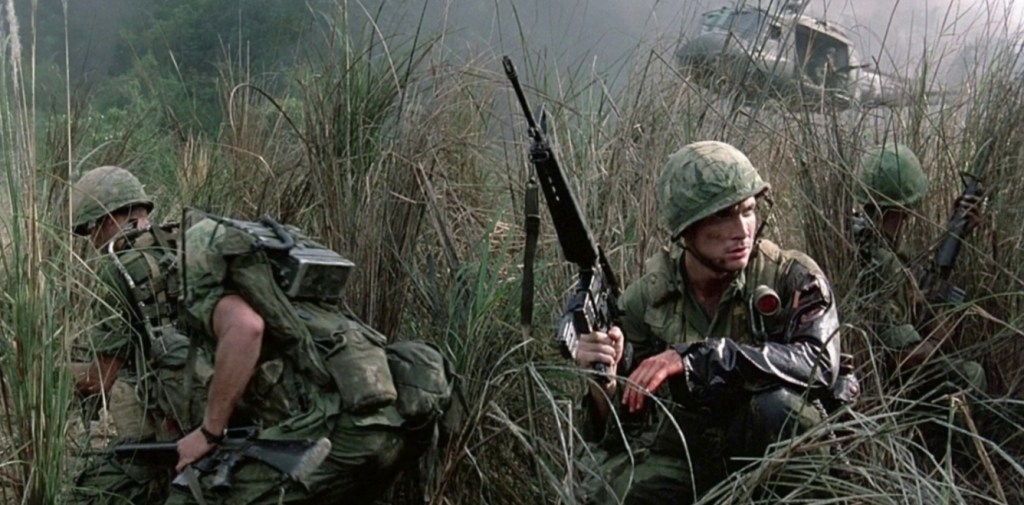
Five new recruits join the platoon of the 3rd Battalion, 187th Infanty, 101st Airborne Divison and in no time at all, they find themselves absorbing the worst that the war has to offer. Put through their paces by their war weary Staff Sargent, Adam Franz, who drills home the importance of staying alive by having VC deserters stalk them during a briefing, the recruits also find that their dangerously green attitudes rankle their new platoon no matter what they do. However, the days of blowing off steam by visiting whore houses and getting high are soon due to come to a halt as the order comes in to storm and ultimately take Hill 937 (aka. Hamburger Hill), a steep vantage point that’s generously peppered with well-entrenched enemy and as the seige begins, a series of tragic incidents make the act of taking the hill all but impossible.
Between moments of troops near the end of their tour taking a fatal bullet, endless mortar fire, a lack of faith from their own superiors and even a shocking case of friendly fire, the rapidly shrinking platoon wax lyrical about racial inequality, social issues and the fact that if they survive, they won’t be getting a heroes welcome from a country who no longer supports the war.
On top of all that, both Franz and highly strung company medic, Doc, seem to be taking it more and more personally everytime one of their comrades dies needlessly in the mud.
Thus, over a grueling period of ten days, the American soldiers face a literal uphill battle as they struggle up a near unassailable mountain of mud for reasons they can’t comprehend as death rains down around them. The it way it stops is to take the hill, or be killed trying.
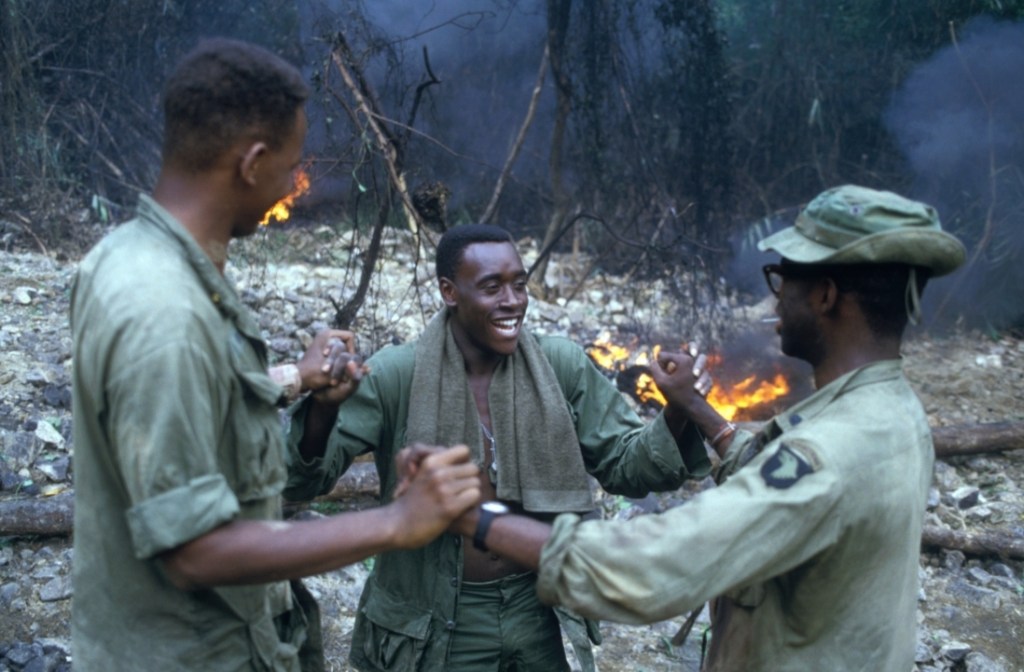
One of the most likely reasons that Hamburger Hill isn’t as readily cited as much as it’s for famous peers is that unlike the works of Coppola, Kubrick and Stone, Irvin isn’t interested in making the Vietnam war out to anything more than it already was – a life swallowing black hole. While Apocalypse Now turned the jungles of Cambodia into a surrealistic nightmare, Platoon placed metaphorical angels and demons on the shoulders of its lead and Full Metal Jacket got down to the business of erasing individualism from its fresh-faced cast, Hamburger Hill proves to be more of a meat and potatoes kind of Vietnam movie, simply focusing on the harrowing day to day life of fighting a confusing war in a sweltering, deadly hellscape.
There’s no trippy metaphors, no sobering allegory, no lingering scenes of G.I.s torturing villagers and surprisingly little moralising as the film – much like the soldiers contained within – simply gets to the task in hand no matter how distasteful and painful it may be. As a result, the tell-don’t-show nature of Irvin’s examination shows the sheer pressure placed on the shoulders of these young fighting men as they struggle to do their duty under increasingly horrific circumstances. Yet, like the classic war movies of old, these men may break, but they never break as the script strives to paint these men as heroes, desperately looking out for one another, rather than burnt out head-cases staring hell in the face.
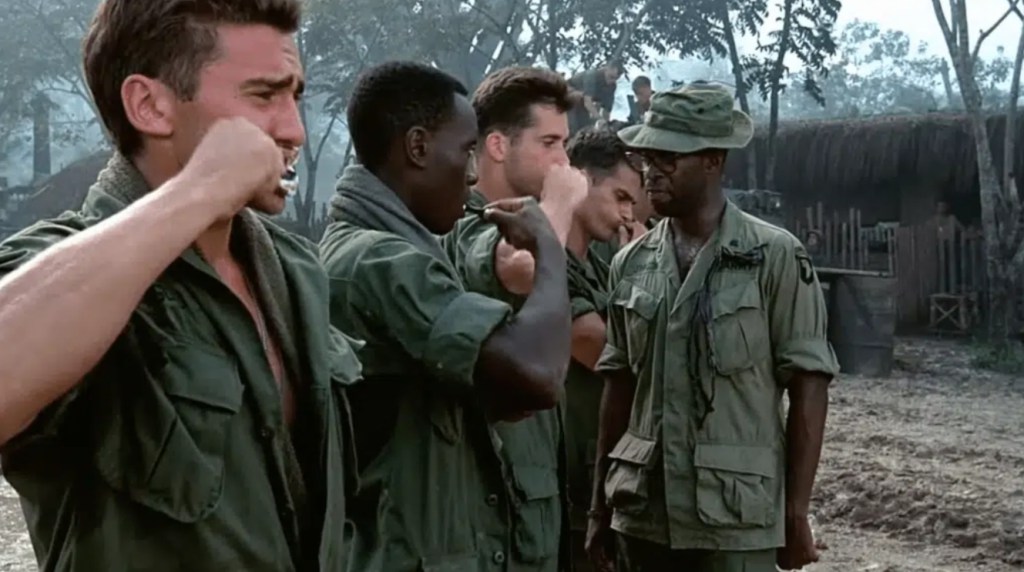
Right from the start, the stress levels are high as the weathered veterans instantly lose their patience the second one of the new recruits displays even the remotest hint of a blasé attitude – watch the highly strung Doc instantly lose his rag when instructing the fresh meat how to properly brush their teeth.
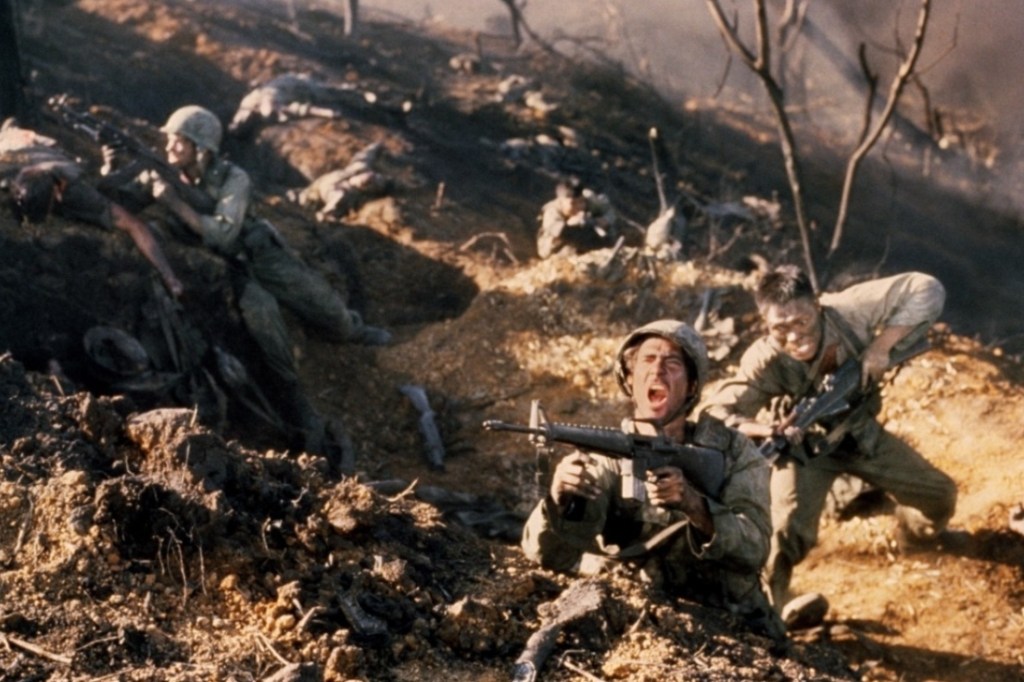
This is the continuing theme the film pushes, that of a group of men desperately and angrily trying to keep each other alive and moving despite brutal loses while similarly displaying the nihilistic world view that comes with the territory as an idealistic grunt is mocked for bothering to wear a flack jacket by being told that “When your time is up, your time is up”. However, Irvin stresses the importance of social issues, not only having his characters give speeches about the hostile welcome awaiting them back home (pretty girls with bags of dogshit to throw), but numerous statements about how the black troops had to sign up because there are no jobs or higher education waiting for them back in the States.
However, despite the usual tropes of the ‘Nam movie being trotted out such as dismissive high command (“You’re getting paid to fight a war, not discuss it.”), occasional bouts of disturbing gore (troops debate the identity of a corpse beheaded during a mortar attack) and a veritble jukebox of 60s classics on the soundtrack, it’s the exactly the straight forward nature of the film that causes it to fade into the foliage in comparison to its peers. The timeline of the ten day assault is sketchy at best, jump-cutting into the middle of of battles to give the impression that this sort of frantic, life-or-death struggle is just a typical day.
Also, it’s a little hard to keep track of who’s who once the mortars start falling and everyone gets caked in mud. A suitably brooding Dylan McDermott and a terrified looking Don Cheadle stand out because they’re familiar faces, but at times you’ll see a mortally wounded man stagger out of the dust and crumple to the ground only for you to miss the drama as you try to work out who the hell it is.
Still, as a forthright, straightforward take on one of history’s most infamous wars, it doggedly does exactly what it says on the tin, even if its old fashioned attempts at classiv heroism and camaraderie are the exact thing that prevents it from standing out.
🌟🌟🌟🌟
 We Have Issues