

Not to be confused with the Michael Myers-less, third installment of the Halloween franchise or the 2011, medieval, Nicolas Cage clunker, Season Of The Witch is a slice of early George Romero that saw the godfather of the modern zombie continue to delve into the sort of social concerns that typified his career. However, thanks to the fact that its gone under more names than a Monte Carlo con artist (Romero shot it under the title of Jack’s Wife, only to have it recut and released as softcore porn flick Hungry Wives before getting its new moniker after the success of Dawn Of The Dead), Season Of The Witch is seen as something of a lesser entry in Romero’s canon, eclipsed by the more overtly horror titles that have gone on to be lauded classics.
However, this film, which big George himself described as a “feminist film” is something of a intriguing find that is as flawed as it is incredibly ahead of its time as it explores the shifting role of women in society rather than taking a typical “witches be crazy” stance.

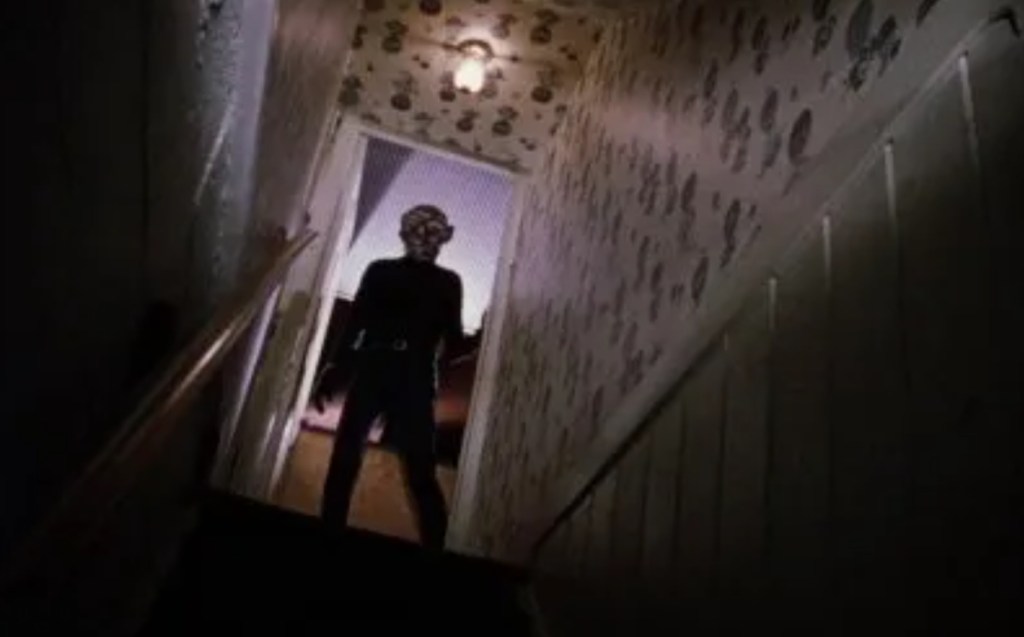
Joan Mitchell is a 39 year-old housewife to distant businessman Jack, who is starting to find her existence in Pittsburgh becoming far too ordinary to bear. With her 19 year-old daughter a college student, all Joan has to keep her sane is to obsess about her looks, endure endless lunches with her gossiping friends and alternate between hosting and visiting house parties – but the inner tension she feels are making themselves known in the form of stress dreams that either see her being controlled by her husband like a dog or chased round her house by a masked assailant.
However, when news of a woman who practises actual witchcraft moves to the neighbourhood, Joan is intrigued about how much the concept unnerves her, but goes for a Tarot reading anyway with her friend Shirley. From here, this seems to stoke a fire within Joan which escalates after a meeting with student teacher Gregg that starts with a heated debate, continues with humiliating a drunk Shirley with a fake hit of marijuana and ends with Joan getting caught masterbating by her daughter who subsequently runs away from home.
From there, her previously ordered live gradually begins to crack as she is slapped by a angered Jack and starts buying paraphernalia after reading up on witchcraft which ends up with her having an affair with the smugly casual Gregg. However, as her belief in witchcraft strengthens, she’s still plagued by nightmares of being attacked by a masked stranger who breaks into her home.
Is the powerlessness of her existence causing Joan to lose her mind, or is her transition into a whole new world priming her to sever her old ties in a most brutal fashion?

Much like Romero’s later film, Martin – a vampire movie that didn’t actually have any vampires in it – Season Of The Witch takes a similarly “horror-free” glance at the world of witchcraft, firmly planting emotional and dramatic fears ahead of anything approaching spells, curses or bubbling cauldrons. This is a movie where any traditional horror is purely coincidental and the real fear here comes from societal pressures and the grind of a life half lived once you realise the years are ticking away.
While you can’t fault Romero’s desire to try something new, the fact that his producers initially tried to turn it into a porno obviously seriously scuppered his attempt to make a feminist statement, but while time has ultimately been kind to some aspects of the film, others have dated noticably.
Very obviously a product of the early 70s, Romero tackles the shift in America’s attitudes toward sex and the role of women in the world with roll necks and beads and beehive hairdos in abundance and its fascinating to watch a movie trying to tackle such social upheaval while it was all happening. The character of Joan is something of an every woman as she struggles to fill the hours of the day as her business minded husband works all hours and the way her empty existence finds an outlet in her trippy nightmares are part of the movie’s more accomplished scenes. The opening sequence that sees Joan’s subconscious process her malaise by casting her as her husband treating her like a dog being stored in some kennels is bang on the money and the subsequent instances of her being attacked by a man in a demonic mask gets across the feeling of stress dreams fairly well.

However, while it seems that Romero was actively trying to step away from the more full-on horror stuff after Night Of The Living Dead (his second movie, There’s Always Vanilla, was about a woman having an affair with a younger man), his experimental style that saw overlapping dialogue literally had the characters describe the movie’s points in casual discussions ends up being overly talking and caused a the pace of the film to drag at points. I understand that’s sometimes deliberate in a movie literally about boredom, but what also thwarts the movie’s ambitions is that the performances are wildly uneven and range from competent to theatre school with some portrayals of the middle-aged women involved feeling about as subtle as Linda Belcher from Bob’s Burgers – shit, they even look like her.
However, possibly the biggest issue is that the script seems to be equating feminism with witchcraft – a shadowy, female cult that causes women to wilfully abandon their traditional, all-American values and while I suspect that Romero is making the connection with wry sarcasm, it doesn’t quite come across like it should. Possibly the reason for this can be found in the thematically similar Martin that proved that Romero was a filmmaker who always felt more at home with tragedy than he was with empowerment. When gearing toward an ending devoid of hope that over-achieves on profound nihilism such as the sudden denouement of Martin, the failure of government in The Crazies or shock ending of Night Of The Living Dead, Romero excels, yet the ending of Season Of The Witch seems more muddled.
Freed from her claustrophobic marriage by the shooting her husband in a way that’s deliberately left unclear (deliberate or accident, Romero ain’t saying), Joan grasps her new life with both hands and joins a coven who will seemingly value her womanhood in the way she deserves. However, Romero muddies the waters by having her induction seem vaguely like her first dream and even includes a cruel coda that sees her still being referred to at a party as “Jack’s Wife” despite gaining her independence.
Simultaneously ahead of it’s time while still being noticably dated, it’s a fascinating glimpse at the early years of one of horror’s most interesting voices – but its overly talky tone and amateurish performances frequently diffuse Romero’s efforts. One chiefly for the director’s completists but Season Of The Witch casts an uneven spell.
🌟🌟🌟
 We Have Issues