
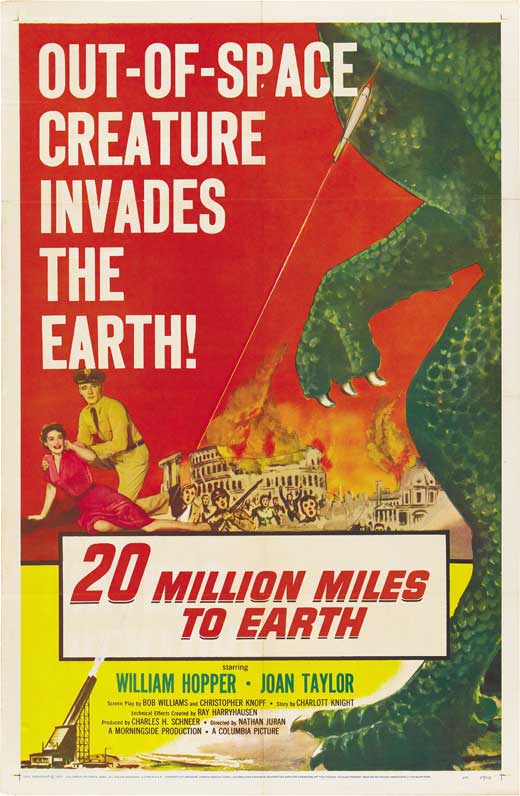
There’s something about a Ray Harryhausen film that sets it apart from other movies of its ilk. In fact, having a creation from the special effect genius stalk through a sci-fi or fantasy flick usually manages to elevate the material the same way a superlative fight sequence would make a lesser Jackie Chan effort essential viewing. Sure, some of those Sinbad movies, or those weirdly sexy dinosaur movies may have been pulpy as hell, but when one of Harryhausen’s creatures would take centre stage, a completely different energy would possess the film. In fact, Harryhausen’s legendary contributions would be so impressive, they would often eclipse everyone else in the film. Can you honestly name the director of any of the Sinbad films, or Earth Vs. The Flying Saucers without checking? Probably not, but you sure as hell know Harryhausen was involved.
It’s with this in mind that we approach 20 Million Miles To Earth, a sci-fi potboiler that may be the greatest, unsung showcase for the visual effects genius that exists.
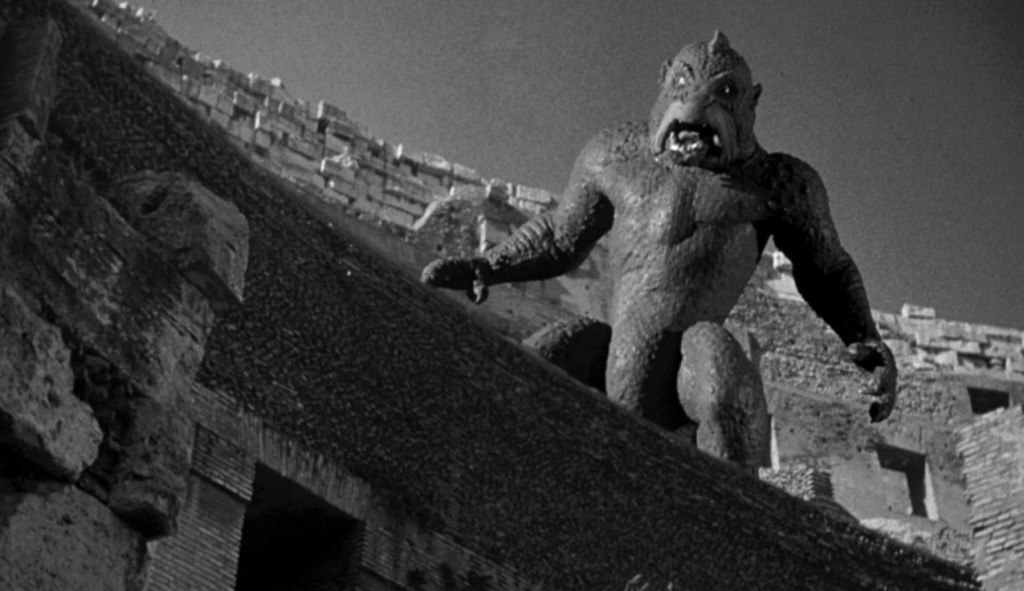
The picturesque blues of the Mediterranean sea are disrupted when the U.S. spaceship, XY-21 rockets out of the sky and crashes off the coast of Sicily after its successful mission to Venus. As the damaged spacecraft rapidly sinks beneath the waves, a couple of fishermen manage to save the last two survivors on board, one of whom is pilot, Colonal Bob Calder.
While the other crew mate succumbs to a fatal space disease that no one seems to be particularly worried about, Calder is far more concerned about a sealed cylinder that has gone missing in the crash as it contains something vitally important.
Cut to the enterprising young urchin, Pepe, who has not only discovered said cylinder, but has opened it and sold the gooey contents to holidaying zoologist, Dr. Leonardo and his medical student granddaughter, Marisa. However, within the gelatinous mass is born a small, strange, reptilian creature that has the unnerving habit of tripling its size in less than a day, and after it eventually grows to human size, the usual hallmarks of a good, old fashioned sci-fi monster rampage seem just around the corner.
However, while a snarling, Venusian lizard creature running around Sicily is understandably cause for alarm, Colonel Caulder is adamant that it must be captured alive as its biology could prove invaluable to future missions to Venus and after nailing the put-upon alien with an electrified net, it seems that the creature has finally been nullified.
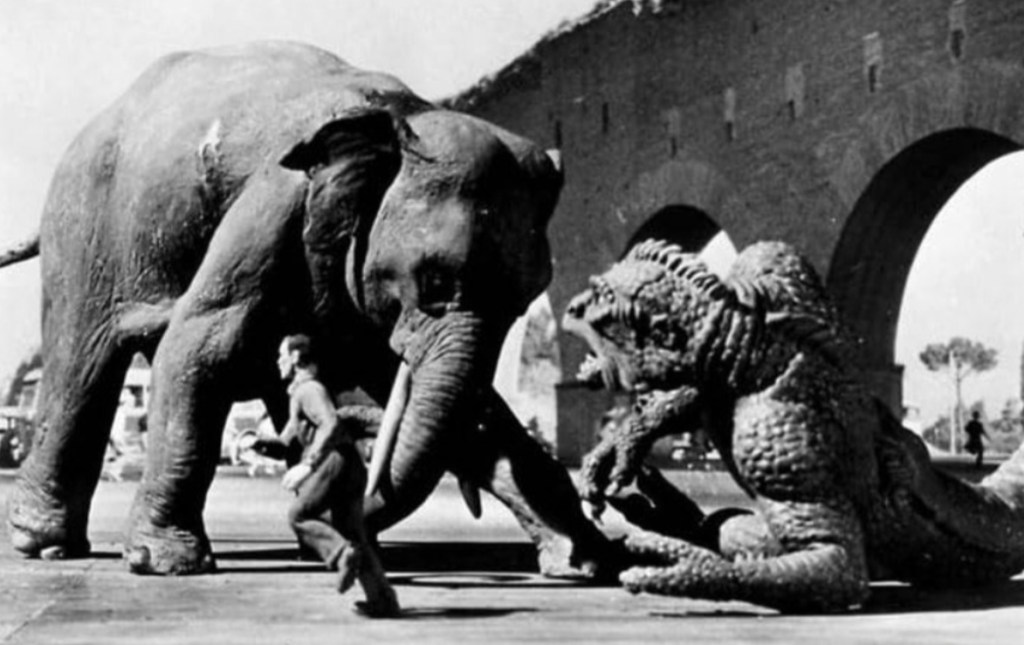
Of course, it obviously seems that no one involved has seen King Kong, and as there’s always one last rampage in the final reel, everyone is horribly unprepared when the creature busts out in order to take in the sights of downtown Rome and fight the odd elephant to the death…
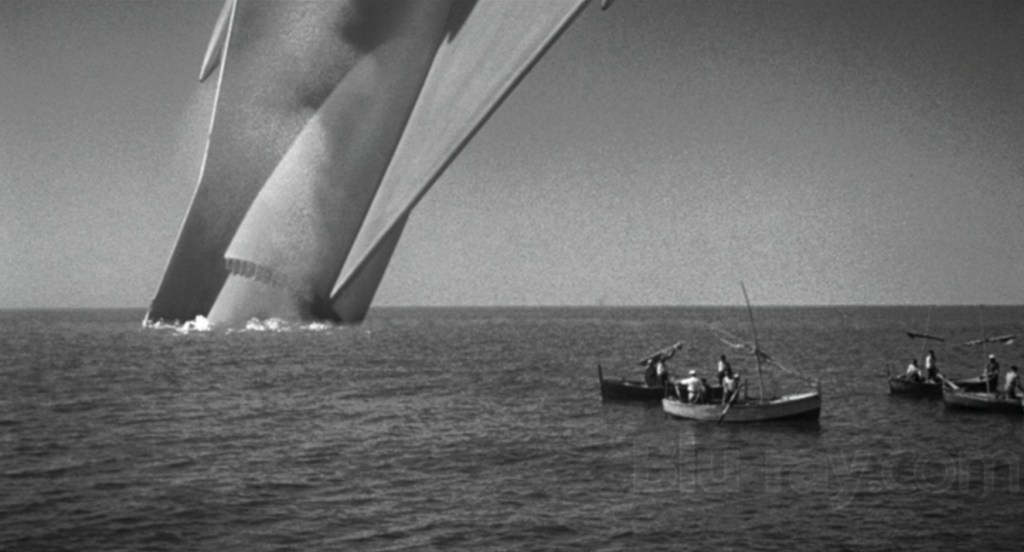
During my synopsis, I name dropped the timeless fantasy adventure movie, King Kong, which proves to be incredibly relevant. After all, it was the pioneering work of Willis O’Brien on the 1933 epic that inspired Harryhausen to get into the visuals business in the first place. This proves to be especially fortuitous when you realise that 20 Million Miles To Earth is essentially the closest Harryhausen got to fully emulating what O’Brien accomplish decades before. Simply put, the Ymir (the official name for the Venusian marauders) stands head and growing shoulders with the King of Skull Island as inarguably one of the greatest performances that stop motion effects have ever produced and it’s something as a shame that the creature isn’t more widely lauded. Yes, some of Harryhausen’s other creations may be more flashy – those ferocious skeletons who tried to stab up Jason and the Argonauts, or the legitimately terrifying Medusa from Clash Of The Titans obviously are incredibly memorable – but the Ymir ends up being the perfect example of how adept his creator is at creating a living, breathing character.
From having the full-sized Ymir rub his little eyes when someone flicks a light on, to having the far larger version angrily defend itself against his pursuers, Harryhausen manages to allow us have a tremendous amount of empathy for the leapin’ lizard, even when it’s nailing screaming soldiers with big lumps of masonry or throwing hands with a bull elephant. There technically may have been more memorable sci-fi antagonists during the 50s – the Fly, the Mu-tant and that weird squid thing in the bubble from Invaders From Mars all spring to mind – but none even show a fraction of the versatility of the Ymir. While his peers would lurk in the shadows, usually portrayed by lumbering stuntmen in rubbery costumes, Harryhausen’s Ymir just goes big in many spectacular ways. That fight between the Ymir and an adult elephant that I keep alluding to is utterly insane, primarily because on of the combatants isn’t a fantastical monster and has to convincingly as an actual animal and elsewhere, the climax goes even bigger when the Ymir takes his battle with troops into the actual Colosseum where the intrepid alien makes his final stand.

Taking into account that the film manages to pull all this off back in 1957, it’s genuinely impressive blockbuster stuff, but if I’m being particularly picky, it tends to be the thrust of the entire movie – after all, it’s no accident that I’ve made it this far through my review without dedicating a single sentence to the actors or director. However, if you can manage to look past the Ymir, 20 Million Miles To Earth actually proves to be enjoyably atypical to the usual, 1950s sci-fi fare. For a start, the location of Sicily is a hugely refreshing change from the usual locale of small town USA and even though the black and white cinematography hardly does the majestic blues of the Mediterranean justice, the movie make great use of its surroundings, especially when the Ymir starts venting its frustrations on some of the local landmarks.
The cast is most made up the usual 50s sci-fi stereotypes (the all-American pilot flirts with the gutsy American nurse inbetween trying to sort this monsterous mess out), and if it worked for countless movies before it, there’s no reason to suggest it doesn’t work now – but some of the supporting cast’s attempts at Italian are so broad, it makes the stereotypical chef from The Simpsons seem as authentic as a Fellini film.
To round up, when it comes to 20 Million Miles To Earth, it’s a case of come for the Ymir, stay for the carnage, but director Nathan Juran (who dallied further with Harryhausen thanks to The 7th Voyage Of Sinbad) manages to sustain a solid world for Harryhausen’s superlative, yet oddly underrated creation to run around in.
So Ymir and yet so far, I guess…
🌟🌟🌟🌟
 We Have Issues