
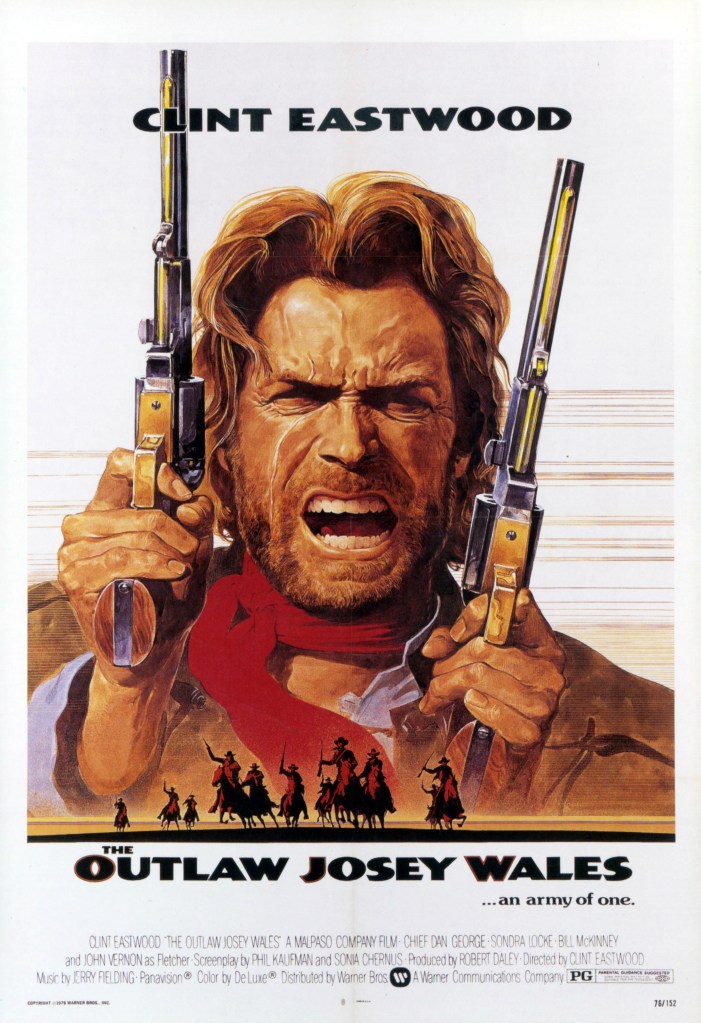
Often, people say that life is not so much about the destination than it is about the journey and it’s a motto that turns out to be doubly true of The Outlaw Josey Wales, a monumentally epic western capably shot – both with cameras and guns – by legendary cinematic immortal, Clint Eastwood.
However, while his previous effort of filming a Western (the similarly impressive, but majestically nihilistic High Plains Drifter) riffed heavily at the Spaghetti Westerns that cemented his career, The Outlaw Josey Wales was a far more mature and sprawling affair that took a wholly different view of the notion of a vengeful gunslinger. Eastwood’s previous pistol pointer saw his bitter lead ride into a corrupt town and proceed to turn it – literally – into Hell until his thirst for vengeance is sated, however, Wales proves to be a completely different animal altogether. This is a man ultimately searching for peace, and he aims to get it with as many pulls of a trigger as it takes.
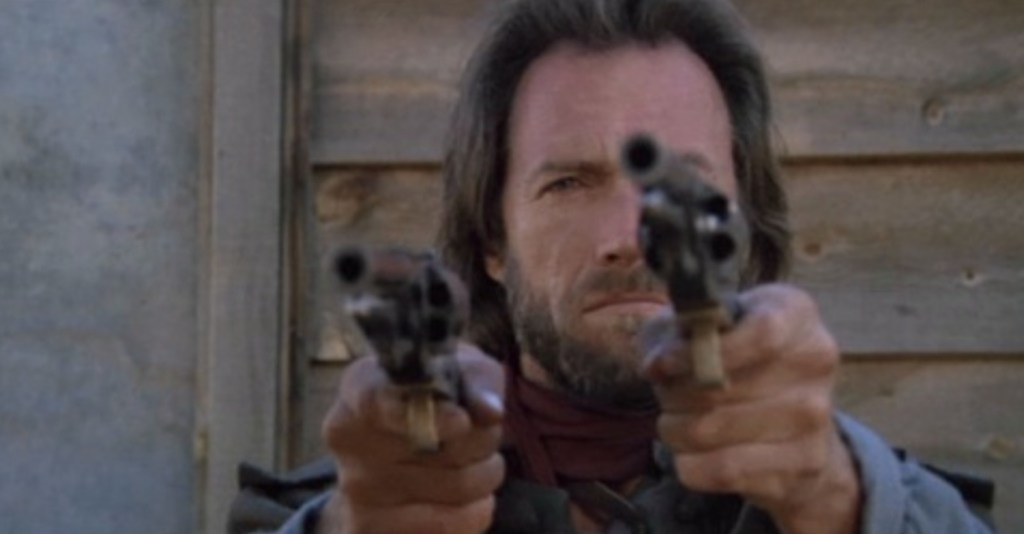
Josey Wales is a simple, Missouri farmer whose life is turning every which way when his wife and son are slaughtered by a group of pro-union militants known as the Redlegs who are led by the sadistic Captain Terrill. Burying his family, Wales pulls out his irons, re-acquaints himself with firing the things in a straight line and then joins a group of pro-Confederate bushwhackers under the command of Captain Fletcher, hoping that attacking union sympathizers and raiding army units will give him a measure of payback for his immense loss.
However, wars end and after the Confederate army surrenders to the North, Fletcher figures that it’s time for his men to do the same, but during the reading of an oath to the United States, the whole thing is revealed to be a trap and everyone is mown down by machine gun fire except for Wales and the young, but wounded Jaime.
Now on the run due to the amount of union soldiers he shot down during his escape (approximation: a lot), Wales and Jamie manage to evade their pursuers, but while they plan to head toward Texas, the younger of the two eventually succumbs to his wounds. However, as our dogged outlaw manages to stay one step ahead of Fletcher and Terrill, he manages to reluctantly pick up a string of unlikely strays who loyally stay with him during his dangerous journey. First there’s Lone Watie, an eccentric old Cherokee whose tracking skills may not be all he’s hyped them up to be; Little Moonlight, a young, ostracized Navajo woman and, after saving them from a band of marauding Comancheros, the curmudgeonly Sarah Turner and her wide-eyed granddaughter Laura Lee.
But upon finding an abandoned ranch for he and his adopted “family” to finally settle down in, there’s still two things stopping Josey Wales from finally resting – firstly, Fletcher, Terrill and the guilty Redlegs are still out there looking for him and secondly, the notion of putting another family in danger – even a found one – torments him nightly.
But then, as he tells a hapless bounty hunter at one point, dyin’ ain’t much of a livin’.

Eastwood directed more stylish Westerns during his career and he certainly directed more urgent ones, but there’s something quietly noble about The Outlaw Josey Wales that makes it a serious contender to be the best cowboy movie the grizzled old gunslinger ever made. Remember when I said earlier that the journey’s the thing? Well, Eastwood doesn’t waste time getting to it as he has Wales’ family wiped off the face of the earth before we even get a chance to see their faces, but while this seems especially callous – particularly when other films usually show at least one scene of the hero frolicking with his kin before disaster hits – Eastwood sells the grief well, even having that trademark curled lip quiver into a full blown crying session.
With this out of the way, Wakes is clear to pack himself some weighty looking Colt Walker 1847s, armour plate those emotions and head out with death on his mind. But once again, the movie breezes past all this during the credits sequence in order to provide its lead as something of a blank slate, primed and ready for the adventure that’s due to unfold thanks to his decision to not surrender to the union.
Eastwood has probably played more monosyllabic, quick on the draw, enigmas more than anyone, but while most of his movies play up to that persona, Josey Wales is intriguingly different. Sure he ends up protecting the weak thanks to his hidden, but thoroughly decent morals, but where other movies have him riding off into wilderness once the bad guys have been pumped full of lead and the innocents are safe, this one does everything it can to keep him from riding off with the comforting power of the found family.
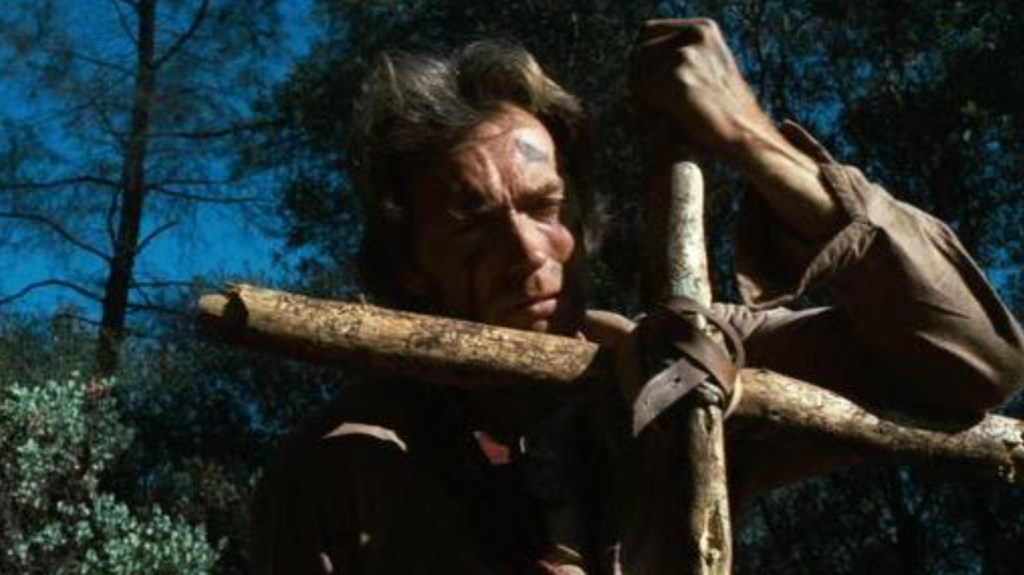
Gradually surrounding a mean, tough loner with a gaggle of eccentrics proves to be Josey Wales’ masterstroke as it forces its lethal title character to consistently give a shit when all he really wants to do is cut bait. Thankfully keeping comedy relief to a minimum and making his motley entourage a measured balance between hopeless and strangely defiant, Chief Dan George steals scenes as the somewhat spacey Lone Watie and Paula Trueman’s razor-tongued Grandma Sarah treads a fine line when it comes to humourous intolerance. On the flip side, the villains would be a little thin if it wasn’t for the presence of John Vernon, but one of the finest voices in Hollywood give the duplicitous Fletcher the layers he needs to be memorable.
Unsurprisingly though, it’s Eastwood who reigns supreme, taking his usually array of tough-guy tics to the next level. The dry as bone one liners are honed to an edge so fine, his utterances could shave a yak in around fifteen minutes. “Are you gonna pull those pistols, or whistle dixie?” he rasps, as a quarter of union boys goggle at him dumbfounded, and he usually punctuates every world weary line with a strategic glob if chewing tobacco that, more often than not, end up splattering on the foreheads of the recently slain. However, lining up with Eastwood’s insistence that The Outlaw Josey Wales is an anti war film, it’s his treatment of his heroes dealing with the Comanche tribes that threaten his new home that fully drives it home. Using words, genuine humanity and promises that he has no intention of breaking, he brokers a truse with the fearsome warriors when other movies would of used violence or threats.
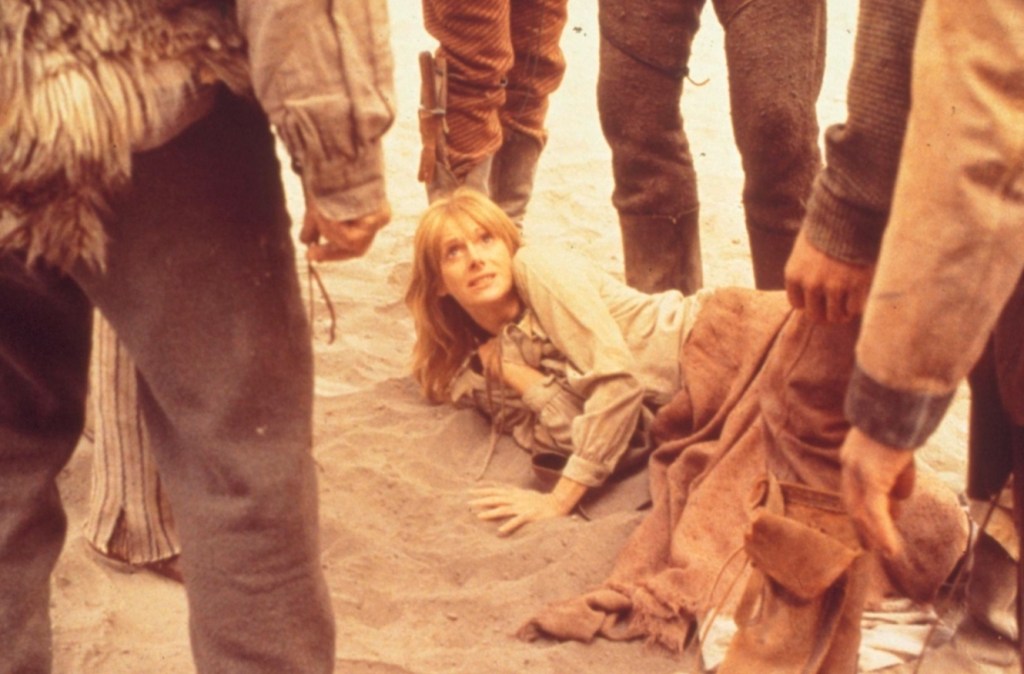
A noticeable attempt to bring the traditional western of age, Eastwood keeps his epic journey heavy with restrained emotion but light on its feet with hope as his movie barters for peace while still blowing away the bad guys to satisfying effect.
🌟🌟🌟🌟🌟
 We Have Issues