
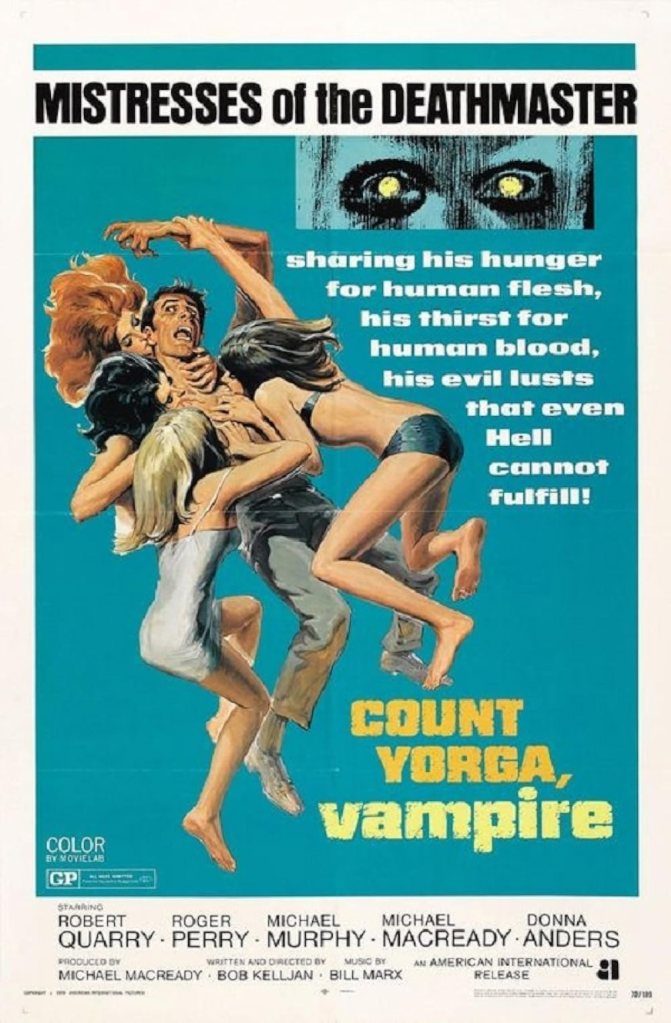
Thanks to the iconic efforts of both Universal Studios and Hammer, the domain of the Vampire had comfortably been established since the 30s as lush gothic castles located somewhere in Eastern Europe somewhere around the late 19th century. Creaky doors and cobwebs were abound as the fanged creatures were usually cast as urbane noblemen with palpable sexual magnetism who transformed into snarling predators when their thirst for blood grew too strong.
However, things were changing and as the world hurtled into more sophisticated times, movies such as George A. Romero’s Night Of The Living Dead was adding a stark, vicious streak to the campier aspects of horror cinema.
It was only a matter of time before bloodsuckers followed suit, and in 1970, Count Yorga arrived on cinema screens with his fangs bared and his cape spread. “But who the fuck is Count Yorga?” I hear you ask; well, for a start, he’s a Vampire (check the title for proof), but more importantly, he’s the little remembered stepping stone that helped cinematic bloodsuckers shift into a brave new world.
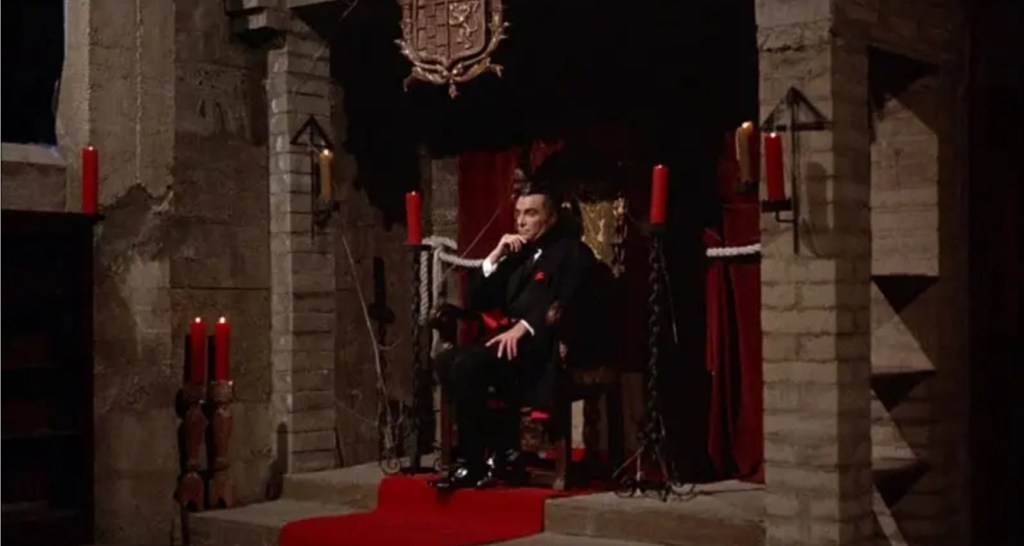
We join a bunch of hipsters as they attend a séance being held by the mysterious Count Yorga who is attempting to contact the spirit of the recently deceased mother of one of their number, Donna. While the rest of the group treat the evening with varying degrees of respect, the Bulgarian mystic forges on and soon hits terrible paydirt when, after seemingly receiving a mortifying vision, Donna freaks out and can only be calmed by the Count’s talent for hypnosis.
With the evening well and truly over and Donna’s boyfriend, Michael tensing to his frazzled girl, friends Paul and Erica offer to drive Yorga back to his remote, LA mansion – but upon trying to leave, the two first find that their Van is stuck in some mysteriously appearing mud and then are attacked by a fanged, super strong assailant. The next day after awaking from their attack with suspiciously hazy memories of the event, both Paul, Michael and their mutual friend, Dr. Jim Hayes are shocked to find that Erica is suffering from severe blood loss and a couple of tell-tale puncture wounds in her neck. If that wasn’t enough, the fact that Erica resorts to suddenly eating a cat to sate her increasing need for the red stuff is enough to convince Hayes that Yorga is a card carrying, bonafide Vampire who has wicked designs on the females of the group.
Michael is obviously resistant to the idea – but after Paul and Erica go missing, the remaining characters go to Yorga’s mansion to confront the Count and uncover his secret once and for all. However, the Count, with a sneaky guile honed over his abnormally long existence, seems to have all the bases covered as a futile showdown looms like the rising moon..
Just because, Count Yorga, Vampire may not be the best, scariest, or even most polished of horror enterprises, that doesn’t mean that this near-forgotten shocker didn’t have enough oomph to make an impact on the horror landscape in general. After all, Hammer bringing their Dracula movies into a modern day setting with Dracula 1972 A.D. was a decision made purely by the studio casting a hungry eye on Yorga’s box office and the whole “classic vampire tale in modern America” thing was handled with aplomb in the 80s with Fright Night and The Lost Boys. Amusingly, Yorga was originally set to be a soft core porno called The Loves Of Count Iorga until the filmmakers managed to snare Robert Quarry in the title role who urged them to keep the sucking to just blood and keep the flick as a straight horror project.
The result is hardly a horror classic in the realms of Night Of The Living Dead of The Texas Chain Saw Massarce, but it certainly has that scrappy, DIY sensibility that typifies those previous entries, but while the film stumbles with such things as a stable plot or measured performances, seeing the conflicting images of a classic vampire story plonked in a 70s, Los Angeles setting proves to be sufficiently strange enough to be oddly endearing.
The surroundings may have updated, but Quarry’s titular Count still Carrie’s many of the typical traits that the likes of Bela Lugosi, Christopher Lee or even John Carradine had made popular and part of the fun is watching the vein piercing villain mince around the place while kitted out in resplendent attire that doesn’t so much suggest that he’s a lord of darkness as much as he looks looks like an evil Liberace. But as strange as it is to see a man lurking around 70s LA with a chalk-white face and a cape, its scruffy, threadbare production values bizarre work in its favour.
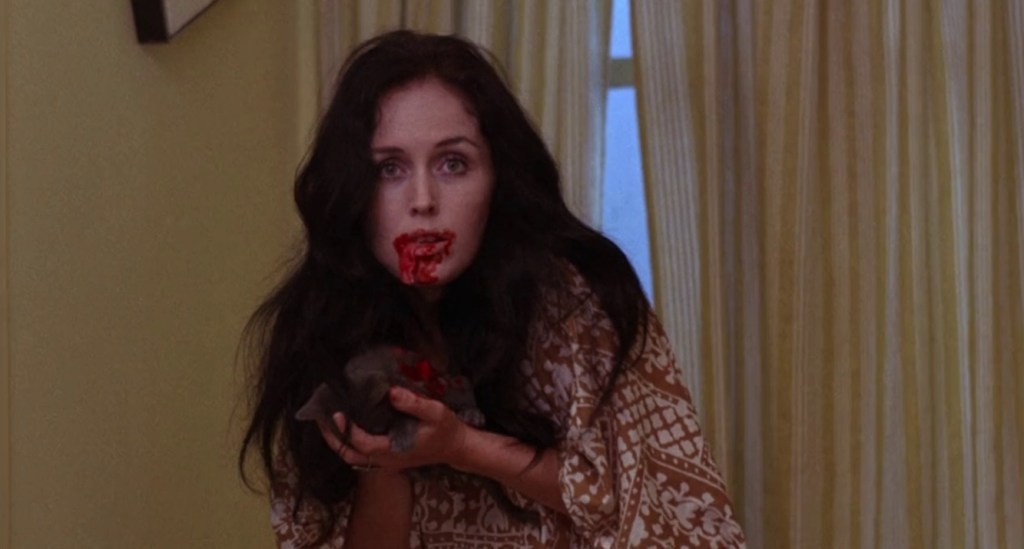
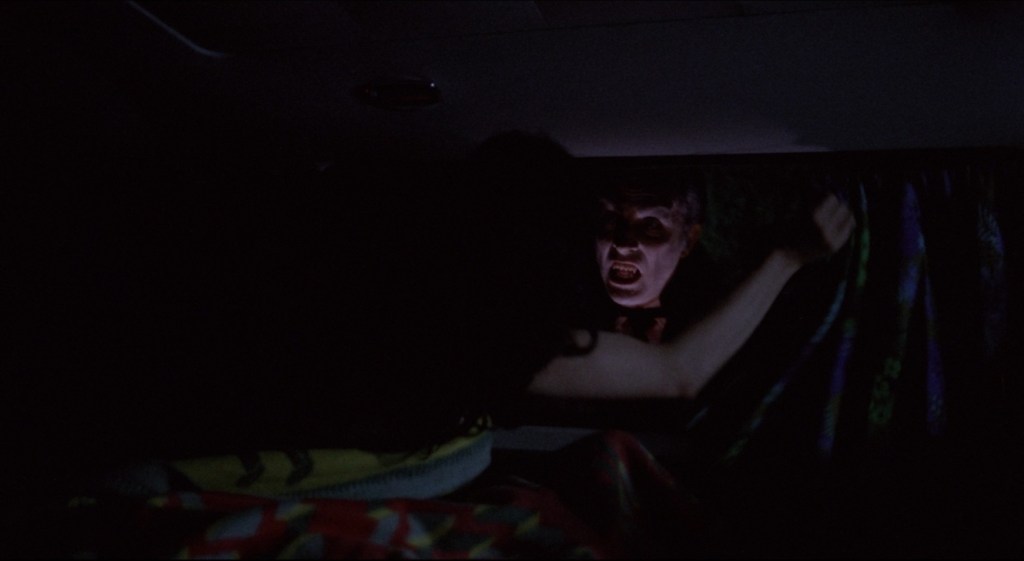
While I would hardly claim that the film has the same effect today as it would have in some flea pit cinema or – in my case – catching randomly at twelve years of age on late night TV, there’s moments that are genuinely freakish. Granted, the sight of a clearly middle-aged man with fangs suddenly lurching into frame with his arms outstretched doesn’t sound like the true face of terror, but the screeching score and the low budget starkness of it all gives it an eerie feel that gets under your skin. A face suddenly leering out of the dark through the windscreen of a van will always make you spill even a little bit of your popcorn and a moment where one of Yorga’s brides to be screeches after unknowingly feasting on a kitty is also successful raising the old heart rate.
Also, either thanks to the workmanlike performances, or the heavy handed script, there’s a real, nihilistic sense that all of our heroes are utterly fucked right from the start which manages to concoct a very real feeling or dread as events continue on an inevitable course to disaster. With no real lead to root for (who exactly is supposed to be the main character here? Michael Macready’s ineffectual boyfriend, or Roger Perry’s amusingly un-sceptical doctor?), you’re just stuck watching this small group of soon-to-be morsels stumble ever closer to their certain doom.
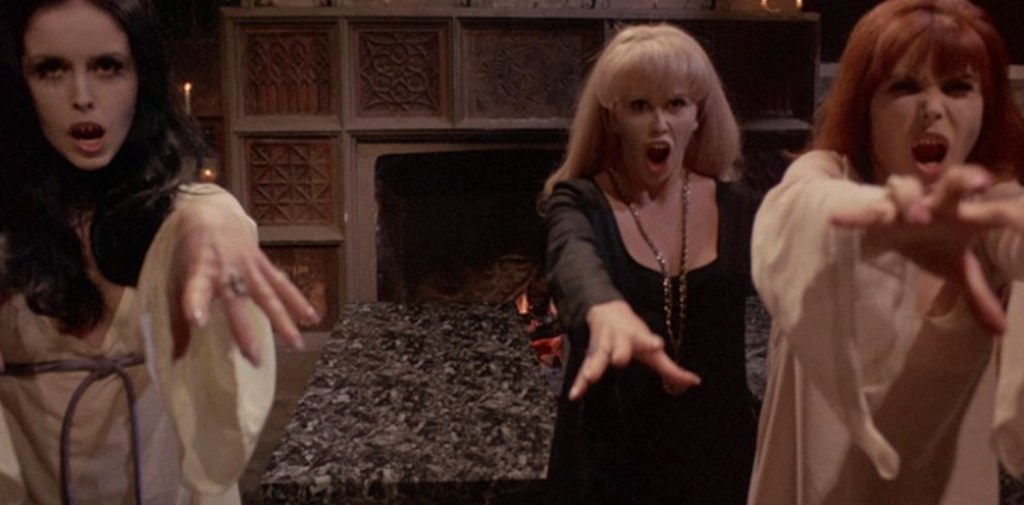
Of course, this doesn’t stop Count Yorga, Vampire from also being incredibly silly for large stretches of its run time and while writer/director Bob Kelijan has a nicely honed mean streak (literally no one is safe during the take-no-prisoners finale), he’s certainly no Romero, Hooper or Craven. Still, while it may often be more Camp-ire than Vampire, Count Yorga proves to be surprisingly effective when delivering an off-beat, creepy little venture that throws conventional vampire rules in the bin.
🌟🌟🌟
 We Have Issues