
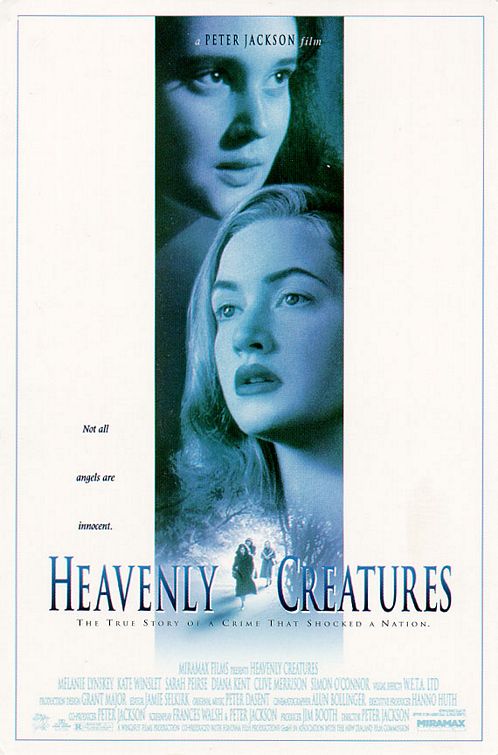
Have you ever taken a step back and fully appreciated how frickin’ insane Peter Jackson’s journey from Bad Taste to Lord Of The Rings truly was?
After the first step of a homemade gore comedy that routinely was ten times funnier than movies a thousand times its size, Jackson doubled down on the odd with the absurdly ambitious R-rated puppet comedy, Meet The Feebles and the slapstick gore epic Braindead. But while we all bust a gut laughing, the proud New Zelander was honing his directorial craft to such a degree that he soon became something of a force to be reckoned with and with the overwhelmingly eccentric, 1996 ghost comedy, The Frighteners under his belt, Jackson finally had the technical know-how to tangle with Tolkien and subsequently change movie history forever. However, the true lynchpin of this rise undoubtedly occured in 1994, when Jackson (mostly) tucked away the blood bags to deliver Heavenly Crearures, a true-crime story from New Zealand that showed the world there was a lot more to the auteur than Pythonesque humor and expansive gore gags.
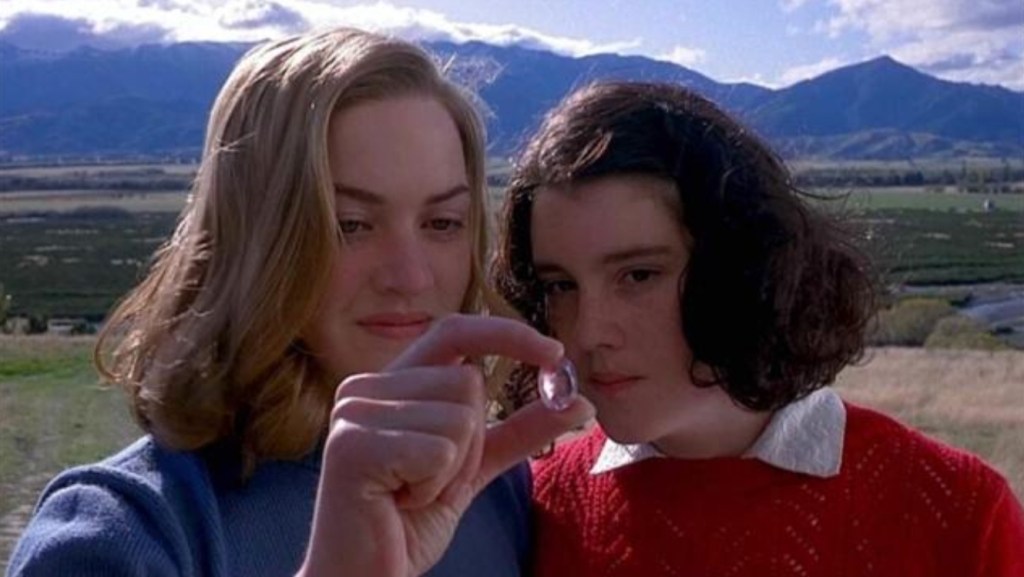
In the New Zealand city of Christchurch in 1952, we meet sullen fourteen year old Pauline who constantly feels alienated by her school and her family thanks to her sizable imagination that leaves her unable to relate to the people around her. In her drab world enters new student Juliet, a thirteen year old English who not only boasts a similar burgeoning imagination, but who wears her excitable nature on her sleeve where Pauline feels like she has to repress hers. The two girls soon bond further over the fact that both were bed bound with sickness early eith their lives with both Pauline and Juliet suffering both from bone disease and lung issues respectively.
As their friendship blossoms, the girls become inseparable and their supersized imaginations merge to create a made-up fantasy realm named Borovnia that proves to be so thought out and complex, it would probably make Game Of Thrones seem like Hawk The Slayer. But soon their respective parents soon start to worry that maybe their friendship is getting a little too close for their comfort. However, any attempts to address their closeness are only met with the girls doubling down on their relationship and retreating even further into their fantasy world.
However, cracks begin to form after a string occurrences mean that the girls have to be separated for a variety of reasons, but the final straw is when Juliet’s parents decide to not only divorce, but send their daughter to South Africa to live with an Aunt to aid with her lung issues. However, the two friends concoct a terrible plan in order to guarantee that they’ll never be separated again.
To be genuinely honest, when I first heard that Jackson was leaving the world of entrail-soaked thigh-slappers behind in favour of a true story based on a couple of wildly delusional schoolgirls, my heart dropped faster than a plummeting elevator car. After all, his voice in the horror/comedy community was probably only second to (or even surpassed) the likes of Sam Raimi and Stuart Gordon thanks to his grisly and giggly triptych of the first three of his films. Still, I guess we’ve all got to grow up sometime and with a heavy sigh leaking from my mouth, I finally settled to down to watch Heavenly Creatures a few years after release and immediately cursed the fact that I was being so foolish. You see, arguably even more so than creating an entire feature length gore comedy out of his mother’s kitchen, or wrestling Tolkien’s legendary tome into movie form, the true tale of two girls utterly lost in their own imaginations may actually be Jacksons most accomplished work to date.
It helps that both he and his partner/co-writer, Fran Walsh, manage to tackle something of an extraordinarily thorny subject with a surprising amount of tenderness (probably more than some critics of the film were comfortable with) as they choose to approach the controversial material from and incredibly intriguing angle. Forgoing the usual deadpan approach of your average true-crime drama, Heavenly Creatures instead decides to put us almost entirely in the mindset of its two main characters as it attempts to show us how exactly a intense friendship snowballed so terribly into a shocking homicide. To do this, Jackson simply is – well, Jackson, and conveys the whirlwind friendship by employing his usual, freewheeling and similarly care-free camerawork to simulate the dizzy highs of meeting someone who just gets you to the very fiber of their being. Also, the choice to visually depict the girls rapid divorce from reality shows that not even a story based in fact could slow the invention the director has.
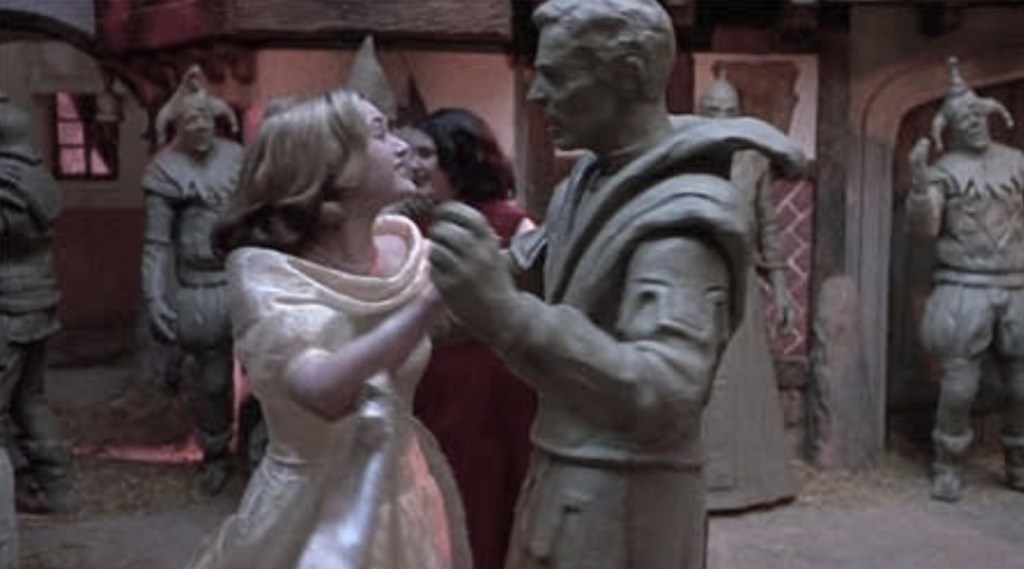
The fantasy kingdom of Borovnia has that usual, medieval look, but its denizens are realised as giant, clay figurines that resemble the models the girls have painstakingly molded during their creative sessions and they both frequently retreat here when the pressures of their lives become too much. Elsewhere, Jackson merges in other things to make these girl’s tastes flesh such as a shared love for tenor Mario Lanza, or a bravura sequence where the girls pretend to be terrorized by Orson Welles after a screening of The Fifth Man.
In response to Jackson’s vibrant style, the twin performances from first timers Melanie Lynskey and Kate Winslet (so weird seeing an “introducing” credit next to Winslet’s name), are utterly outstanding and their exagerated performances match the tone of the piece a completely.
There was some controversy at the time (like their always is in cases such of this) concerning the accuracy and a perceived notion that the movie sometimes seems to be far too sympathetic with the soon-to-be killers, but this is dispelled by the devastating final twenty minutes where the director drops every shred of the fantastical and delivers a legitimately shocking murder. Its here that Jackson’s cards are truly revealed – should we feel sorry for two muddled children who turned to such a heinous crime? Possibly, but that doesn’t mean that what they did wasn’t a truly reprehensible and utterly selfish act.
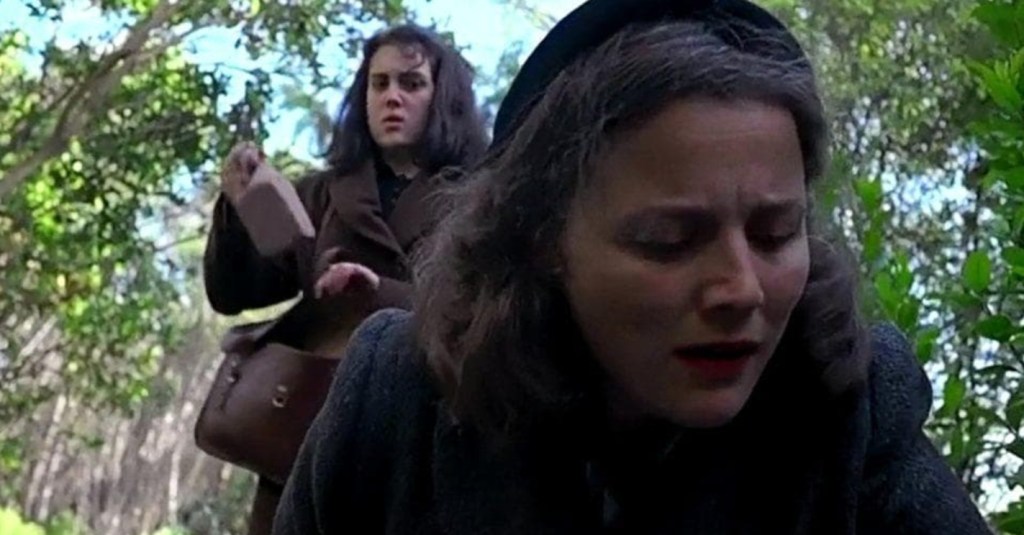
In fact, after the flamboyant fanciful nature of everything leading up to this fateful moment, the actual events the directly lead up to the moment are downright chilling. Juliet tries to convince herself that their victim is rather a sad person, and thus might actually welcome getting their head stoved in with a brick, while Pauline plots with a grim determination and the tension lead up to the inevitable act is nigh on unbearable.

Jackson’s maturing as a filmmaker scores huge, not just because it led to the gates of Mordor itself, but because it showed without a shadow of a doubt, that the director was more than a blood soaked, one-trick pony.
Heavenly.
🌟🌟🌟🌟🌟
 We Have Issues
When I first learned about how Kate made her mark in this film, after seeing her famous work since including Titanic, it opened my mind a great deal to what it must take for any actor or actress to get a huge break in their very early movie careers. The ending to this film is still quite haunting and therefore, sorry to say, not on my re-watch list. I still of course give Kate my respect for it. Thank you for your review.
LikeLiked by 1 person