
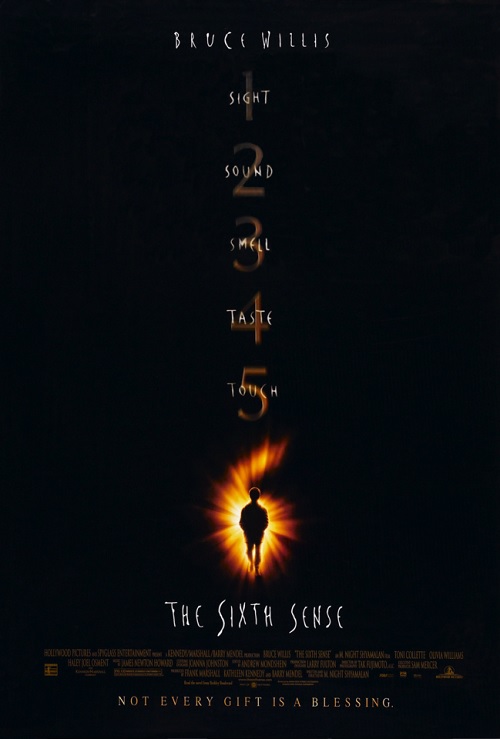

For the longest time, I’ve tried to ignore the beautifully subtle lure of M. Night Shyamalan’s The Sixth Sense for the most ridiculous of reasons – I guessed the twist.
I didn’t even guess the twist, like, twenty minutes into the film; no, I managed to figure out Shyamalan’s devastating parting shot purely by watching the trailer and piecing it all together from a second-long shot that never even made it to the final cut of the film (a moment where Dr. Malcolm Crowe is almost hit by a car who doesn’t see him, in case you were wondering).
Now, it’s important for me for you to know that this isn’t a flex or a boast; I was genuinely pissed that I’d nailed the rug pull weeks before I saw the movie, mainly because I didn’t get to experience the film the way everyone else did and as a result, I’ve begrudgingly acknowledged the film’s many other plus points while never fully meaning it – but today that changes. Today I truly see dead people with open eyes and a clean slate.
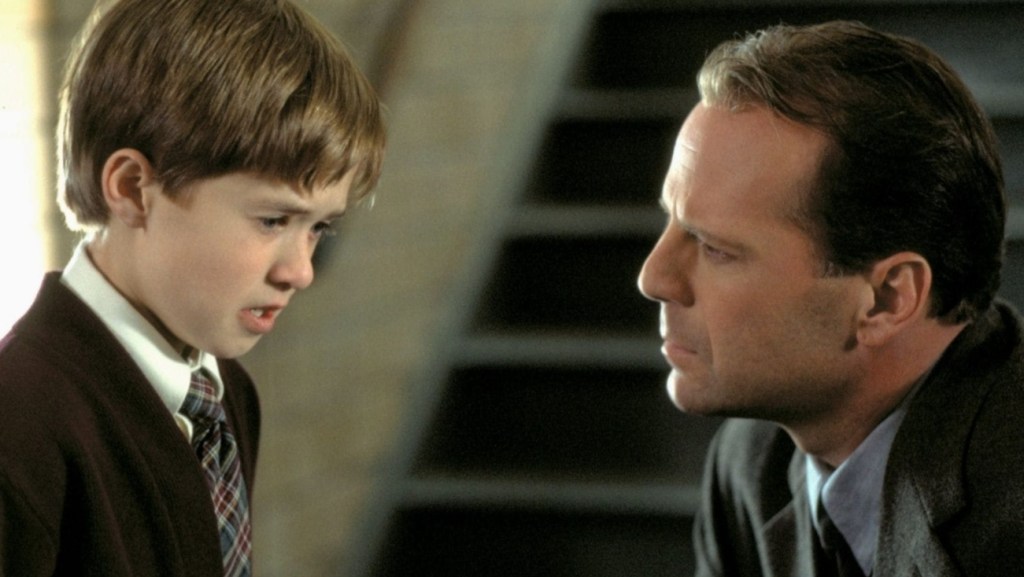
Dr. Malcolm Crowe is a talented child psychologist who is finally getting recognized for his work, but while he celebrates at home with his loving wife, Anna, a former patient named Vincent Grey, who believes Crowe failed him, breaks into their house and shoots Malcolm before turning the gun on himself.
Skipping ahead months later, we meet troubled child Cole Sear; a secretive and withdrawn nine year old who seemingly suffers from acute anxiety despite having a worried mother who adores him and Malcolm, seemingly still practicing after his ordeal, unsurprisingly sees the boy as some sort of salvation after what occurred with Grey. However, Cole isn’t quite like other boys in ways that Malcolm struggles to comprehend – you see Cole is able to see ghosts who constantly surround him in a bewildered, angered state which explains away his nervous nature.
However, while Malcolm struggles to accept this strange revelation, he’s also currently trying to save his rapidly disintegrating marriage that has become so fragile since the shooting, both he and Anne never talk anymore.
However, a breakthrough comes when Malcolm suspects that Grey might have been suffering from the same, supernatural affliction and subsequently hops on board with Cole’s theories with the intention of helping the child not only protect himself from the disturbing encounters, but actually do some good with these literal lost souls.
However, as the two begin to make sense ofthings and slowly recognise that Cole’s ability can be more of a gift than a curse, Malcolm starts to make peace with his own predicament – or at least, the one he thinks he’s in…

When digging into the root of my personal issues with The Sixth Sense, the problem becomes all to clear and it’s one that’s plagued M. Night Shyamalan from the second this, his third movie, first spooled through a cinema projector. Of course I’m referring to that final act twist and the fact that it was so seismic, once people experienced it, it’s all they seemingly wanted from the director ever since for better or worse. Thus other movies followed and Shyamalan wasn’t shy about leaning into it, delivering jaw dropping denouements with every entry whether the movie called for it or not which soon, frustratingly, eclipsed the director’s talent for telling a story and almost sent him tumbling into self-parody.
However, upon returning to the autumnal streets of 1999 Philadelphia, it became impressively apparent that the twist – as shocking as it was – was easily the least of The Sixth Sense’s virtues and that my long overdue reappraisal wasn’t just necessary, but downright vital.
For a start, The Sixth Sense contains some truly stunning performances that’s led by a staggeringly good Haley Joel Osment who, armed with a pair of devastatingly soulful eyes for one so young, easily holds his own with his fellow cast mates. Simply put, this kid genuinely looks like he’s seen some shit, and so you immediately buy everything he’s showing or telling you which helps immensely when Shyamalan is trying to sell you on this glimpse of the supernatural. Similarly magnificent is Toni Collette who takes what could be a one dimensional role of Cole’s long suffering mother (she’s technically a red herring after all; as is everyone who isn’t played by Bruce Willis – but we’ll get to that later), but the actress – whose cinematic parenting skills in horror movies took a similar battering in the likes of Hereditary and the Fright Night remake – makes Lynn Sear a very real, very relatable character and the script does her the honor of making sure that she gets an actual arc as isn’t simply cast aside in the complexities of setting up that ending. In fact, the tearful moment when Cole finally let’s his mother in on hid secret via a message from her mother could possibly be the best bit of drama that Shyamalan has ever been responsible for.
And with that, we come to Bruce Willis – or as I like to call him, The Sixth Sense’s straight man. Subdued, thoughtful, wounded and sporting the most 90s hairpiece ever weaved, Willis builds on the reputation afforded him by Pulp Fiction and Twelve Monkeys to prove that he’s far more than just a smirking action star – although he’s pretty fuckibg good at that too. Utterly convinced this story is about him, Malcolm simply can’t conceive of the fate that has already befallen him and it plays into that reoccurring theme of people unable to face up to their problems that Shyamalan frequently works into his films.
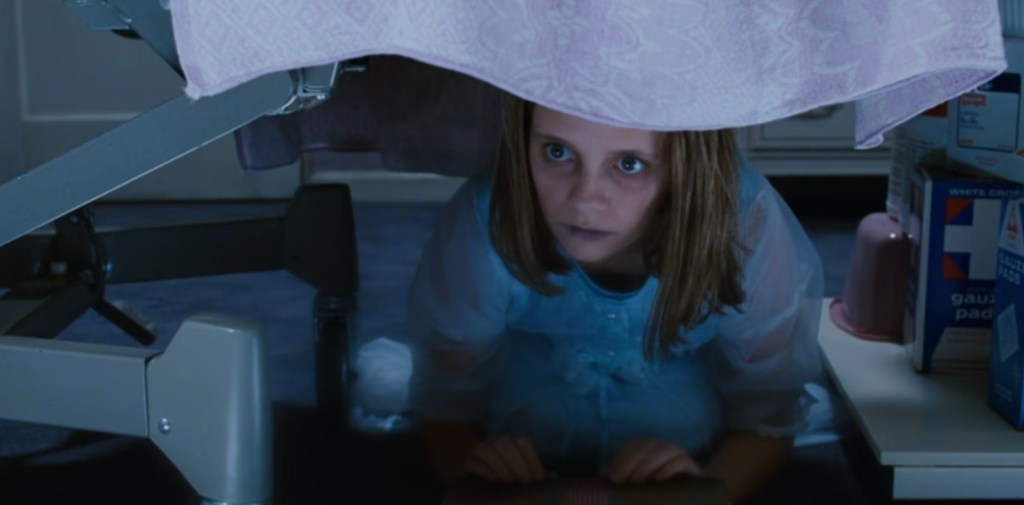
But while Willis’ low-key approach helps sell the film, cementing it is that astoundingly subtle style that the director fast became known for that allows scenes to breathe with long, unbroken cuts and esoteric angles to set the tone perfectly and while the movie isn’t exactly a lean, mean, jump scare machine (thank god), it skillfully succeeds in filling you with dread thanks to the odd, ingenious moment (witness Cole’s fear being given away by the condensation left on a table by his sweaty palms), or starling image (a ghost child turning to reveal he’s missing the back of his head) and the fact that the director’s artistry now seemingly comes second to his twist making abilities is nothing less than a crying shame.
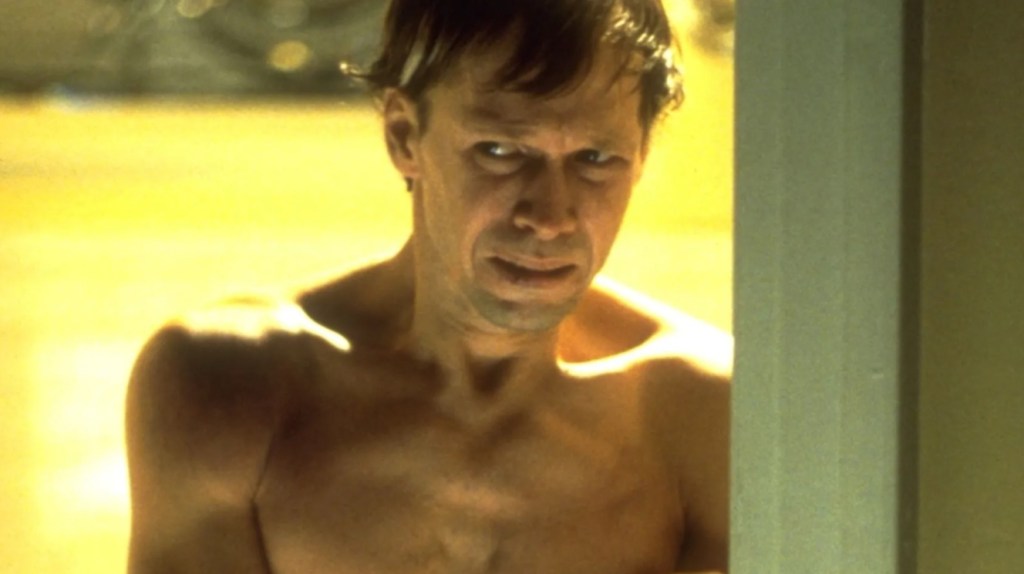
Ah yes… the twist. To give the devil it’s due, it’s a fucking great twist, but like all great twists, it only really works once as the movie will never truly be the same again once you know the secret that Malcolm’s been deader that the DCEU since the moment shot by Donnie Wahlberg’s frazzled Grey. However, I’d argue that the movie is actually better once that twist has lost its power as the dip in sensationalism means that the real meat of the movie is allowed to stand on its own.
At turns warm, chilling, immensely moving and legitimately creepy, any chance to revisit The Sixth Sense is a chance well taken.
I mean, it’s just good sense after all…
🌟🌟🌟🌟🌟
 We Have Issues
The Sixth Sense was one of the most particularly best films to end the previous century on. Thank you for your review.
LikeLiked by 1 person