
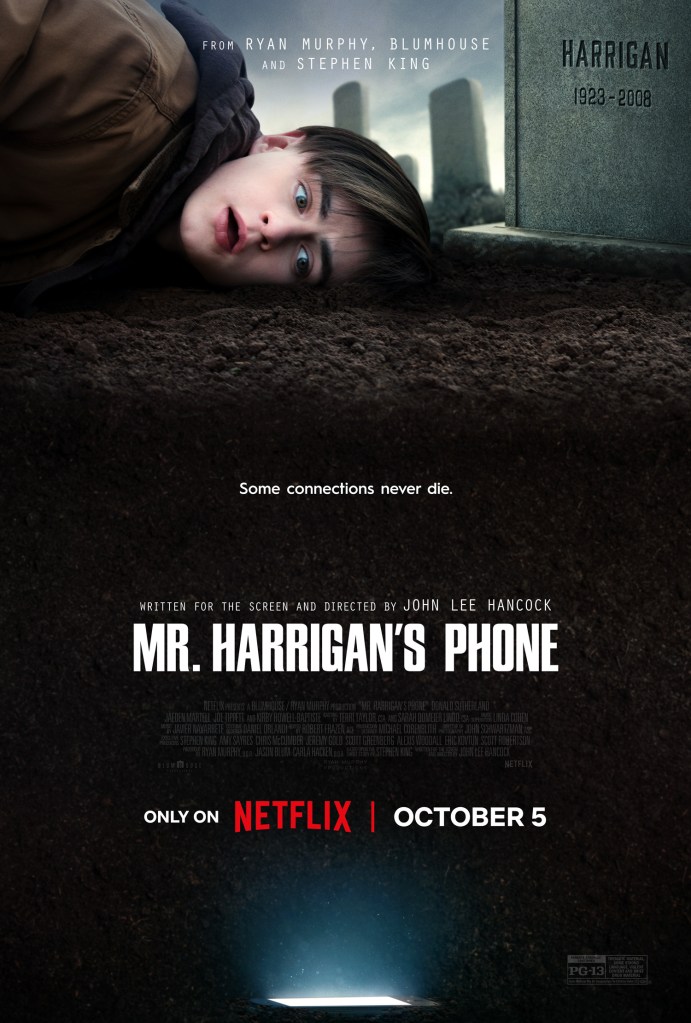
The last time a Stephen King adaption dabbled so blatantly with the notion of the smart phone, we got Cell, a movie about mankind having their consciousness rewritten by a pulse through their devices that turned them into mindless zombies – however the horribly uneven finished project only succeeded getting a bad reception (get it?) from critics and fans alike. However, in 2020, King’s latest collection of short stories, Let It Bleed, contained an altogether different tale concerning life, death and the all consuming lure of the smart phone in the form of Mr. Harrigan’s Phone and it certainly didn’t take long before someone snapped it up for a film version. However, while King is most famous for his stories that tread a more familiar, horror-based path, this story has more in common with the likes of Stand By Me as it primarily concerns itself with a coming of age drama while it spins its supernatural story.
Can this quiet, more introspective story bring the ghostly chills of the likes of The Shining while including the warmth of Rob Reiner’s 80s classic?
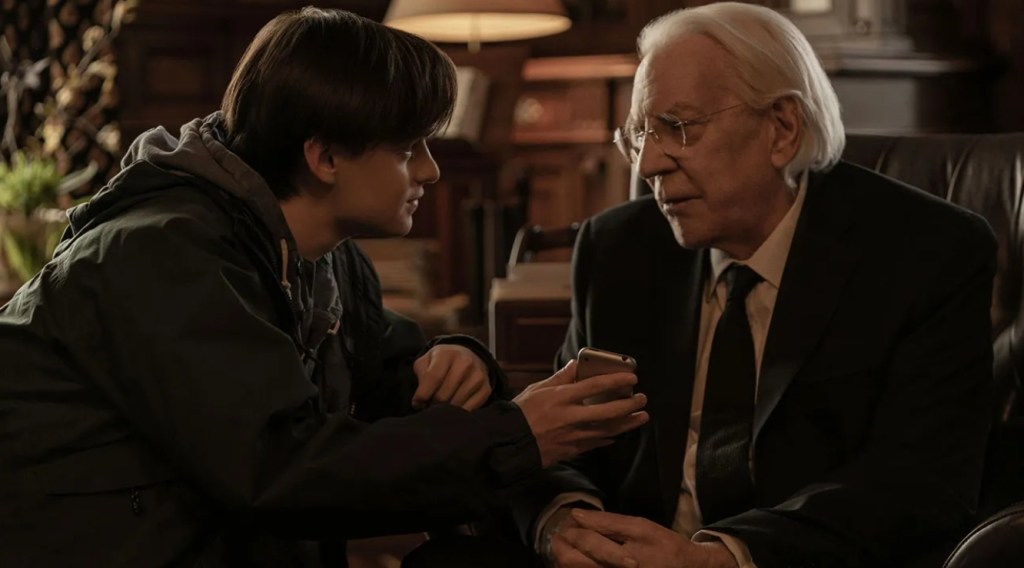
In 2003, young child Craig is in mourning for his dead mother, but he finds a respite from the sadness when he’s hired by the elderly John Harrigan to read books to him three times a week as his eyesight has started to fail. Harrigan, back in his heyday, was something of a formidable businessman and amassed both a sizable fortune and a fearsome reputation before he eventually retired and moved to Maine in order to obtain the seclusion from city life he so desired.
Their reading sessions go well (although I personally wouldn’t be comfortable with my pre-teen son reading Lady Chatterly’s Lover to an old man) and after five years and many books later, the two have built up quite a bond and Craig even gets presents four times a year from the old man, even if the millionaire only gifts him a single, mere scratch card for each occasion and before you know Craig is soon starting high school. However while there’s ups – he’s supported by kindly teacher, Ms. Hart – and downs – he’s preyed upon by sadistic bully Kenny Yankovich – it’s all made worth it when his father resents and buys him an iPhone.
However one day, one of those scratch cards Harrigan gifts him pays out to the sum of $3000, but after he’s used the money for what he wants, he uses the rest to buy a phone for Mr. Harrigan and while the old geezer is initially resistant, Craig repays the wisdom that his elderly friend has given him by teaching him how to connect with modern technology.
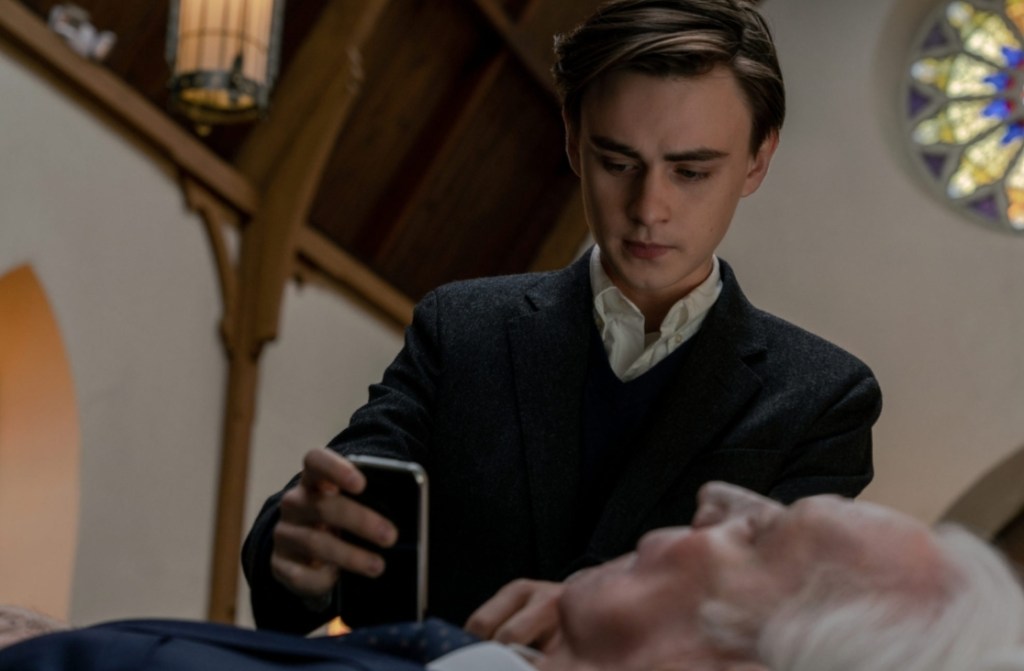
However, soon Harrigan passes and in his grief, Craig places the phone he bought him into his jacket pocket at the funeral when paying his respects. But one night, days after Harrigan is put in the ground, Craig gets an impossible test message from his mentor…

Anyone expecting a more full-on injection of horror after seeing both Stephen King and Blumhouse’s named on the poster might well be served by checking their expectations at the door before they select this movie off from the Netflix menu page. You see Mr. Harrigan’s Phone is something more of a more traditional ghost story that almost runs second to us watching young Craig go through his formative years. As a result, the movie has been granted a more deliberate tone that favours a more quiet and subtle approach to things rather than piling on the dread as the creepy happenings that occur after Harrigan has be put in the ground are more than an afterthought than the main thrust of the tale.
Thanks to Blumhouse’s more recent releases have favoured the more typical feel for a modern ghost story, I was surprised to see how close the movie stuck to King’s original novella, but when you consider that the movie was wrote and directed by John Lee Hancock who also us The Blind Side and Saving Mr. Banks, the more character based approach isn’t that surprising at all.
It also helps that the main two-hander of Harrigan and Craig are portrayed by capable actors with the late Donald Sutherland appearing in one of his final movies in the titular role (Mr. Harrington that is – not his phone). Sutherland is beguiling as he ever was while somehow managing to look like I’ve imagined every old man in any Stephen King book to look. Likewise, Jaeden Martell – who seems to be hoovering up Stephen King roles after playing Bill Denbrough in the It reboot – does a good job as the sullen, but ultimately good hearted Craig, even though the movie has him brooding mournfully through his whispy fringe a bit too much. The cinematography is rich, the score subtle and the movie seemingly attempts to try and resurrect the more gentle, unsettling kind of ghost story rather going for full on scares or cheap shocks.
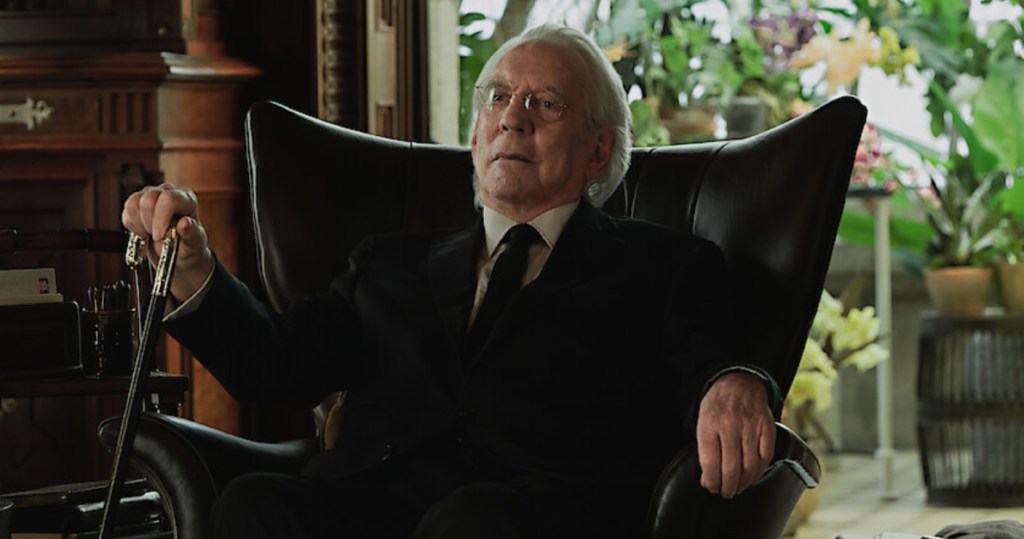
All this is all very well and good, but Mr. Harrigan’s Phone plays things so subtle that it often teeters on the boring side and, ironically, will no doubt gave less attentive viewers reaching for their phone to doomscroll rather than fully invest in this quietly modest tale. The thing is, the story is fairly creepy on paper as this young boy realises his actions with a phone has somehow got him a connection with the other side (Apple really should include that in their ads), but all this seems to disperse in a puff of dust when put on film. There’s some truly unsettling concepts at work here, especially when you consider that Harrgian’s spirit has been trapped in transition to the other side by Craig’s spontaneous act of returning Harrigan’s phone with his body at the funeral and enacts Craig’s isolated bursts of anger against a bully and a drunk driver at random points, but the film seems far more interested in probing the drama and providing free advertising for Apple at every given turn.
Maybe this film would play far better to to the type of “mature” audience who find a breakneck pace and the prospect of dealing with modern technology far more intimidating than the prospect of a murderous ghost, but I can’t see this film landing particularly well with anyone whose attention span has been stripped from them like loose paint thanks to the very gadgets King seems to both build up and vilify.
In the end, while the performances are strong and the production values are suitably autumnal, Lee Hancock approaches the material in such an understated and languid way, its tough to care about anything that’s going on and not only does it leave you thoroughly ungripped, it eventually leads you to believe it probably was far more successful on the written page.
Mr. Harrigan’s phoned it in…
🌟🌟
 We Have Issues