
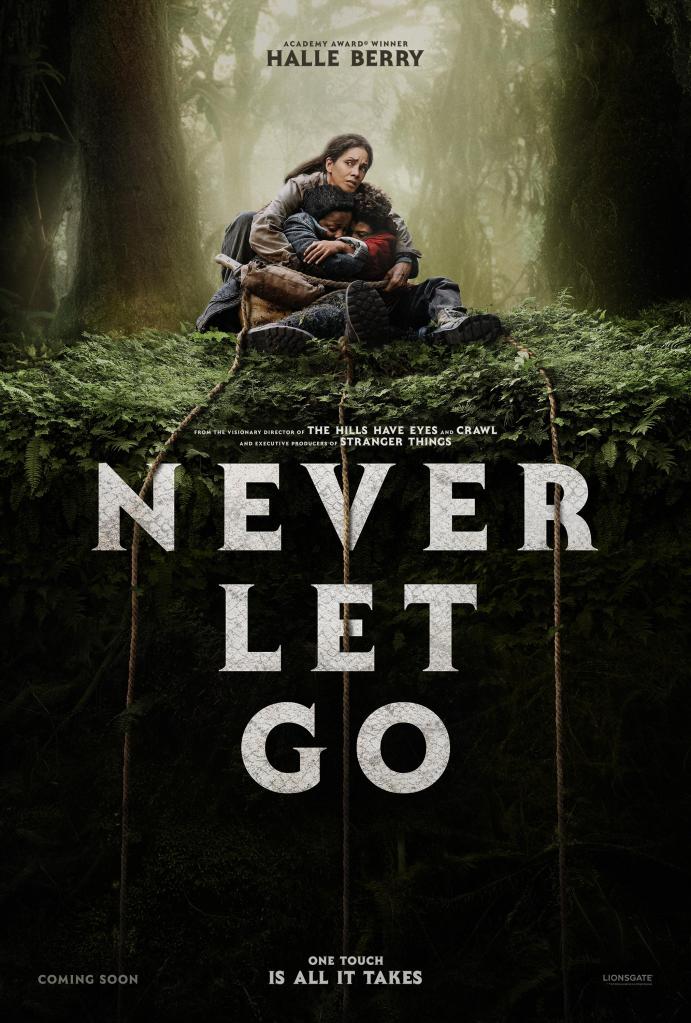
It’s always interesting when you have a film director willing to change up their entire style to fit a film. Take French horror director Axelandre Aja, who exploded onto the scene in a crimson spray of plasma with Haute Tension back in 2003 and continued to apply that brutal New French Extreme aesthetic to his similarly bestial The Hills Have Eyes remake. Since then he’s tried to add a few new quivers to his bow with tits and ass comedy Piranha 3D, goth romance Horns, slick animal attack flick Crawl and minimalist sci-fi thriller Oxygen – however, with his latest venture, Never Let Go, he seems to be tackling the sort of insidious mystery usually found in the works of M. Night Shyamalan.
However, can the man who once staged a decapitation by chest of drawers manage to find the balance needed to pull off this latest example of elevated, mental illness horror in the wood, or will he not be able to see the forest for the trees?
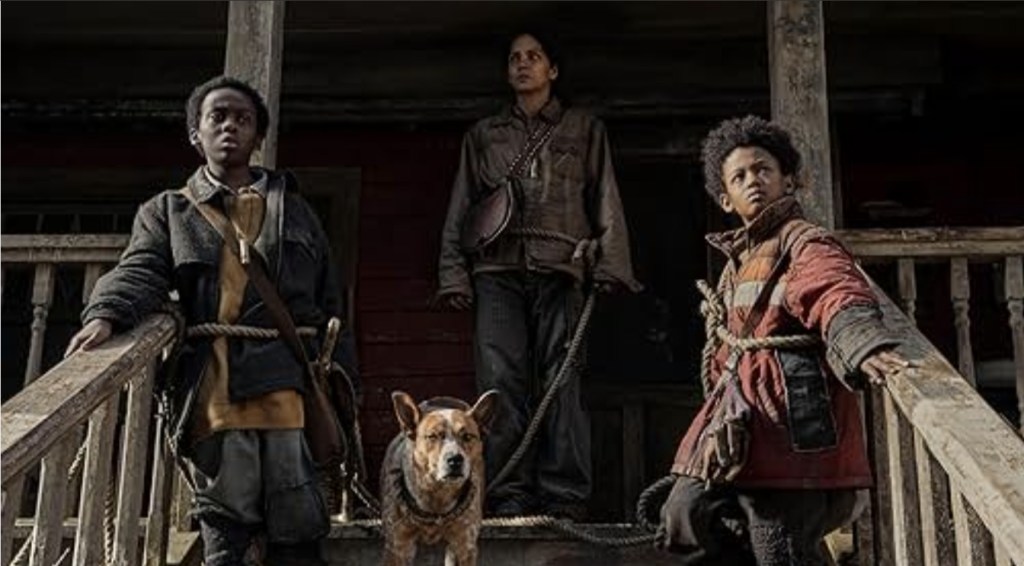
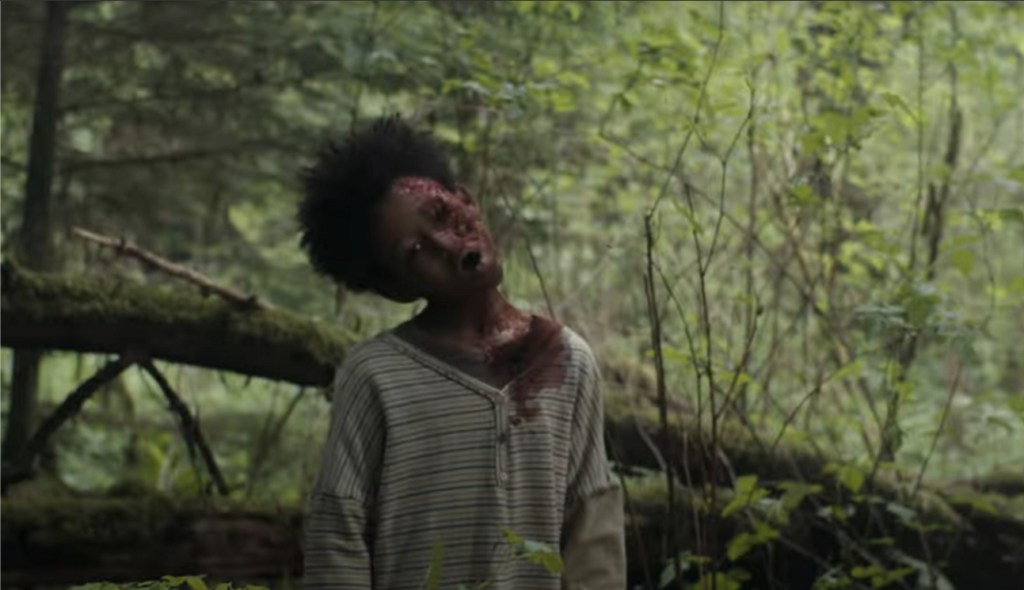
In a secluded house located deep in a dense forest, we meet Momma, a clearly disturbed woman who is raising her two twin boys in immensely stressful circumstances. The world is gone, gradually wiped away by some nameless evil that possesses by touch and has managed to turn humanity on one another causing untold death and destruction to civilisation; but luckily Momma has safety protocols in place to keep her, Samuel and Nolan nice and safe. Apparently, their house has been crafted to specifically keep the evil out due to the love that exists in the foundation of the building that exits within the family and they are safe to venture outside just as long as they remain connected to their home via long ropes.
However, the family is in trouble. A particularly harsh winter is depleting their food supply fast and the trio is slowly staving despite surviving on cooked grubs and fried frogs. Worse yet, while Sam is every inch the dutiful son, Nolan is reaching that point in life where he’s starting to question everything he’s been taught to believe and despite Momma’s insistence that a snake demon that can take the appearance of anyone could strike at any moment, he begins to challenge her at every turn.
Tensions begin to rise between the three, but after a while, we start to think that Nolan may have a point as neither of the two children actually manage to witness the nightmarish, snake-themed visions their mother sees and the vast, detailed rules she drills into them on a daily basis could also be a perfect way to keep them from discovering whether civilisation has actually fallen or not…
So what is reality? Is everything absolutely fine and it’s Momma’s psychosis that’s in play here, or is there actually an evil force lurking among the trees and branches that can corrupt with a touch?
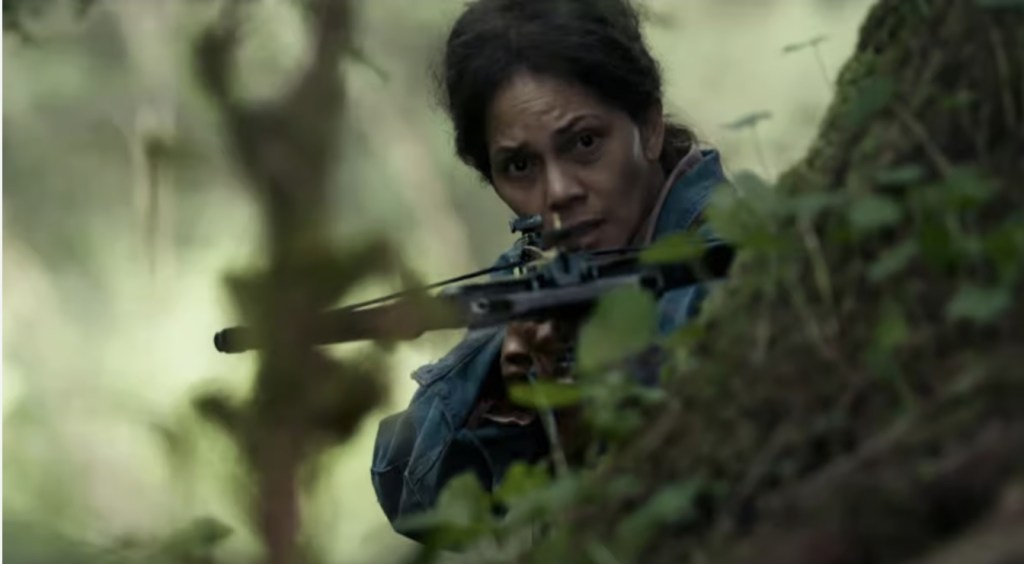
There’s been quite a few examples of movies lately that’s featured fractured family units at the end of the world having to contend with some otherworldly force that also comes complete with a surprisingly complex set of rules. There’s been A Quiet Place, Bird Box and Arcadian, just to name a few, but while Never Let Go follows dutifully in their wake with family drama, creepy creatures and tense moments, the film it most resembles is Shyamalan’s The Village. Of course, regardless of what your personal feelings of Shyamalan’s much maligned movie are, it seems that Aja and co have doubled down in order recreate that sense of crawling dread that’s usually followed by a devastating rug pull that usually generates much discussion around watercoolers.
To his credit, Aja actually manages to pull this off with long, brooding shots of the forest interspersed with the occasion jump scare from one of Mamma’s visions that serve to heighten the ever-growing divide as the film constantly taps you on shoulder to whisper “hey, it’s all a metaphor for raising children, yeah?”. However, while all this would be fine in general, Aja has adapted so completely to Shyamalan’s method, he’s managed to absorb quite a few of his contemporaries bad habits too with a noticable one being that the whole thing tends to fall apart during the final reel.
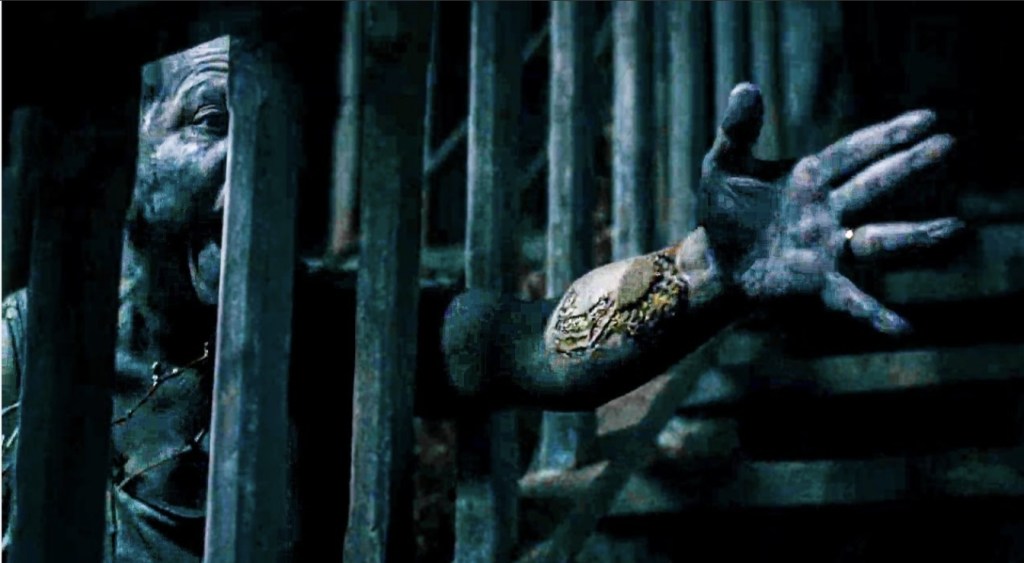
Now don’t get me wrong, I love an ambiguous ending and sometimes, it’s vital to end a horror film with a couple of question marks in order to help sustain the chills long after the credits have done their thing, but much like M. Night at his worst, Aja just seems unable or unwilling to just simply pick a lane. Worse yet, as the final moments of the film played out, I found myself utterly confused with what was supposed to be occuring. While I don’t want to give anything away – although I accidently might, so be on spoiler alert just to be safe – it feels like Aja simply couldn’t decide whether to go with the monsters or the keep things more psychological and so offloaded both on us to have his monstrous cake and eat it.
It’s a shame, because up to this point, Halle Berry and her two young co-stars have been putting in some serious work as they document a family trying to function in such stressful circumstances. Berry, possibly looking the most haggard than she’s ever looked on screen with tangled hair, a scarred face and suspicious tattoos that hint to a hard upbringing, is particularly stellar in a role so unglamorous, you can almost smell the panicked body odor through the screen. Elsewhere, Percy Dags IV and Anthony B. Perking also impress by carrying just as much – if not more – of the movie than Berry does. In fact, the family is so good, it’s almost a disappointment when the movie falls back on some standard horror tropes like a reliance on jump scares or the occasional cool monster design.
Simply put, the moment the film starts to slither away from the central concept of a woman with deep reaching mental issues and a murky past trying to raise her children while simultaneously abusing them as they visibly starve before our very eyes and my memory can’t help but recall The Watched, another Shyamalan-esque spot of rural horror (directed by his own daughter, no less) that that similar problems with sticking the landing after crafting a genuinely atmospheric and tense scenario.
I’m all for directors trying new styles and switching up people perceptions of what they can do and Aja should be commended for feeling himself on his toes (there’s certainly no hint of the guy that had a killer fish burp up a severed penis in Piranha 3D), but he undoes almost all of his good work by constantly breaking his own rules and fundamentally misunderstanding what makes a good ambiguous ending actually work. I forgave him once for the odd way he handled the mental health related twist he delivered at the end of High Tension (it actually works if you come at it from a different angle), but the way he finishes off Never Let Go is more irritating than anything else. In fact, with all the lengthy strands of rope Never Let Go deals with, it seems that the film gave itself enough to hang itself with.
🌟🌟
 We Have Issues