
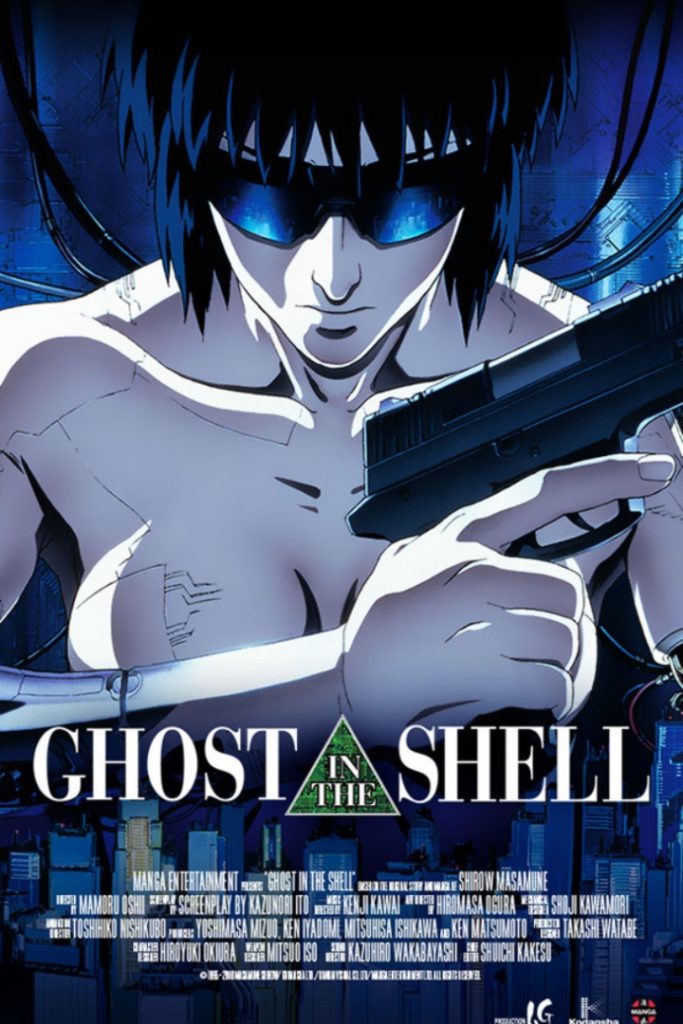
While Ridley Scott’s Blade Runner seemingly delivered the first and last word in rainy, dystopian futures where everyone is having an existential crisis about their own humanity, no other medium took that baton and ran with it more successfully than Japanese Anime. However, while the award for the most accomplished view of a grim, yet totally believable, future world has to go to Katsuhiro Otomo’s breathtaking Akira, always close on its heels was Mamoru Oshii’s Ghost In The Shell.
Possibly more infamous now for the whitewashing controversy that befell the live action American remake, the original animation took Masamune Shirow’s thoughtful Manga and turned in a brooding, cyberpunk classic that impressed the likes of the Wachowski Siblings and James Cameron, who themselves are no slouches when it comes to concocting stunningly tangible sci-fi worlds. However, despite its delicious eye for style and some world building that you feel like you could walk right into the screen and actually feel the rain on your face, does Ghost In The Shell still live up to the hype?
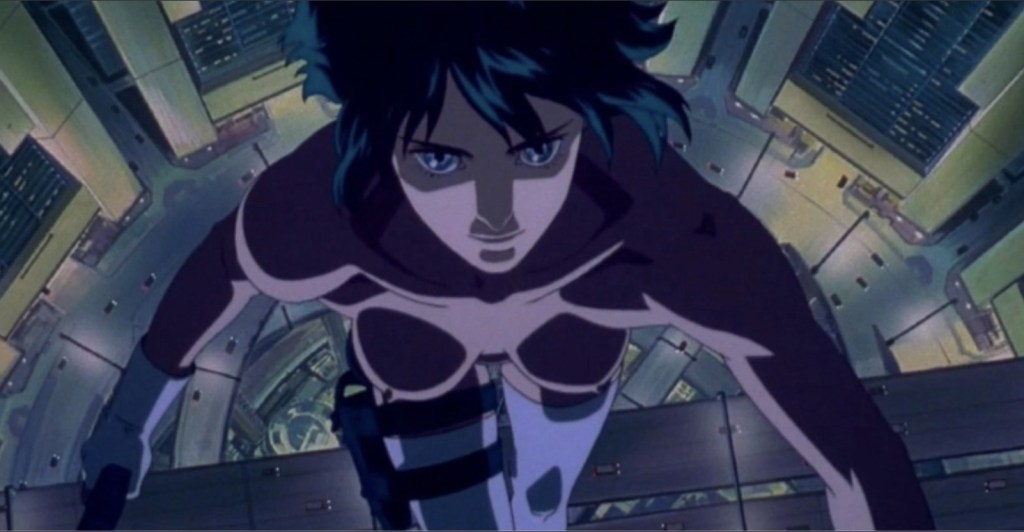
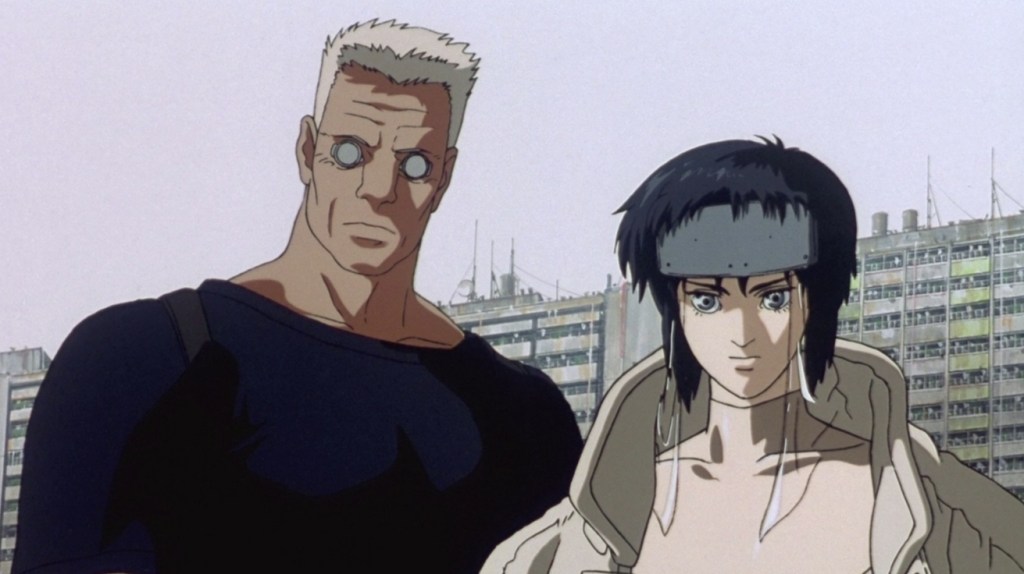
The year is 2029 (not long now, eh?) and technology has now advanced where many people have had some or all of their body parts replaced by cybernetic parts, such as incredibly dexterous prosthetic hands, super strong limbs or even bionic eyes. However, in the case of assault team leader Major Motoko Kusanagi of the Public Security Section 9, the only thing remotely human about her is her brain abd while this gives her impressive physical advantages when doing her job fighting cybercrime, it often leaves her wallowing in broody contemplating as she mulls over the nature of her humanity and the existence of her soul – or “ghost”.
After a mission to assassinate a diplomat of a foreign county to stop the defection of a computer programmer, Section 9 manages to finally get a lead on a mysterious hacker known as the Puppet Master who has been going around “ghost-hacking” random people to do his bidding, be it delivering virus that can infect other victim’s cybernetics through the phone, or even manipulate someone to become an assassin without even realising it.
When a factory that manufactures cybernetic bodies (or shells) is targeted by threats unknown, a single shell escapes the scene and is promptly rendered inert after being waylaid by being hit by a truck, Section 9 discovers that it actually contains a ghost inside. However, when the decidedly dodgy Section 6 claims to have permission to claim the ravaged shell, speculation rises that the consciousness inside it may actually be the trapped ghost of the Puppet Master himself. While it’s decreed that the ethereal hacker must answer for his crimes and not be used as a tool for further, cyber-skullduggery, the Major has a more personal reason to score a face to face with him – to discuss the natures of humanity and purpose and discover if the Puppet Master has any answers. To her surprise, it turns out the Puppet Master shares a lot of her concerns…
While I would personally maintain that Ghost In The Shell – despite a lot of philosophical musings about the nature of self – isn’t quite the perfect Anime experience that some claim (I’m still an Akira guy, I’m afraid), it still provided me with something damn close once upon a time. During its original cinema release in the UK, I managed to catch a screening and was sat in the front row where, for the next eighty two minutes I was buffeted mercilessly by flawless, cyberpunk visuals, a haunting score and endless conversations about what it is to be human and feeling unease in a body that feels unnatural. Once the film ended, I felt the need to turn in my seat to gaze at the audience behind me and saw a sea of human faces, all illuminated by the rolling credits, all sharing the same awed/confused facial expression – so while I don’t equate Ghost In The Shell as the quintessential Anime experience, it certainly gave me one that perfectly encapsulated it.
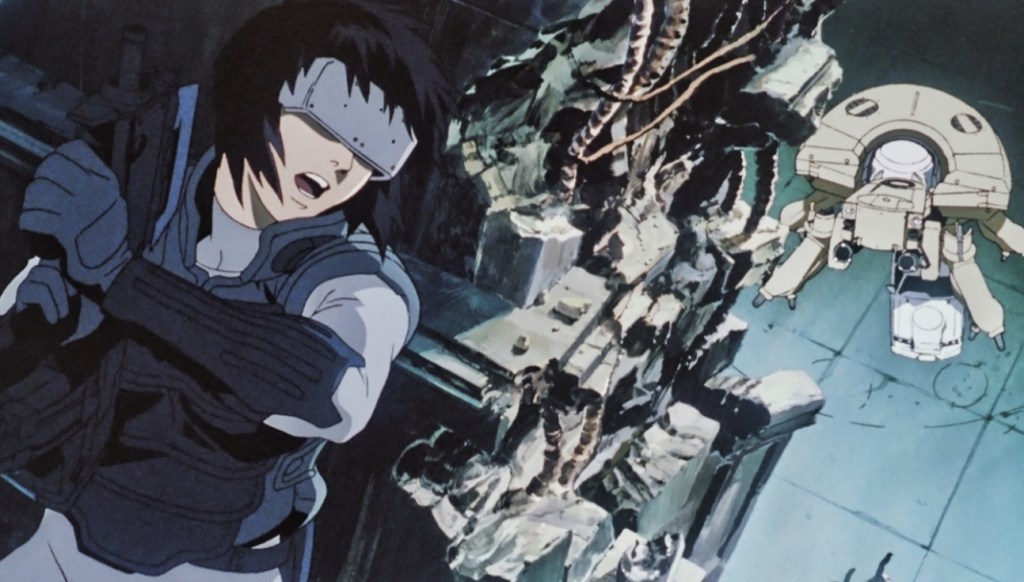
And with good reason, because while Mamoru Oshii certainly pushes the boat out when it comes to visual excellence, Ghost In The Shell is a surprisingly talky affair – which is odd when you consider that scenes of broody monologuing in Anime usually means holding on a virtually static image where only a character’s lips are ever so slightly moving. Luckily, the world building, the design ethic and the sheer onslaught of philosophical reflection manage to result in a truly spellbinding experience and the reason is that the movie tends to treat the more overtly science fiction tropes with a more ethereal hand. Take the use of tech for example; while the gun fights are nice and tangible (a climactic battle with a spider-legged tank is magnificently matter of fact) everything else is portrayed as decidedly dream-like.
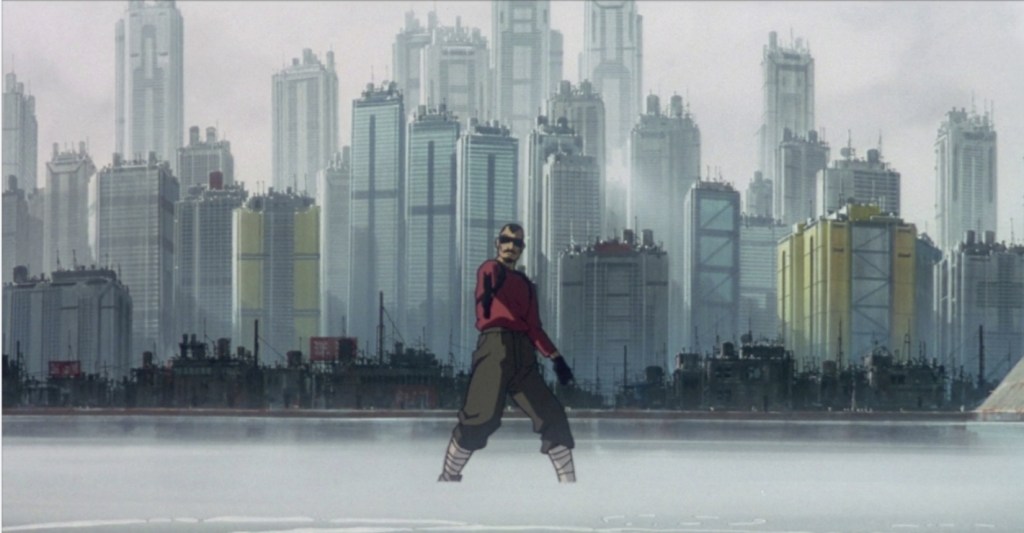
The sight of the Major escaping after the opening assassination by dropping of the side of a building, butt-naked, while activating her thermoptic camouflage in super smooth slo-mo is genuinely hypnotising. Later, the Major gets the drop on an assailant on the flooded streets of “New Port City” using the same tech and the sight of the twirling streams of water trailing from his feet after he catches a roundhouse kick to the face predates the similar visuals made so famous in the Matrix movies. However, even these pale in comparison to the truly resplendent opening credit sequence that may rank as one of the medium’s finest ever moments. As we watch the Major getting assembled piece by piece as the truly transcendent score swirls around you that weaves traditional Japanese music with hyper-futuristic visuals to create a truly unique experience that the rest of the film manages to maintain.
But possibly the most impressive part of Ghost In The Shell is what sets it apart from the majority of of its kind. While other Anime movies concern themselves with upsettingly horny demon monsters or ridiculously jacked fighters describing their particular brawling style in detail before punching off their opponent’s head, the themes laid out here are disturbingly as relevant as ever. OK, so we don’t run around with our brains in robot bodies, openly fretting whether we still technically count as human or not, but with the rise of AI and the continuous reliance of social media and tech to run our lives, the growing angst that we’re losing touch with our very sense of self runs strong throughout the premise.
Part neo-noir, part gritty police procedural, part talky political thriller and part gloriously atmospheric sci-fi, Mamoru Oshii’s genuine high point for the medium may overegg the pudding for those hoping for more obvious action beats and delivers no easy answers for its insanely questions. But for bewitching visuals and super-deep philosophical concepts, this is one particular “ghost” that will haunt you for years.
🌟🌟🌟🌟
 We Have Issues