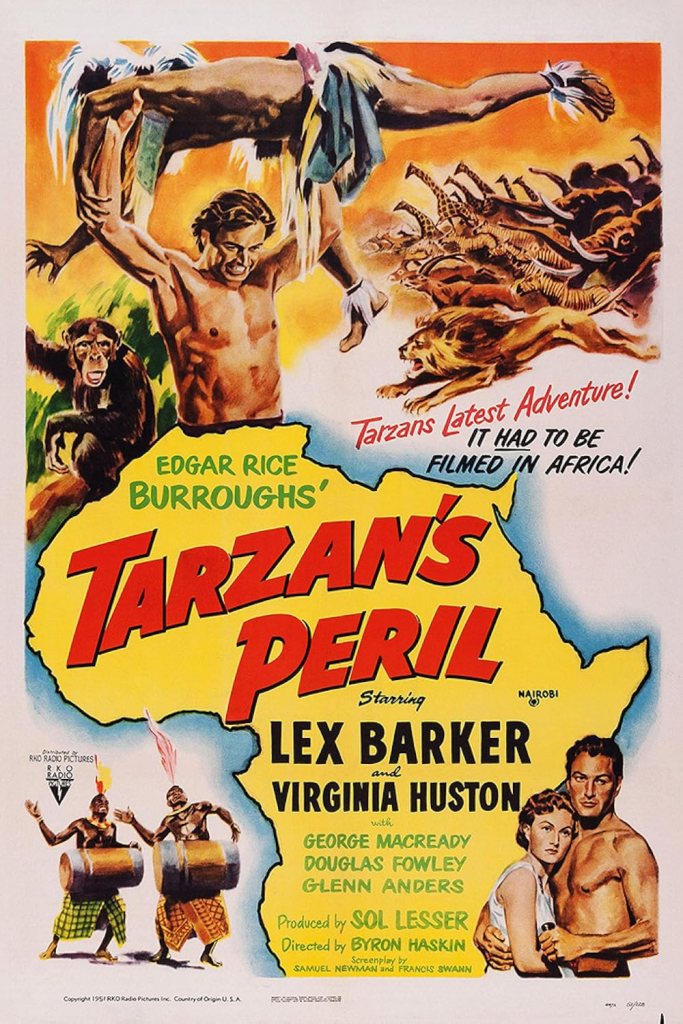
You know, I’ve reviewed so many classic Tarzan movies for this site now (and in the wrong order, no less) that it’s getting virtually impossible to be objective about them one way of the other. Am I marking a film down because it’s plot is too derivative, only to remember that the film it “copies” was actually released after the movie I’m chastising? Am I bigging up an inferior entry just because it has a better Tarzan/Jane combo and has mercifully ditched the impossibly needy Boy? While I’m trying to be impartial, am I not giving a Tarzan actor a fair swing of the vine just because he’s not immediately as good as Johnny Weissmuller?
These are all pitfalls I’m mindful of even if I weren’t trawling through a franchise that – in its heyday – was slamming out entries virtually once a year for over thirty years; and I’m not even counting the silent entries.
I’m only bringing up these issues because as I reach the midway point of Lex Barker’s tenure in the tree house, I’m finding it increasingly difficult to have an opinion.
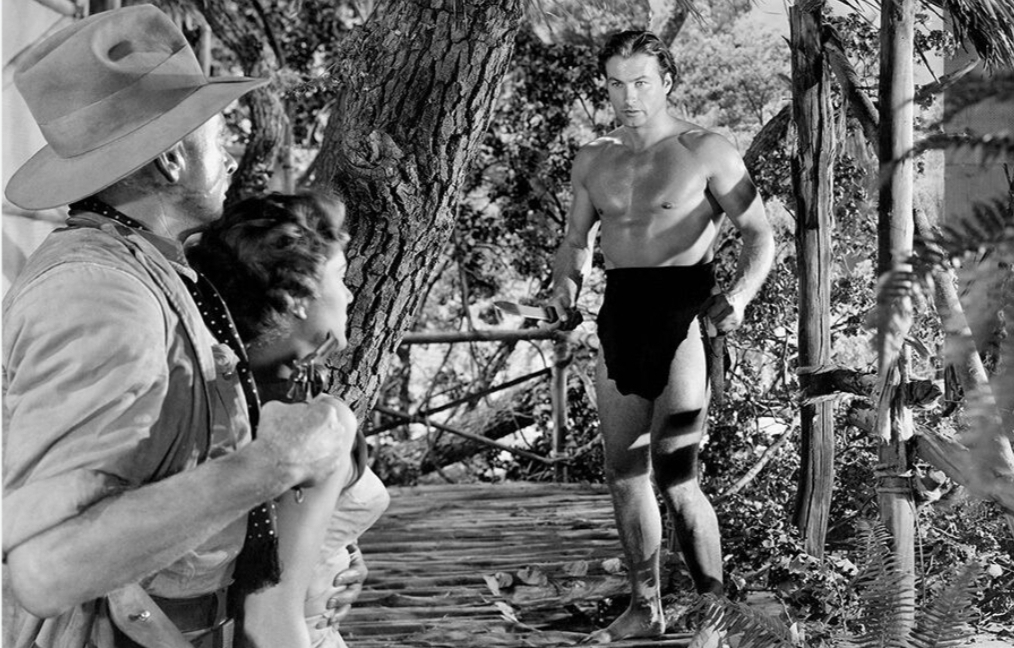
With another day, we find another potential problem brewing within the jungle kingdom that Tarzan, the Ape Man will inevitably police, but this one may end up have more personal repercussions than most – you see, one of Tarzan’s old foes, the coldblooded Radijeck, was a gunrunner who worked for an unnamed foreign power, but ultimately found himself banged in the jungle slammer for his crimes, has just escaped his imprisonment. Apparently things got far more intimate than that as not only did Tarzan previously clash with the villain, but Radijeck has some sort of altercation with Jane too that saw her turn him in and the news is so potentially catastrophic, it even causes District Commissioner Peters to delay his retirement until the man is caught.
However, despite this build up, Radijeck seems to have no real real interest in settling old scores, and instead is heading through the jungle with two accomplices in order to make money selling guns to the spiteful King Bulam, who wants superior firepower to get revenge on the tribe of Queen Melmendi who previously spurned his advances. Still, even though Radijeck isn’t gunning for Tarzan and his spouse, he’s still got ample opportunity to show off his villain credentials as he gradually does in his compatriots and even local authorities in order to score a larger slice of the gunrunning pie.
Of course, sooner or later, Tarzan has to get involved, but focuses more on subduing the rising forces of King Bulam than putting his old enemy into the nearest intensive care unit. However, this attitude may come back to bite the hero on his loin clothed behind when events converge to bring everyone involved crashing together with only the promise of a few being able to walk away.
On paper, Tarzan’s Peril should be an adventure movie home run, not just plot wise, but in how certain aspects of the franchise were actually portrayed. For example, not only is this the first Tarzan movie that was actually partially shot in Africa (Kenya to be exact), but the cast featured prominent black actors such as Dorothy Dandridge – the first African-American film star to be nominated for an Oscar – and Fredrick O’Neal who founded various groundbreaking theatre groups for black actors and audiences. Of course, they’re portraying natives in a Tarzan film which is unfortunate, but entirely unavoidable considering the time period, but a least there’s some aspects of the treatment of non-caucasians and the continent in general that have the potential to be slightly more nuanced than what we’ve previously seen.
However, the reality ended up being a little different. As I just stated, both Dandridge and O’Neal play your standard chieftains, one of whom is required to be a standard damsel in distress and the other a typical villain and due to some issues with shot footage becoming allegedly damaged on the trip back to America, not only was plans for Tarzan’s Peril to be in colour, but all of Lex Barker’s scenes were lost, requiring all of his role to be weirdly reduced. While the surviving location footage (transferred to black and white) does certainly make a difference to the scale of a franchise usually shot in backlots, but the benefits that all of the above should have given the film ends up being smothered by a plot that frustratingly doesn’t make the most of its potential.
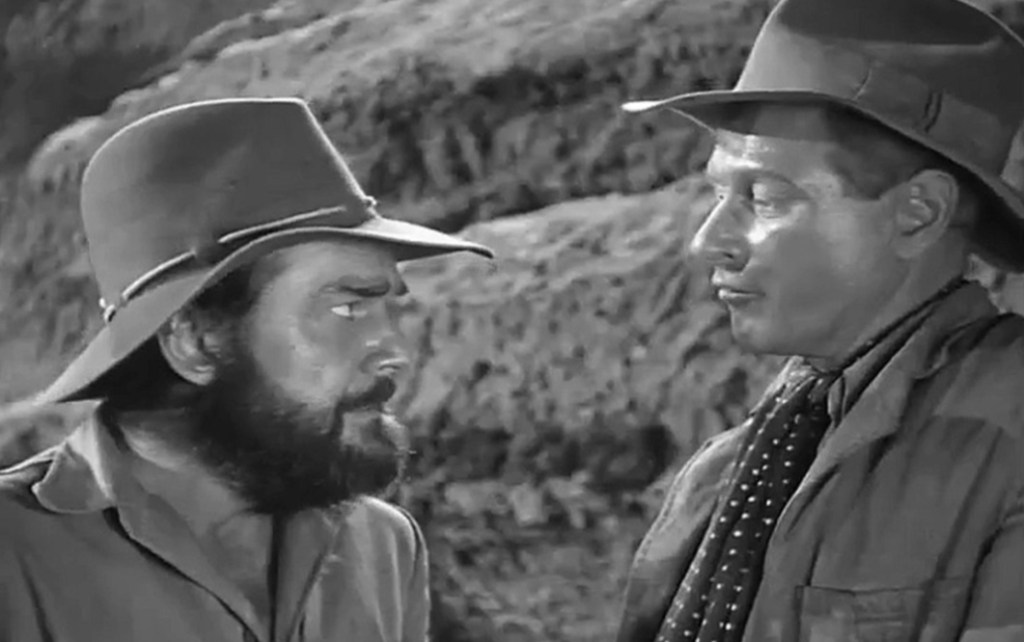
The main issue with Tarzan’s Peril is that it practically bends over backwards in order to set up a suitable nemesis for Tarzan, but then has them literally spend only about three minutes of screen time together. Played with a legitimate air of menace by George Macready who milks every line he has with dastardly, vaudevillian dickishness and the script works so hard into building him up as a dude who has past beef with our lead, it genuinely had me checking both IMDb and Letterboxd just to make sure I hadn’t missed a movie somewhere. However, even without a backstory that includes personal grudges with both Tarzan and Jane, the movie gives Radijeck plenty of in-film notoriety too after having him play two tribes off one another, gradually kill off his own partners and even has Alan Napier (Alfred from the 60s Batman TV show) gunned down in cold blood the day of his official retirement.
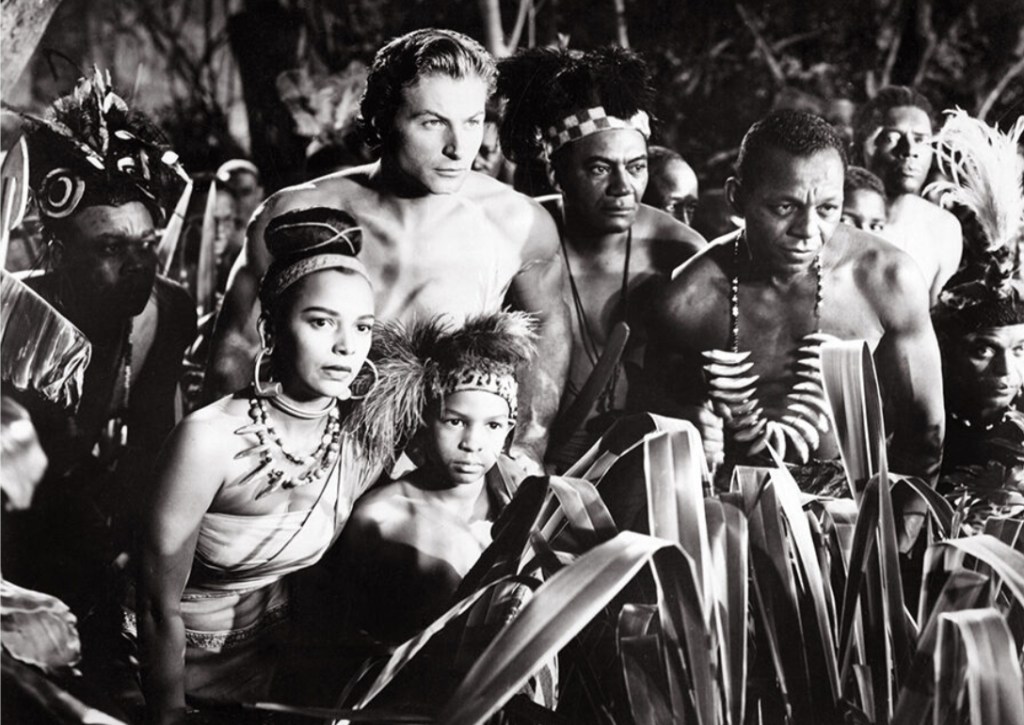
In fact, in a series where Tarzan villains are as disposable as the kleenex of a horny teen, Radijeck has the qualifications to be a rare standout, however, for whatever reason, the bad guy ball is dropped time and time again by literally keeping the two as far apart as humanly possible while building up no tension whatsoever. Worse yet, this is yet another one of those damn Tarzan movies that opts to keep its titular character either offscreen or unconscious to either cover for the lost footage or simply provide a lazy explanation for while Tarzan isn’t simply swinging in and handing the baddies their ass posthaste. Similarly, the jungle lord’s family are also poorly handled. Cheeta may be only slightly a little less of the lawless agent of chaos I frequently label her, but her capering is weirdly only limited to a spot of petty theft and the absent minded swallowing of a pocket watch during a pivotal sequence. Still, she fares better than Virgina Huston’s completely passive Jane who not only stands as Barker’s third Jane in three movies (should we be worried, Lex?), but sits around the tree house wearing strangely ornate jewellery and adding nothing to the plot.
Still, despite being marginalised by his own movie, Barker still cuts it as a decent Tarzan – even if he’s finally allowed to be face and vanquish his antagonist in literally the last two minutes of the film. Although I will say that his dodge/swing/kick move is pretty bitchin’ and worthy of Spider-Man – who hadn’t even been created yet.
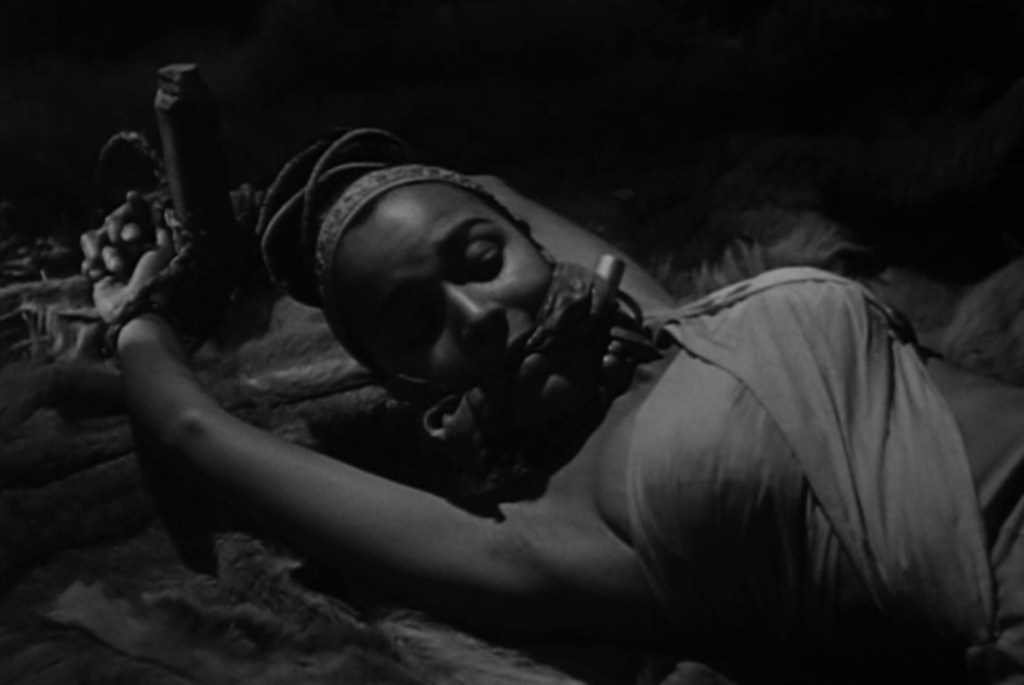
Once again, another Tarzan flick falls prey to being frustratingly derivative, but what hurts all the more is that it had the pedigree to be something genuinely gripping. However, any chance it had of changing the the game is lost in bad plotting, weird character decisions and a rubber snake so phoney, it almost negates all the actual Africa footage. My critical analysis of Tarzan movies may now be a little frayed – but I apparently can still recognise a missed opportunity when I see one.
🌟🌟
 We Have Issues
One comment