


Once upon a time, disaster movies were lavish affairs that saw an all-star cast either fighting or running from some unimaginable act of destructive carnage, be it earthquake, swamped cruise ship or *checks notes* bees. However, modern versions of the genre seem to have undergone the same moral change that the World War II movie went through after films like Schindler’s List and Saving Private Ryan brought gravitas back after all those perky, men on a mission adventures. While directors like Roland Emmerich once got audiences to whoop with excitement as national monuments were wiped off the face of the earth, nowadays, the disaster movie usually deals with real life events that ramps up the threat while dialing back the sensationalism to drive home that this really happened.
A perfect example of this would be Paul Greengrass’ The Lost Bus, an account of the gargantuan Camp Fire that rocked California back in 2018 and ultimately claimed 13,500 homes and 85 lives. If anyone can deliver teeth grinding chills that doesn’t cheapen the real events, it’s the dude that made Captain Phillips.

Butte County in Northern California is something of a tinderbox at the best of times, but after the mixture of a faulty, sparking power line; unfeasibly dry weather; and strong winds manage to create the perfect recipe for a raging inferno, the surrounding townsfolk are blissfully unaware that they’ll soon be ringside for one of the most devestating wildfires in Californian history. As if to prove my point, as the blaze starts, we focus on the daily struggles of local sad sack Kevin McKay, who is trying to make ends meet as a local school bus driver in the neighbouring community of Paradise as his life starts to resemble an especially downbeat country and western song. But despite an ailing mother, a hateful teen son and a dog he has to put down because of cancer, his life (and everyone else’s) is about to get a hell if a lot more stressful when that fire starts rampaging ever closer to a populated area.
As Ray Martinez, the division chief for the California Fire Department finds that it’s practically impossible to get fire crews to the remote regions where the blaze began, the high winds also prevent any aircraft from managing to accurately drop any firefighting liquid from above; which means it’s soon time to evacuate. However, this means that many roads out of town become gridlocked and a local school still has over twenty kids trapped with no way to escort them out without a bus to take them to the rendezvous area.
With his son and mother in need, Kevin nevertheless takes the call to go and help, thinking that it will only take ten minutes to do the drop, but as the wildfire gets ever bigger and violent, both McKay and school teacher Mary Ludwig find that if they’re going to get their young charges out alive, they’re going to have to endure a hellish journey through the worst of the devestation.
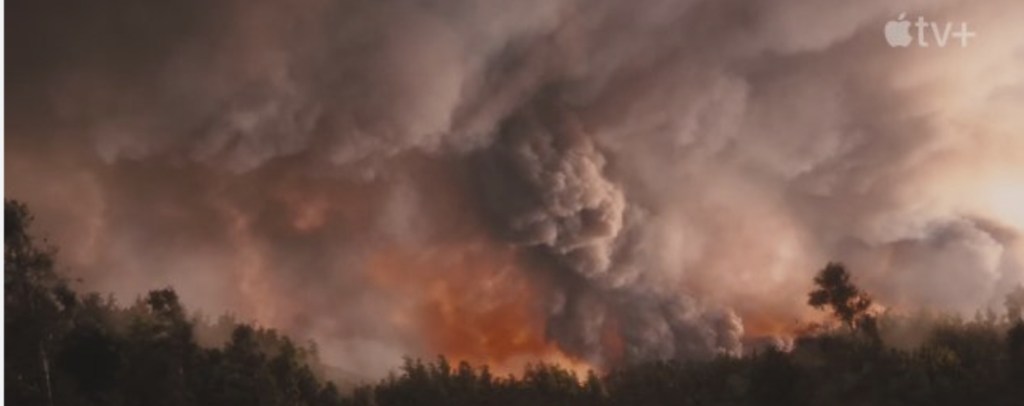
As I alluded to earlier, if any modern filmmaker had talents tailor made for making a modern disaster movie based on true events, it’s Paul Greengrass. As we know, he’s an old hand at telling potentially sensitive stories with a sober and understanding hand thanks to the likes of Captain Phillips and United 93; however, thanks to the three Bourne movies he skillfully directed, the director is also well versed at putting on a show and is just as capable of bringing brains to the blockbuster as the likes of Christopher Nolan or Denis Villeneuve. However, with The Lost Bus, Greengrass shows that he has a knack of cutting though the bullshit in order to deliver a thriller that plonks you right in the middle of the tension.
Alternating between watching Matthew McConaughey’s flailing, middle-aged crash-out as he battles to get his crumbling like back on track and clusters of authorities hurriedly talking over each other as they detail the path of the fire, Greengrass actually follows the established path of the disaster movie pretty closely, giving us plenty of opportunity to see what an average joe our lead is as the foreshadowing ramps up to fever pitch. As I’ve always been a sucker for these kinds of film, watching a master of sustained tension slowly expand the threat from hazy radio reports to Mount Doom-sized plumes of smoke billowing in the air from barely a town away is something of a rare treat – but in order to make things even more sweat inducing, the script makes McKay’s morning so fucking stressful between juggling his raging son, judgmental phone calls from the ex-wife and constant nagging from his boss about his shitty time keeping, you’re already wound up before it becomes clear that danger is imminent.

This also means that MacConaughey gets something to play with before the film simply just has him looking scared shirtless from behind the wheel of a smoldering school bus and while a lot of the personal issues that McKay has to deal with are admittedly small potatoes compared to a fire that covered 153,336 acres and raged for two weeks, it does give us a much needed sense of normalcy before things go nuts. In comparison, America Ferrera’s teacher doesn’t get to show up long after the shit has hit the flaming fan, and thus doesn’t have much to do other than joining McConaughey in looking genuinely terrified; but thankfully both actors are charismatic enough to not get overwhelmed by the spectacle when in arrives.
However, while Greengrass is well versed at shooting fast paced, technical jargon that doesn’t pander to laymen, he really excells at the fire sequences which are – to put it mildly – utterly fucking horrifying. Whether utilising POV shots that suggest that the voracious element is rushing though the forests like a marauding kaiju or looking down on the school bus like a fire proof drone, The Lost Bus delivers some of the most intense fire sequences in recent memory. Refreshingly, Greengrass opts to keep the nerves jangled and doesn’t take much time actually making most of the emperiled kiddies actual characters in case he inadvertently veers into inadvertent saccharine territory.
Of course, no disaster movie, even one directed by Paul Greengrass, can avoid some standard pitfalls and once the story gets fully enveloped by the choking smoke, there’s a sense that things get slightly episodic as our heroes face one new problem after another. Also, there’s an odd feeling that some of the movie travels over the same ground as bits of Roger Donaldson’s 1997 volcano film, Dante’s Peak as scenes of a bus full of scrraming kids, driving through various infernos and clouds of ash mirrors Pierce Brosan doing the same in a pickup truck nearly thirty years earlier.
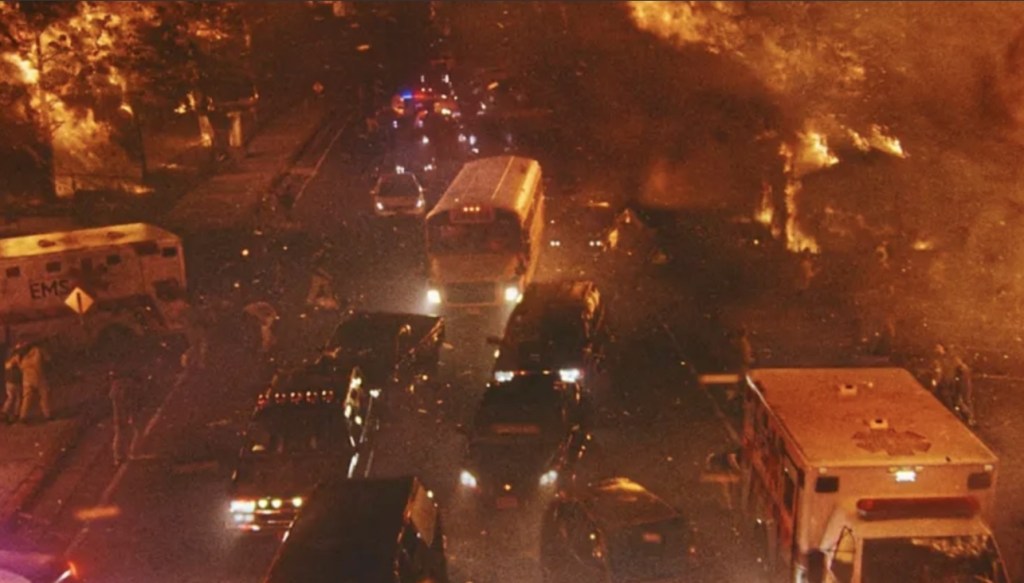
However, while we’re once again cheated out of a major release cinematic release thanks to the demands of streaming, Greengrass delivers his usual, vital style while still dropping in some last second commentary about the responsibility of the Pacific, Gas and Electricity Company. While the established rules of the disaster movie means that this true story falls slightly into the realms of predictability, this story of one of California’s largest disasters has more than enough heat to keep your jaw well and truly clenched.
*In Matthew McConaughey voice* “Alight, alight, alight.”.
🌟🌟🌟🌟
 We Have Issues