
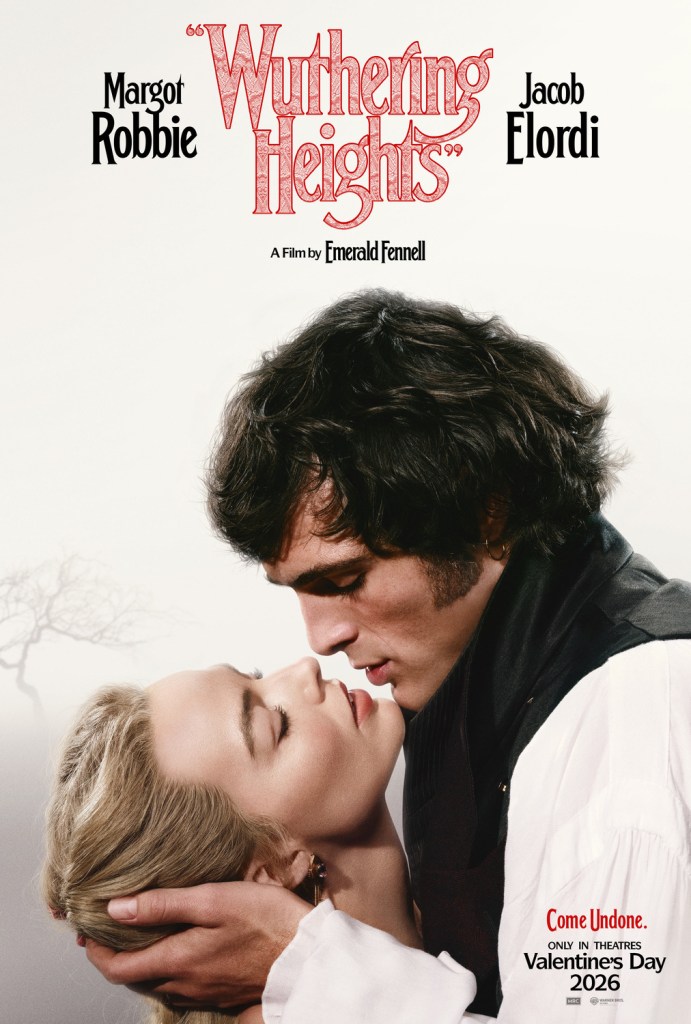

The classics are classics, and time shall not wither them – however, that doesn’t mean that filmmakers aren’t going to come along with every new generation to try and give it a new lick of paint. One such example is Emily Brontë oft adapted favorite of tragic romances, Wuthering Heights, that has seen whole legions of of Cathys and Heathcliffs go through the same, love induced, trauma time and time again like the multiverse of amore-triggered madness. However, leave it to Emerald Fennall to try something different.
That’s right, the director of such jaw-dropping, boundary pushing delights as Promising Young Woman and Saltburn has gotten her provocative hands on Brontë’s volume (ooh-er!) and delivered her distinctive take on the beloved tale and will doubtlessly put a few noses out of joint with it.
Brontë purists, prepare to have your underskirts blown up, because Fennell has put those noticable quotation marks either side of the title for a reason – it’s the fantabulous Fennellisation of one Emily Brontë.
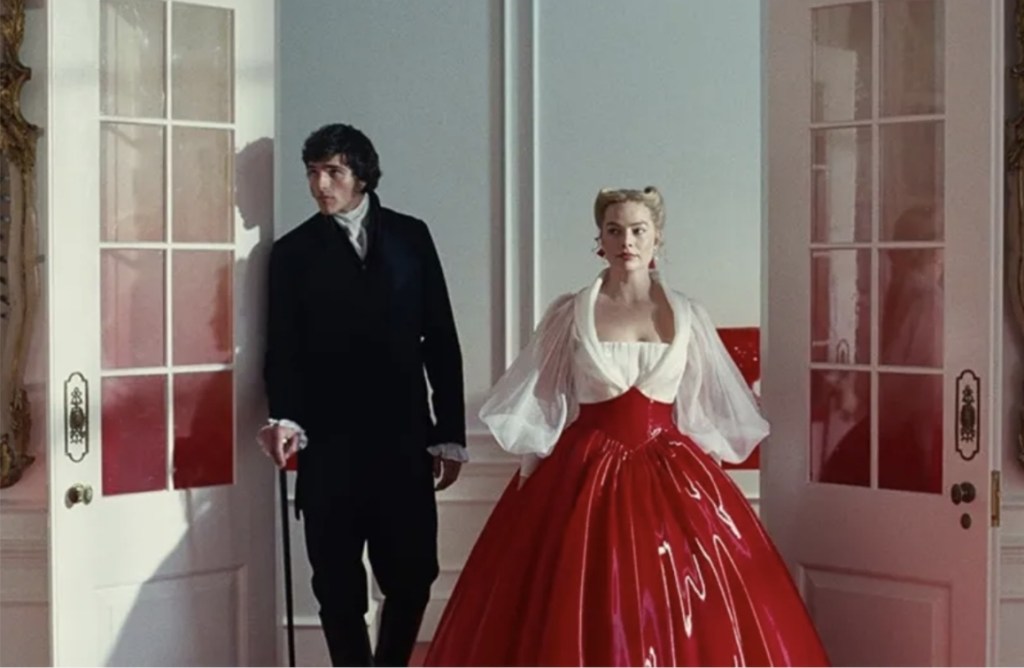
On the constantly windswept moors of Yorkshire, we find the absurdly gothic estate of Wuthering Heights, the crumbling mansion of Mr. Earnshaw, a man whose grief of his dead wife and his alcoholic rages has caused his house to rapidly approach ruin. But while he throws just as many over-emotional tantrums as his precocious daughter, Cathy, he nevertheless returns home one day after saving a homeless boy off the streets of Liverpool with the intention of him becoming his daughters “pet”. Naming the boy Heathcliff after her dead brother (there’s a lot of dead relatives in these things), Cathy soon becomes extremely protective of him and he her, even going as far to take the brunt of Earnshaw’s Drunken beatings when it was Cathy who was the culprit.
Six years pass and Wuthering Heights would be better off being renamed Withering Heights as Earnshaw’s gambling debts has the estate on its dilapidated knees. However, Cathy has a way out from her bleak existence in the form of their new neighbour, wealthy textile merchant Edgar Linton, whom she hopes to court and eventually marry – however, the burgeoning feelings that both she and the now strapping Heathcliff share for each other can barely be contained, so Cathy has to choose between her head and her heart when it comes to seeing where her affections lie. But when her jealous, paid companion, Nelly Dean, tricks her into saying the wrong things within earshot of Heathcliff, he flees Wuthering Heights, leaving Cathy with a far simpler selection.
Edgar is only to happy to lavish her with gifts and attention, but after they are wed, Heathcliff returns after over a decade away to reveal that he too now has money and has bought Wuthering Heights. And thus begins a war of misplaced affection where love, lust, jealousy and spite are all used as weapons that will ensnare all of those caught within the drawn battle lines.
So I have to confess that my main draw to “Wuthering Heights”, isn’t so much to see Brontë’s classic on screen (again), but to see what Emerald Fennall could possibly do next after having Barry Keoghan noisily slurp semen-laced bathwater and enthusiastically hump a grave. Further more, I’ve never actually read or seen the original novel or any of the adaptations either, which probably means that I’m sort of in a prime predicament to enjoy this version for what it is, and what it is isn’t your average retelling of the familiar story. Simply put, those quotation marks that have noticably encircled themselves around the title prove to be the secret of enjoying the adaptation, because this is not Wuthering Heights, it’s “Wuthering Heights” and Fennell isn’t shy about bringing some of those wonderfully twisted sensibilities to the fore.
However, despite some wonderful visual tweaks and some hard turns into the sort of aggressive sexual behavior that would make Christian Gray go celibate, Fennell’s version struggles to bring both her and Brontë’s styles together in a way that fully benefits either.
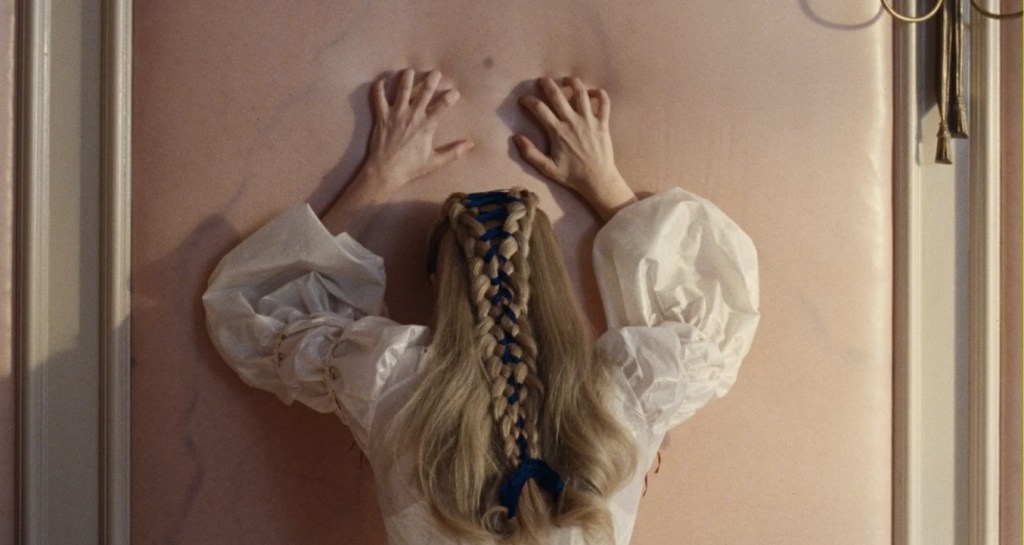
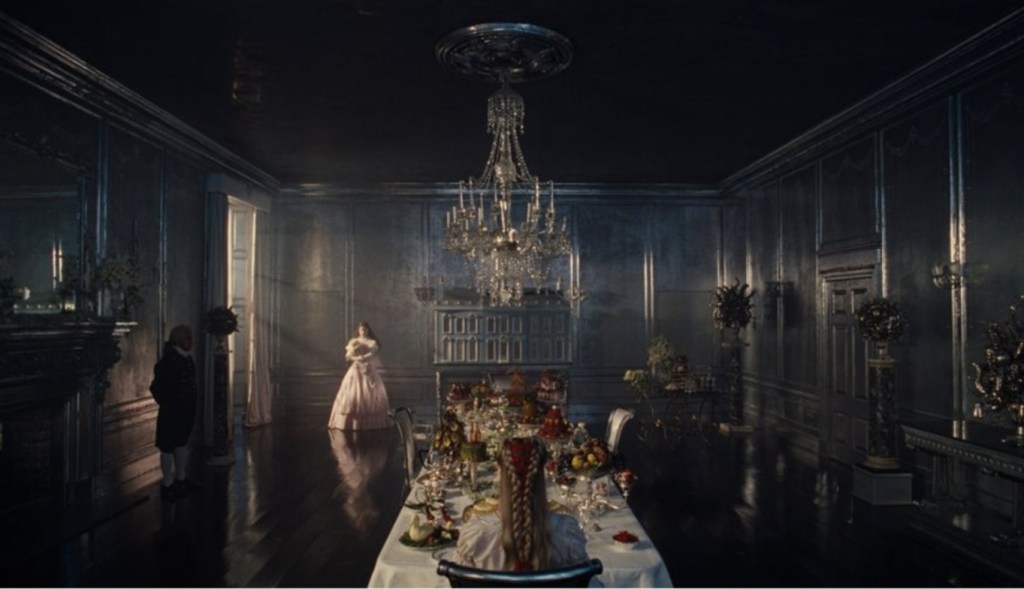
There’s no denying Fennell’s eye, however. Crafting a stormy tempestuous wonderland that falls somewhere between Del Torro gothic and Cronenberg ick, shots either look like they’ve been ripped right from the cover of pulpy, lust paperback from the 70s, or veer into the sort of decor you’d get in a Clive Barker novel. The walls of Cathy’s room in Edgar’s house are designed to match her skin right down to light blueish veins and the occasional freckle and elsewhere, this giant, eccentric doll’s house also sports a fireplace cluttered with endless, porcelain hands. As a counterpoint, Wuthering Heights itself is an oppressive Yorkshire hellscape of endless rain and stormy moors that’s as rickety and gnarled as the Gollumesque dental work of Martin Clunes’ abusive patriarch. With such exaggerated sets, the actors have no choice but to acquiesce and play to scale, which means some big, unsubtle sets demand some big, unsubtle performances.
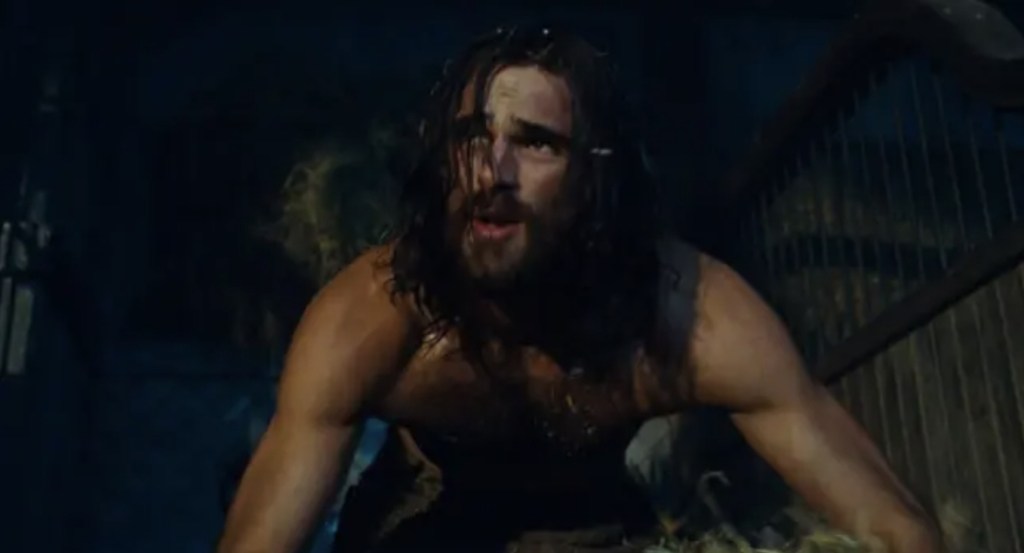
Thankfully, both Margot Robbie and Jacob Elordi are fully game and unleash all the yearning, lusty stares and stricken, emotional breathing you’d want from a film that’s turned its pervy side up to eleven. Robbie comes at Cathy as part spoilt Bonnie Langford, part spiteful manipulator where Elordi delivers a constantly looming Heathcliff who evokes his own performance as Frankenstein. However, while the broiling feelings percolate between the two, things don’t really get fun until Fennell gets to drive both mad when fate continuously keeps throwing them together before tearing them apart.
Novel purists will no doubt be horrified at instances of BDSM that creep into proceedings, but Fennell obviously believes in putting her own, defiant stamp on things which is perfectly fine. However, you ultimately don’t care for anyone as the director has them all writhe in the histrionics of unrequited love and the heavy handed style inevitably results in these famous characters becoming nothing more than mere lust-puppets. I don’t want to use the world shallow, but Fennell’s approach ends up stepping in the style over substance puddle on more than one occasion resulting in a damned if she does, damned if she doesn’t effect. If she had remained more devoted to the novel, there would have been no reason for Fennell to make the film in the first place, but in making the story very much her own, it can’t help but feel that it falls short of both the filmmaker’s talents and the legacy of the novel. Oh, and if things aren’t weird enough, Edgar is played by the guy who is Clem Fandango in Toast Of London.
Fennell’s visual feast and typical subversive leanings mean that she’s still a talent to watch and you can’t deny that she’s made something incredibly memorable. However despite all of her efforts, Brontë’s source material proves to be an uneasy fit and as a result, neither are able to reach their Wuthering Heights…
🌟🌟🌟

 We Have Issues