

Chapter 2 arrived with a very different kind of pressure than the premiere episode of The Mandalorian. After the shock ending of Chapter 1, the conversation around the show had exploded almost overnight. The reveal of the mysterious child instantly changed pop culture, reigniting the kind of communal excitement that Star Wars had sometimes struggled to sustain in recent years. Suddenly, everyone – from lifelong fans to casual viewers – was tuning in not just to see another episode, but to see what this moment meant for the future of the franchise.
Many viewers had approached the series cautiously, unsure whether Star Wars, a franchise know for its large scale, could be successful on the small screen. Chapter 1 erased much of that doubt by proving the show could lean on atmosphere, restraint, and character rather than constant spectacle. It just felt like Star Wars. With the second episode, anticipation had shifted from curiosity to investment. Fans weren’t just impressed, they were hooked by this new cute mystery box of a character.
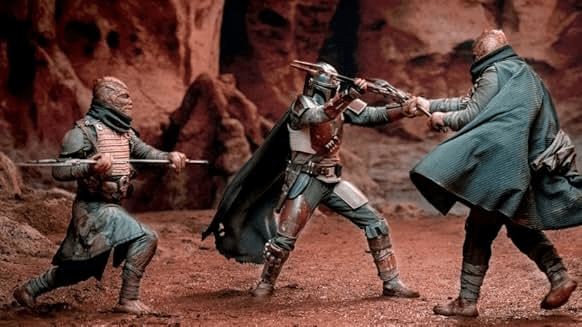
Picking up immediately after the events of Chapter 1, The Child finds the Mandalorian attempting to leave the planet with his unexpected charge. They are immediately attacked by a group of Trandoshan bounty hunters who, although they inflict some damage, are quickly dispatched with the add of a disintegration rifle. The reveal that they have a bounty tracking fob lets the Mandalorian know that others will be coming for his new ward. After a nights rest, any illusion of a smooth escape is quickly shattered when a gang of scavenging Jawas dismantles his ship piece by piece. The episode then transforms into something closer to a video game side quest, as the Mandalorian into an uneasy negotiation after a straightforward firefight fails.
This is where Chapter 2 truly distinguishes itself. Instead of escalating the stakes through larger action set pieces, it emphasizes vulnerability. The Mandalorian is repeatedly knocked down , both literally and figuratively, by the Jawas, whose chaotic energy contrasts sharply with his stoicism. Watching a supposedly elite bounty hunter get defeated by the scavengers is both humbling and humanizing. It shows him not as an invincible hero, but as a skilled professional who can still fail.
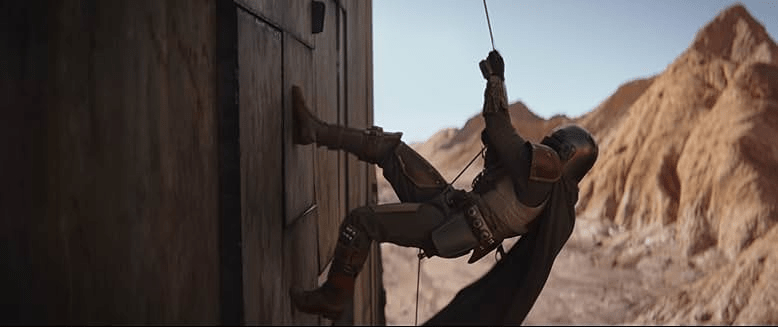
The episode also shapes the dynamic between the Mandalorian and the child into a Lone Wolf And Cub style relationship. Though the infant remains silent, its presence is constantly felt. Small moments, like the child calmly watching violence unfold or reaching out in empathy, begin to establish a bond built on shared experience. The Mandalorian’s growing protectiveness feels organic, growing through the episodes visuals rather than exposition. This style of storytelling is something George Lucas, a hater of dialogue, had always tried to achieve with the original Star War films.
The episode also brings back Nick Nolte’s Kuiil as both ally and thematic counterpoint, representing a weary survivor of galactic conflict who has chosen peace over power. His straightforward peace-driven wisdom is a contrast to the Mandalorian’s profession, questioning whether violence and bounty hunting are sustainable paths in a post-Empire galaxy when trying to protect the child. Their interactions add philosophical side to a Star Wars story which would normal be provided by the Jedi to what might otherwise be a simple fetch-quest narrative.
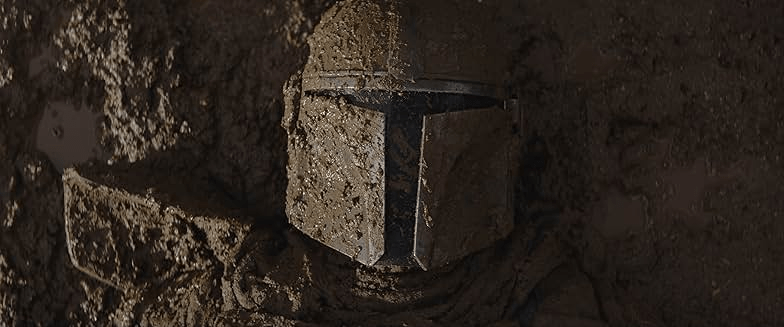
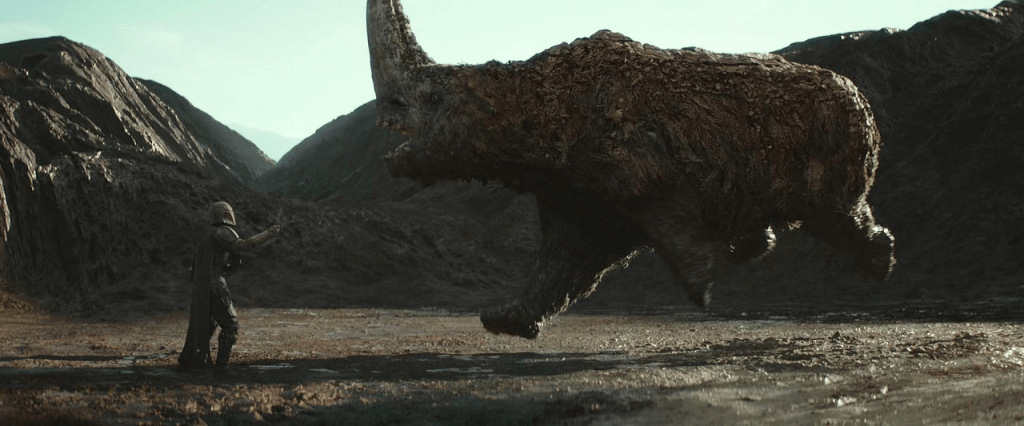
The Jawas’ demand, an egg from a dangerous mudhorn creature in return for the ship parts, leads to the episode’s central confrontation. The mudhorn battle is brutal and messy, emphasizing physical struggle over flashy choreography. The Mandalorian is clearly outmatched, his armor dented and bent, his body pushed to the limits. It’s during this moment of near-defeat that the child reveals what we all expected as he uses the Force to levitate the massive creature.
This revelation is handled with restraint. There is no swelling music cue or extended build up. Instead, the moment unfolds almost quietly, allowing the Mandalorian to soak in the awe of the situation. The Force, completely absent from much of Chapter 1, suddenly re-enters the story, not through a trained Jedi, but through a helpless child. The mystical elements of Star Wars still exist, even on the fringes of the galaxy.
In the aftermath, the Mandalorian completes the task, retrieves the egg, and regains the stolen parts of his ship. Yet the episode’s true resolution lies in its emotional shift. The Mandalorian chooses to keep the child with him, no longer treating it as cargo but as a responsibility. This changes the series from the bounty-hunting procedural that everyone expected it to be into a character-driven journey.
The episode resists the temptation to go bigger in terms of action but the revelation blows the doors of the expectations for what could happen going forward. It reinforces the show’s commitment to visual storytelling, minimal dialogue, and moral ambiguity. By focusing on character moments and small-scale conflict, the episode builds on the existing set-up.
Chapter 2: The Child proves that The Mandalorian isn’t afraid to slow down and trust its audience and its creators. It embraces simplicity without feeling thin, using quiet interactions and physical struggle to build emotional stakes. Rather than answering every question raised by the premiere, it poses a new one, what kind of person will the solitary Mandalorian become now that he has someone to protect?
🌟🌟🌟🌟
 We Have Issues