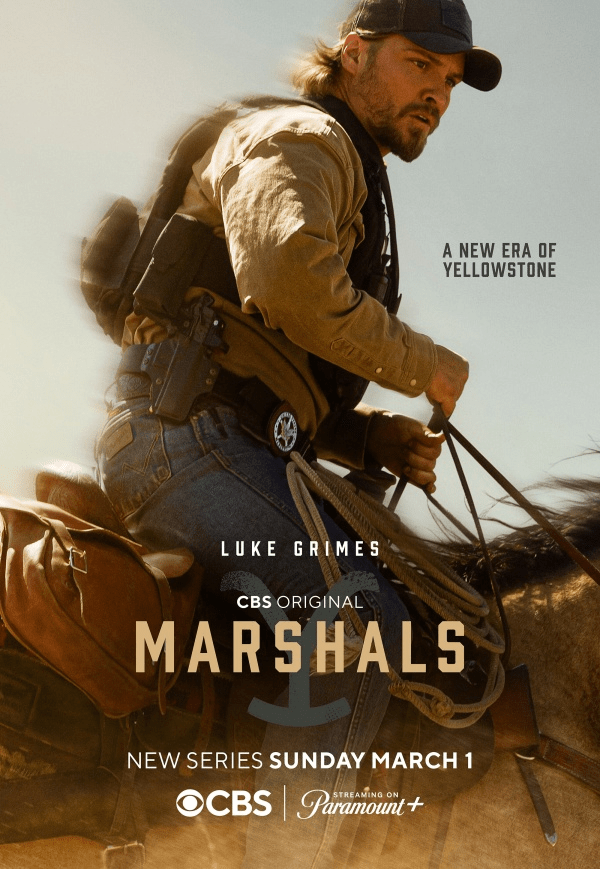

The first of multiple in-development Yellowstone sequels Marshals has finally arrived. Ever since the flagship series wrapped up under the cloud of Kevin Costner’s ego, fans have been wanting to see the further adventures of the surviving Dutton clan but series creator Taylor Sheridan has been focusing on filling in the background and making this a generational drama. Now things are finally moving forward but where Yellowstone was a family crime epic, playing like a neo-western Sopranos, unfortunately Marshals reverts to be a traditional crime procedural and lands somewhere squarely in the middle of the road. It’s neither a triumphant return to the Dutton saga nor a complete dud as attempts to shift Kayce Dutton (Luke Grimes) from ranch heir to U.S. Marshal while grappling with profound personal loss.
Right from the opening sequence, the show establishes its tone with a dream-turned-nightmare: Kayce in a warzone, grabbing a ringing phone, calling out for his wife Monica. The explosion jolts him awake in an empty bed, the Yellowstone brand visible on his arm, a clear signal that this is still the same tortured character we all know but now widowed. The episode quickly reveals Monica’s offscreen death from cancer (linked to reservation contamination issues), leaving Kayce to raise their teenage son Tate (Brecken Merrill) alone at East Camp. Their interactions feel authentically strained: grunts over breakfast, Tate storming off to school or protests, Kayce staring into the Montana horizon like he’s carrying the weight of the entire Rockies. Grimes delivers these quiet moments with his trademark stoic intensity, and it’s one of the episode’s stronger elements. The grief is palpable without being overwrought, and it grounds the procedural shift in something emotionally real. But there is a big problem here, whether Kelsey Asbille chose not to return as Monica or was written out, this feels like a classic case of fridging (killing off a female character to give a male character motivation). Kayce was the least interesting Dutton in Yellowstone, with the most interesting thing about him being his relationship with his wife. The series will have to do a lot of character work if it is going to sustain itself.
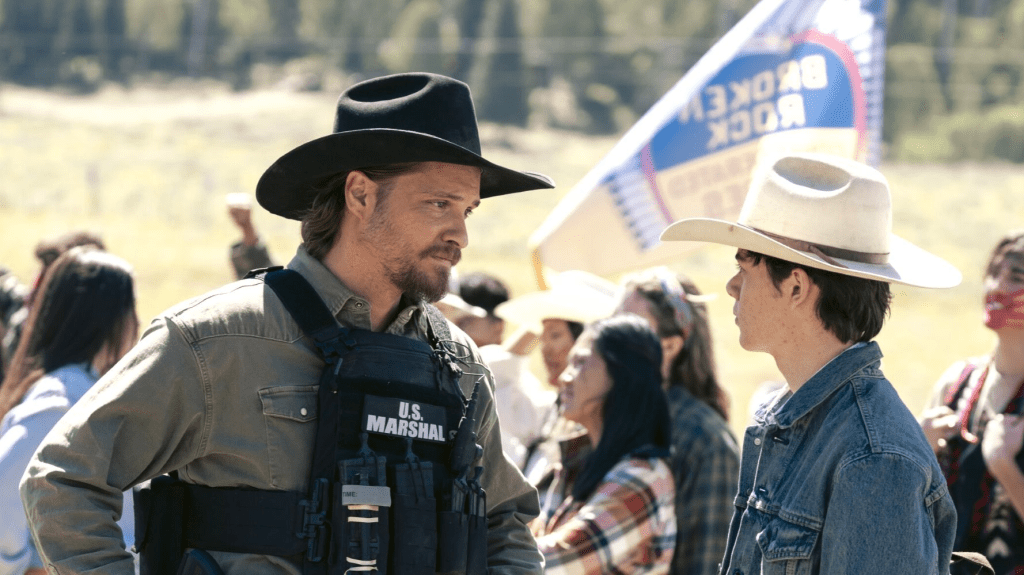
The main plot kicks in when Pete Calvin (Logan Marshall-Green, who will forever be not Tom Hardy), Kayce’s old SEAL teammate and now a Marshal task force leader, shows up with an offer Kayce can’t entirely refuse. The team is hunting fugitives preying on reservation women and, more urgently, a bomber targeting Broken Rock amid protests over toxic waste and a proposed mine. Tate gets caught up in the rally, adding personal stakes. Kayce reluctantly joins the pursuit on horseback, leading to a tense standoff with an armed anti-government militia. Action sequences are serviceable, with shootouts in the woods, and an explosion at the protest site, they lack the edge of Yellowstone‘s ranch brawls, beatdowns, and eliminations. The procedural beats feel formulaic: quick briefings, chases, door-kicking, and a climactic shootout where someone inevitably questions pulling the trigger, the standard things show like NCIS have been doing for decades.
The supporting cast shows promise but remains underdeveloped in this premiere. Marshall-Green brings a gruff charisma as Calvin, hinting at his own post-military struggles, while the rest of the Marshal unit gets just enough screen time to suggest future arcs without stealing focus. The episode smartly ties into Yellowstone’s themes of land rights, tribal sovereignty, and government overreach, with the Broken Rock protest feeling like a natural extension of past conflicts. Yet the dialogue occasionally veers into clunky exposition, like characters spelling out backstories or motivations that could have been shown rather than told. With Sheridan just an executive on the series, it has the feel of a photocopy of his style, like a subpar Sicario or Wild River, two of his films that feel they inspire the show more than Yellowstone.
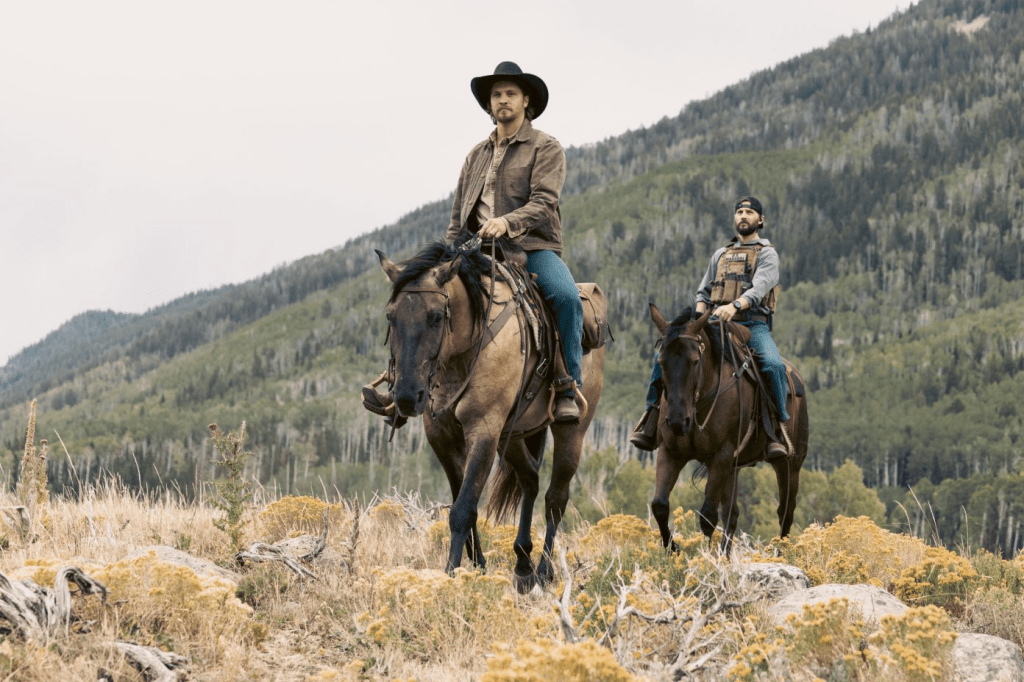
Visually, the Montana landscapes remain breath-taking, with sweeping shots of mountains and valleys that remind viewers why the Yellowstone universe is more than just a glossy soap opera. The cinematography captures the isolation and beauty effectively, though the action staging feels a bit TV-standard compared to the flagship series’ more cinematic flair, most likely due to budget constraints. This also doesn’t have the added star power that the other spin-off got. No Harrison Ford level actors here. Pacing wise, everything moves briskly for a pilot, getting the characters together and the plot moving, avoiding the slow-burn setup that spin-offs 1883 and 1923 indulged in, but it sacrifices depth in the process. We get hints of team dynamics and Kayce’s internal conflict, but there’s not much to latch onto.
Ultimately, Piya Wiconi, which mean “new beginning”, succeeds as a functional launchpad. It honours Kayce’s journey by giving him a legitimate new beginning while keeping one foot in the Dutton legacy. Fans of the original will appreciate the continuity, which include references to the ranch sale, tribal ties, Kayce’s SEAL past, and there are a number of returning characters, but newcomers might find the emotional baggage a hurdle and feel like they are missing something. It’s not as philosophically and morally layered or unpredictably violent as Yellowstone at its peak, nor does it fully commit to being a fresh procedural. Instead, it occupies a middle ground: watchable, occasionally compelling, and perfectly average.
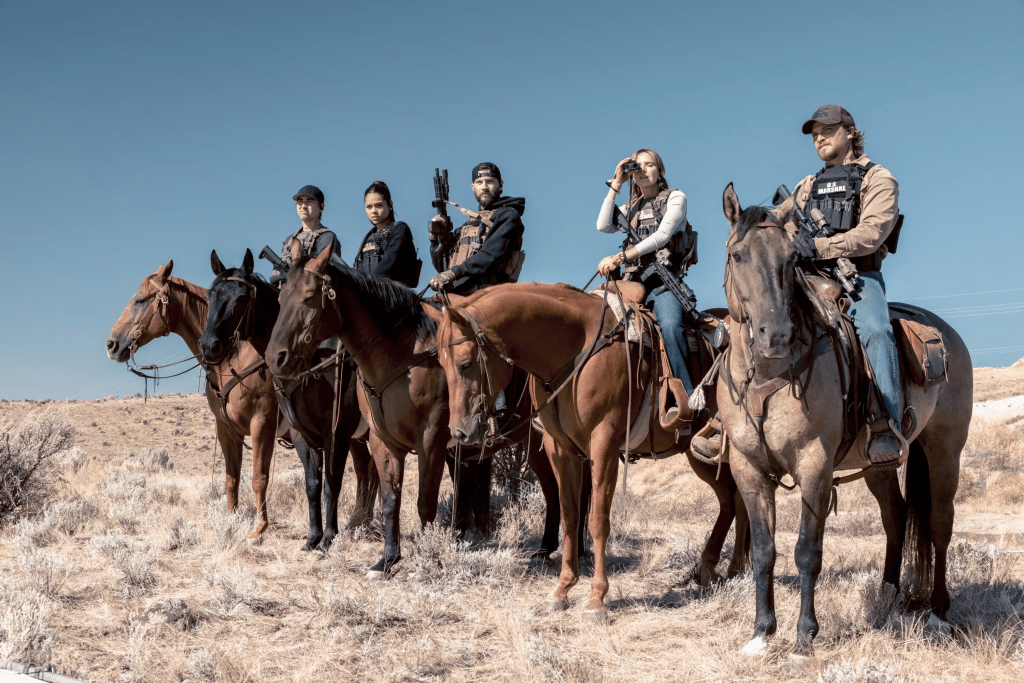
This isn’t the bold reinvention/continuation some hoped for, but it does play better than a lazy cash-in. It’s a solid first step that sets up potential for better team interplay and deeper exploration of grief and justice in future episodes. After one episode it doesn’t come close to what Yellowstone achieved and will have to pick up its game significantly to be a worthy successor. Unlike it’s flagship, this has the feeling of disposable entertainment, it’s not bad but it won’t stay with you.
🌟🌟🌟
 We Have Issues