
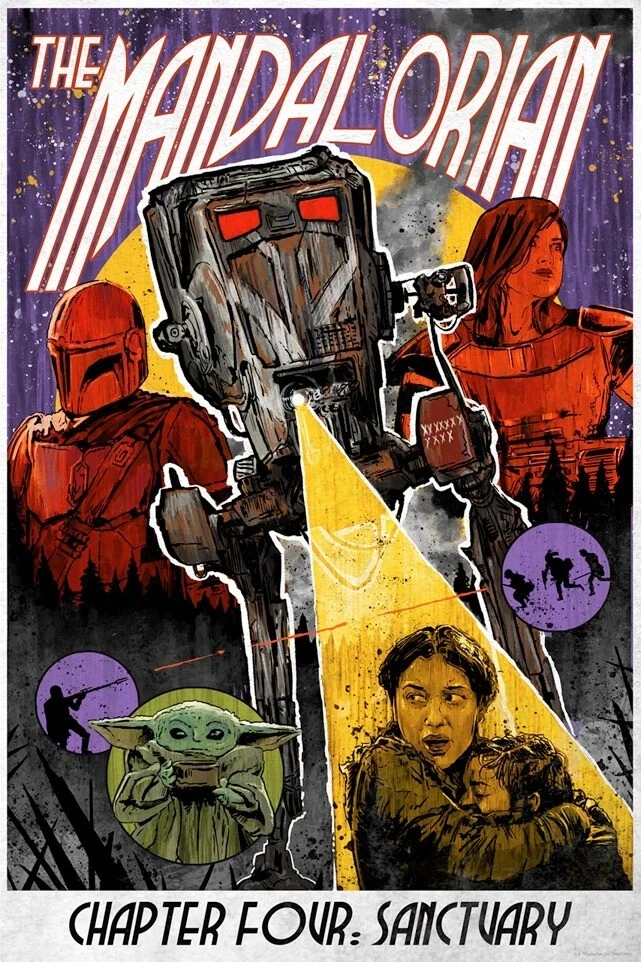

After the explosive, game-changing events of Chapter 3, expectations for the series changed. The series had just raised the stakes dramatically, turning its central character into a fugitive and firmly establishing the emotional core of the story. Gone was the idea that this would be a standard week-to-week procedural. Viewers might have expected the next episode to escalate things even further with more chases, more confrontations, more direct fallout from the Mandalorian’s betrayal of the guild. Instead, Chapter 4 takes a deliberate step sideways (something that becomes familiar, with the show adopting a video side-quest mentality), offering something quieter and more reflective.
By this stage, with just three episodes, the show had fully embedded itself in popular culture. The child was a phenomenon and a natural follow-up to Marvel’s Baby Groot, and the dynamic between him and the Mandalorian (Pedro Pascal and various stunt men) had become the heart of the series. But with that popularity came a question: could the show sustain interest without constantly relying on high-stakes action or major reveals? Sanctuary answers that question by scaling things down and focusing on character, tone, and theme.
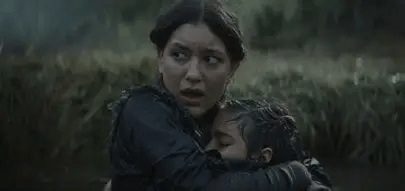
The episode is directed by Bryce Dallas Howard, and her influence is immediately apparent. There’s a softer, more motherly feel to the storytelling, with an emphasis on environment and human connection. Series creator Jon Favreau continues as the main writer, but this chapter feels intentionally self-contained, almost like a classic Western/Samurai detour where the wandering gunslinger/swordsman finds temporary refuge, only to discover that peace is never quite within reach.
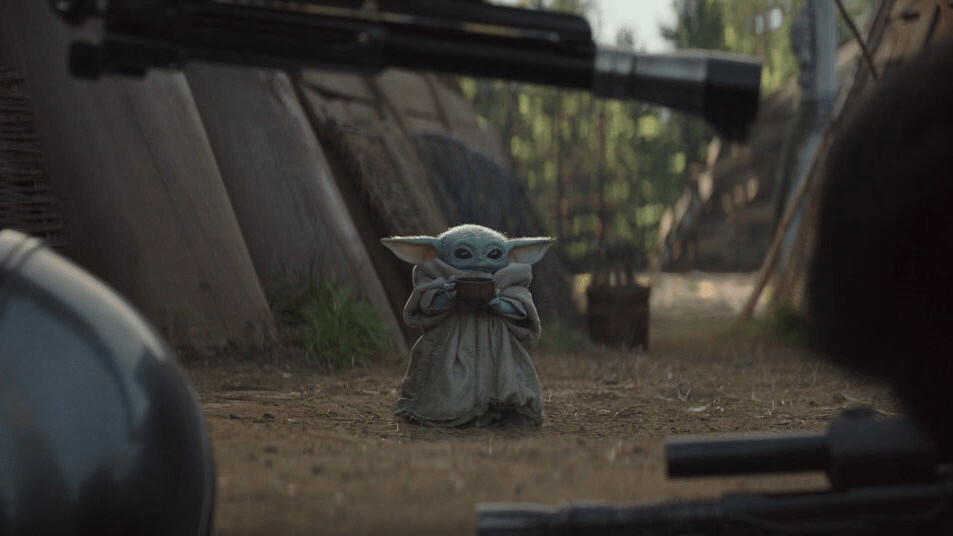
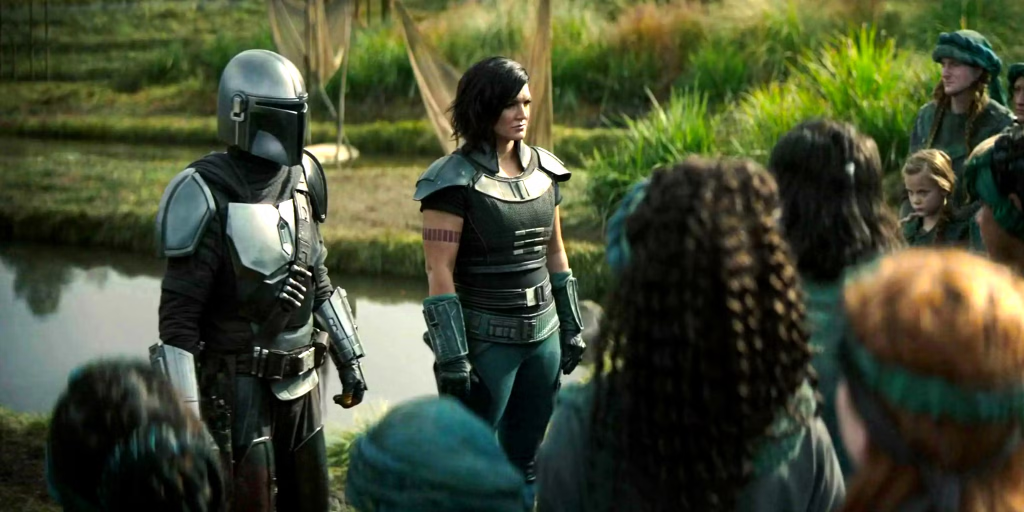
The story begins with the Mandalorian seeking a place to hide. Now actively hunted after the events of Chapter 3, he needs somewhere remote enough to avoid detection. He and the child arrive on a quiet agricultural planet, where a small village lives in relative isolation. It’s here that the episode introduces one of its key characters, Cara Dune, played by Gina Carano. A former Rebel shock trooper turned mercenary, Cara is immediately established as a formidable presence, capable of matching the Mandalorian blow for blow in a brief but memorable skirmish. The shot of Grogu looking on, sipping his broth, is now a social media staple.
Cara’s inclusion adds an important new dynamic. Up until this point, the Mandalorian has largely operated alone, interacting with others only when necessary. Cara represents someone who understands conflict and survival in a similar way, but who has chosen a different path—one of reluctant independence rather than strict adherence to a code. Their mutual respect is built quickly, without unnecessary exposition, allowing the story to move forward efficiently.
The central conflict of the episode emerges when the villagers ask for help. Their peaceful existence is being threatened by a group of raiders equipped with an Imperial AT-ST walker, a striking reminder that even in the farthest reaches of the galaxy, the remnants of the Empire still linger. The Mandalorian initially hesitates, consistent with his cautious, self-preserving instincts. However, the presence of the child complicates matters. If he stays, he risks exposure; if he leaves, he abandons innocent people to their fate.
What follows is a familiar but effective narrative structure: the training of a village to defend itself. The Mandalorian and Cara work with the villagers to prepare for the inevitable attack, teaching them basic combat skills and setting traps. These sequences are deliberately paced, focusing on cooperation and growth rather than urgency. This a classic Seven Samurai trope that Star Wars relies on regularly.
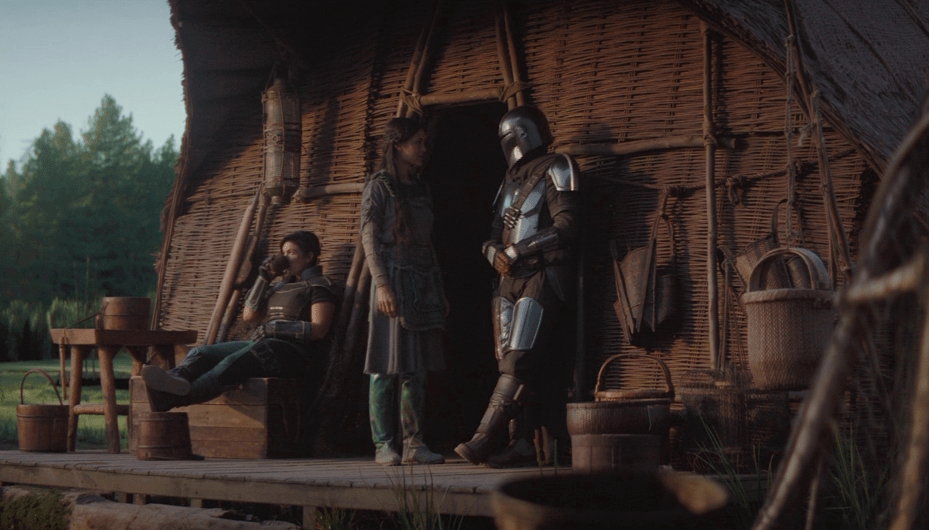
Amid this preparation, the episode also carves out space for quieter character moments. A widow named Omera, played by Julia Jones, forms a subtle connection with the Mandalorian. Through her, we see a glimpse of what his life could be outside of bounty hunting, a life defined not by constant movement and danger, but by stability and belonging. The child, meanwhile, integrates effortlessly into the village, reinforcing the idea that he represents innocence and possibility in a harsh world.
These moments are crucial because they highlight the central tension of the episode. For the first time, the Mandalorian seriously considers settling down. He even contemplates leaving the child behind in a place where he might be safe and able to grow up without constant danger. It’s a striking development for a character who, just a few episodes earlier, treated the child as little more than a job.
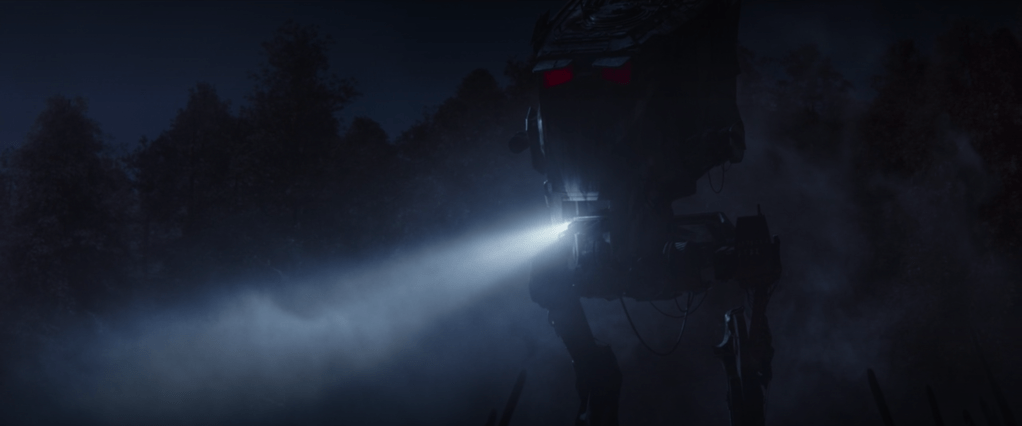
The attack on the village serves as the episode’s main action sequence. The AT-ST, reimagined here as a looming, almost monstrous presence in the forest, brings a sense of scale and danger that contrasts sharply with the otherwise grounded setting. The battle itself is straightforward but effective, combining strategy and teamwork rather than relying on spectacle alone. The villagers, once helpless, now stand their ground, supported by the Mandalorian and Cara.
In the end, the threat is defeated, and the village is safe. But true to the show’s themes, the resolution is not entirely comforting. The Mandalorian realises that he cannot leave the child behind after all. A bounty hunter tracks them down even here, proving that nowhere is truly safe. The brief dream of a peaceful life dissolves, replaced by the harsh reality of their situation.
As a standalone episode, Sanctuary may seem like a detour from the main plot, but it plays a vital role in the series’ overall development. It deepens the Mandalorian’s character, showing that beneath the armor and stoicism lies a desire for something more than survival. It also reinforces the bond between him and the child, shifting it further from obligation to genuine care.
Chapter 4 demonstrates the strength of The Mandalorian’s storytelling approach. It doesn’t rely solely on momentum or spectacle to keep the audience engaged. Instead, it trusts in character, atmosphere, and theme. By slowing down and exploring what the Mandalorian is fighting for, not just what he’s fighting against, the episode adds emotional weight to everything that follows and sets up an end goal.
🌟🌟🌟🌟
 We Have Issues