
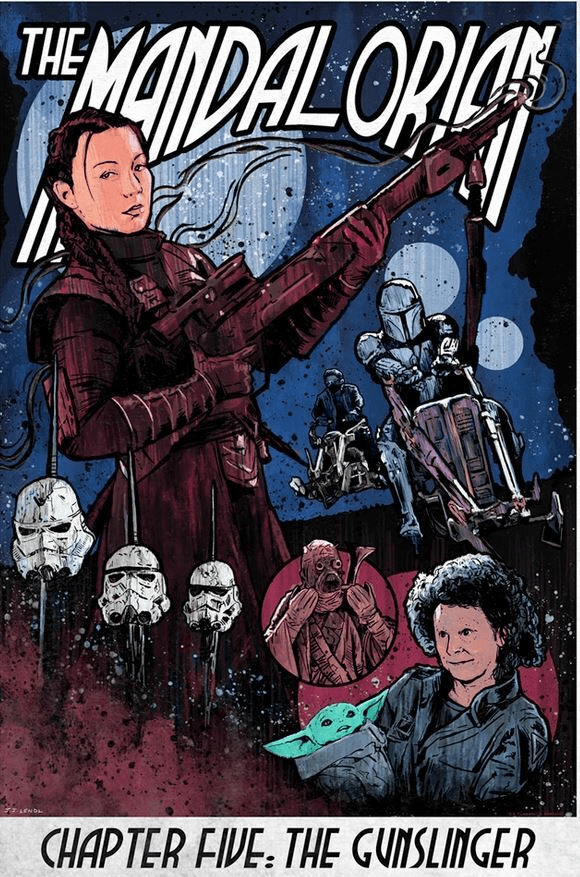

After four episodes that steadily built character, tone, and emotional investment, The Mandalorian had begun to find its rhythm. The show had proven it could balance action with introspection, and its central dynamic between the Mandalorian and the child had become its strongest asset. With that in place, Chapter 5 feels like an attempt to deliver a more classic, standalone adventure, but the result is an episode that, while still enjoyable, doesn’t quite reach the same heights as what came before. Not every episode should be a major turning point and The Gunslinger leans into that idea more heavily than previous chapters, presenting a story that feels intentionally smaller and more episodic. The question is whether that simplicity works in its favor or exposes limitations.
The episode is the second to be directed by Dave Filoni, and once again written by Jon Favreau still guiding the series as creator, with the intent of clearly aiming for the spirit of classic Star Wars adventure, particularly the kind rooted in familiar locations and archetypal storytelling. Nowhere is that more evident than in the episode’s setting.
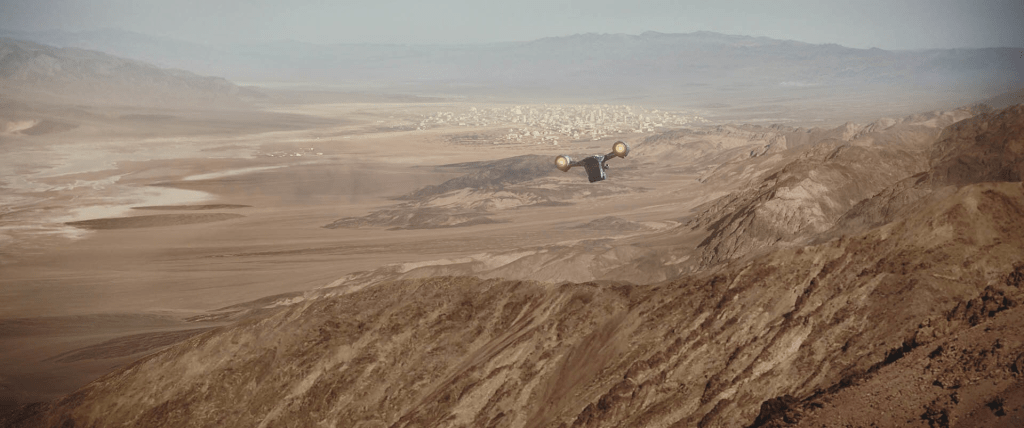
The story begins with the Mandalorian arriving on the iconic desert planet of Tatooine, a nostalgic return to one of the franchise’s most recognizable locations. The episode even revisits the famous Mos Eisley cantina, now quieter and more subdued than in its original appearance. These callbacks are effective in establishing atmosphere, but they also highlight one of the episode’s central issues: a reliance on familiarity over innovation.
Stranded with a damaged ship and in need of credits, the Mandalorian takes on a job from an aspiring bounty hunter named Toro Calican, played by Jake Cannavale. Toro is eager, inexperienced, and desperate to make a name for himself within the guild. He serves as a clear foil to the Mandalorian—where the latter is calm and methodical, Toro is impulsive and naive. We also meet him sitting in the same seat where Han Solo shot Greedo but, unfortunately, Cannavale is no Harrison Ford.
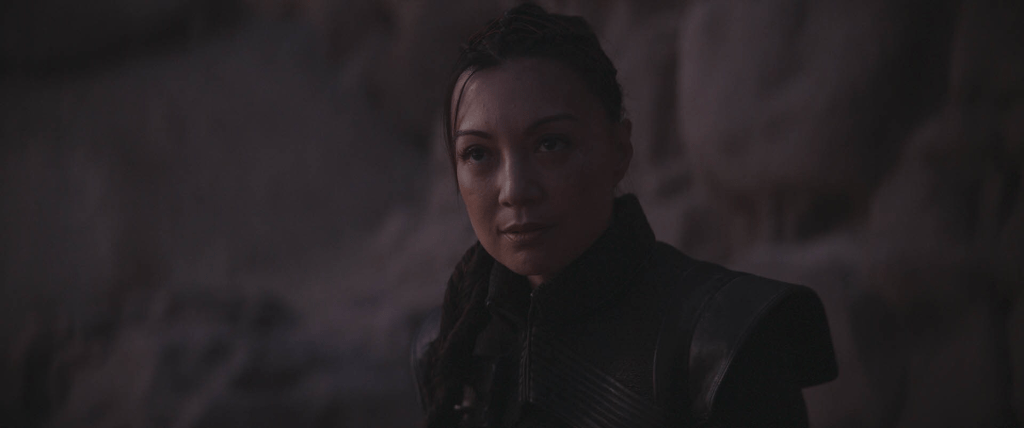
Their target is Fennec Shand, a skilled mercenary portrayed by Ming-Na Wen. Fennec is immediately positioned as a dangerous and capable opponent, and her presence injects a sense of tension into the otherwise straightforward setup. The hunt across the desert highlights some of the flaws in the shows style of shooting but the interactions with the Tusken Raiders does have some engaging movements with some effective world building.
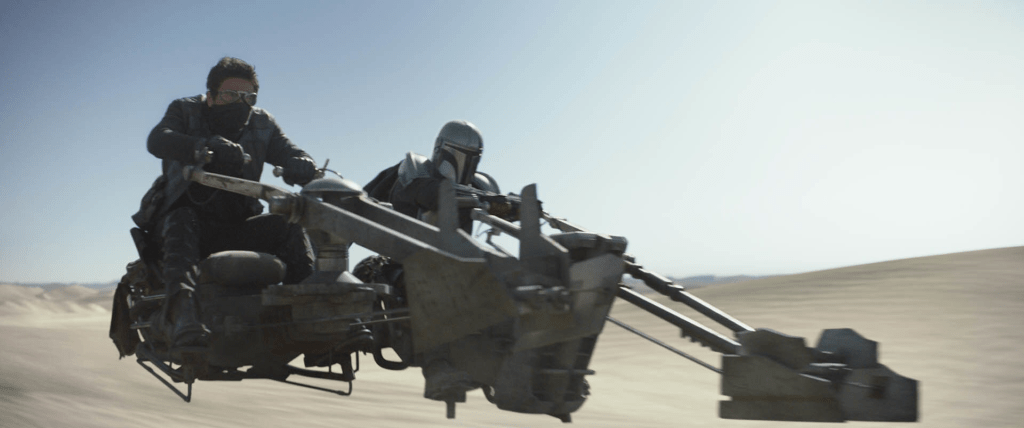
However, the episode’s structure feels simpler than previous chapters. The partnership between the Mandalorian and Toro follows a familiar arc and lacks the emotional connections we’ve seen with characters in earlier episodes. Toro’s character feels underdeveloped, serving more as a plot device than a fully realized individual.
The confrontation with Fennec Shand provides the episode’s most compelling exchange. Rather than simply acting as an antagonist, she attempts to manipulate Toro by exposing the Mandalorian’s situation that he is a fugitive with a valuable target of his own. It’s a moment that hints at deeper intrigue and suggests that the wider galaxy is becoming aware of the Mandalorian’s actions. Unfortunately, this thread is not tugged on as fully as it could have been, and Fennec’s role in the episode comes to a rapid conclusion.
The final act centres on Toro’s inevitable betrayal. Seeking to claim a larger reward, he turns on the Mandalorian, taking the child hostage. This development aligns with the episode’s themes of greed and ambition, but lacks any depth or surprise. The resolution where the Mandalorian outmanoeuvres Toro and eliminates the threat seems confined by the shooting space and lacks any of the emotional or narrative impact of previous climaxes.
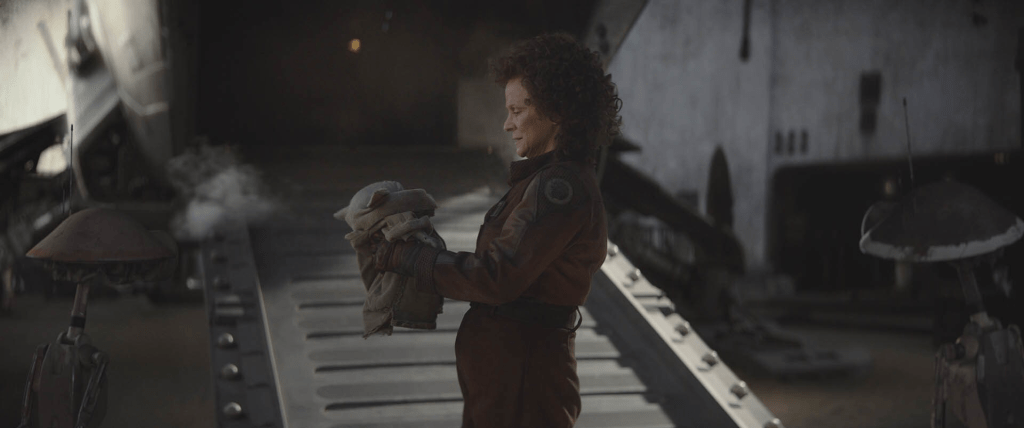
Amid all this, the child remains a consistent presence, though more in the background than usual. Small moments like his quiet interactions with Peli Motto, the mechanic played by Amy Sedaris, provide brief glimpses of warmth and these scenes help maintain the show’s core charm, even when the main plot feels less engaging.
In the end, the Mandalorian repairs his ship and prepares to leave Tatooine, restoring the status quo. Yet the episode closes with a brief, mysterious tease involving an unidentified figure approaching Fennec’s body. It’s a moment clearly designed to spark curiosity, but it also underscores how much of the episode feels like setup rather than payoff, especially if you know who they are hinting at.
As a standalone chapter, The Gunslinger is perfectly watchable. It captures the aesthetic and tone of Star Wars, offers a few entertaining sequences, and continues to develop the Mandalorian’s journey in small ways. We do get two great new recuring female characters introduced but compared to the stronger, more character-driven episodes that precede it, it feels somewhat slight.
Chapter 5 is the first sign that not all TV Star Wars will knock it out of the park but it isn’t a failure by any means. It lacks the depth, originality, and emotional impact that made earlier episodes stand out and by leaning heavily on familiar settings and predictable storytelling, it highlights the risks of a more episodic approach. Still, even at its most uneven, the series remains engaging carried by its central duo, its Star War feel, and the promise of more of what has come before.
🌟🌟🌟
 We Have Issues