
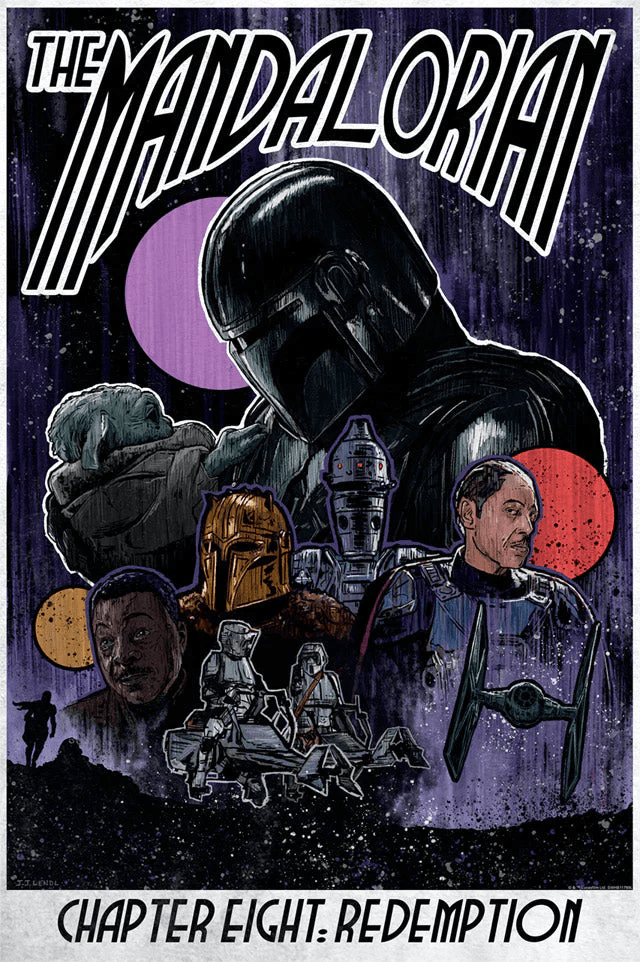

Redemption brings the first season of The Mandalorian to a confident and emotionally satisfying close. After the tension and cliffhanger ending of Chapter 7, the finale wastes no time in delivering on its promise, blending action, character payoff, and thematic resolution into one of the most entertaining episodes of the season. It’s the kind of conclusion that not only rewards viewers who watched every episode and also reinforces the series’ identity as a whole, what was thought to be a bounty hunter mission of the week procedural show is now unmistakably about a father and son.
The previous episode had reintroduced a sense of urgency that had been missing in some of the mid-season chapters, and now the brakes are off as the story barrels towards it conclusion as all the show’s elements have aligned. Its characters, its tone, and its central conflict have all fallen into place to deliver an episode that works from beginning to end.
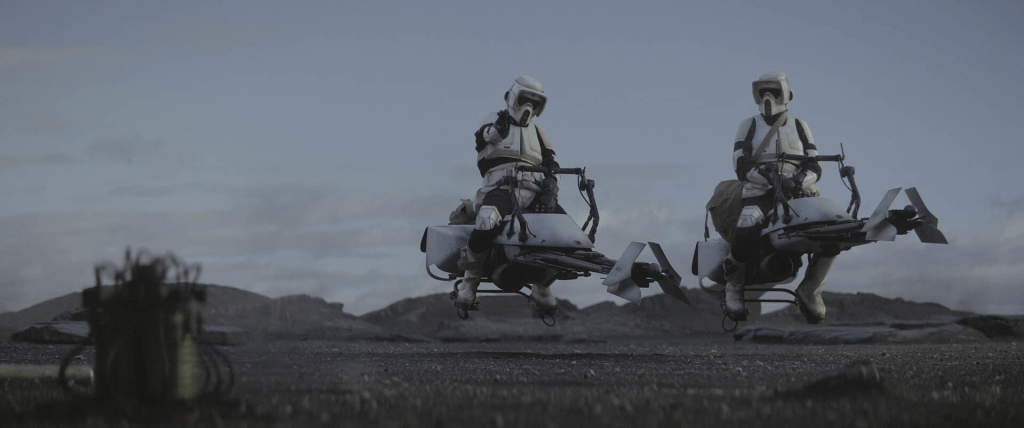
Directed by Taika Waititi, with series creator Jon Favreau continuing on scripting duties, the episode strikes a careful balance between humor and gravity, something that he sometimes struggle with. Waititi’s influence is most evident in the opening sequence, which features two scout troopers (Jason Sudeikis and Adam Pally) casually discussing their situation while guarding the captured child. The scene is unexpectedly funny, containing a troopers can’t shoot straight gag, humanizing characters who are usually little more than faceless soldiers, while also building tension in a subtle way, but once one of the troopers lays hands on the child you know it’s game over for them
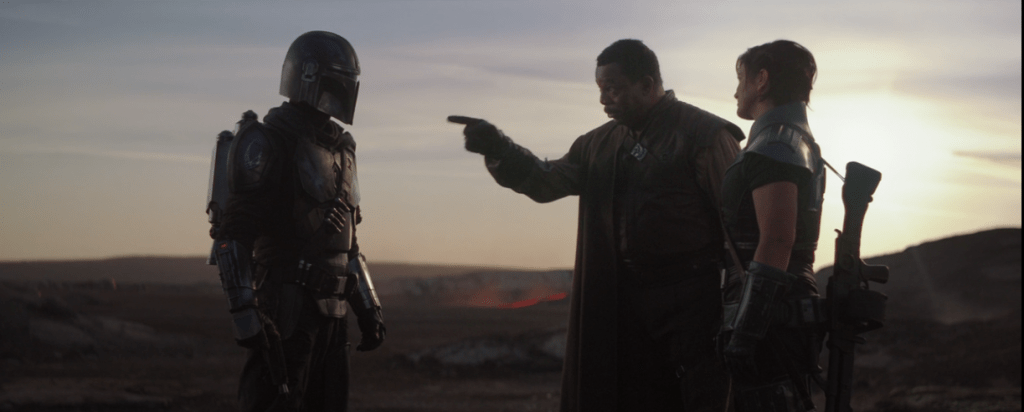
From there, the episode quickly reconnects with the main storyline. The Mandalorian (Pedro Pascal and others), along with Cara Dune (Gina Carano) and Greef Karga (Carl Weathers), remains trapped in a cantina, surrounded by Imperial forces led by the formidable Moff Gideon, portrayed with controlled intensity by Giancarlo Esposito. The sense of confinement established at the end of Chapter 7 carries over seamlessly, maintaining the pressure on the characters.
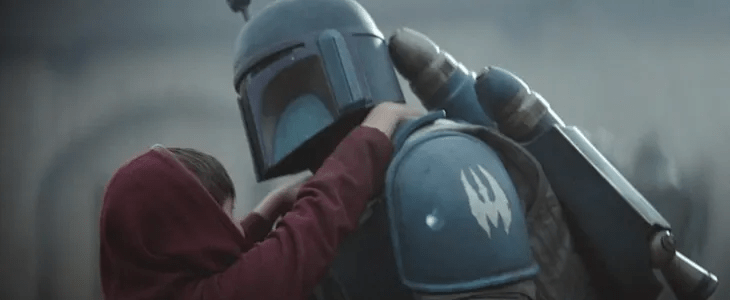
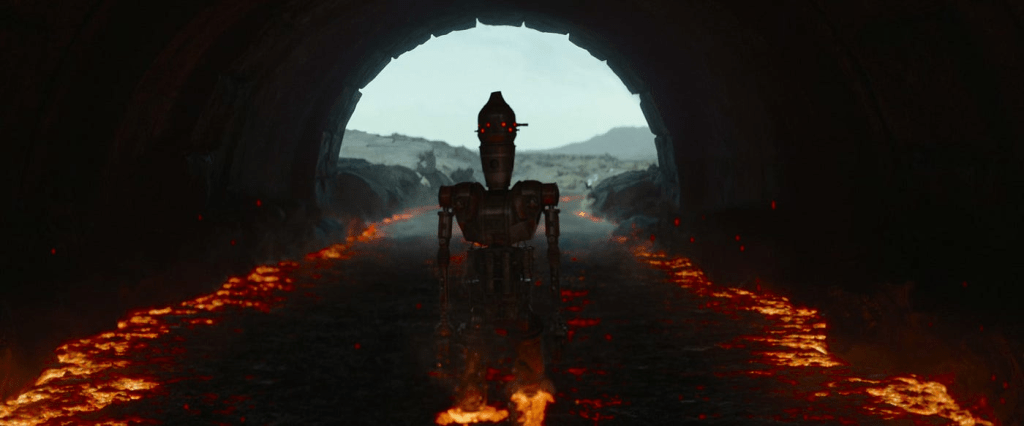
One of the episode’s key strengths is how it pays off earlier setups. IG-11, voiced by Taika Waititi, returns in a dramatically different role from his introduction in Chapter 1. Reprogrammed by Kuiil, the droid now serves as a protector rather than a killer. His arrival, carrying the child to safety, is both thrilling and unexpectedly touching, reinforcing one of the season’s recurring themes: that identity can change.
The action sequences in Redemption are the strongest of the season. The shootouts in the street, escape from the cantina, the fights in underground tunnels, and the eventual confrontation with Imperial forces all press the right buttons. Each set piece builds naturally from the last, maintaining a sense of progression rather than spectacle for its own sake. Its the style of cliffhanger serials that George Lucas was always aiming for.
Amid the action, the episode also delivers important character moments. First we finally get the reveal of the Mandalorian’s name – Din Djarin – which is information dropped by Moff Gideon, setting him up as an all-knowing villain. Then Din is forced to remove his helmet for the first time. This moment, handled with restraint, adds insight into the strict code he lives by. It’s a quiet but meaningful development, emphasizing that beneath the armor is a person shaped by trauma and tradition. The episode also expands on Mandalorian culture through the revelation of the Armorer’s role and the concept of the Mandalorian as a foundling. These details add context to why Din so protective of the child. What began as a job has now become something much more personal.
The climax, involving IG-11’s sacrifice, provides one of the season’s most emotional moments. The droid’s decision to self-destruct, something that was played for laughs in the first episode, is handled with surprising poignancy, turning a once-comedic and mechanical character into a symbol of selflessness. Although dead, Kuiil’s influence remains strong and a reminder of the show’s ability to find humanity in unexpected places.
The final confrontation with Moff Gideon is effective not because of its scale, even though it’s the biggest set pieces so far, but because of what it represents. Gideon is not just another antagonist; he embodies the lingering threat of the Empire and the danger it poses to the child. His presence now gives the series a clear ongoing villain, even as the immediate conflict is resolved. The final moments ensure that the larger narrative remains open. Gideon’s survival and his possession of the Darksaber, a weapon with deep ties to Mandalorian history, add a new mystery and set the stage for future conflict. The story has now evolved from a small Star Wars side story to become heavily embedded into the mythology of the universe. This, alongside Din accepting his role as the child’s protector, setting out on a new journey to reunite him with his kind, redefines the show going forward.
With its strongest elements fully realised, the series ends its first season not just on a high note, but with the promise of even greater things to come.
 We Have Issues