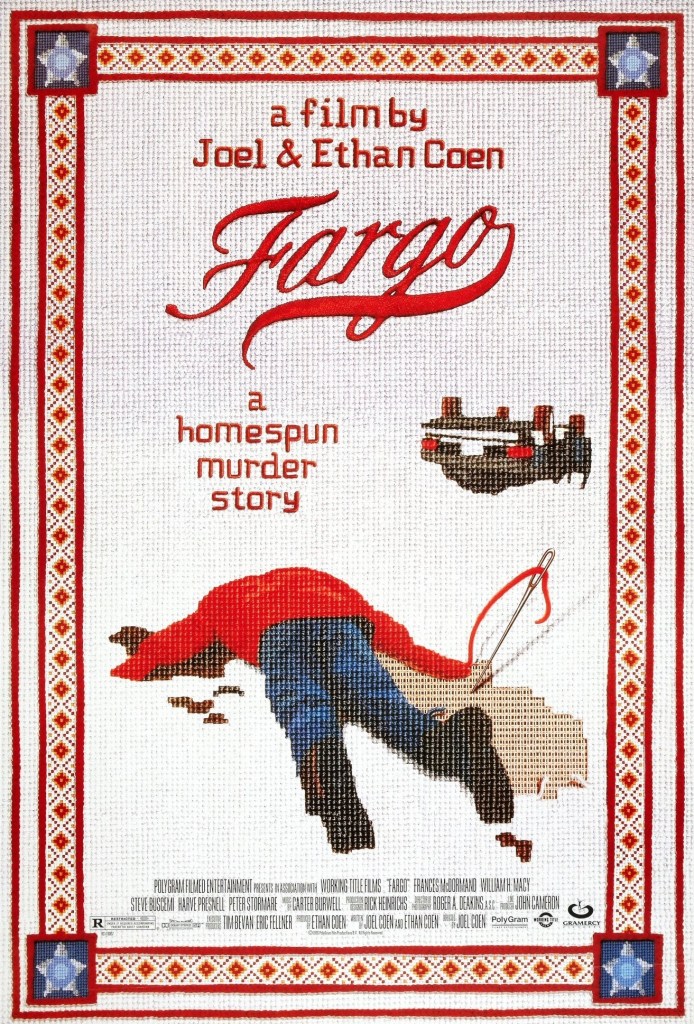

In the world of the crime movie, nothing hits quite like a series of unfortunate, criminal events like a Coen Brothers film. In fact, they’d started their career with the immensely sweaty, incredibly panicky Blood Simple that saw a small act of infidelity snowball into something horrifically out of control that featured premature burials, impaled hands and a whole bunch of fatal misunderstandings. However, after licking their wounds from the critical and commercial lambasting they received for screwball comedy, The Hudsucker Proxy, the two brothers from Minnesota struck back with a film that not only proved to be inherently personal, but also may be the finest example of the darkly ironic crime epic they ever managed.
Swapping out the oppressive heat of Texas for the pure white wastes of the the midwest, Fargo sees small time crooks get into some big time troubles when a kidnapping brings in the unlikliest bloodhound you can imagine – the heavily pregnant form of Brainerd Police Chief Marge Gunderson.
Minnesotan car salesman and professional sadsack Jerry Lundegaard is in a bit of a bind. Desperate for some cash, he’s cooked up a plan to hire a couple of guys to kidnap his wife in order to extort money from his wealthy father-in-law in the form of a ransom. However, the two men he’s managed to do this job – the stoic, imposing Gaear Grimsrud and the weasley, motor-mouthed, Carl Showalter – aren’t exactly polished career criminals themselves and while the kidnapping goes ahead, a string of incidents on the long drive through Brainerd leave three random bodies strewn in the snow.
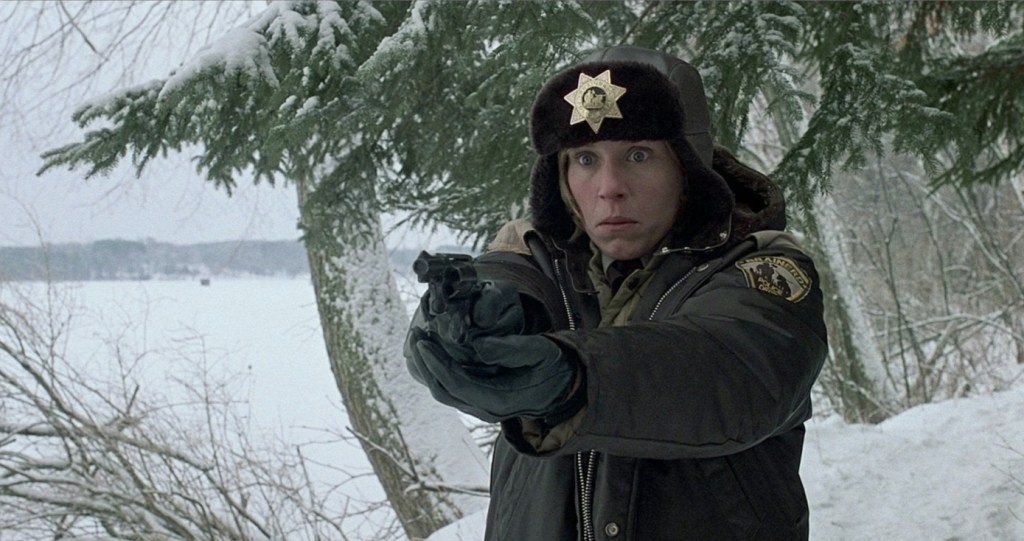
Enter Brainerd Police Chief Marge Gunderson, a down to earth sort of gal with a mind like a steel trap, a sunny disposition and a hankering to solve some murders is only her dang blasted morning sickness wasn’t acting up. That’s right, Marge is about seven months pregnant, but that isn’t the sort of thing that slows a woman like her down and as her investigation starts to tighten the net, life keeps insisting on interfering in the poorly laid plans of Jerry Lundegaard. For a start, the hapless salesman can’t manage to keep his headstrong father-in-law from getting fully involved, which starts to make the proposition of a hand-off pretty shaky and complications matters even further is the fact that Carl is willing to fuck over everybody to get more than his “fair” share of the loot, while Gaear seems to be missing some vital bats in his blonde-haired belfry.
However, as Jerry’s plans rapidly collapse into disaster and more lives are inadvertently claimed in his quest to obtain that ill-gotten cash, it’s simple Marge who ends up tightening the screws the most as it seems to be she who is destined to unravel all the chaos that’s turned into a murderous knot.
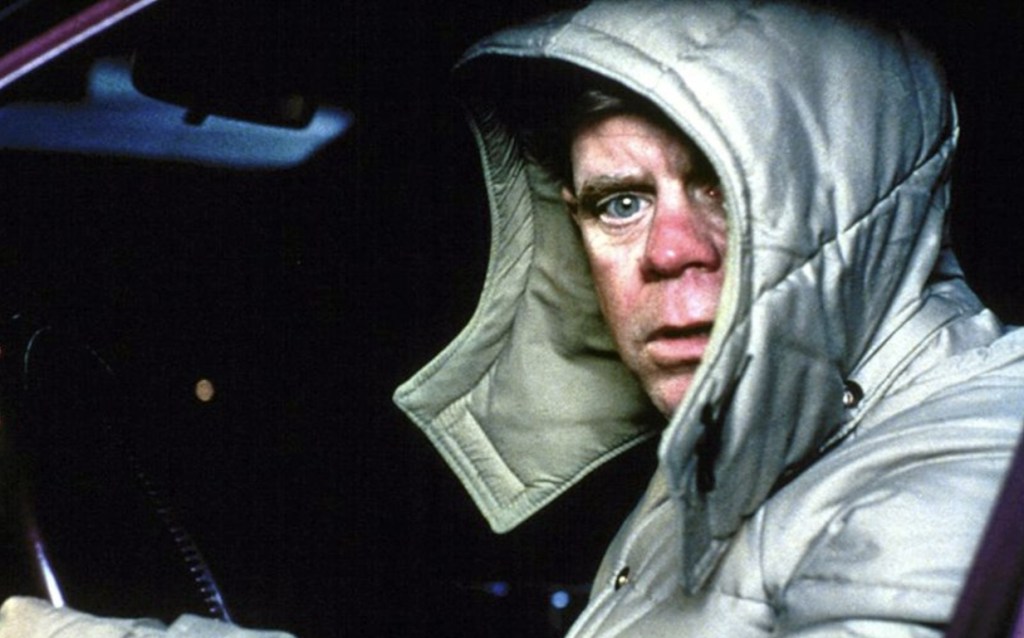
While most people were drawn to Fargo due to the mix of fatalistic irony and perpetually cheerful Minnesota accents (down a shot after every “Yah” or “You betcha” and you’ll be dead), I’ve always embraced it for the skillful juxtapositioning of a genuinely sad tragedy with the simple bliss of Margie and her schlubby husband, Norm, be placed side by side with the rapidly imploding life of Jerry Lundegaard and his disasterous get rich quick scheme. The secret is all in the dialect. With the majority of the cast blurting out that almost musical Minnesotan twang, it mamages to enhance the different aspects of the various players – with Frances McDormand’s Marge it comes off as happy-go-lucky proof of her innate honesty despite the fact that her frumpy, pregnant waddle masks the fact that she’s by far the smartest one in the room. Alternatively, William H. Macy (looking the most hangdog Hollywood’s most hangdog man has ever looked) utilises the dialect to highlight truly what an emotionally impotent man his loser is, with every “Heck” and “Darn” sounding more and more pathetic as his plan causes yet more death. On the other hand, even those who don’t have the accent are marked by it with Steve Buscemi’s “funny lookin'” crook and Peter Stormare vacant faced heavy consistently looking irritated at the way everyone else speaks.
I mentioned earlier how the Coen’s mastered snowballing disaster fairly early in their career with the spiritually similar Blood Simple and then later with the similarly nihilistic No Country For Old Men, but with Fargo they get to do it with real snow. In fact, the dazzling, white vistas prove to offer some of the most beguiling visuals the Coens have ever delivered – especially as the darkening souls of various wrongdoers seem particularly shady surrounded by that much pristine frost.
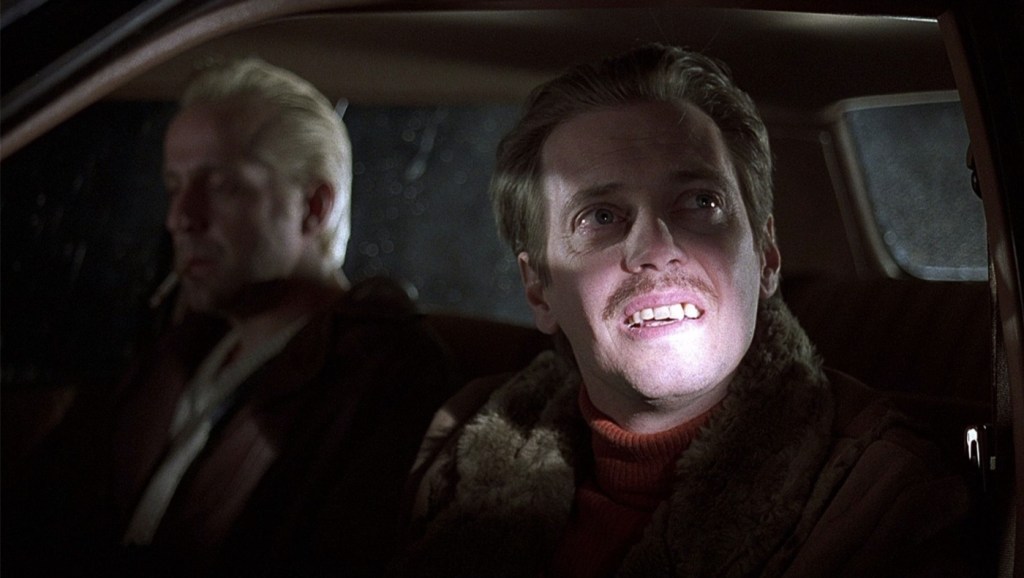
However, for all the needless death, violence and Carter Burwell’s truly magnificent and strangely epic score, the Coens naturally ensure that Fargo is very, very funny. Obviously the rapid-fire deployment of all those “Yah”s help (each one reportedly meticulously planned and scripted), but even from the opening title card that cheekily claims that the film is based on a true story (it isn’t) the brothers cleverly keep things just on the right side of absurd. From Margie dealing with that morning sickness while examining a frigid corpse, to Jerry repeated practising his worried husband phone voice only to instantly stumble at a receptionist, the entire film is packed with tiny, subtle moments that off set the grander moments of violence.
“Blood has been shed, Jerry!” growls Carl over the phone as the idiotic kidnap plot starts to go off the rails and while the Coens have never shied away from splashing the red stuff, there’s something about all that pure virgin snow and cheerful accents that makes the nastier parts of Fargo doubly nasty. In fact, while watching a stray bullet excruciatingly tear open Carl’s jawline and witnessing that gout of blood that sprays from a murdered cop’s head are prime examples of vicious, Coen Brother death dealing, surely Gaear’s innovative use of a wood chipper stands out as a perfect example of the balance between ghoulish and blackly hilarious that the filmmakers achieve so well.
Quite possibly the crown jewel of the “idiots do crime” end of the Coen spectrum, what stick most of all in a movie filled with memorable things is just how absurdly normal these people are. The bad guys are not masterminds and the heroes aren’t polished white hats – they’re just people which ends up being the exact thing that makes Fargo so special. “There’s more to life than a little money. Don’t you know that?” admonishes Marge in the climax, going from dowdy warrior woman to mother hen in the blink of an eye, and it’s strange that a story so bleakly tragic can also deliver some heartfelt hope.
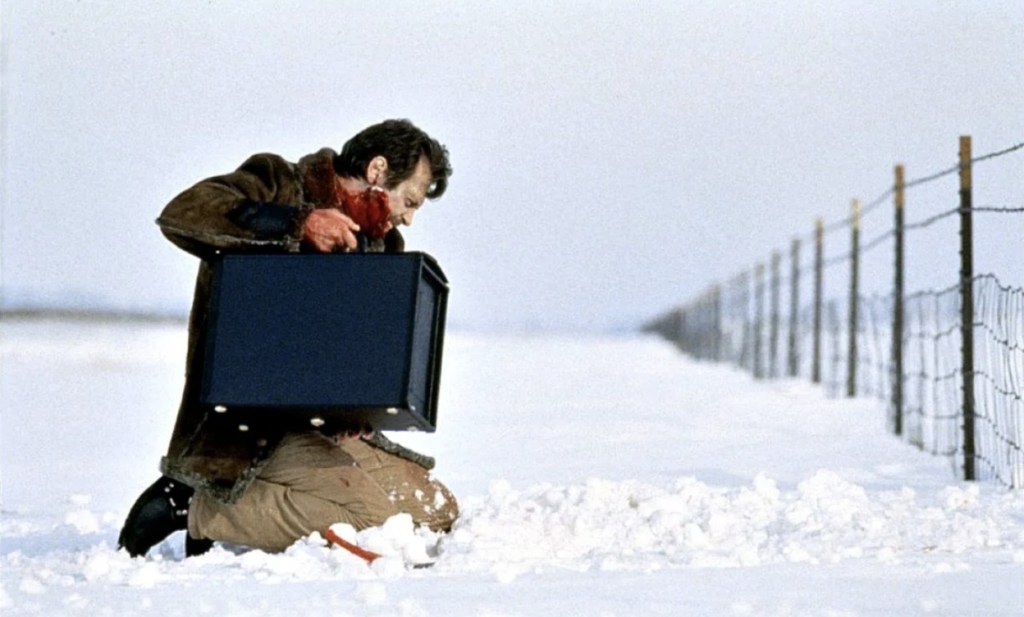
Nailing every single thing that the Coens were known for and then elevating it into something extra special (Oscars were forthcoming to an extremely worthy Frances McDormand and the brother’s script writing skills), Fargo delivers a crime-doesn’t-pay method with their usual, eccentric flair. A stone cold candidate for the Coen’s best? Oh yah, you betcha.
🌟🌟🌟🌟🌟

 We Have Issues