
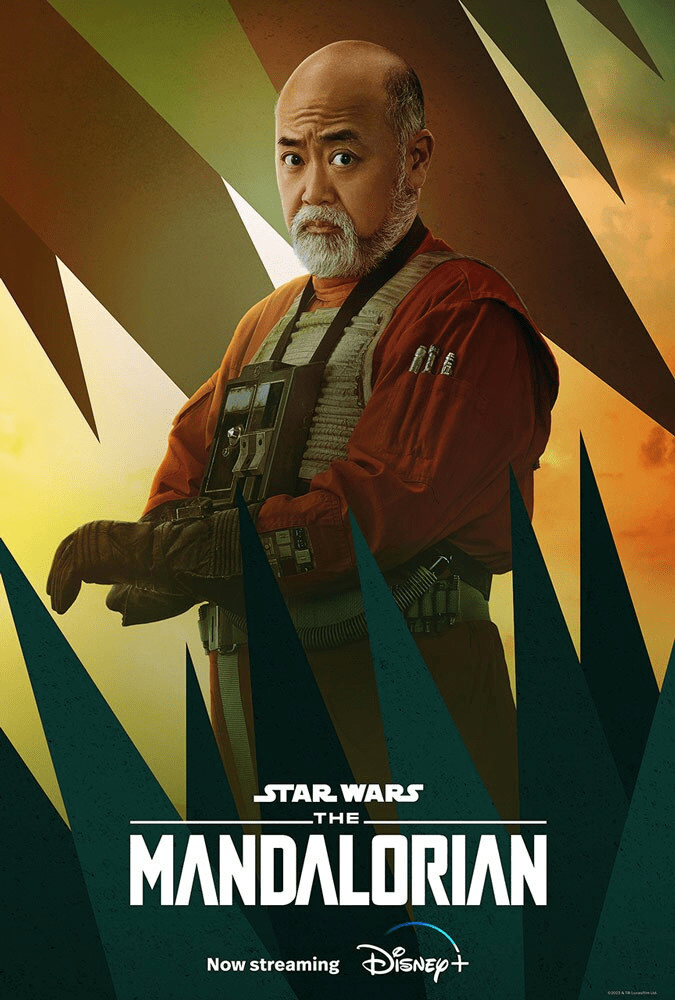

The Pirate is a pivotal episode that blends action, character progression, and wider world-building into something that feels both satisfying and purposeful. After a couple of strong episodes that felt like side stories or filled in the background, we get one that pushes the season’s narrative forward while still taking time to reinforce the evolving identity of its central characters, the growing importance of Mandalorian culture, and the lingering threat of Imperial remnants. This is also one of the series most entertaining episodes for pure Star Wars action.
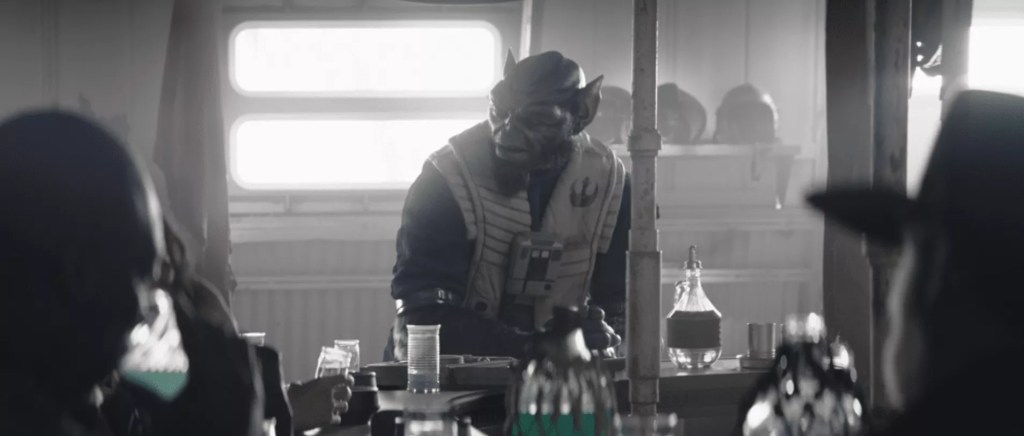
Directed by Peter Ramsey, with Jon Favreau continuing to shape the series, the episode wastes little time in establishing its central conflict. The pirate Gorian Shard launches an assault on Nevarro, setting the stage for a rescue mission that draws together multiple factions. It’s a classic setup, one that leans into the Western and adventure serial roots that have always underpinned the show.
At the center of it all is Din Djarin, voiced by Pedro Pascal, whose role continues to evolve from lone bounty hunter to unifying figure. His decision to rally the Mandalorians in defence of Nevarro highlights how far the character has come since the early days of the series. He’s no longer simply surviving, he’s leading, negotiating, and, perhaps most importantly, choosing to stand for something beyond himself.
The episode also places significant emphasis on Bo-Katan Kryze, played by Katee Sackhoff. Her arc continues to gain momentum here, as she transitions from a figure of quiet disillusionment to one of renewed purpose. The Mandalorian covert’s acceptance of her leadership, particularly after her experience on Mandalore, adds an emotional weight to the action that elevates the episode beyond a simple rescue mission.
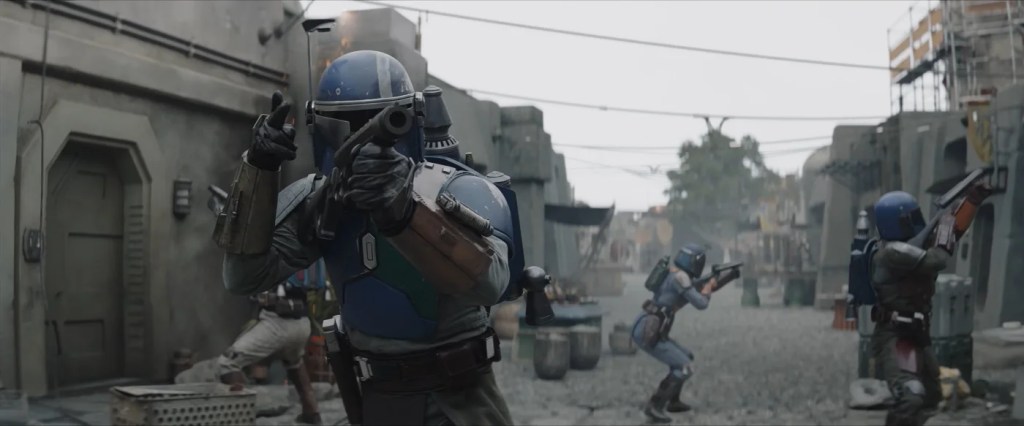
The battle for Nevarro is the episode’s centrepiece, and it delivers on a visual and kinetic level. The coordinated assault by the Mandalorians showcases their distinct skills and weaponry, creating a dynamic sequence that feels both chaotic and controlled. Jetpacks, aerial combat, and tactical teamwork all come into play, emphasising the idea that this is no longer a scattered group of survivors, but a functioning unit with a shared goal.
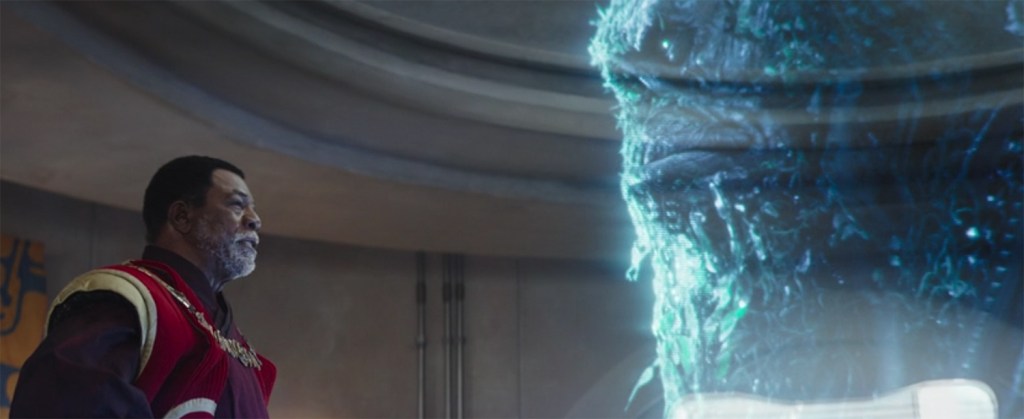
The episode also revisits Nevarro’s transformation under Greef Karga, portrayed by Carl Weathers. Once a lawless outpost, the planet is now presented as a thriving community worth protecting. This evolution mirrors the journey of the Mandalorians themselves, reinforcing the idea that change, while difficult, is possible.
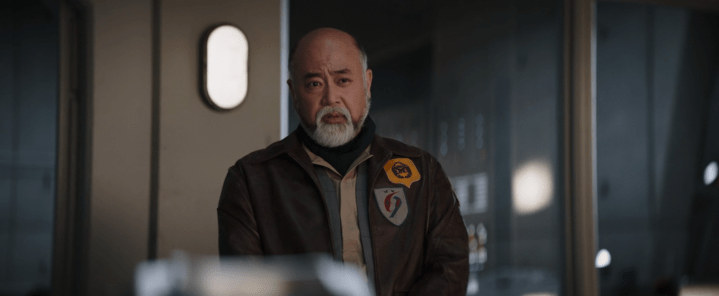
There is also an interesting sidestep into the state of the galaxy, something that hasn’t really been touched on until now. The involvement of the New Republic, particularly through Captain Carson Teva, adds another layer to the story, suggesting that the galaxy remains far from stable. These elements don’t dominate the episode, but they provide a sense of continuity and build anticipation for what lies ahead with a cliffhanger about the fate of Moff Gideon
The only real issue with the episode is that every thing plays out a bit too easily. The central conflict is resolved cleanly and efficiently, without the kind of moral ambiguity or narrative complexity seen in some of the season’s more ambitious chapters. While a satisfying experience, it also means the episode doesn’t stick with you as much as others. That said, this straightforward approach is also part of its strength with a return to the core elements that make The Mandalorian so entertaining. It delivers action, character progression, and a sense of forward movement, all without being overcomplicated.
In its closing moments, the episode reinforces the growing importance of Bo-Katan’s leadership, setting the stage for the conflicts and alliances that will define the rest of the season. It’s a quiet but significant shift, one that suggests the story is building toward something larger. The cliffhanger also poses questions that could shape the series going forward.
This chapter may not take the same risks as some of the season’s more experimental episodes, but it excels in execution, delivering a clear, engaging story. It’s the kind of episode that reminds you why the series works so well at its best – focused, character-driven, and rooted in a world that continues to feel rich with possibility.
⭐⭐⭐⭐

 We Have Issues