


And so here we are. After thirteen episodes and some rather odd, late in the day story decisions, we’ve finally made it to the end of the second series to come out of the union between Marvel and Netflix and it’s something of a relief to say that, for the most part, Jessica Jones gets back on track.
It’s been a weird experience watching a show that initially tried so hard to be something completely different to – yet equally gritty as – Daredevil suddenly peak three episodes too soon and then ditch a lot of its edgier, braver stuff in favour of more standard superhero plotting. But while we’ve weathered random subplots taking point, a main villain who disappeared from the show for an entire episode two installments from the end and a whole bunch of unsubtle foreshadowing for at least three other shows, it’s time to belatedly pull focus and lock on to what truly matters – the belated takedown of a mind controlling rapist. Over to you, Jess; he’s all yours.
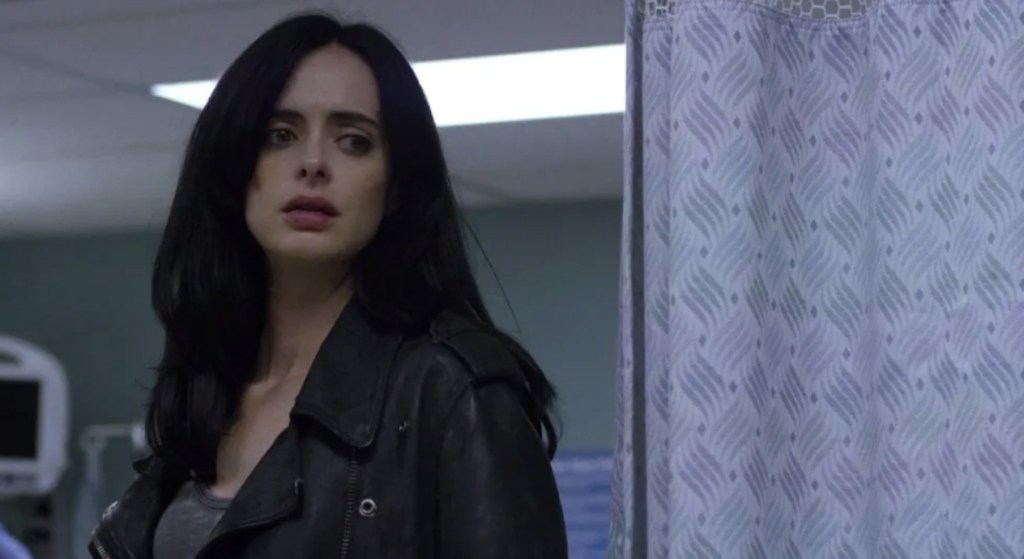
After halting Luke Cage’s Kilgrave controlled rampage by shooting him point blank in the face with a shotgun, Jessica Jones has discovered that while her former lover’s skin may be unbreakable, those squishy inside bits don’t take particularly kindly to such trauma. Getting him to the nearest hospital, Jessica is lucky enough to bump into Claire Temple, a nurse who has some experience treating the superheroes of New York thanks to her frequent run-ins with Daredevil. Once again going above and beyond the call of duty, Claire not only manages to help Jones smuggle the comatose Cage back to her apartment, but immediately starts improvising treatment to treat someone with a brain injury who can’t be operated on in the conventional sense.
Meanwhile, Kilgrave is growing increasingly agitated about the fact that his augmented powers still isn’t enough to control a Jessica who is still immune to his commands. Demanding that his enslaved father pumps the rest of his experiments into his system, the mind controlling misogynist maxes out his abilities and prepares to set another trap for the object of his affections to either control once more or kill her outright.
Teaming once more with adopted sister, Trish, the pair plan to try and draw out Kilgrave once and for all only to discover that his power upgrade has given him a small army of armed police and some random passers-by to act as both his spear and shield. But even if Jessica can get past them while still hopefully being immune to his enhanced powers, can she finally do what needs to be done and put the manipulative prick out of everyone’s misery, much less her own? In the aftermath, Jessica’s sense of self-worth may still be fairly low, but it seems that her story has caused a growing number of people to think otherwise…
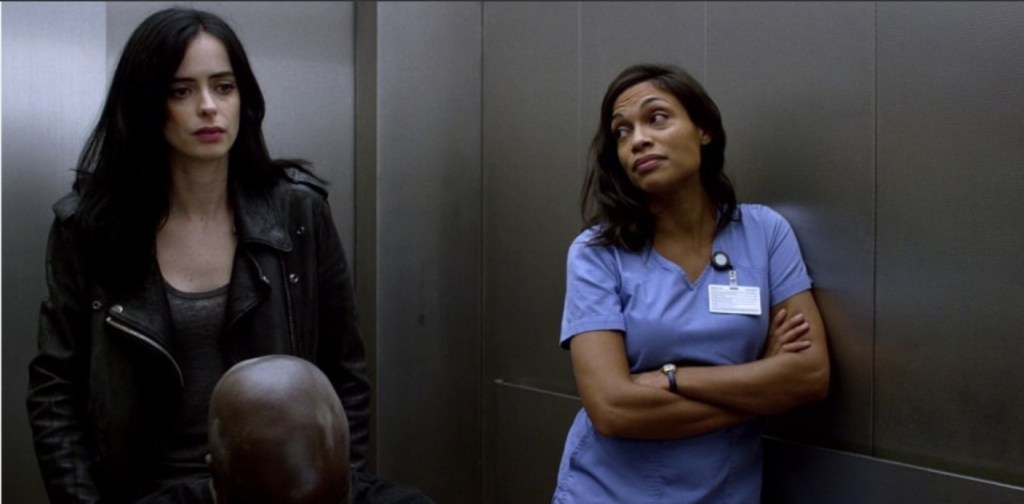
While “AKA Smile” may not equal the heights the show enjoyed around midway through the season, it does manage to reconcile both it’s gritty social commentary on assault and it’s MCU friendly leanings into a whole that finds something of a happy medium. Yes, there’s a final battle to be carried out that ultimately offers up a more satysfying and neater conclusion than many rape survivors actually get and yes, the MCU cameo machine deploys Rosario Dawson’s Claire Temple ludicrously late into proceedings to continue that all-important superhero brand synergy, but after two episodes of the show obviously treading water, the fact we’re now moving towards an ending makes a world of difference. However, while Kilgrave is long since due for a good old fashioned shit-kicking, we have to deal with a bunch of other plot-stuff first. After all, we’ve future shows to promote.
Yes, I sound rather abnormally pissy for someone who does genuinely love the MCU, but Jessica Jones was one of those rare entries that functioned far better when it was acting like it’s own protagonist and keeping the rest of the world at arms length. Whenever the greater MCU tended to peek it’s head in was the times when the show managed to lose both it’s focus and it’s powerful message which prove to be far beyond anything we’d found in the franchise thus far. However, the first half of the episode still has to resolve the whole Luke Cage-in-a-coma thing, but while all this dallying with other plots has tended to cause the show to drag, the return of Temple actually manages to be something of a welcome addition despite occuring at a potentially distracting time.
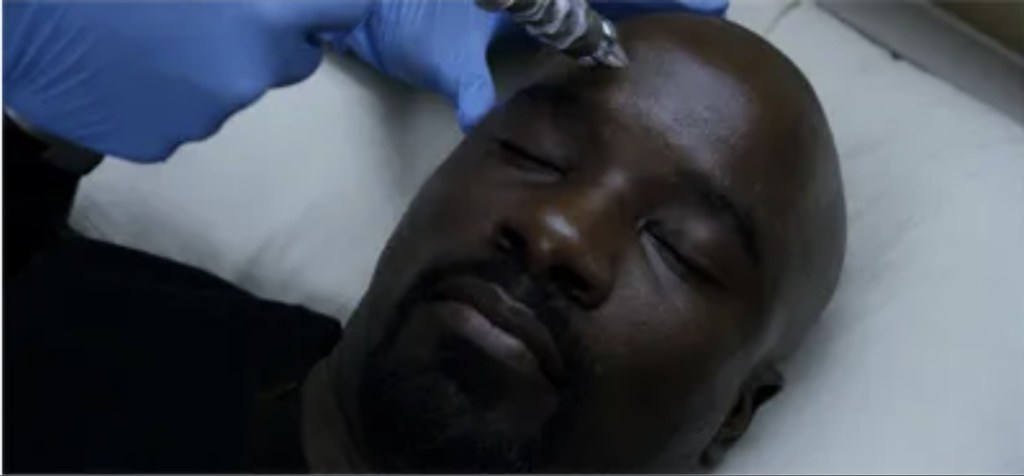
Instead, watching Dawson and Krysten Ritter’s characters bond adds yet more credibility to the woman-sentric plot as the two battle to save Luke Cage from a battle he can’t bounce back from on his own. In fact, while the sub-ER plot to remove excess fluid in Cage’s brain via the only means available to them (through the eyeball, folks), should once again be yet another frustrating diversion, it ends up being the most gripping thing the shows done in the last three episodes. I guess it also helps that we finally get to that final battle that was teased way back in episode 10, so once we’ve gotten our nods to both Daredevil, Luke Cage and even the inevitable, upcoming Defenders show, it’s finally on to the last showdown with David Tennant’s Kilgrave.
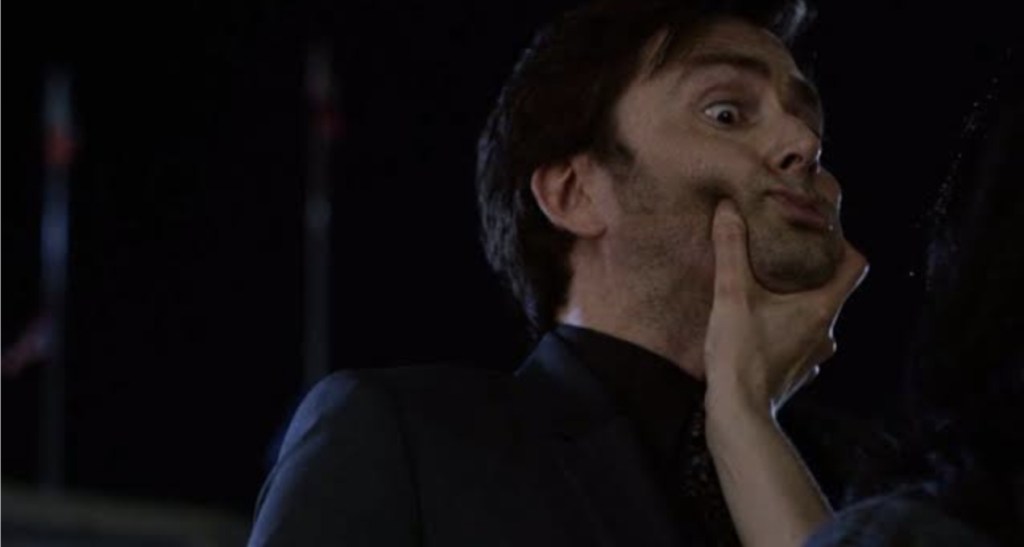
In many ways, Tennent’s villain has truly been the show’s purple crown jewel thanks to the fact that, unlike other Marvel villains, the show actively hopes that you fucking hate him. Entitled, petty and utterly lacking in anything approaching responsibility for any of the unspeakable acts he’s routinely responsible, the actor’s talent for petulant snark made him easily as nuanced as Vincent D’Onofrio’s Kingpin or Tom Hiddleston’s Loki, while still being a truly odious being to boot. The fact that he’s so effective, means that after his immensely satisfying death (Jessica pops his neck like a breadstick after fooling him about her compliance), there’s something of a worry that any subsequent seasons will struggle finding a suitable follow up, but that’s a season 2 problem and nothing to worry about on the here and now.
In a time when women superhero characters still struggled to find their voice outside of purely suiting the male gaze (Scarlett Johansson’s Black Widow may have gotten a character upgrade in The Avengers, but she still was made to lead with her butt on the posters), Jessica Jones allowed Krysten Ritter to not only break the usual stereotypes assigned to cape wearing heroines, but also dug deep in making her a flawed, antisocial and very human protagonist who frequently dulled her urge to do good with hard liquor and a “fuck you” attitude.
While certainly too long at thirteen episodes, Jessica Jones defiant middle finger at toxic masculinity proved that you don’t need a skin tight super suit and personality transfusion to fight evil when jeans, a leather jacket and a surly demeanour can do the job just as well. But it was the darker, rawer places the show chose to go that made it truly stand out and while Jones rightly despised being ask by a guy to change her grumpy demeanour, at least she gave us something to smile about.
🌟🌟🌟🌟

 We Have Issues