
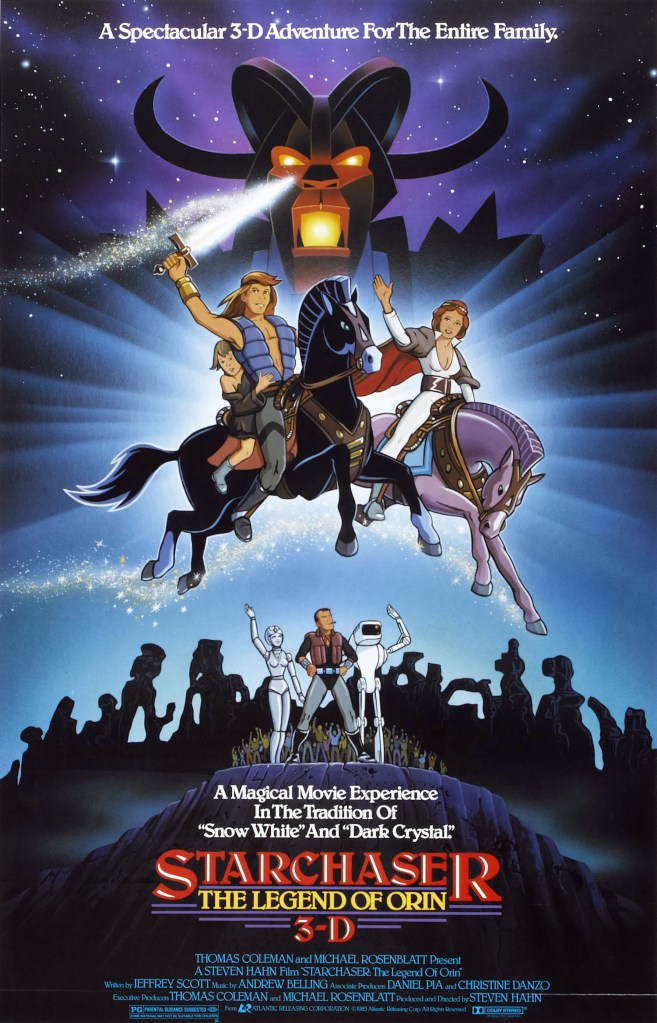

It’s the mid-eighties and with the sound of an exploding Death Star and celebrating Ewoks, the Star Wars Trilogy has come to an end with Return Of The Jedi. In the power vacuum that followed, it seemed that not even Lucasfilm could satisfy the lust for sci-fi/fantasy that it had created as all it had to offer was Ewok related media that no one seemed to particularly want. If the hunger for Star Wars style content was insatiable before, it was nigh on crazed now…
In this light, a lot of the movies that came out in the wake of the holy trilogy ending were treated quite harshly by critics and audiences upon their original release – which is understandable considering the lack of originality at the time was fairly annoying. But now decades have passed, isn’t it about time we give dome of these pretenders a reappraisal and try to see past all the Luke Skywalker and Han Solo clones in order to hunt for any quality within? Yes there’s glowing swords, yes there’s sassy droids, but is their any part of forgotten animated epic Starchaser: The Legend Of Orin that stands on its own?
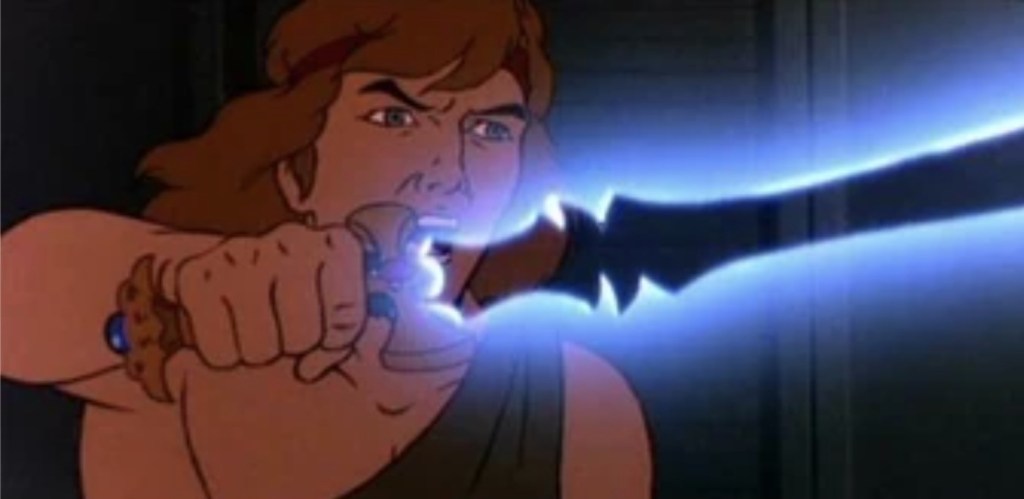
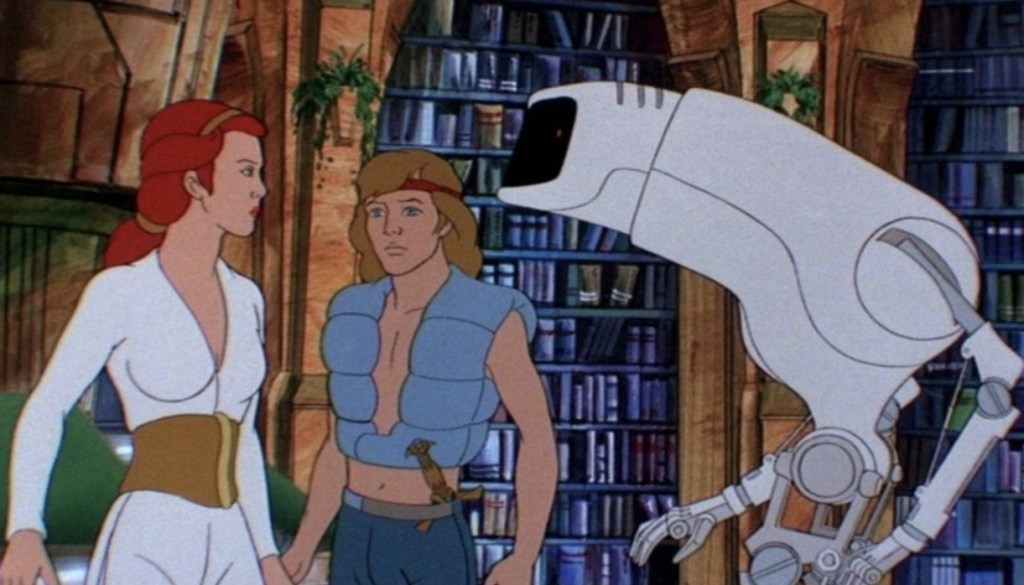
Miles beneath the surface of planet Trinia exists Mineworld, a subterranean slave colony that’s been brainwashed over the generations to believe that toiling under the lash of their robot masters is what their gods wishes for them. In this grim existence exists Orin, a young, idealistic Skywalker type, who quietly rages against their God, Zygon, while trying to support his ailing family. But one day he stumbles across the jewelled hilt of a bladeless sword that projects the message that Mineworld is a lie, so Orin and his girlfriend, Elan, decide to try for the surface and search for that missing blade in order to free their people.
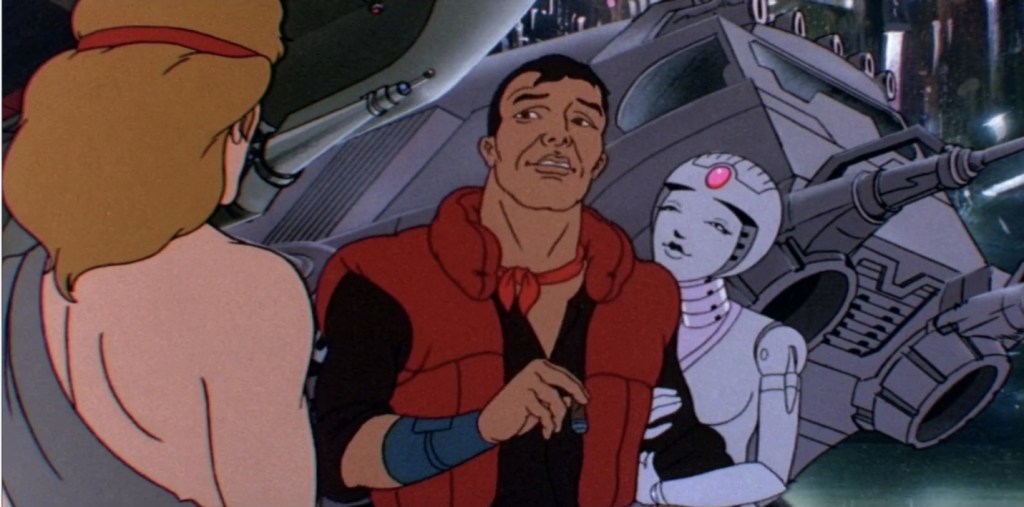
Obviously, the evil Zygon isn’t about to let his crystal mining scam go south thanks to a couple of kids, especially as his plan also includes a spot of universal conquering, but while Elan is killed, Orin makes it to the surface and begins an adventure that takes in all the familiar tropes of sci-fi/fantasy flicks at the time. Hooking up with swaggering smuggler, Dagg Dibrimi, his scaredy-cat ship’s computer, Arthur, and a reprogrammed robot secretary they pick up along the way, Orin travels the galaxy trying to find the missing piece of the mystical sword that could save his people from Zygon’s tryanny.
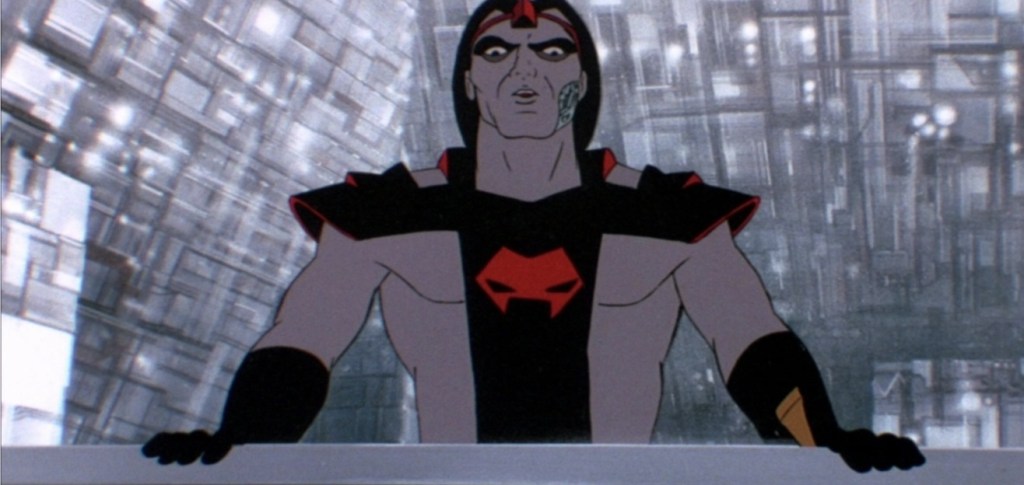
However, as he lurches from adventure to adventure, Orin not only discovers that Zygon has a few more secrets up his despotic sleeve than galactic subjugation and crystal hording. It seems that there’s a whole secret history going on here that involves that hilt, a legendary race known as the Kha-Khan and the reason Zygon surrounds himself with so many robots. Can Orin find the blade he so desperately needs, or will it turn out that that the power was inside him all along? That was sarcasm – of course it does.
Decades after it was released, part of the fun of Starchaser: The Legend Of Orin is spotting exactly how much of George Lucas’ legendary franchise has been co-opted and panel beaten into a new shape to slot into the plot director Steven Hahn has in mind. Why anyone thought we wouldn’t notice the shameless grand theft Jedi that’s occuring by basing the entire plot around cyborg villains, gold-hearted ruffians who put the smug in smuggler, and swords with a suspiciously familiar blue glow, I’m not sure, but what was shamelessly derivative back in ’85, ends up being rather reassuring these days, even if new ideas are noticably thin on the ground. However, what manages to stand out most is the animation style which seems to exist in a sweet spot somewhere between Don Bluth and Heavy Metal that isn’t afraid to go to some truly weird places.
Like a lot of movies aimed at kids that was made during that anything goes, cocaine snowstorm known as the 80s, what really endures is the decidedly kid-unfriendly shit that exists within Starchaser’s runtime. For a start, this is one animated family film that has no qualms about racking up something of a disturbing body count that sees feeble old men take the lash of a laser whip to the eyes, teenage boys get crushed in cave ins while their mothers wail in horror and – most ballsy of all – the outright strangulation of the female lead barely twenty minutes into the film. Yes, rock musician-haired Orin delivers some Skywalker-level whining, but I’d argue that he’s actually got something of a point considering what he’s been through already – especially considering he’s utterly clueless about the world above and the universe beyond. But still the child-traumatising onslaught continues; half mutant, half robot Man-Droids try to harvest our hero for his organs, robots blow their own brains out for comedy value and, most infamous of all, cigar-chomping, Dagg Dibrimi changes the short tempered personality of robo-babe Silica by gagging her with tape and fiddling with circuitry that’s located under the dump truck of her metel butt. While you reel from the sight of human/robot sexual assault played for laughs in a kids film, there’s something else that’s worth noticing in this film that all but been forgotten.
Not only was Starchaser a bold venture into 3D (the murky red and green kind, not the James Cameron approved stuff), but a lot of the animation was bolstered by some early use of CGI which gives the spaceships and impressively weighty, three dimensional look even when viewed in two dimensions. But rather than just slapping CGI animation directly into the film regardless of the fact that it would completely different from the rest of the film (like The Last Starfighter, for example), Starchaser managed to retain the hand-drawn cell animation throughout which give it a unique visual edge that almost makes up for all the sexual fetishes it probably awakened in people later in life…
However, while it contains all the hallmarks of a jaunty Star Wars cash-in such as copious laser fire, bass-voiced villains and some unfortunate racial stereotypes (not sure what featuring gold-toothed Arabs on an alien planet was supposed to achieve), all of Starchaser’s quirks and technical achievements aren’t enough to stop it from both getting quite saggy in the middle and being far to similar to its “source material” to really take flight on its own. Still, if you fancy a trip back to mid-eighties sci-fi that delivered mascara wearing, cyborg slave owners and a secondary hero that had a receading hairline and openly did “butt stuff” with shapely female robots, this star is definitely worth chasing for a blast of disposable, if pretty fucked-up, nostalgia.
Older viewers who remember watching this in their formative years will probably be amused at all the truly questionable shit filmmakers were getting away with back in the day, while newer watchers may be horrified at how cavalier filmmakers used to be with our childhood. But regardless of your stance, Starchaser: The Legend Of Orin proves to be a fascinating minor footnote in forgotten, Star Wars baiting cinema.
🌟🌟🌟

 We Have Issues
I remember this one and I certainly remember enjoying it. Thanks very much for your review.
LikeLiked by 1 person