
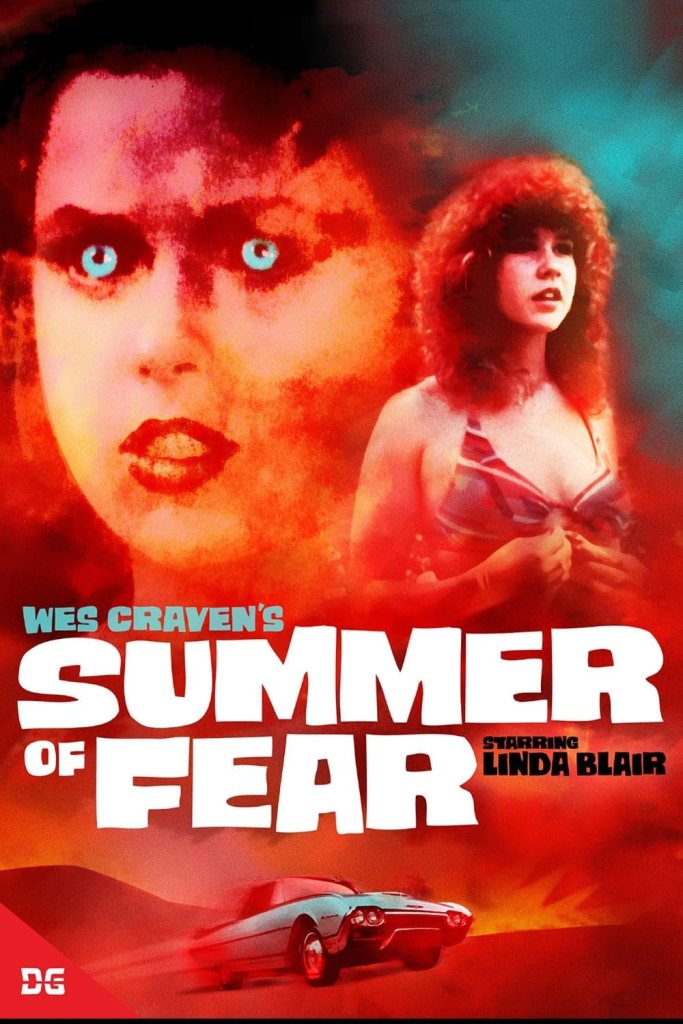

When comparing the 70s/80s filmographies of some of horror’s leading lights, you can see a clear line of progression from their scrappy beginnings to the genre altering masterpieces that cemented their names. For example, John Carpenter had a near unbroken line of influential masterpieces that stretched all the way from Dark Star, past Halloween and beyond The Thing and similarly, David Cronenberg has a whole smattering of noticable, body horror classics before he shifted into the later, more decorated phases of his career. However, when we look at the early days of Wes Craven, we find a much more bumpy road as the former English teacher seemed to find it harder to find his voice in the years between his savage early films and his more polished later works. Lurking between the brutality of The Last House On The Left and The Hills Have Eyes and the slicker scares of A Nightmare On Elm Street, The People Under The Stairs and Scream is the made for TV movie, A Stranger In Our House (also known by the far snappier title of Summer Of Fear). Could the man who kickstarted his career with roving sex criminals and deranged dessert mutants manage to find his feet in a TV movie?

When teenager Julia is rudely orphaned when her parents manage to launch their car off a mountain road, her Aunt Leslie and Uncle Tom agree to take her in even though they haven’t seen her since she was a baby. At first, their kids are happy to welcome a new face to the family, but while eldest, Peter, and youngest youngest, Bobby, seem nonplussed at their new visitor, Rachel soon finds that the arrival of her cousin portents a bunch of bizarre happenings.
At first, Rachel’s horse, Sundance, takes a sizable dislike of Julia and as she integrates herself more into the family, Rachel can’t help but notice that she’s getting shoved out by her cousin. But while you could say that the arguments about borrowing dresses and losing bedroom space is typical subjects for teen rivalry, things soon start to get even more suspicious when Rachel develops hives just before a school dance and Julia swoops in and goes with her boyfriend, Mike, instead. Determined to get to the bottom of this, Rachel soon adds up all the weirdness (there’s a human tooth in Julia’s belongings, a photo featuring Rachel has gone missing, bits of Sundance’s hair shows up in Julia’s clothes drawers) and comes up with a fairly wild explanation: Julia is a witch.
However, while this seems like quite an extreme accusation, Rachel’s neighbour, Professor Jarvis, just so happens to be an expert in black magic and believes that her wild theories may actually be bang on the money. But even if Julia is a witch and is busy getting her hooks into the family, what can Rachel possibly do to stop her when her cousin has all that dark hocus pocus at her command.
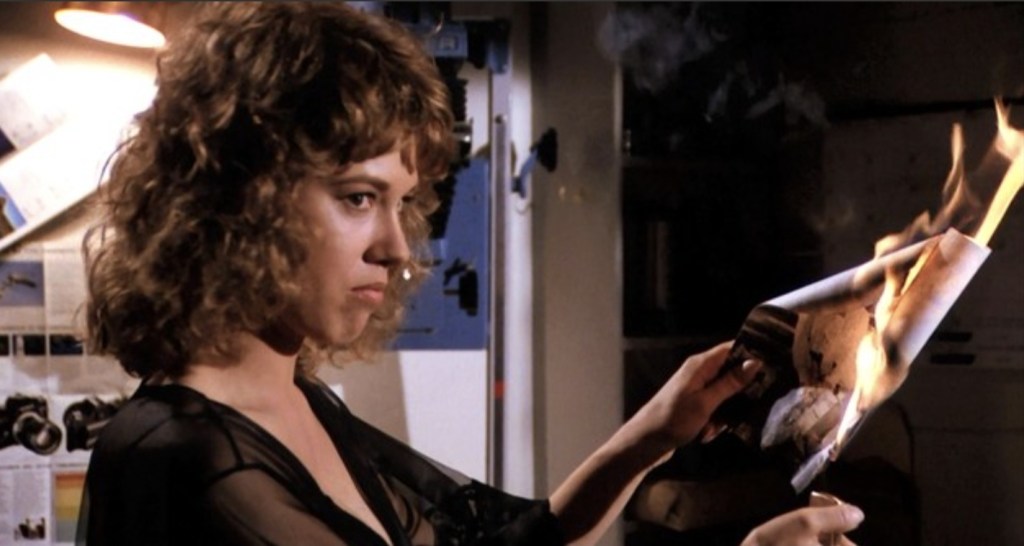
While it may initially be tough to reconcile the animalistic, indie rage of Wes Craven’s first couple of horror films to the far more muted melodrama of a TV movie about a teen witch, but then on the other hand you could probably say the same about the director’s venture into porn back in 1975. However, the truth of it is, there was probably a need for the director to A) hone his skills to a more professional edge after the indie, DIY roughness of Last House and Hills, and B) for him to rack up some director-for-hire projects that didn’t play quite so rough. What’s more, fans of the late horror legend might find it quite fascinating to see the director channeling some of his more familiar themes such as a family crumbling under the threat of an outside force and prominent scenes of teens in peril. In fact, while Stranger In Our House may contain many of the quaint, silly downfalls of a Movie Of The Week, there is a very clean through line from those earlier classics and the iconic entries that later made his name – or at least, it’s far cleaner than Swamp Thing at any rate.
However, while those of us who deeply miss the man who gave us Freddy Krueger will no doubt enjoy drawing those connecting similarities, that doesn’t stop Stranger In Our House from being an overfamiliar trudge through some stock tropes that feels about as cutting edge as a rubber chainsaw. Maybe it’s because Wes wanted to make a film that didn’t predominantly feature distressing sexual assault, but his choice of adapting Louis Duncan’s young-adult potboiler, Summer Of Fear, ends up on the other end of the spectrum by being completely bloodless and relatively scare free. It’s also light on smarts too as Craven is content to play a basic psycho-thriller game with the addition of witchcraft surprisingly adding little to proceedings other than giving Rachel a metaphorical paper trail to follow.
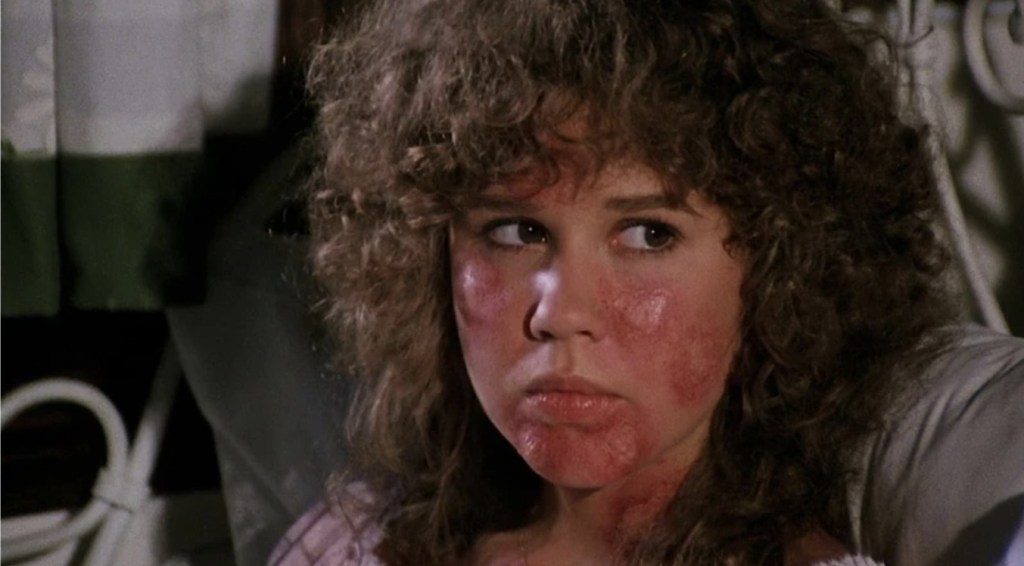
All the usual tropes are present as Linda Blair’s obscenely perky teen tries to figure her “cousin” out from under a gargantuan frizz of hair while her father and mother (who sports eyebrows sculpted by Morticia Addams) just thinks she’s turning into a spoiled brat. In their defence, it doesn’t help that the script has Blair seemingly attend the Luke Skywalker school of whining which makes this pony owning princess tough to love for the opening half. On the flip side, Lee Purnell’s bitchy witch doesn’t quite embrace the villainous potential when her scheming cuckoo seems to be wreaking all this havoc just to borrow clothes without asking, but at least the film has her flounce around in an enjoyable bonkers finale in a evil dress and freaky white eyes. Also making a noticable appearance is Fran Drescher – which just makes things randomly Stranger.
Ah, yes – that finale. While Craven is content for the most part to colour within the lines of 70s era television, his more extreme urges soon break out during the final reel in a final action sequence that ends up being more unintentionally amusing than it is tense. For some reason, the film chooses to end their witch thriller in an honest-to-God car chase that sees the murderous Julia pursue Rachel in a screeching automobile while snarling, growling and glaring daggers with her funky white eyes. You’d think that with a villain with all the powers of sorcery at her fingertips, the family infiltrating witch wouldn’t have to dirty her hands by suddenly turning the film into fucking Bullitt, but is sure is funny.
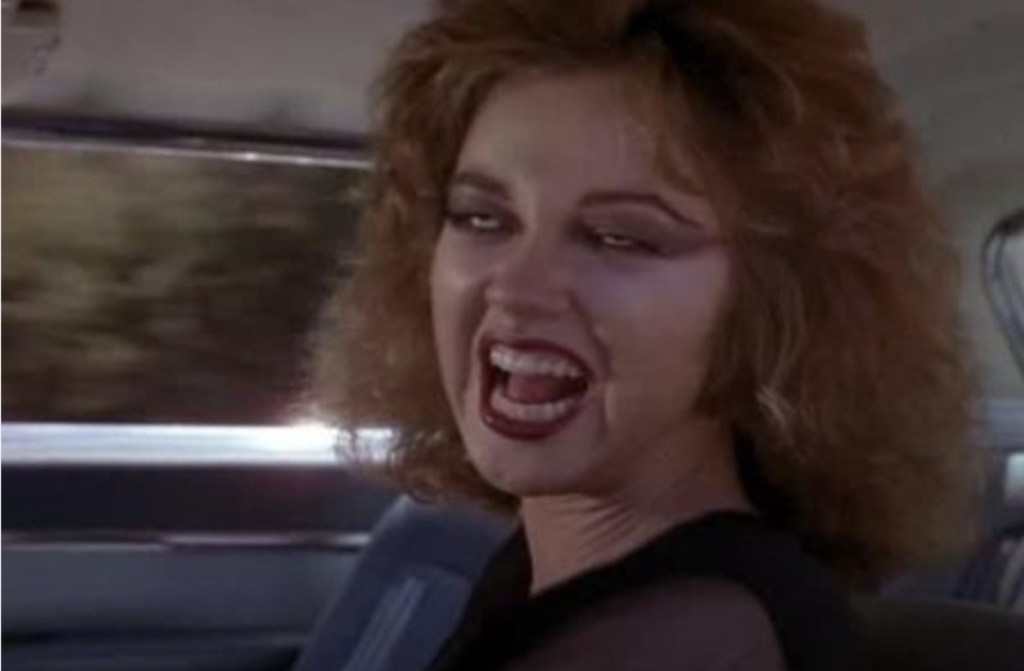
Hardly vintage Craven, Stranger In Our House sees the jobbing master of horror more interested in getting the handle on the studio system than delivering anything close to an innovative thrill. However, completists of the director’s work will no doubt enjoy watching him not only team with another horror titan (props to Blair and her beachball sized hairdo), even if his villain is more of a what than a witch.
🌟🌟

 We Have Issues