

In 1976, Rocky was released to the world and frankly, was a sensation. Gritty, but chock-full of heart, we followed the unlikely journey of a boxing nobody from Philadelphia who gets a golden ticket to the big time when he’s picked for a world title shot. As a very loose adaption of the life of Chuck Wepner (with a liberal amount of Rocky Marciano sprinkled in), it not only cemented boxing as one of the most cinematic sports there is, but it took the world by storm as were all charmed by it’s feel-good vibes.
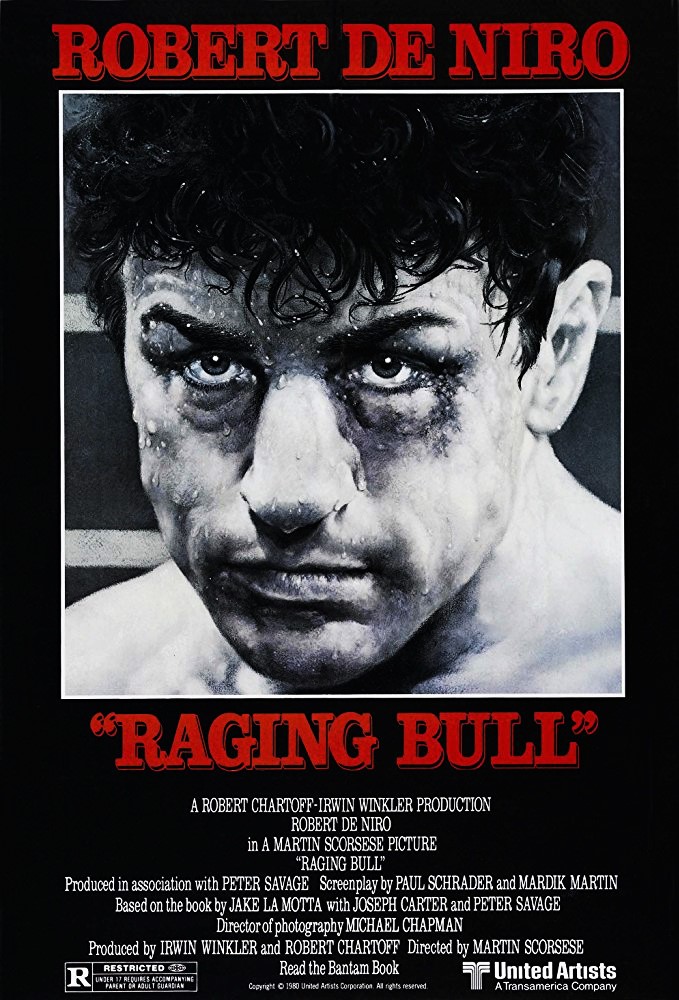
However, waiting to make their entrance to the ring on the flipside of this was Martin Scorsese’s Raging Bull, a no-holds barred biopic that sneered in the glass half-full outlook of Rocky Balboa that acted much like the dark twin of the people’s favorite. Digging deep into themes of self loathing, paranoia and unfathomable amounts of toxic masculinity, Marty delivered quite literally the antithesis of every other sports movie ever made as we watched the flawed, monstrous, but undeniably talented, Jake LaMotta torpedo his life with remarkable savagery.
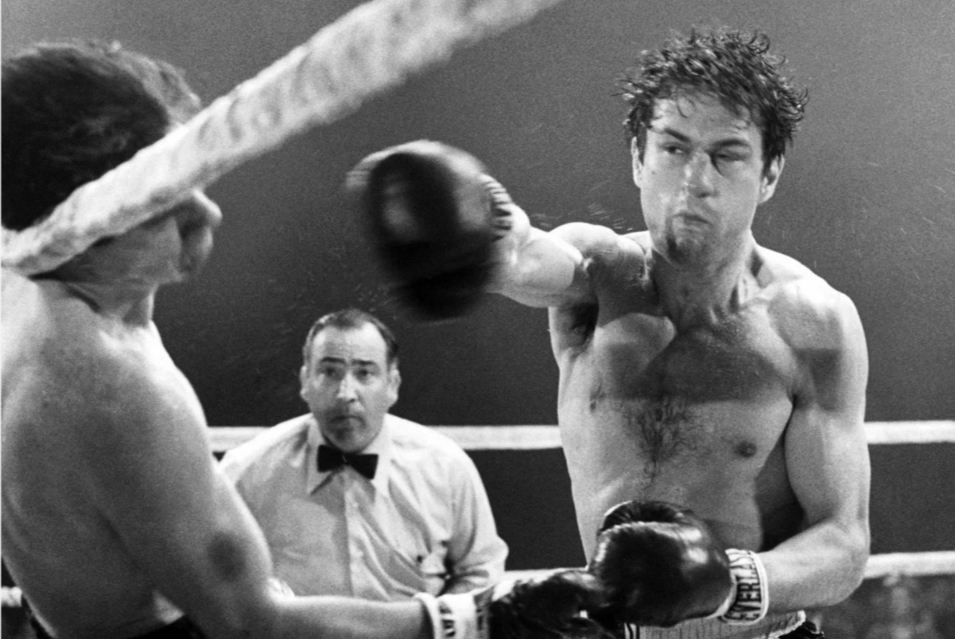
The year is 1956, and a fat, washed-up Jake LaMotta muses about his life and career before heading out on stage to deliver puns and gags at his club, but after skipping back to 1941, we see the muscular, middleweight boxer in his prime and undefeated as he trades gloves with Jimmy Reeves. However, giving us an early clue to the sort of luck Jake seems to attract, he successfully knocks out his opponent only to see him win on points when the referee’s count is interrupted by the final bell.
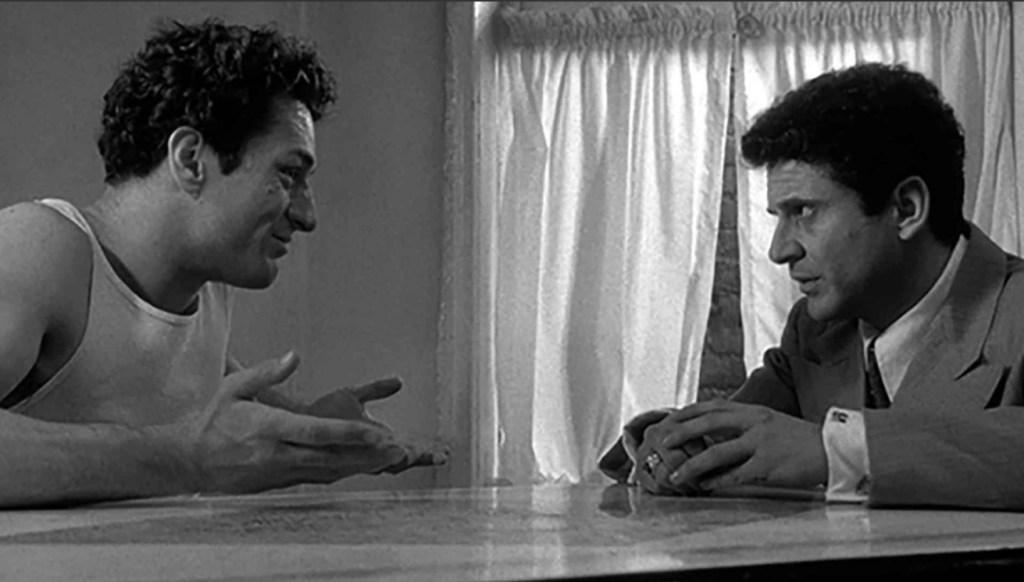
Not used to taking a loss, Jake is consoled by his brother and manager, Joey, who still maintains that he can get his sibling a title shot through his Mafia connections – however, Jake’s pride leaves him to snub these offers as he wants to make it entirely on his abilities alone. It’s at this point that the house of cards that is his existence wobbles at the sight of Vickie, a 15 year-old from the Bronx neighbourhood whom he soon woos into a relationship despite already bring married, but by 1945, he’s married to her and soon becomes an aggressively possessive husband.
While he spirals into violent paranoia outside the ring, he suffers similar luck in the ring – losing on points to people he visibly dominates for fifteen straight rounds. Later still, after overhearing in passing that Vickie thinks an upcoming opponent is good looking, LaMotta makes a point of reducing the young fighter’s face to hamburger meat in order to feed his brutal insecurities. But as his weight starts to balloon and his mistrust grows exponentially larger, added pressure from the mob to take a lucrative dive uppercuts his mental state even further. Will winning the world title manage to soothe the rampaging beast that rages through his psyche, or will it make him even worse. I’ll give you a clue: it’s a Martin Scorsese film so you can probably guess.
If anyone was going to take a sports biopic and turn it spectacularly on its head, it was blatantly going to be old Marty. Already responsible for the quinisential film about toxic masculinity and mental health (Taxi Driver, in case you’re a cinematic zygote), Scorsese took Jake LaMotta’s 1970 memoir, funneled it through a script by Paul Schrader and Mardik Martin and delivered a knockout blow that cast a smoke shrouded eye over domestic abuse and fragile egos just as much as it does about boxing itself. To be honest, I’ve always been more of a Rocky guy than a Raging Bull guy, but while I want to side with the underdog more than I want to be dragged through the muck of 1940s New York, there’s no doubting that Scorsese’s searing epic is objectively the better film.
Raging Bull us one of those films that everyone involved with it have hurled themselves into it with 110%. Much has been made of Robert De Niro psychical transformation from obscenely sculpted boxer to bloated has-been, but pound for pound, I’m willing to suggest that his take on Jake LaMotta is arguably more intimidating than Travis Bickle. The mohawked Bickle is a maniac, I’ll grant you, but you’ll find a hulking Jake LaMotta in every single abusive household as his sheer presence and his rampant paranoia makes every thing he says a potential gateway to a savage beating. Watching the way the actor (as LaMotta, of course) treat Cathy Moriarty throughout the film is genuinely disturbing as he zeroes in on the tiniest details of her – or anyone else’s – dialogue to discover nonexistent proof that she’s been sleeping around.
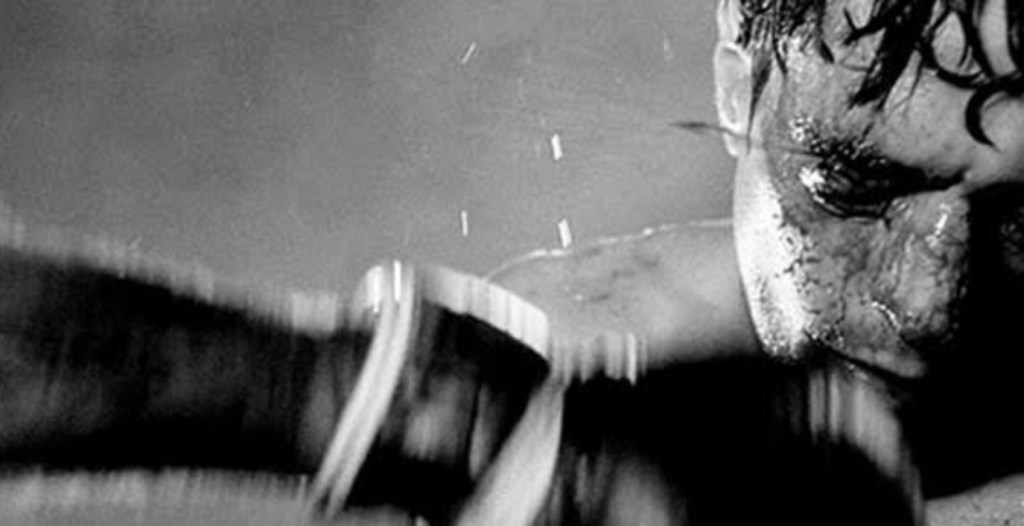
The line delivery, the physically imposing stance, the slaps – the director and actor team up to make the focus of this film into a truly odious beast, drunk on the adulation he gets when he fights. It’s truly stunning stuff, made all the more raw by the arresting black and white cinematography that heightens both the grime and the majesty of the boxing sequences. Among the swirling cigar smoke and the squirting blood, Scorsese worries less about intricate boxing choreography and focuses more in the in-ring emotion as the bloody, animalistic poundings are juxtaposed with the soothing strains of Pietro Mascagni’s Intermezzo from Cavalleria rusticana, which adds to that operatic feel. It also adds to the power that LaMotta wields, and as his mindset fragments with every “unfair” loss, he starts to believe he’s getting punished for the thuggish life he leads. At one point, his mounting self loathing and impotent rage at the mob demanding that he take a dive leads him to allow himself to be pummeled into a bloody mess by his opponent only to openly mock the fact that he was never actually knocked down through a jeering crimson mask. In fact, waiting for the LaMotta bomb to go off once he gets something in his head is so nauseatingly tense, it’s like watching the “How am I funny” scene from Goodfellas for two hours without the jokey punchline.
But as good as De Niro is (a little too good at times), massive kudos really need to go in the direction of Joe Pesci who manages to ground the film as his long suffering brother. While Bobby is free to bulk up, slim down, rant, rave and throw his weight around in the showier role, without Pesci there for him to bounce off, you have no yardstick to measure how crazed and jealous the boxer has really become. However, leave it to Scorsese to offer a searing biopic that has no interest in chronicling the success of someone, but instead probes the depths we sink when true victory stubbornly eludes you in both life and profession. Or to put it more simply – a majestic film about epically crappy people.
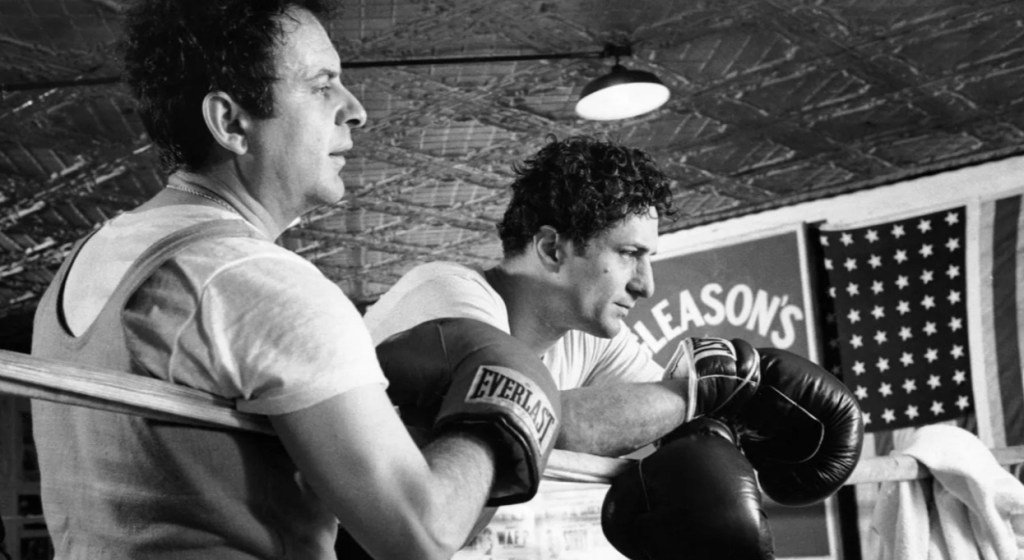
Essentially the harrowing antidote to every positive sports movie ever made, Scorsese makes the in-ring glories far less important than the dumpster fire of a life La Motta had when he stepped back through the ropes and newcomers may be taken off guard by it basically being a film about the fragile male ego and domestic abuse. However, as one of the most important films in both Scorsese and De Niro’s arsenals, it’s punching power simply cannot be denied. No sports movie was this raw before and it’s influence can easily be traced over 46 years later – especially when it comes to getting to the dirt under the nails even through a pair of boxing gloves. Nothing in this genre hits harder than Raging Bull, not even Rocky and that’s a fact.
🌟🌟🌟🌟🌟

 We Have Issues