
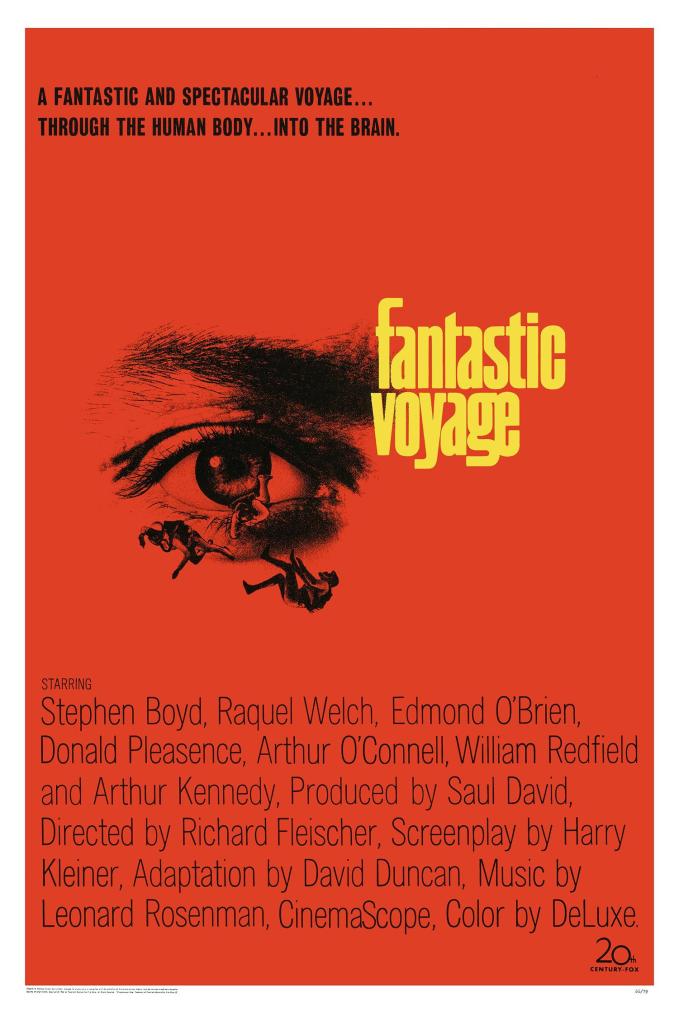
When it comes to watching some of the older entries in the classic, sci-fi canon, its advisable to keep an open mind so wide, you could slot an unminiturized submersible through it. In the days before CGI, or even the more tangible visual effects of the 80s, cinematic craftsmen (and women) worked their butts off to create bizarre new worlds from practically nothing – and they don’t come much more bizarre than the interior of the human body.
Cue 1966’s Fantastic Voyage, a science fiction adventure that saw a (mostly) heroic crew, shrunk down to microscopic size in order to perform a vital spot of brain surgery from within as a ticking clock and numerous biological barricades impede their progress. Directed by Richard Fleischer, the man responsible for realising 20,000 Leagues Under The Sea for Disney, it’s easy to write it off these days as just another hokey adventure, but much like the film itself, it’s most memorable moments lay within…

Welcome to a world where miniturization is real as forces both sides of the Iron Curtain work to perfect the procedure so it lasts longer than the mere 60 minute cealing the science currently sits at. However, scientist Dr. Jan Benes has managed to crack the problem and despite working in Russia, he feels the secret to making things little deserves to belong in the hands of the Americans and promptly defects. However, upon getting as far as New York City with the help of agent Charles Grant, Benes is left comatose after a last ditch assassination attempt leaves him with a pesky clot in that valuable brain.
A normal operation will be too invasive and will kill the scientist as just surely as trying to shoot the clot out with a shotgun, but those at the CMDF (Combined Miniture Deterrent Forced) have a plan as audacious as that clunky acronym. They propose to take a bunch of experts, stick ’em in a modified submarine, shrink that shit down and have them travel through the body until they can reach the clot and zap it out from within with a laser – however, they’re only going to have a sixty minute window to complete their mission before they start to grow again and thus not only cause harm to Benes, butcalso alert his body’s natural defences to kick some ass.
The team – made up of Grant, naval pilot Bill Owens, frosty medical chief Dr. Michaels, difficult surgeon Dr. Duval and his assistant Cora Peterson – get underway, but if there wasn’t enough problems standing in their way before, there’s also a very real possibility that there’s a saboteur among their number who will take every opportunity to end Duval’s life from within. Can Grant smoke out the bad egg (rumoured to be Duval) and lead the mission to success, or will they all be vehemently smited by rampaging antibodies or murderous white blood cells?

Before descending into the realms of the miniaturized world of Fantastic Voyage, we have to address those effects which have become less and less effective with every passing decade. While movies since have tackled the notion of shrinking with more advanced technology (Joe Dante’s rollicking 80s spiritual remake, Innerspace, being the most pertinent), those who dismiss this 60s epic purely on the fact that its attempts to realise that crazy premise are quaintly primitive may need to check their special FX prejudice at the airlock door. Yes, the sight of the gooey goings on within the human body may look odd, with blood vessels looking like the globuls within a lava lamp or, in the case of the lungs, a weird, undulating stage covered in pink plastic bags – but Fantastic Voyage rightly scored an Oscar for its efforts which were defiantly cutting edge for its time. Although, with that being said, it’s genuinely amusing that the film insists 60s boffins have the technology to shrink people down to the size of a microbe but they still require hefty sized projectors to carry out their briefings…
Now we’ve gotten that out of the way, we find Fantastic Voyage to be something of an effective, ticking clock, sci-fi thriller that not only explains its premise incredibly well as it barrels along, but also remains a nicest level of tension throughout. In fact, remove of the shrinking mumbo jumbo and you’ll find that Richard Fleischer’s film plays more like the disaster themed adventure movies of the 70s and 90s such as The Poseidon Adventure, Armageddon and Deep Impact that saw plucky ensembles have to think on their feet as an endless array of lethal problems keep insisting on popping up at the absolute worst moment.
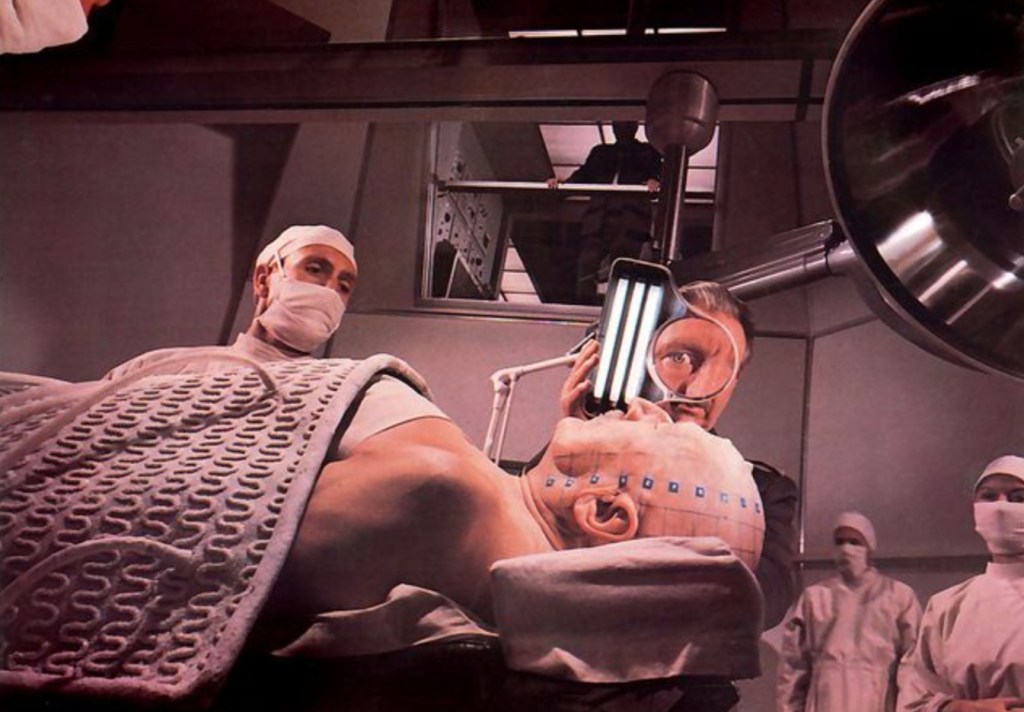
Be it a sudden issue with the oxygen tanks, an unplanned change in course due to an undetected arteriovenous fistula (don’t you hate it when that happens?), or overheating engines that cause our heroes to stall in the inner ear, the stress is carried over to what’s happening in the operating room as what happens out there, often effects what happens inside.
It helps that Fleischer attacks this world as realistically as he can as the pace of the thing feels more than a espionage flick than a sci-fi adventure and the way we’re taken through the inner workings of the CMDF, an agency that’s weirdly dependant on golf carts – adds some much needed gravitas to its outlandish premise.
Speaking of gravitas, we’re granted a clutch of performances that are laced with that sense of super seriousness that 60s sci-fi all seemed to come with and yet there’s a certain looseness there that stops the cast from being furrow-browed cutouts. Yes, the shapely Raquel Welch doesn’t really have much to do aside from get attacked by antibodies and frequently test the tensile strength of the zipper on the front of her wetsuit while Arthur Kennedy’s Duval does that poetic science talk thing with a faraway look in his eye – oh and if you’re trying to keep the identity of your saboteur a mystery, maybe don’t hire Donald Pleasance at his most coldly sinister – but the nervous banter of the generals who are sweatily watching things unfold keeps matters fun and relatable.
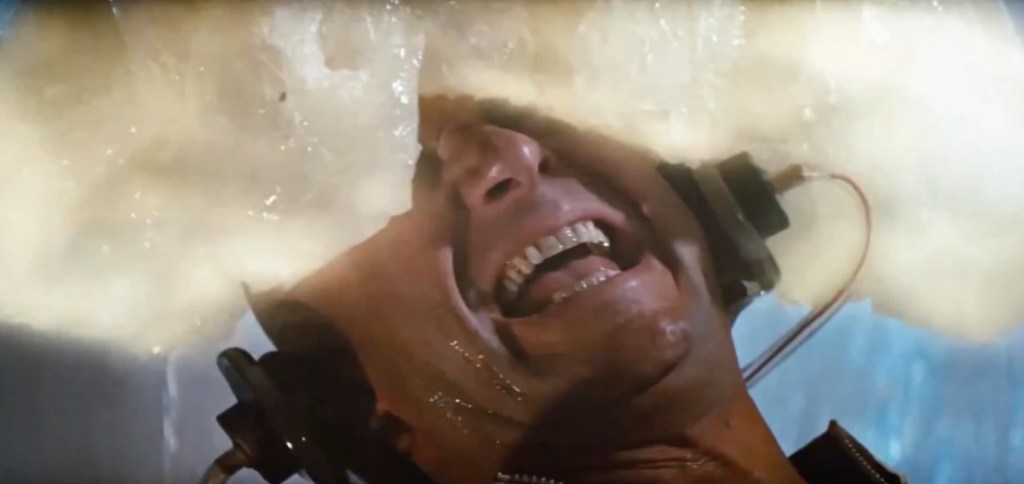
Swift, smart and loaded with peril (Pleasance’s complete and utter freak out as a white blood cell advances on him is worth the price of admission alone) Fantastic Voyage proves to be exactly that if you can keep an open mind concerning the visuals, but the biggest question mark proves to be why the hell (Innerspace aside) have we not had a remake with all the modern mod cons plastered all over it?
Anyway, I guess a true classic doesn’t technically need one and this is one towering science fiction outing that genuinely proves that it’s what inside that counts. No small feat…
🌟🌟🌟🌟
 We Have Issues
This film brings back a few memories – the Mad Magazine sendup for a start:
Raquel Welch – “Hi, I’m going along because… Wait ‘til you see how I look in a skin-tight diving suit!”
Hi, I’m Steve Grunt, I’m going along to see how she looks!
The first time I saw this, shortly after it was first released, was at a long-gone cinema in a small coastal town. Just as Ms Welch was being attacked by the horrible green slime, the power went out! Had to wait months to catch up with it again to see how it all ended. Spoiler; she escapes.
Finally, nobody addresses the elephant in the room when it comes to these miniaturisation stories; they might be shrunken, but where does their mass go? They should weigh the same I would have thought no matter what their size. Are there ever any “in universe” explanations for this?
LikeLiked by 1 person
I re-watched Fantastic Voyage last night. As a break from how most sci-fi films are done today, it was most refreshing to reflect on how the Oscar-winning pre-CGI for this one remains appealing (even after how far such inner space sequences in films and TV have come). Thank you for your review.
LikeLiked by 1 person