
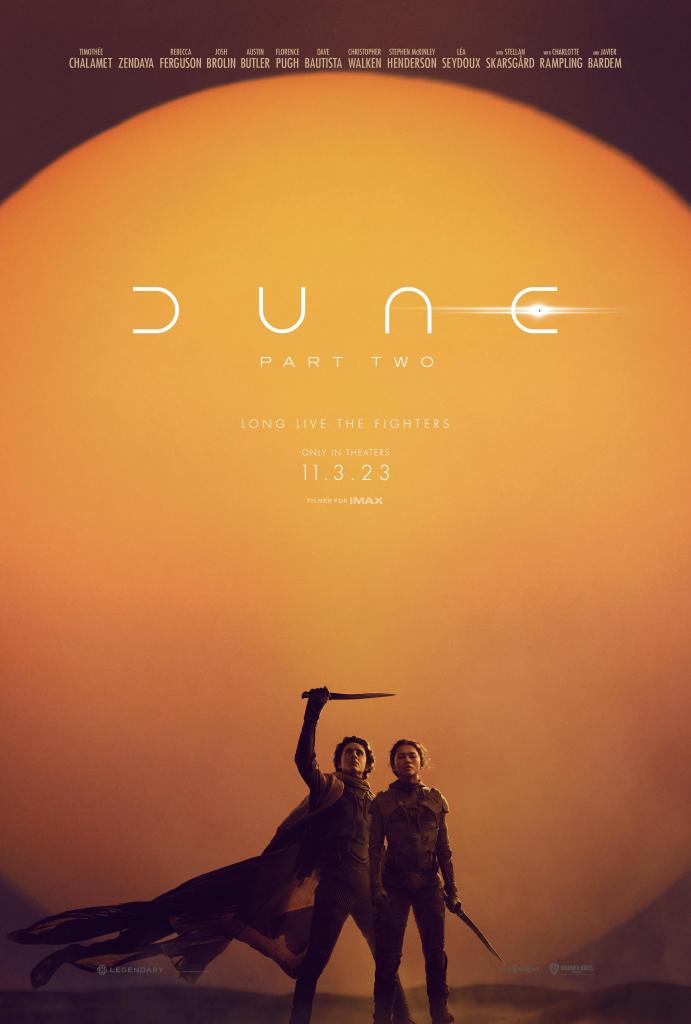
Back in 2021, director Denis Villeneuve took a massive risk by tackling one of the white whales of sci-fi literature, Frank Herbert’s Dune. Not only had the Tolkien-levels of dense world building scuppered, confounded and frustrated such previous visionaries as David Lynch and Alejandro Jodorowsky, but the movie – which only adapted the first half of the first book – was released during a time when cinema was still trying to pick itself up after the effects of COVID had forced the industry to a grinding halt.
And yet, miracles obviously do happen, as the powers that be dictated that Dune had raked in enough dough to warrant forging ahead with the book’s second half – but while such epic undertakings usual see these sort of gargantuan endeavours shot back to back, could Villeneuve recapture the impossibly grandiose nature of his first trip to Arrakis?
Does a sandworm shit in the dessert?
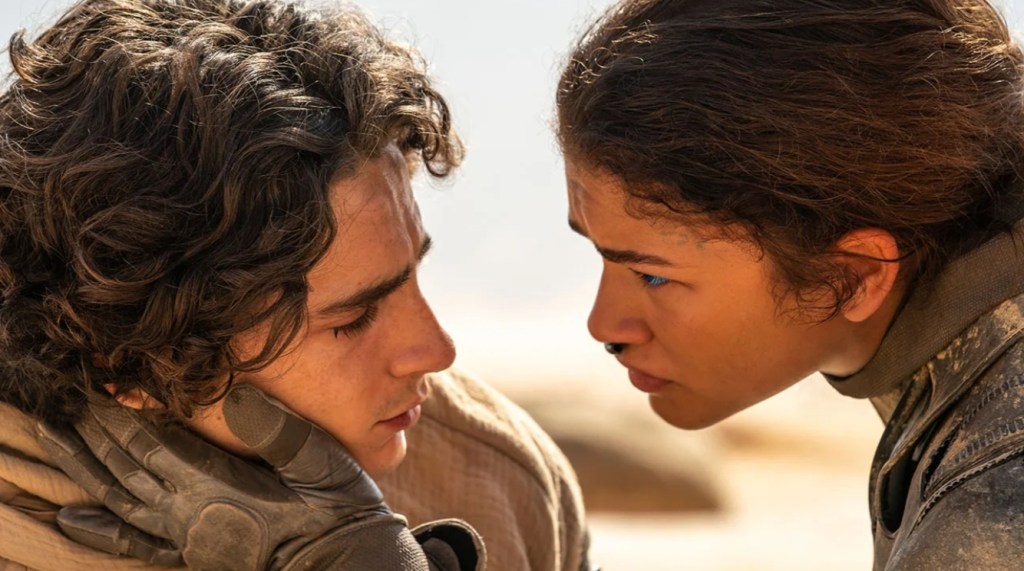
When we last left Dune, the vast ramifications of various, political schemes had all but exterminated the members of the noble House Atreides as the brutal House Harkonnen – under secret orders of the Emperor Shaddam IV – took back the planet Arrakis in order to keep farming the lucrative spice melange. However, the only survivors of the massacre were Lady Jessica and her son Paul who escaped into the endless dessert to take shelter with the Fremen, the indigenous warrior race who can not only survive the harsh conditions of the planet, but can actually use them for their benefit.
While Paul and Jessica eventually are begrudgingly accepted into the Fremen culture, it soon becomes apparent that everyone is expecting vastly different things from their integration. While Paul wants simply to become one of them and help the fight the oppressive Harkonnen, Jessica wants to manipulate Fremen prophesies in order to install her son as the messiah some of the people of Arrakis already believe him to be and even becomes their Reverend Mother in order to do so.
Paul struggles with his destiny primarily because his vision tell him that a holy war would not only enslave the Fremen totally due to their religious beliefs, but it would also shed the blood of hundreds of thousands of people across the galaxy if he were to overthrow the corruption of the Emperor. Thankfully, his growing love for the independently minded Fremen, Chani, keeps his mind on raiding Harkonnen spice mining, but the dent they’re putting in everyone’s coffers isn’t going unnoticed.
In an effort to ensure that their centuries old plans remain in place, the female order of the Bene Gesserit ensure that if Paul can no longer be controlled, then a replacement must be found and top of their list is Feyd-Rautha Harkonnen, the absolute mental case who has just been installed by his uncle, the Baron, to bring order to Arrakis by any means necessary.
While Villeneuve’s first past at Dune was an exemplary example of epic filmmaking on a breathtaking scale, the first half of this story had already been somewhat covered in David Lynch’s beautifully flaw attempt back in 1984. However, due to budget constraints, producer interference and the fact that no one had the slightest idea how to make such a gargantuan enterprise work in a single movie, the pay off ended up being crammed into a bunch of montages and a rushed ending that skimmed over a lot of important stuff. Thankfully, now that his first film had skillfully worked through it, Villeneuve was given the chance to finish the book right, and by God if it isn’t the most profoundly epic thing you’re likely to see in cinemas all year.
Attacking the dense sci-fi with the grandiose sweep of an old-school biblical epic, the director launches into the second half of the story with the wriggle room to give the ramifications of Paul’s reluctant ascension to messiah all the emotional heft it needs and make no mistake, it’s super powerful stuff.
Finally able to expand on Paul and Chani’s relationship beyond an initial distrust and some lingering, meaningful stares, both the director, and Timothée Chalamet and Zendaya, give their burgeoning love story emotional resonance in the face of growing religious fervour as more and more of the Fremen drink the Kwisatz Haderach cool aid. However, those who initially lacked belief that Chalamet lacked the presence for the role – or that Zendaya wouldn’t make a convincing desert warrior will no doubt find themselves bowing down with the rest.

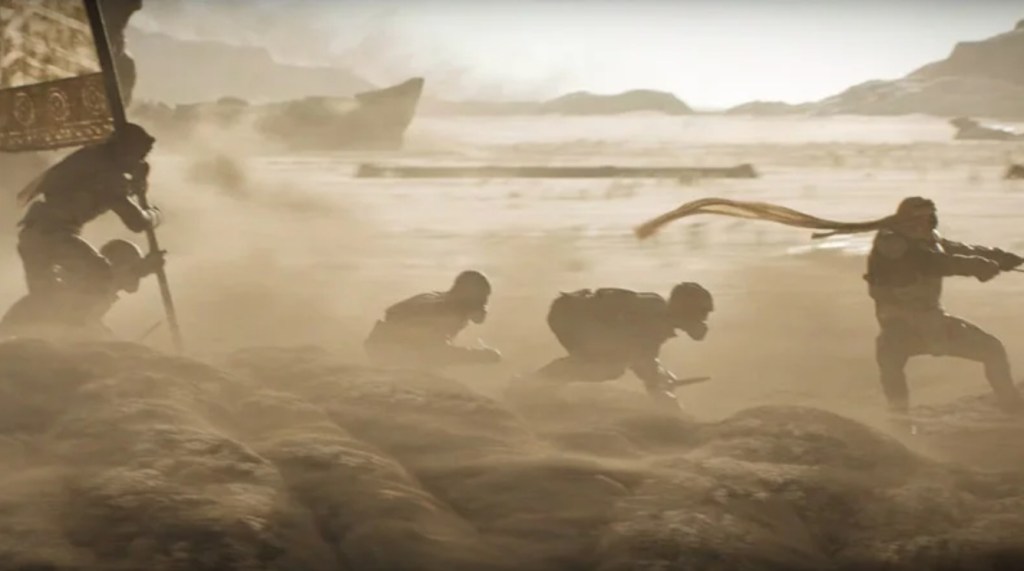
What also aids the movie greatly is that that the sense of the original’s scale has, somehow, gotten ever larger and throws in battle scenes so large they could be seen from space, yet more insidious plotting and a much welcomed injection of weird that would no doubt get a nod from the Lynch contingent.
However, beyond scenes of Rebecca Ferguson openly and casually conversing with her own unborn child, the real jawdropping stuff is reserved for a long awaited trip to the Harkonnen homeworld of Giedi Prime. With everything rendered a translucent monochrome by a black sun, the place looks like an dystopian S&M party and is the perfect way to finally introduce the movie’s not-so secret weapon, Austin Butler’s Feyd-Rautha, who more than counters Sting’s infamous, 1984, rubber underpants with black teeth, a cherubic face and a psychotic streak longer than a sandworm. Simply put, he’s the anti-Paul and he’s a magnificent foil for our hero as he grapples with the expectations that are being put on him.
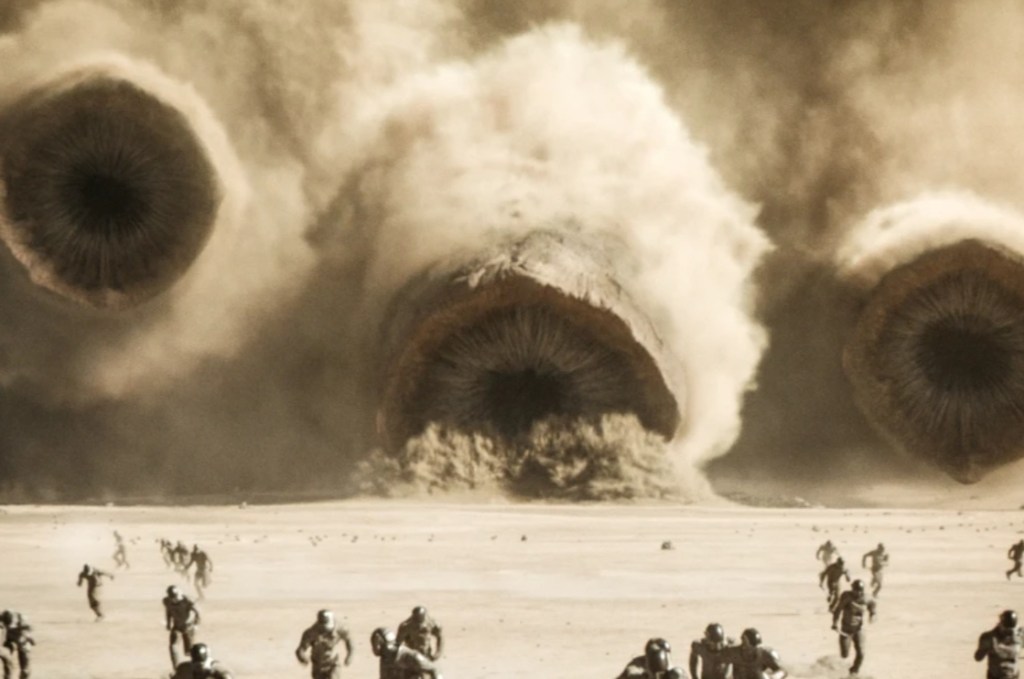
However, the biggest knockout strangely isn’t the scenes of vast armies running headlong into massive invertebrates (although the scene where Paul first rides a worm almost tops Giedi Prime), but it’s how steadfast the movie is at retaining the point that Paul accepting his role as messiah would be incredibly destructive. In fact, it’s the whole hook for the final reel as the story sets up the fact that the universe as we know it is ultimately screwed no matter which way Paul turns and it make the ending both devastatingly triumphant and dread laden all at the same time.
Those not familiar with Herbert’s series of novels may feel that too many things are left unsaid, but if the rumours are true, and Villeneuve will indeed tackle the second book, Dune Messiah, then all will be revealed, but you can’t help but admire the balls it takes to adapt the second half of one book and thematically turn it into the second part of a proposed trilogy while the third movie hasn’t even been confirmed yet.
Magnificent in every way you can think of, Dune: Part Two is epic world building with a conscience that doesn’t exchange emotion with explosions, or vice versa. If you’re uncertain of your Muad’Dibs from your Shai-Huluds, the Dune: Part Two probably won’t help too much, but on a scale of mature, absurdly epic filmmaking, this return to Arrakis is a triumphant play in the ultimate sandbox.
🌟🌟🌟🌟🌟

 We Have Issues
One comment