

On paper, a union between splattery horror director Stuart Gordon and celebrated writer David Mamet seems like an odd combination. Had Gordon hit the mainstream after decades of independent filmmaking had seen him wrangle everything from Lovecraftian horrors to fighting robots, or was Mamet just a huge fan of Re-Animator? Who knows, but when you figure that the director got his start in the theatre, things start to make a lot more sense. It also helped that in 2005, Gordon was in the midst of his non-horror “serious” phase that has already seen him adapt Charlie Higson’s vicious crime novel, King Of The Ants, to the screen and with Edmond, he found himself tackling an adaption of Mamet’s caustic, 1982 play which the author had adapted himself.
What emerged was a strange, searing tale of a mid-life crisis gone horribly awry that sets out to ruffle as many feathers and rattle as many cages as it possibly could – something both Gordon and Mamet were old hands at.
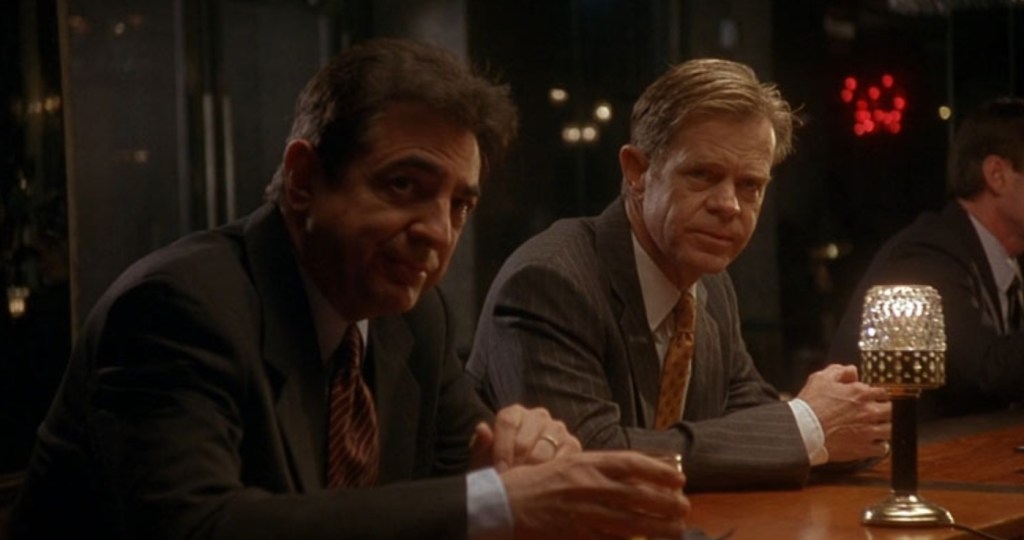
Edmond Burke is your typical, middle-aged man who has spent most of his existence sleepwalking through life in a suit and tie, obsessing about seemingly unimportant things and being utterly ruled by his job. However, after a fateful visit to a tarot reader, he is told a single phrase that causes him to unravel in the space of a single evening with brutal results.
After a lifetime sweating the small things, being told “you are not where you need to be” seems to be the trigger he’s been waiting for and he starts by going straight home and simply telling his wife that they’re done just like that. From there, he leaves with only the clothes on his back and heads to a bar where, after a rather racist conversation with a stranger concerning the “pressures of the white man”, Edmond admits that he believes that his marriage has stripped him of his masculinity and all he really wants to do right now is get laid, so his brand new buddy directs him to a classy strip joint.
However, here’s where things take an alarming turn as Edmond’s new outlook on life has him enfused with a new sense of entitlement which leads to him haggling with a string of hookers of noticably declining quality that ultimately has him kicked out of every establishment. Now wandering the streets at night and getting a learn-as-you-live education as his sense of righteous indignation grows, but after getting roughed up by two con artists after calling them on their scam, Edmond manages to rustle up enough cash to buy himself a knife for protection.
With his ego at an all time high and existing under the belief that he should be able to say or do whatever he wants, it’s a fateful meeting with a lonely waitress that will ultimately forge the final path Edmond finds himself on.
Whether you believe it or not, there’s a gulf between film and theatre that’s often tough to broach. Literally stagey scenes and extended monologues, if not treated with a certain amount of care, can feel awkward, visually bland or just plain unbelievable when the need to play to the cheap seats is taken out of play. Unfortunately that’s exactly the kind of issues that plagues Edmond right from the get go despite both Gordon and Mamet having extensive experience in both.
Maybe Gordon wanted to keep that kind of theatrical performance in order to create a heightened reality that makes some of Edmond’s more racist, homophobic or misogynist diatribes feel less like some sort of unpalatable, enraged call to arms, but at numerous times the style simply takes you out of the experience and even feels a little silly. Similarly, while Mamet obviously has a near unparalleled ear for dialogue (let us never forget that the dude wrote that Glengary Glen Ross speech), at times the actors stumble over his prose which often feels unnatural and weirdly clunky – the hyperactive back and forth with Julia Styles being a major example.
Of course, this could all be deliberate, but my point is that, for me, it didn’t entirely work, especially when you consider the incendiary subject matter involved. Even back in the 1980s, Edmond could be seen as something of an iffy prospect where the examination of a man’s mental breakdown in the form of a violent form of mid-life crisis that sees a man justifying and carrying every single intrusive thought that explodes in his brain. Obviously, this leads to a near unending stream of controversial topics that will simply just not be everybody’s cup of tea (or worse yet, speak to a certain contingent), but it’s important to recognize that despite his manic insistence that he’s figured out how to live life, Edmond is literally a rather pathetic man in throes of a progressively violent nervous breakdown and its further backed up by a childish insistence that everything should be going his way despite being naive as fuck about everything from how the business of prostitution works, to card games that have already been explained to him how crooked they are.
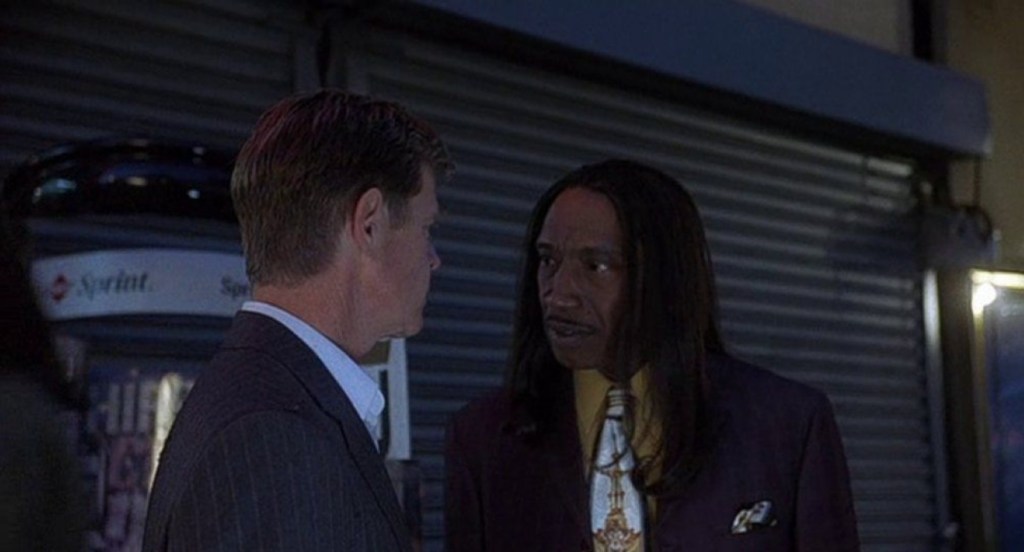
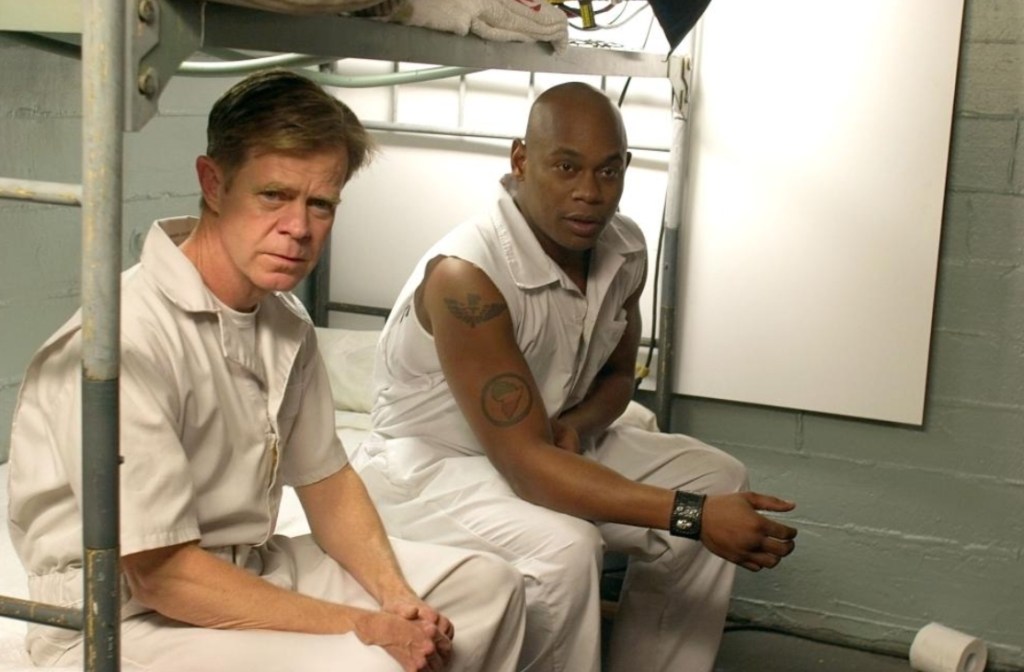
It would be tough to find anyone who could put a positive spin on Edmond’s blundering, borderline psychotic behavior, but holding the entire enterprise together is the king of the hangdog expression, William H. Macy, whose spirited performance as an unhinged asshole makes the entire enterprise watchable. Macy’s played sad-faced, immoral types before (hello Fargo), but here he’s given licence to deliver frustrated, jumbled rants that gives a legitimately creepy idea on how twisted his buttoned down life has become. Macy is, of course, great – but the impressive laundry list of recognizable faces that surrounds him are a little hit and miss. While Joe Mantegna as the bar patron and Bokeem Woodbine’s cell mate make impacts (the character role in particular ends up with the most unpredictable outcome you can imagine), the majority of the female roles are either just whores who explain the ins and outs of prostitution to a black faced Edmond to whatever the hell Julia Stiles is trying to bring to her role as a tragic waitress.
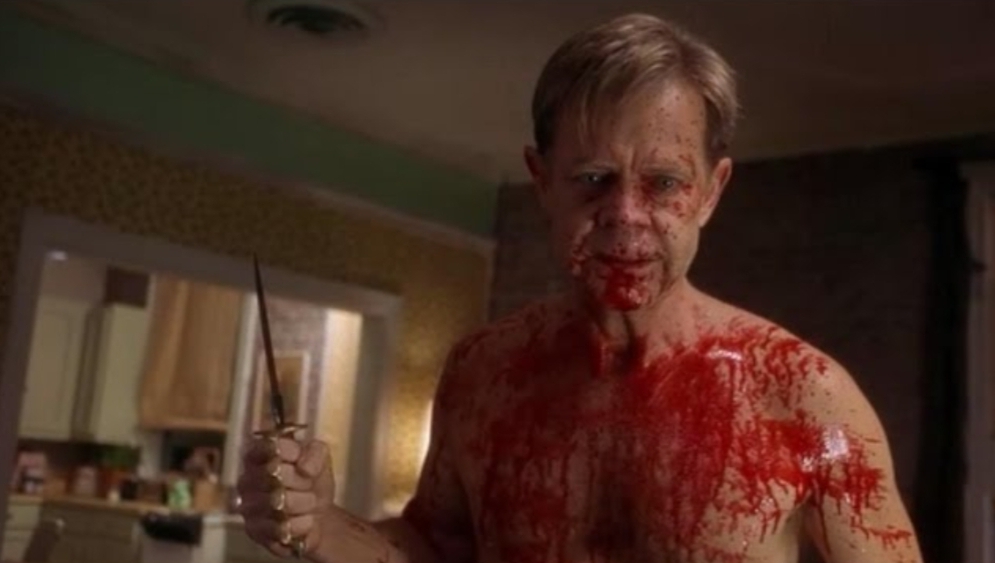
However, despite Macy’s efforts, I’m not entirely sure what the movie is trying to say as its lead screams racial slurs at people, slices up a victim in a cloud of overexcited mania and ultimately ends up in a jail cell shaved bald and amusingly wearing Dr. Robotnik’s moustache. It thankfully doesn’t seem to be praising Edmond’s revelations, but I didn’t particularly feel that the film was actually condemning them either as the only reason we’re given for the whole meltdown is that life is just shit.
Mamet keeps things unpredictable and Gordon’s horror experience keeps things focused and moving, but even a great central performance isn’t enough to make Edmond particularly memorable or thoughtful enough to justify moving this hateful rampage from the stage, to the screen.
🌟🌟
 We Have Issues