
Alfred Hitchcock is usually considered the purveyor of the classy thriller, giving his complex scenarios an air of respectability regardless of having his movies packed with murders and people of a generally unbalanced nature. While Norman Bates was a cross-dressing soul who suffered from a serious case of dissociative identity disorder, the style of the times and Hitchcock’s own tastes meant that while he dealt with rather messed-up characters, his movies kept up a certain decorum that more modern, violent and sexually explicit homages didn’t have to follow.
However, at the junction where classic Hitchcock meets the likes of Brian De Palma’s Dressed To Kill and Paul Verhoven’s Basic Instinct, sits Frenzy, Hitchcock’s unapologetically sleazy serial killer movie that saw the director not only rise out of a slump that saw him deliver what many describe as his last, great film, but also drops Hitch’s usual restraint to gleefully keep up with the changing times.
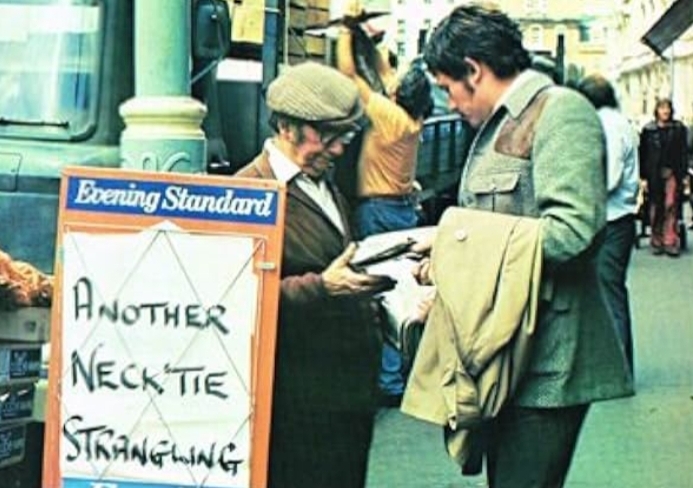
A relentless sex killer is stalking the streets of London whose appetite for raping women and then throttling them to death with necktie has left a string of bodies in his perverted wake. However, none of this seems to have any connection with down on his luck, former RAF squadron leader, Richard Blaney, who loses his job as a barman that very morning after being accused wrongfully of thieving from the till. While his best mate, Bob Rusk, tries to give him a kind word and a can’t-fail tip on the horses to help him along, it seems that the setting on Blaney’s luck is defiantly stuck on bad.
However, despite Richard’s obvious flaws in character (likes a drink a bit too much and owns a fairly volcanic temper) salvation seems to be at hand in the form of his sympathetic ex-wife Brenda, who runs a successful matchmaking agency and takes pity on the continuing misfortune that’s befalling her ex. However, things take a rather sinister turn when, after the evening they’ve spent together, Brenda is later found raped and strangled to death in her office with a dreaded neck tie wrapped firmly around her neck which marks her out as the latest victim of the Necktie killer.
Thanks to a typically Hitchcockian turn of fate, suspicion falls upon Blaney almost instantly and while he tries to keep his head down and regain the trust of his girlfriend, Babs, it seems that capricious fate (not to mention Hitch’s particular brand of gallows humour) simply has no interest in giving the man a break. However, as a chief inspector ponders the case along with his wife’s worrying experimental cooking, we actually know who the Necktie Murderer is and have been following his path of salacious appetites the entire time. But while we simultaneously watch Blaney twist in the wind as the killer similarly struggles to keep his identity secret, we realise that someone’s luck has to give out sooner or later. But whose?
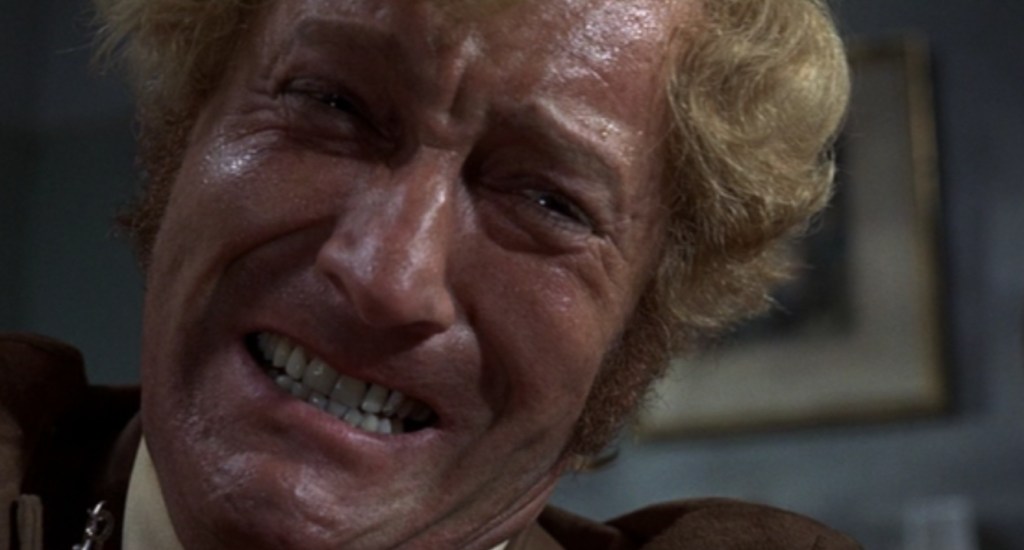
Critics had decided that, by the time the 70s had rolled around, Hitchcock had lost a lot of his previous luster, but the release of Frenzy showed that not only had the Master of Suspense still not lost a step, but the most relaxed restrictions on sex and violence allowed him new lurid and graphic ways to persue the rather sordid material. The most noticable sign of this is with the murder of Brenda, that easily (and uncomfortably) goes way beyond anything Hitch had done before and took him into territory usually plumbed by the like of Michael Powell’s incredibly controversial Peeping Tom. There’s no discreet silhouettes or refined cutting away here as we watch the Necktie Murderer strip the poor woman naked, have his evil way with her and then strangle the life from her for what seems like a fucking eternity. Of course, this is exactly how Hitch wants it as he had been aching to show onscreen exactly how clumsy and difficult it is to actually squeeze the life out of somebody with your bare hands (I don’t really want to know how Hitch knows this, but there you go), and the result is like a truly unsettling inverse of the wound avoiding editing of Psycho’s shower scene.
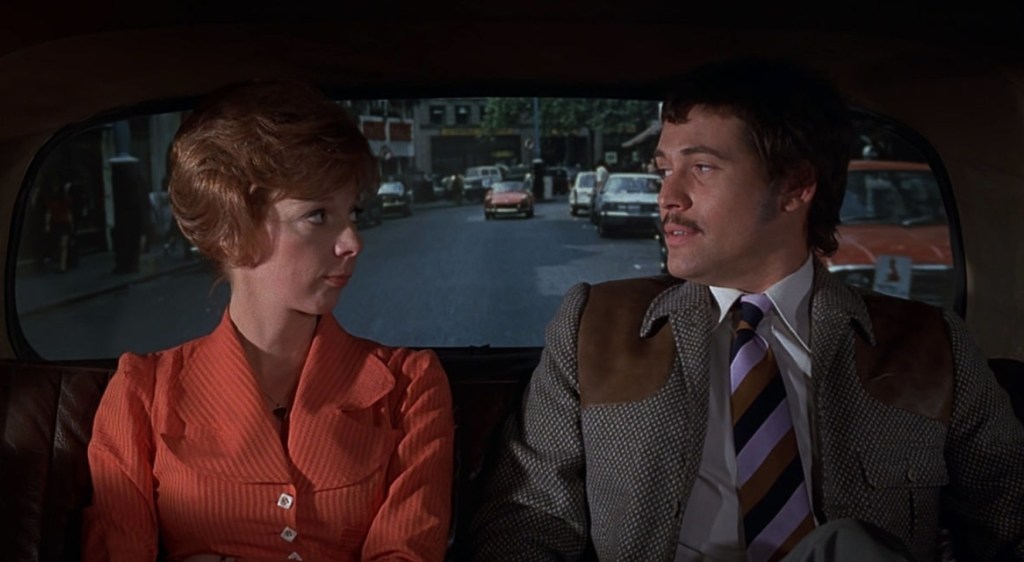
But before you go and write Frenzy off as Hitchcock’s decent into tastelessness, the movie also contains some of the blackest humour of the director’s entire career. Take the opening scene, for example, where we find a city official delivering a rather self-important speech about how the government is planning to clear up the pollution in the River Thames when, utterly on queue, the nude body of a murdered woman floats past to the excitement of the gathered crowd. Elsewhere, the movie takes the same track of suddenly putting us in the villain’s shoes when he suddenly has to backtrack and jump through a whole mess of stressful hoops after discovering that a vital piece of evidence has been left clutched in a fist sealed shut with rigor mortis after he’s disposed of the body. Thus Hitch puts the entire film on hold while we watch a man we know to be a remorseless sex-killer sweat and scramble to earn his freedom and it plays up to the strange fact that the director has engineered his movie to be an experience that contains no actual main lead, but instead is made up of a series of rather undesirable people and a clutch of sad and tragic victims. There’s something of a cruel, nihilistic streak at play too as everyone treats the presence of a murdering rapist as something that’s just happening as they get on with their day in a disinterested fashion. Even Alec McCowen’s Chief Inspector, while driven to catch the culprit, has an amusing subplot involving being distracted by his wife cooking the most godawful meals for him while she cheerfully points out the discrepancies in the case as he picks at the pigs trotter sitting on his plate.
To some more bewitched by Hitchcock’s earlier, Hollywood fare, Frenzy must have been an ugly, sordid and rather messy shock, but even the most repulsed moviegoer has to admit that this cruel, spiteful film also includes what may be Hitch’s most bone chilling shot. As the killer politely shows another potential victim into his flat, he closes the door with the nauseating line “you’re my type of woman” and the camera takes that as its cue to slowly back away along the hall, down the stairs and out of the front door and into the bustling street. We’ve heard no sounds of a struggle, nor is the inevitable outcome spelt out to us, but we just know with every fibre of our being that the woman us meeting a most vicious end with the general public only meters away.

Similarly audacious is a cast that may feature a wealth of familiar faces (Jean Marsh, Billie Whitelaw, Bernard Cribbins, Clive Swift), but includes not a single star name which makes the outcome virtually impossible to predict.
It’s Hitchcock, but not quite as you know him – but the elevated levels of perverted freakiness gives the old master one last burst of speed in his penultimate movie.
🌟🌟🌟🌟
 We Have Issues