
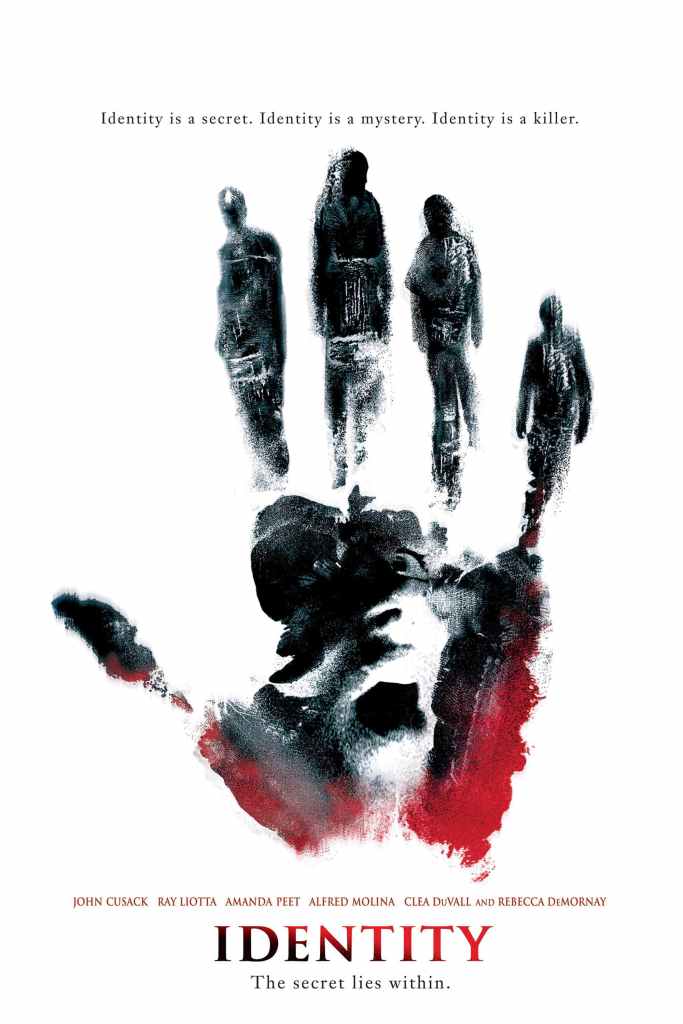
I have to admit, when Identity first was released, was fairly nonplussed about its “classy” slasher stylings and a left field plot twist that felt more lazy than shocking; and yet my interest was re-peaked years later when a quick trawl revealed that it was directed by none other than James Mangold. Of course, back in 2003 I had no freakin’ clue who Mangold was, but in the years since he’s managed to lay out one of the more eclectic filmographies of the past few decades (Indiana Jones And The Dial Of Destiny notwithstanding).
After one of the grittier comic book movies ever made (hello, Logan), a rare non-Mission: Impossible action vehicle for Tom Cruise (Knight And Day), a harrowing teen drama (Girl, Interrupted) and a tense Western remake that measured up to the original (3:10 To Yuma), the director himself seems to have manifested as many different identities that dwells in the rain lashed motel featured in his earlier thriller and for that reason alone, I figured I’d crack open its skull, and take another peek.
After it’s discovered that a bunch of vital evidence was misfiled during his trial, mass murderer Malcolm Rivers is to be brought before the powers that be so his psychiatrist, Dr. Malick, can appeal against his execution with only a day left before it’s due to be carried out.
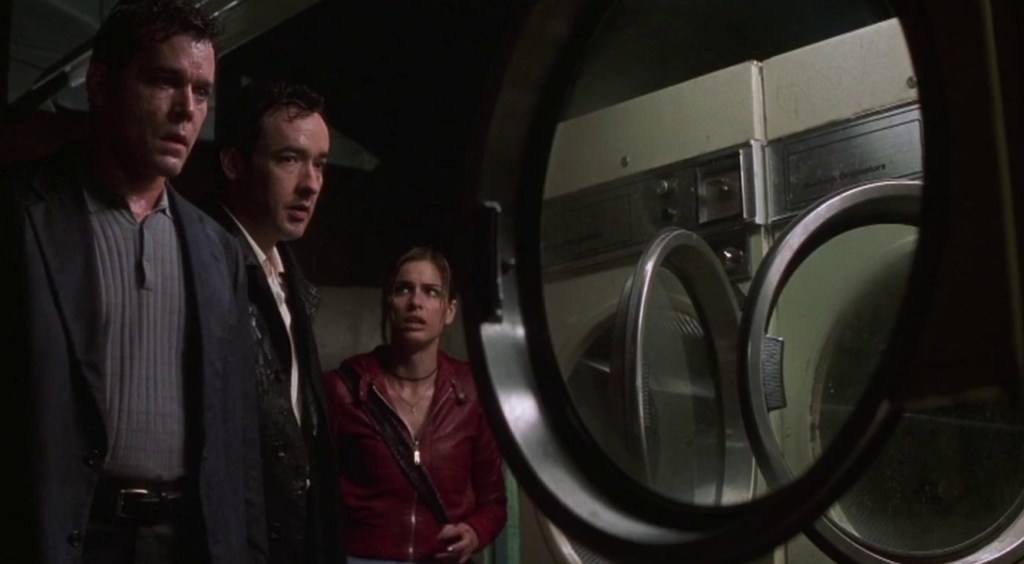
Meanwhile, in a motel that’s seemingly located somewhere around America’s asshole, ten strangers are thrown together by a string of fateful occurrences only to find themselves stranded by a rainstorm that isn’t taking any prisoners. Ex cop turned limo driver Ed finds himself drawn into this mess after plowing through a woman in car while driving bitchy former actress Caroline Suzanne and after bringing her and her distraught husband and child to the motel, they soon meet the owner, Larry, and Paris, a Vegas prostitute who seems to be in the run from something. Soon, bringing their number up even more, is the arrival of bickering newlyweds Lou and Ginny and Officer Rhodes who has a rather worrying passenger in his car in the shape of convicted murderer, Robert Manie.
After complaining of flooded roads and a little uneasiness between some of the group, Ed tries to patch up the wounds of the unfortunate woman who he inadvertently nailed with his car, but matters get decidedly worse when one of their number suddenly shows up decapitated with their head doing the rounds in a dryer. The natural culprit is obviously Maine and soon both Ed and Rhodes are scouring the rain lashed area as they search for him, but as this seemingly endless evening continues and more of their number falls to a mystery assailant, the survivors soon start to realise that nothing and no one is what they seem.
But never mind this, what does all this have to do with Malcolm Rivers?

So I don’t think I’m surprising too many readers when calling a spoiler warning for the rest of this review, but when trying to find a blanket term to describe Identity, Hitchcock meets Split seems to be the easiest and simplest three-word description that comes to mind. However, when you take a closer look as the movie’s twisty turny-ness, strong influences of Agatha Christie and Italian Giallo also find it’s way into the complicated makeup that makes up the films fittingly fractured personality.
Taking Christie’s And Then There Were None as a template to try and put a slightly classier spin on what is essentially a mind-fuck slasher flick, the script isn’t above chucking in some ghastly murders to up the shock factor. But aside from the sight of a severed bonce thumping around with the bloodied laundry and someone else being forced to fatally deep throating a baseball bat, Mangold isn’t too interested in making the carnage too excessive and this is where the Hitchcockian factor kicks in as the movie winds itself around a noticably Bates-like motel as it winds up to it’s big reveal. However, until then, we gave a lot of wandering around in the rain to deal with and while Mangold is enjoying ratcheting up the tension, it’s the familiar cast who manage to keep things moving.

While the sight of John Cusack appearing in what essentially is a tricked-out horror film isn’t that strange now after witnessing him in both 1401 and Cell, seeing him in a fright flick back in 2003 after a fairly flawless nineties run is was a little strange, but he does manage to bring an air of respectability to the movie that helps keep you off balance when the twists start getting seismic. Helping out immensely also are the likes of Ray Liotta, Amanda Peet, Jake Busey, Rebecca De Mornay and Clea Duvall who all add another sense of legitimacy thanks to the combined size of their genre work. However, there is an argument to be made that all this ensemble really has to do us wander around in pouring rain while constantly holding a look of terrified confusion on their faces until the twist fully sinks its hooks in and it’s here where Identity truly stands or falls.
Essentially, the seemingly nonsensical scenes featuring Alfred Molina and Pruitt Taylor Vince as a psychiatrist fighting to save his potentially dangerous patient soon prove their worth when we find out that the people stranded at the stormy motel are all, in fact, different personalities that all reside within Malcolm’s mind and the reason that someone is killing them off one at a time is because Dr. Malick is in the midst of a type of therapy that’s supposed to whittle down their number until one last, dominant persona is left standing. It’s an admittedly a grandstanding play for a “mere” whodunit and while it’s a genuinely cool concept, it also came in the wake of 1999’s Fight Club who used a similar plot wrinkle to such acclaim, any other movie who even hinted at having a “it’s all in his mind” type of swerve just felt like it was ripping off the eccentricities of Tyler Durden.
Of course, it’s a fairly unfair position to take and Mangold handles the reveal well, but I also can’t help but feel that the film is way too simple for a twist so grand and maybe the Friday The 13th style antics might gave been better served if the therapy made all of the personas, not just the most dangerous one, fight viciously in order to survive much in the style of Mario Bava’s fiendishly spiteful A Bay Of Blood.

As a result, it bizarrely feels like the filmmakers have worked really, really hard in order to be really, really lazy because at times, the twist feels less like a brave innovation and more as licence to explain away any pesky plot holes or inconsistencies as just trippy brain stuff. Plus it might of given some of the cast more to do then just being scared/hysterical/wet for the entirety of their screen time, which is something that you’d expect the director of Cop Land might have been itching to try.
However, you can’t fault the movie for sheer, basic entertainment even if it’s psychological makeup is as split as its main antagonist.
🌟🌟🌟
 We Have Issues
As far as all that tediously handled DID twists that many thriller movies have imposed upon us, Identity can be a particularly good one for how it refreshes the natural excitements for questionable realities, especially identities. Personally I would have preferred a happier ending. But Identity works for me as a tale that can encourage us to consider that not all is what it seems. It was also my first intro to the lovely Amanda Peet. Thank you for your review.
LikeLiked by 1 person