
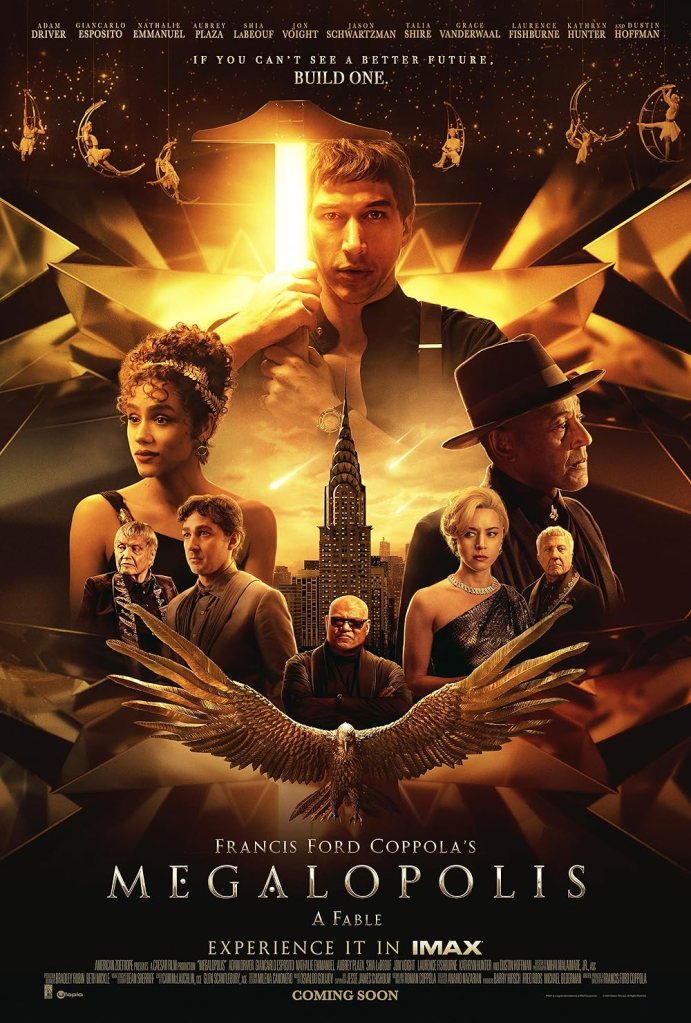
Once upon a time, a new breed of director descended upon an antiquated Hollywood armed to the teeth with new ideas and visions that would change the nature of American cinema as we knew it. The likes of Steven Spielberg, George Lucas, Brian De Palma and Martin Scorsese brought more urgent, wild styles to more attention grabbing stories that used an uncompromising hammer to panel beat the art of movie making into their own image – but leading the charge was their general; Francis Ford Coppola.
But after a string of movies that redefined cinema (the first two Godfather movies, Apocalypse Now), a few that didn’t (Jack, anyone?) and some fascinating oddities (his take on Bram Stoker’s Dracula is still an artfully mixed bag that drunkenly veers between genius and ridiculous like a pendulum powered by pure camp), Coppla went silent, content to tend to his vineyard.
Well now he’s back with his long awaited, self-funded, passion project that tries together a cast that teeters on the line between eclectic and eccentric. It’s finally time to visit the maniacal splendor of Megalopolis.
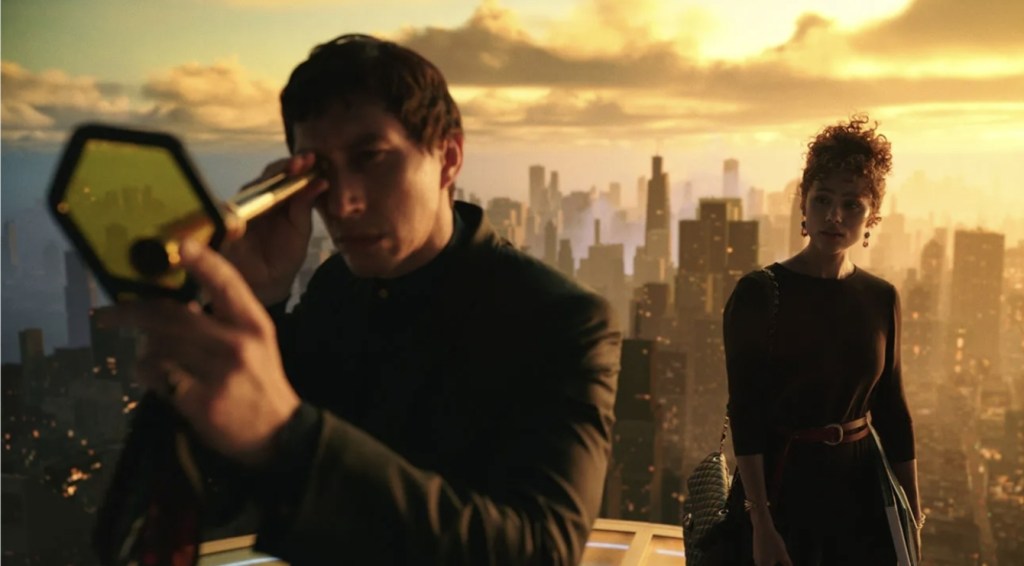
In an alternate America that is heavily inspired by ancient Rome, we find the country in chaos due to the continuing animosity between Mayor Francis Cicero and genius, futurist architect Cesar Catilina who wishes to revolutionise the city of New Rome with Megalon, a revolutionary, bio-adaptive wonder material that will not only change the way things are made, but may be the key to changing humanity itself for the better.
But while Cesar is adimant that a strong connection to the way things were is ultimately a recipe for disaster, Cicero launches a smear campaign against him heavily insinuating that he had something to do with the death of his own wife.
Caught in the middle of this tussle is an array of the corrupt and the concerned, with Cicero’s own daughter, Julia, soon becoming enamored of this visionary who also has the ability to stop time on a whim. But elsewhere we find the likes of power hungry TV presenter Wow Platinum, who moves from being Cesar’s mistress to setting her sights on his uncle, wealthy bank CEO Hamilton Crassus III and Crassus’ wayward and decadent grandson, Clodio Pulcher who has always hated Cesar from afar.
As public opinion shifts wildly between loving and hating Cesar’s belief for the human race, numerous social issues start to pile up in the streets, but this doesn’t stop all the major players trying to find footholds, no matter how dishonest, in order to get that they want and thwart their enemies. But when a Russian satellite decays from orbit and crashes into New Rome, Cesar seemingly now has the chance he needs to break ground on Megalopolis and get it built while his greatest detractor frets about his daughter fraternising with his greatest enemy. However, it’s Clodio who needs to be watched them most as the political party he’s managed to start sees the architect as public enemy number one.
Holy shit. Where to start…?
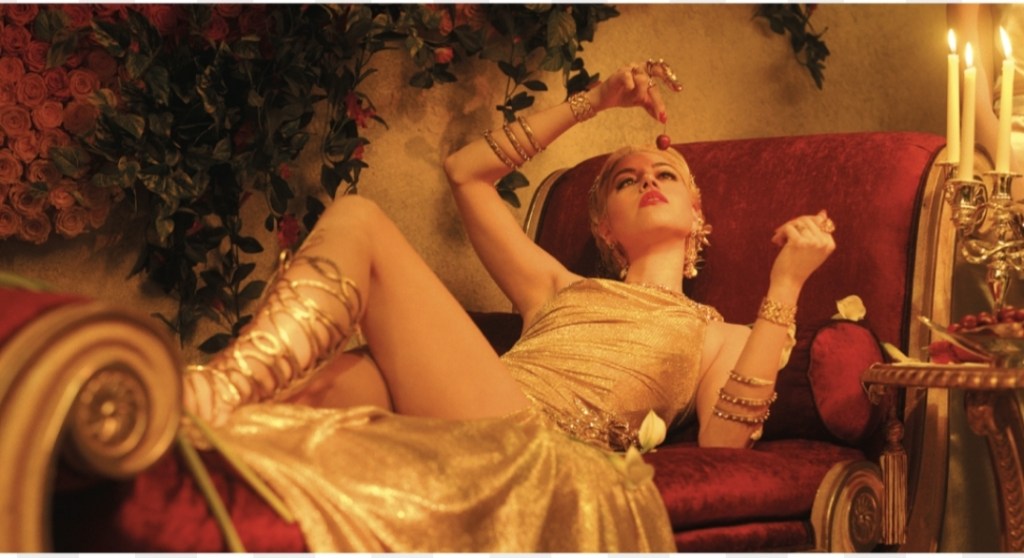
Essentially a baroque, satirical pantomime that’s one part Oliver Stone to two parts Baz Luhrmann, anyone expecting an iota of restraint or subtlety from Megalopolis might want to check their expectations at the door as Coppola doesn’t hold back at all at realising a film he’s been trying for decades to realise. To give you some much needed context, Coppola, is essentially trying to marry up the future of the United States with the implosion of the Roman Empire by essential setting the Catilinarisn conspiracy in present day New York. It’s fairly involved stuff and ripe for some dramatic intrigue – especially as we’ve seen America fall once already this year in Alex Garland’s frankly terrifying Civil War – and yet Coppola instead chooses to cast an eye over the collapse of one of the most powerful nations on the earth with a broad, satirical edge that tries to match the absurdity of the last couple of decades with a sense of theatrically that might not be to everyone’s taste.
Let’s put it this way; remember the melodramatic nature of Coppola’s Dracula that armed itself with numerous performers (and accents) that all felt like they were from different films while he created a rich, stylized world entirely using old school camera tricker; well imagine that but with even less subtlety – which I assume might be a little tough considering Dracula had a moment where Sadie Frost has sex with a wolf man. The director films his epic as if it’s a grand, no expense spared, revisionist take on Shakespeare’s Julius Caesar and has the large performances to match as every one of his actors plays their roles to the cheap seats even though modern cinema sound systems mean that is isn’t necessary.
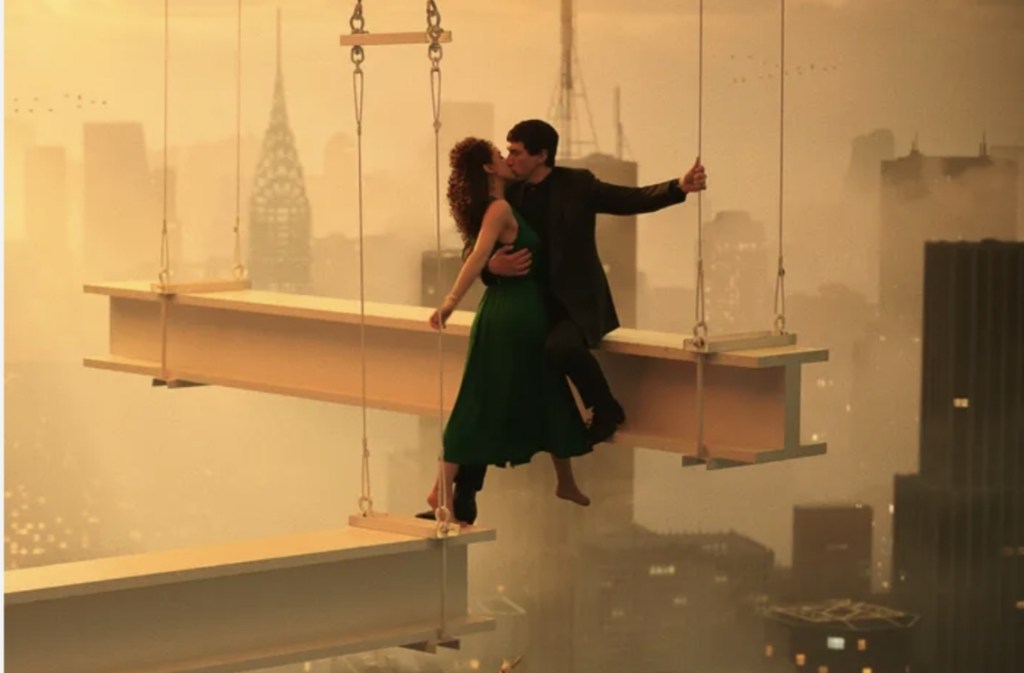
The result is an amazingly inconsistent mixed bag that zig zags between genius and annoying like a nitrous powered pinball that will no doubt enthrall some while leaving others convinced that they’ve witnessed the biggest load of shit they’ve seen all year. However, the most truly frustrating thing about Megalopolis is that I’m not entirely sure who is right as the movie can literally go from the sublime to the stupid and back again in a single scene. It doesn’t help that Coppola’s targets are fairly obvious and doesn’t offer up anything new or revelatory (greed = bad; change = scary), but its obvious that the filmmaker isn’t interested in wasting time on subtext when he can just hurl it at the screen as is.
The actors have little to do but just dig their fingernails in and attempt to cling on for their very lives. Adam Driver fares well, displaying the usual stoicism while inexplicably blurting out whole passages of Shakespeare during press conferences, also understanding the assignment is Aubrey Plazza who gives the predatory Wow Platinum a enjoyably burlesque spin on a panto villain and Giancarlo Esposito who puts across his fear of change nicely with a commanding presence. However, others seem to succumb to the madness on screen in other ways as Shia LaBeouf scuttles around the place without any eyebrows as the villainous Clodio and I can’t help but feel that Lawrence Fishburn and Dustin Hoffman are a little sidelined.
Flawed up the wazoo with some visual effects that can’t quite match Coppola’s vision and some distracting lurches in time (the 9/11 inspired satellite crash is largely glossed over and Cesar and Julia’s time stopping ability is never really explained), but who knows, maybe we’re still too close to all the craziness to properly be able to stand back and fully appreciate what Coppola is actually shooting for and time will be kinder to it than most of the critics have been.
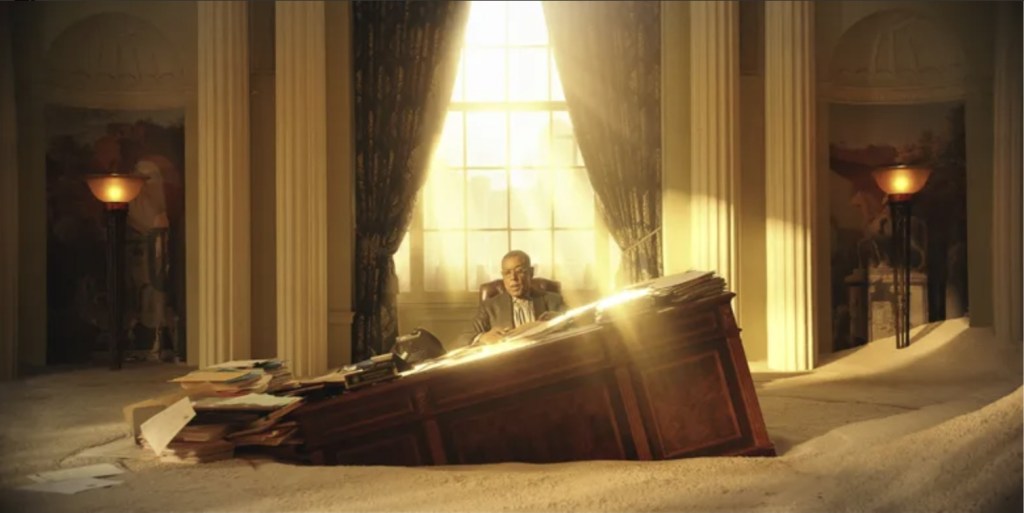
A mess, a masterpiece, a triumph and a tragedy, Coppola’s controversy laden fable is about as far as you can get from safe, homogenised filmmaking and I’m actually glad that he finally got to make it – but just like the products he sells from his vineyard, maybe it just needs a little more time to breathe…
🌟🌟🌟

 We Have Issues
I feel Apocalypse Now is the greatest movie ever made. I feel FFC’s Dracula is total garbage. I am now concerned that this film veers more towards the garbage than the great. I will check it out, but my expectation are lowered.
LikeLiked by 1 person
For personal reasons I would call Apocalypse Now Coppola’s best film too. I just felt that it had so much to say on what can bring out the darkest in human beings and especially in times of war.
LikeLiked by 2 people