

Long before Mike Flanagan got his mitts on the worlds created by legendary prince of gothic, Edgar Allan Poe, infamous cheapjack producer/director Roger Corman was considered the king of bringing the Boston author to the big screen. Back in the sixties, the man who made budget cuts an art form managed to helm a string of adaptations that still stand to this day as masterpieces of atmosphere that inspired the likes of Tim Burton and Guillermo Del Toro even now.
The first offering that Corman delivered was The House Of Usher, a morbid tale of the kind of madness and self destruction you only seem to find in the grim, mist enshrouded worlds that Poe weaved so adroitly, but while many modern audiences might find all the melodrama and outbursts of theatrical anxiety a bit hokey, in a realm often considered primarily the stomping ground of Hammer or Amicus, Corman managed to play them at their own game and very often succeeded.
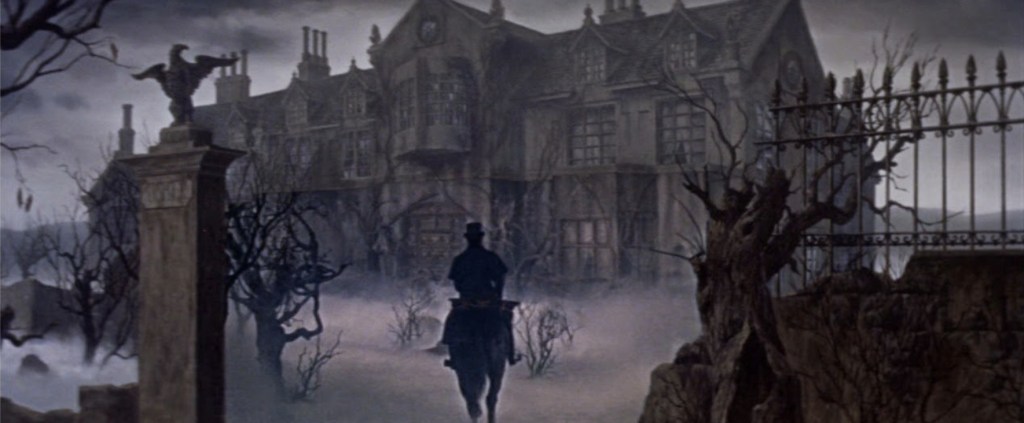
Handsome young thing Mark Winthope has traveled to the cavernous, creaky mansion ominously known as the House Of Usher in order to whisk his fiancée away from this crumbling, swampy place and marry her once and for all – however, upon arriving at the place, he is alarmed to find that his beloved Madaline Usher has been confined to her bed by her epically fragile brother, Roderick.
When he angrily demands to know why his apparently healthy bride to be is suddenly being treated like a sickly glass doll, Mark is soon given an entire rundown of the sordid history of the cursed bloodline of the Ushers. It seems that after generations of cruelty and madness, Roderick has come to believe that the misdeeds of his ancestors have seeped into the house and surrounding lands, turning once lush fields as barren and lifeless as an Egyptian mummy’s sperms count. Worse yet, Madaline’s “highly overwrought” brother is convinced that he and his sister are cursed and that death will soon come for their frail and tormented bodies.
Mark naturally is convinced that Roderick is mad and tries to shake the hold he has over his sister, but the longer he stays at the House Of Usher and the more he tries to cheer Madaline up, the more he sees that her questionable family history is gradually pulling her down into the same mania that afflicts her histrionic sibling and that if he doesn’t get her out soon, she’ll end up sharing the family crypt with the rest of the expired Ushers.
However, time is fleeting in more ways than one and if the crumbling foundations of the building aren’t earning enough that this ghastly house and all of its secrets could soon come crashing down into the swamp that surrounds it, Roderick’s similarly crumbling sanity may soon compel him to urge the Usher’s terrible legacy along with horrifying results.

While Corman will forever be synonymous with such rickety 50s trash as The Wasp Woman and Attack Of The Crab Monsters (not to mention producing 2010’s Sharktopus), the benefits he bestowed upon Hollywood are almost too huge to mention as he not inly gave an entire generation of hungry filmmakers their first jobs in moviemaking, but her also taught them how to be brutally economical with their budgets, allowing them to realise their dreams and thus launching a plethora of legendary artists.
However, while grooming stars and a keen business acumen isn’t a bad way to be remembered, many forget that when he wanted to be, Corman wasn’t a half bad filmmaker himself and this soon becomes evident from a timely watch of House Of Usher.
Sure, that legendarily shrewd eye is obviously locked on that budget (only four characters and they rarely leave the titular house), but for a movie when not much actually happens except for multiple people writhing in existential paranoia, Corman somehow makes it eerily fascinating. Instead of faithfully recreating the story, ol’ Rog seems dead set on trying to capture the sheer morbid dread that Poe enthusiastically dealt in and pin it to celluloid like a vast, gothic butterfly. The Usher’s homestead is a virtual ruin, dusted in cobwebs and wearing autumnal must draped around itself like the feather boa of a manic depressive drag queen; thunder and lightning have never been more strategic as each flash and rumble seems to wait for that opportune moment and the walls are coated with malformed portraits of the Ushers, each leering down from their place like a malevolent rogues gallery. Simply put, Corman fucking nails it, giving everything such a vibrant, gothic sheen he almost single handedly outdoes the entirety of Hammer’s similarly technicolor output in a single movie.
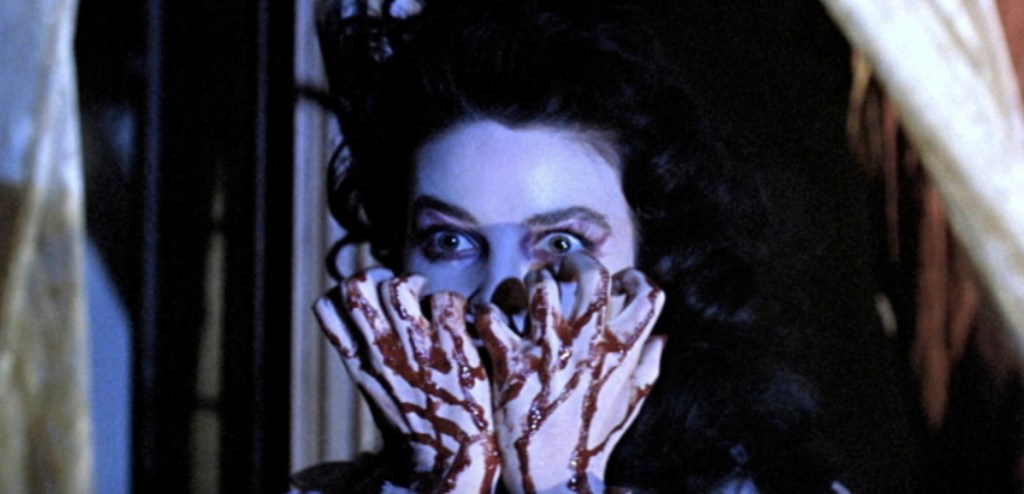
However, while the ambience and visuals managed to do Poe justice, the piece de resistance proofs to be Corman’s not-so-secret weapon for most of his Poe outings – that of the velvety threats of Vincent Leonard Price Jr.. From the moment the unfeasibly prickly Roderick Usher slinks on screen, visibly weighed down by the sheer weight of his melodramatic existence, Vincent Price makes even the most slowest moments of the movie insanely watchable. Descending into camp wincing the second anything sets of one of his infinite ailments, he’s intriguing to behold, even when all his does is complain about the agony of his very existence. Afflicted by a “morbid accuteness of the senses”, Price turns a laundry list of weakness and irritability into poetry. Any sort of food more exotic than the most pallid mash is unendurable to his taste buds, apparently and any sort of garment other then the softest, is agony to his flesh. He goes on to say that his eyes are tormented by all but the faintest illumination, odors assail me constantly, and sounds of any degree whatsoever inspire me with terror which surely make him one of horror cinema’s most enduring drama queens – especially when he’s twanging out minor key tunes on his lute. And yet that famous voice keeps everything absurdly watchable (a rundown of the crimes of the Usher family while glaring at their portraits is also first class pontificating at its finest) until the wheels finally fall off everyone’s sanity and Corman sprints for the finish, throwing in phantasmagoric dream sequences and a final act that sees the female lead buried alive by her conniving bro and turn absolutely bestial with insanity. In fact, the sight of Myrna Fahey with animal rage in her eyes and fingers torn and bloodied from clawing her way out of her coffin is genuinely ghastly for a film that’s mostly been all talk up until then and as the House Of Usher finally gives up the ghost and collapses into the mire, Corman manages to make all the hand wringing build up utterly worth it.
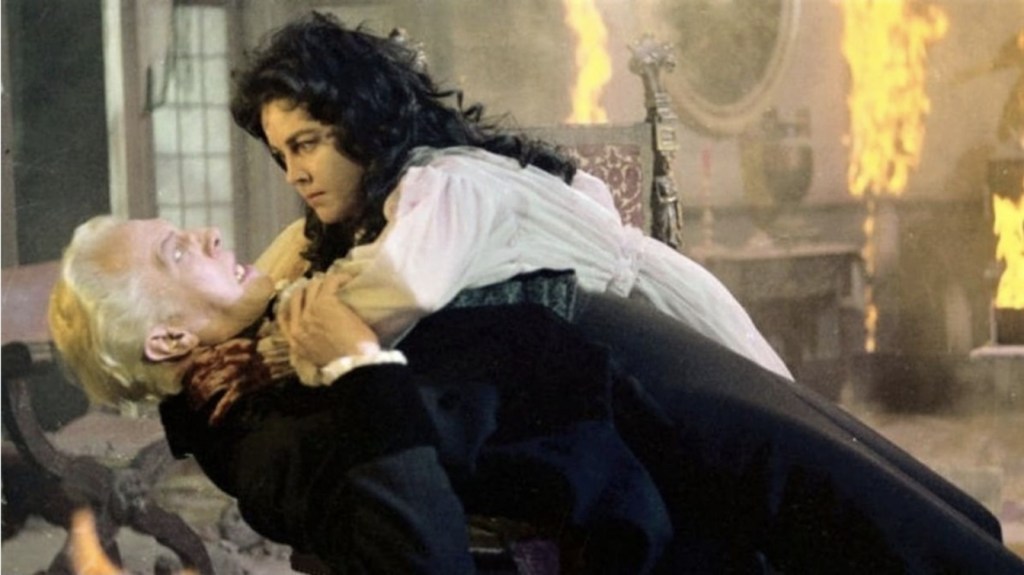
And yet, there was much more and arguably better to come as Corman continued to forge ahead with his Poe inspired movies with masques, ravens and pendulums all waiting ominously in the wings. However, as pure gothic cinema of the 60s goes, you’ll be hard pressed to find much that can stand against the House Of Usher and the sight of a code red drama queen Vincent Price at his most gloriously hypochondriac.
🌟🌟🌟🌟
 We Have Issues