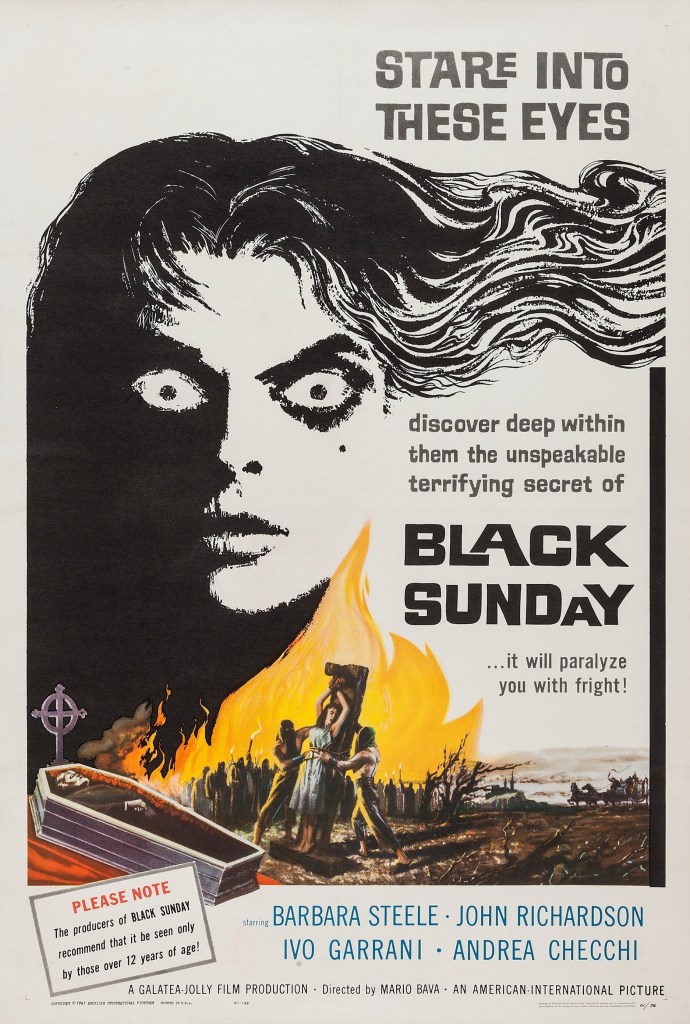
While Mario Bava doesn’t seem to get as much credit for creating a certain kind of visual style (I didn’t see him get name-dropped in the likes of Juno or Screan IV like Dario Argento did), it only takes a casual watch to see that his insanely confident directorial eye is pretty much responsible for the creation of many types of sub genres such as the slasher movie and the Giallo film. From the trippy, living pop art of Danger Diabolik, to the gory, glamorous kitsch of Blood And Black Lace, to the sleezy but complex brutality of A Bay Of Blood, Bava delivered template after template that went on to provide the foundations of many iconic films – after all, Planet Of The Vampires shares more than a couple of similarities to Ridley Scott’s Alien.
However, for his first film, Bava chose to take inspiration from others with Black Sunday (aka. the far more flabobyant Mask Of Satan) as he followed in the footsteps of Universal’s monster output of the 30s and Hammer’s recent lean into horror – but arguably most impressive of all is that he managed to equal them when it came to sheer, cobwebby, gothic chills.
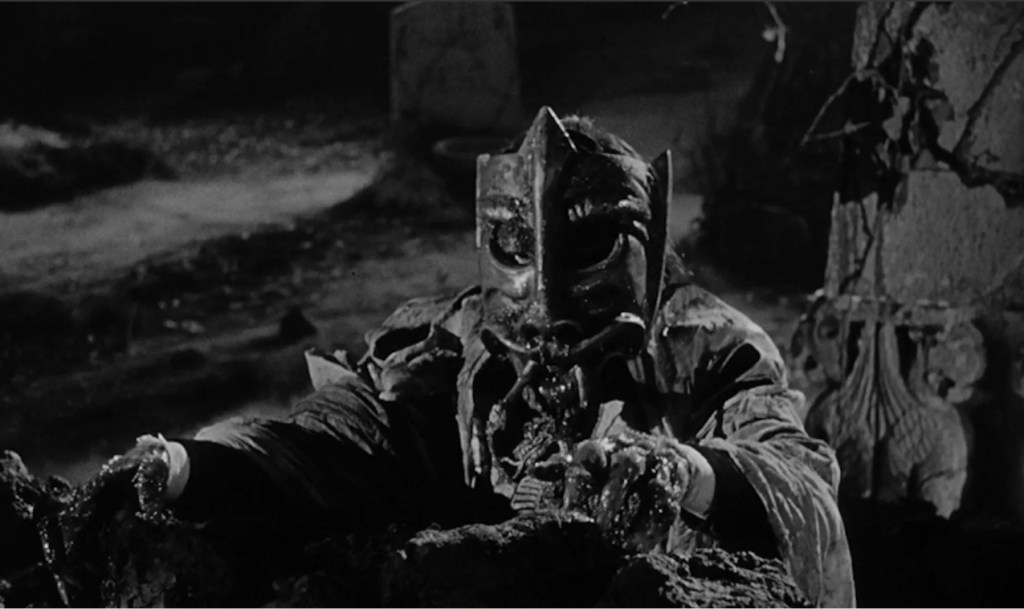
As the tale begins, we are introduced to Princess Asa Vajda, a vampiric witch who plied her evil trade in 1630s Moldavia, who seems to be seeing her life of worshiping Satan take a worrying turn when she and her equally dastardly paramour, the Sonny Bono moustached Javutich, pay for their wicked ways thanks to her brother, Griabi. But while they are both tortured, branded and have giant metal Satan masks hammered onto their faces (y’know, just in case they were unsure of what they were guilty of), the final act of cleasing their evil by fire is thwarted by torrential rain and so their battered bodies are instead buried in places that will hopefully be able to contain their evil.
Fast forward ahead two centuries and Dr. Choma Kruvajan and his assistant Dr. Andrej Gorobec are passing by Asa’s resting place and find that their curiosity proves too much for them as they pick over her grave. However, while having a peek is one thing, Kruvajan can’t help but remove her mask (surely an epically bad choice no matter how superstitious you may or may not be) and after accidently dripping some blood from a fresh cut into her empty eye sockets, he unwittingly resurrects the witch who soon takes it upon herself to wreak vengence of the ancestors of her brother.
Targeting exact double, Katia Vajda, to be her vessel, she and the similarly resurrected Javutich launch a campaign of death on her distant relatives that also manages to ensnare Kruvajan and Gorobec too, but as the death toll and blood drained bodies start to mount, Gorobec and Katia soon start to fall in love despite the horror massing around them. Is there any possible hope that innocence can triumph in the face of a woman so vengeful, hundreds of years of death can’t even slow her roll?
It’s said that a picture speaks (or should that be shrieks?) a thousand words and while Black Sunday didn’t exactly have the most revolutionary of plots, the evocative and stunning opening sequence along proved that Bava was going to let his images do the talking. While creaking doors, gnarled tree branches and cavernous castles were hardly a new thing – in fact, not only had the aforementioned Hammer impressively cornered the market with that very imagery thanks to their sexy, more lurid adaptations of classic movie monsters, but Roger Corman was about to enter the fray himself with a string of equally atmospheric movies based on the works of Edgar Allan Poe that took gothic chic to a whole new level. However, the Italian styling of Bava not only proved to be the equal of Hammer and Corman, but in some cases actually surpassed them with some of the most striking horror photography of the time. Seemingly merging the German expressionism of Nosferatu with the likes of James Whale’s Frankenstein, Bava served up a stunning array of visuals that were all him as the stark black and white turned every frame into a monochromatic masterpiece.
Take that eye catching open sequence that literally tells you everything you need to know in one, brutal scene. Seeing as the Italians didn’t have the same squeamish tendencies as some of its peers it almost immediately delivers a moment where scream queen in waiting, Barbara Steele, has a spiked mask embedded into her face with the type of gargantuan, oversized mallet usually used by the likes of Harley Quinn. Everything on screen is laid out perfectly. Every tree, every bonfire, every sweaty muscled, hooded torturer and while it’s a truly nasty opening that let’s us know how evil our antagonists are by their torments (vampire witches aren’t to be sniffed at), it’s also a visual knockout.
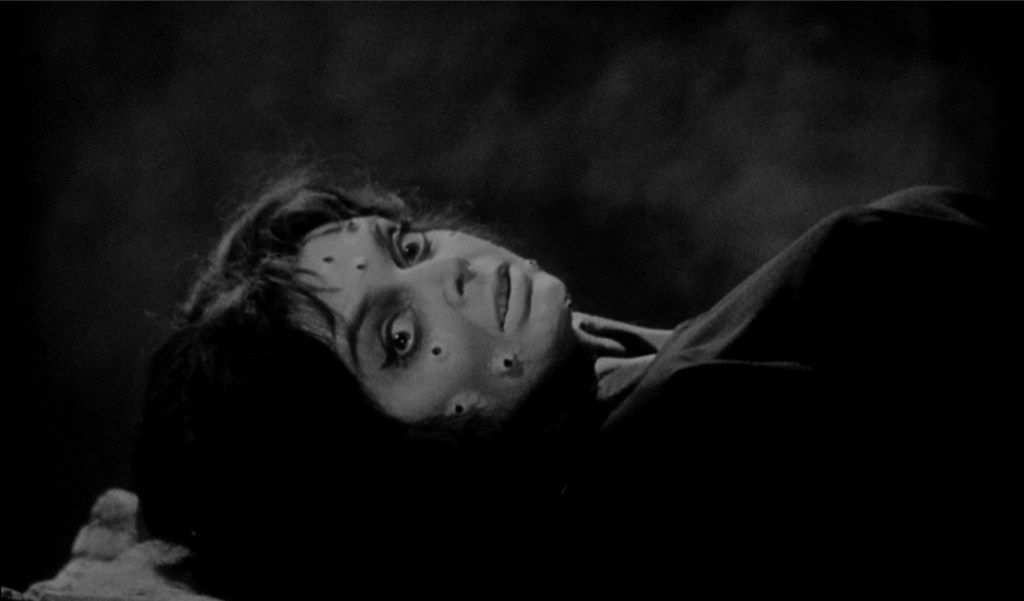
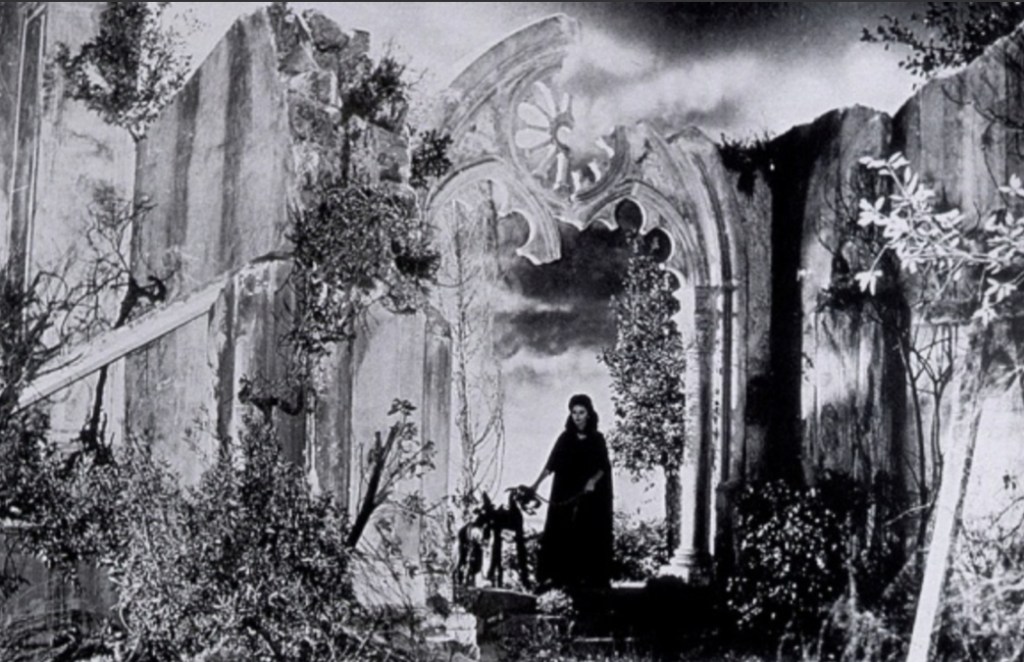
From here the story unfolds in a fairly standard fashion. There’s men of science who show up in a small, somewhat backward town like something out of Frankenstein, there’s superstitious peasants straight out of a Dracula film and the doomed Vajda family, with their cursed history, are more than a little reminiscent of the Ushers of Poe’s story thanks to the generational shit that’s about to hit their fan – and yet Bava’s deft hand at framing extreme gothic deco makes everything seem fiercely original. Behold the resplendence of Barbara Steele entrance as her second, innocent character, Katia as she’s framed by the cracked entrance of a wrecked cathedral while being flanked by two dogs or the sight of the eyeless corpse of Asa as her peepers eerily grow back after a couple of drops of some refreshing blood. It’s arch horror material and while the actual science behind the villain’s abilities remain a little nebulous (is a vampire witch just a witch who drinks blood – or is it a vampire who has learned magic?) the tag team of Asa and Javutich prove to be a formidable duo of the devil and their depraved acts helped define that Italian attitude to horror that ramped up the link between violence and erotica that still feel disturbingly alluring to this day. Take the moment when the punctured face of Steele turns to lock her giant, insanely expressive eyes on a victim only to give a smile that exists firmly on the incredibly confusing border of seductive and monstrous and it’s no real surprise that the actress became quite the familiar face in the genre who went on to work with the likes of Corman, David Cronenberg and Joe Dante.
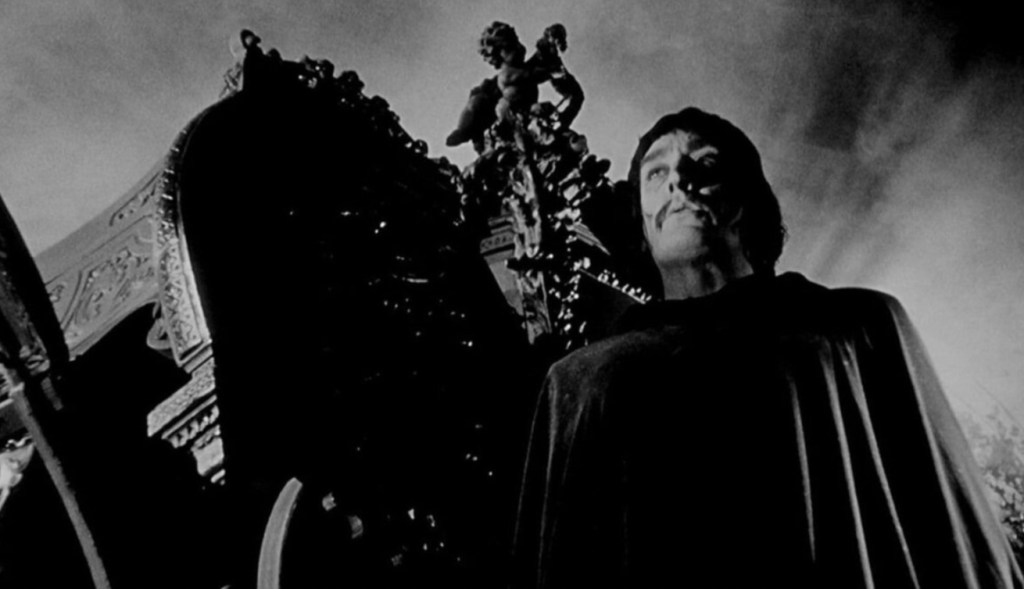
However, earning his flowers the most (photogenic black roses I suppose) is Bava who spring boarded from here into becoming one of the most influential directors that casual moviegoers have tragically never heard of. While Black Sunday’s plot may not be the most original chunk of 60s horror that you’ve ever seen, the director’s keen sense of atmospheric weapon’s grade gothika proves to be vurtually second to none and blatantly has had a massive influence on the likes of Guillermo Del Toro and Tim Burton to name inly a couple. Never in a month of Sundays (especially black ones) will you find a more stylish, creepier and surprisingly vicious example of 60s horror.
🌟🌟🌟🌟
 We Have Issues
Masterpiece.
LikeLike