

When it comes to delivering the atmospheric goods to a horror film, Mario Bava stands as a true pioneer. Whether he was beating the likes of Hammer Films and Roger Coman at their own games with the stunning, gothic, black and white photography of Black Sunday, or infusing the cat and mouse world of Blood And Black Lace with colour so rich it could burn the eyes of Dario Argento clean out of his head – but during the 70s the genre was experiencing something of shift as movies concerning creaky castles and stylised slaughters had to find a way to adjust to cinematic horrors starting to gain a more contemporary feel. With game changers such as Rosemary’s Baby, The Omen, The Texas Chain Saw Massarce and The Exorcist only years away from retooling the genre entirely, other filmmakers tried to simply plonk classic horrors into modern scenarios with mixed results. In 1972, Bava gave it the old college try with Baron Blood, but could this tale of a resurrected sadist manage to fuse old school creeps with roll neck jumpers and fashionable head scarves?

Overly confident American, Peter Kleist has arrived in Austria to take time out from looking handsome while studying at college and cast an eye over his family history. After agreeing to stay with his uncle Karl, Kleist soon hits ancestral paydirt when he discovers that his great grandfather was none other than the notorious Otto Von Kleist, a practicing sadist who earned the rather fitting nickname Baron Blood after torturing and killing hundreds of villagers before being cursed by a witch he had burned.
Anyway, after finding this out, Peter is naturally desperate to find out more and convinces his uncle to take him to the Baron’s old castle which is currently getting renovated into a hotel by an unscrupulous entrepreneur, but in doing so he meets Eva, a former student of his uncle who has been hired to desperately try and ensure that the remodel doesn’t make any lasting changes to the castle’s foreboding architecture. Being both attractive, fashionable young things, Peter and Eva hit it off and during a dinner together, Peter reveals that he’s brought some ancient parchments found back in his grandfather’s house in America that seemingly contain an incantation that could raise his murderous relative from the dead.
Now, why in the absolute blue fuck anyone would actually want to do this is anyone’s guess, but before you know it, both Peter and Eva head off into the castle to do some late night incanting and – surprise surprise – actually manage to jog a ravaged Otto Von Kleist back into the world of the living.
Of course, a long period of death isn’t going to do much to calm the murderous tastes of someone the world at large referred to as Baron Blood and before you know it, moldy old Otto is running about the place, racking up a brand new body count as he seeks to reclaim his castle. Can the Baron be stopped? Will anyone escape his thirst for murder? And what connection does wheelchair-bound millionaire Alfred Becker have with all of this?

Mario Bava’s attempts with Baron Blood seem to match several similar attempts to try and pull off classic style creeps in a modern setting (modern here meaning 1972) much like Hammer’s Dracula A.D. 1972 and the two Count Yorga movies which all doubled down on sinister capes, dilapidated castles and eerie mist rubbing shoulders with hippies and extravagant bell bottoms. However, sadly, this proved to be a gimmick that didn’t seem to work much beyond the amusingly camp and despite his previous catalogue of atmospheric classics, Bava’s Baron Blood also fell into the trap of being stuck between the two time periods.
It’s somewhat frustrating that Bava couldn’t get the balance right, because the basic plot of Baron Blood is pretty much something his countryman, Lucia Fulci, could have pretty much bang out in his sleep and make it far memorable than the film ended up being. In fact, a disfigured, sadistic bastard rising from the grave to casually murder various idiots isn’t a hundred miles from the plot of Fulci’s The House By The Cemetery, but while Lucio’s gloriously absurd 1981 gorefest is a ridiculous, surreal gift that just keeps giving, Baron Blood suffers from a weird overindulgence of restraint, both with the plot and with the Baron’s bloody deeds. For a start, Bava’s lead character, played by the lush walking hairdo known as Antonio Cantafora, is the exact sort of overconfident moron whose actions cause the death and destruction of everyone around him that doesn’t even make that much thematic sense. Sure, horror cinema is loaded with evil-raising halfwits, by in Peter Kleist’s case, he attempts to raise his psychotic ancestor despite freely admitting that he doesn’t really believe in any of that supernatural stuff – but if that’s the case, why the hell did he go through the effort to bring arcane documents all the way to Austria and break into the Baron’s castle? That’s a lot of effort to go through for something you don’t actually believe in.

Elsewhere there’s the usual stock of Euro-victims for the Baron to kill such as a mentally impaired caretaker or a greedy businessman, but while the villainous Otto Von Kleist cuts a classically imposing figure with his chopped meat complexion and a rather fetching hat and coat combo, Bava doesn’t really stage any of the bloodshed with any particular elan or impact, which is weird considering that he’d excelled himself only a year earlier by belting out some superlative slaughter in the savagely stylish A Bay Of Blood. Yes, there’s a particularly startling moment involving an iron maiden closing its spikes into someone’s face (a Bava specialty since Black Sunday) and a moment with a doctor that oddly feels like that Joker bit from Tim Burton’s Batman, but other than that, there isn’t much here to help things stand out other than Elke Sommers’ extensive wardrobe and the fact that the yelping scream she delivers while in peril sets her apart from other, more traditional screamers.
However, Baron Blood’s main flaw is that for all it’s admirable attempts to invoke the old school chills of classic fright fare from a decade earlier, it ultimately proves to be fairly slow and not particularly interesting. In fact, the movie itself seems to sense this and suddenly decides to change things up a mere thirty minutes before the end by introducing a medium who offers up oddly convenient salvation in the spirit of one of the Baron’s victims, and then counters that by then randomly giving the villain the option to assume a more human form in a last ditch attempt to add some mystery to its plodding bulk.
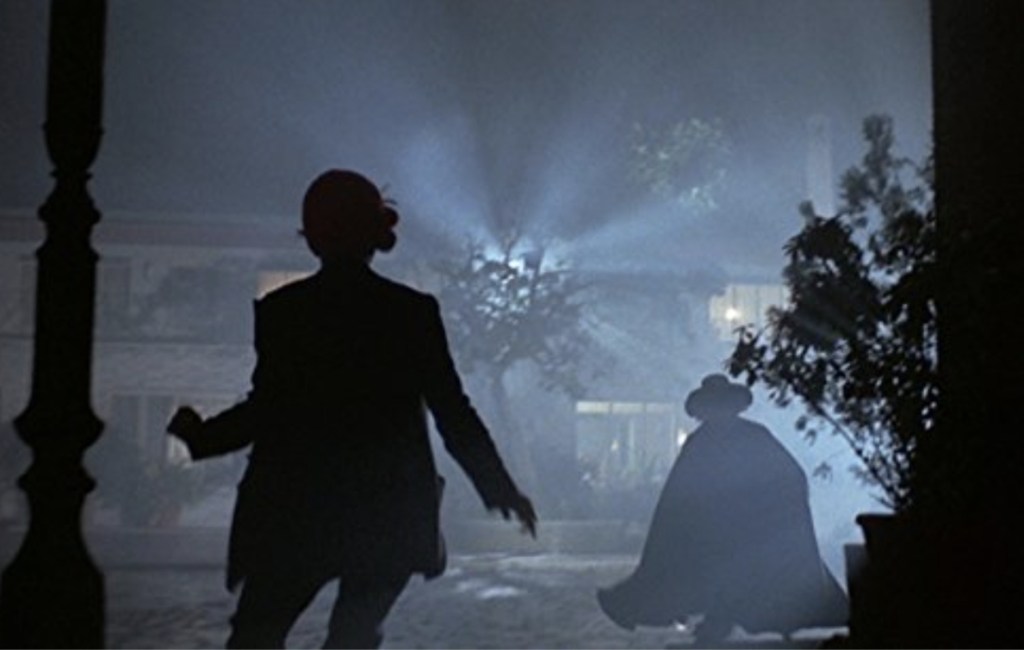
Sadly, nether of them work particularly well and the fact that Baron Blood drags his heels as much as he does mean that this is one Bava movie that can’t be salvaged by his strong visuals masking a plot that’s as ropey as the title character’s mauled puss.
🌟🌟
 We Have Issues