

What makes a serious filmmaker want to remake a stone cold classic? Is it hubris; the assumption that they can better something that was just fine as it was? Is it a sense of deep respect that drives them to rework a beloved movie so it can speak to a more modern audience, or is it something else? To truly understand it, I guess you’d have to ask such diverse talents as David Cronenberg, John Carpenter, Peter Jackson, Philip Kaufman and countless others as to why they did their respective redos – however, one of the more fascinating pairings between an auteur and an existing property has to be Werner Herzog’s punt at Nosferatu.
Quite how one of cinemas most unpredictable artists decided on taking on possibly one of the influential horror movies ever made would no doubt boggle the brain, but you certainly can’t argue with the results as the director enlisted his famously volatile muse/hated enemy Klaus Kinski to play one of three most intriguing Dracula variants ever created.
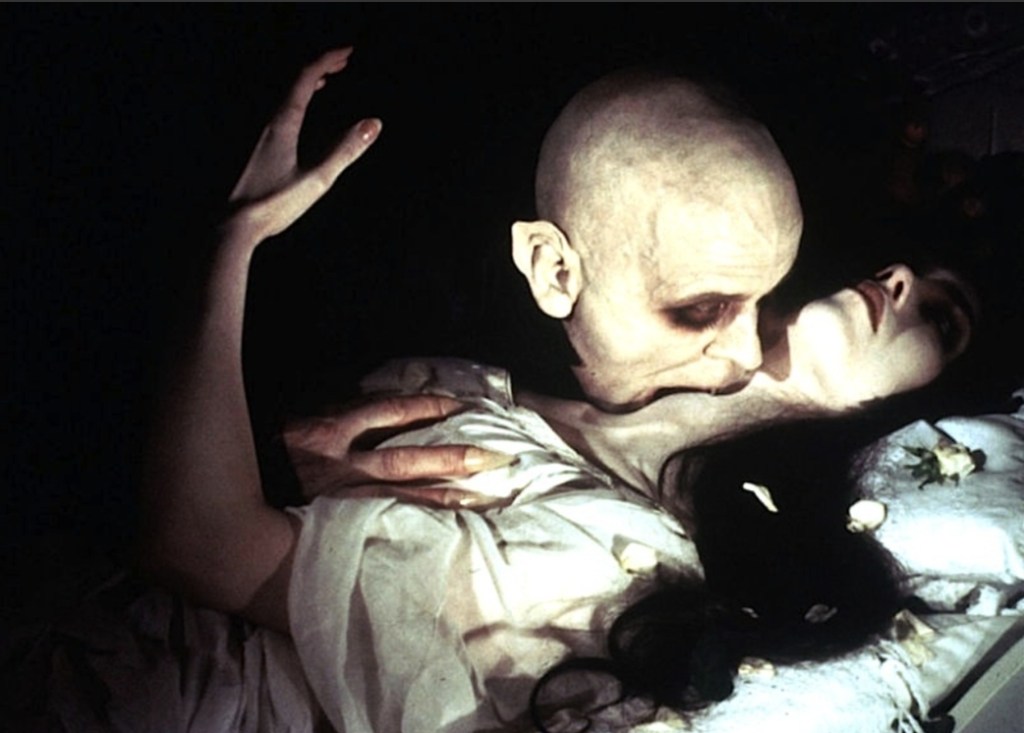
Jonathan Harker is an estate agent working out of Wismar, Germany in the year of 1850 who seemingly has his whole life ahead of him as he has his devoted wife, Lucy, behind him and a prosperous real estate deal to cement. However, the catch is that Harker has to travel to Transylvania and meet with reclusive nobleman Count Dracula in order to sell him the property he wishes to buy in Jonathan’s own neighbourhood, but during his long journey, he meets a string of local peasants and gypsies who all warn him against doing something that seems plainly rather dodgy.
Well, dodgy it most certainly is as the Count is revealed as a pasty, bald, bat-eared, snaggle-toothed outcast who has a passion for blood that’s only rivaled by his innate loneliness. However, despite being something of a pathetic figure, the Count has some rather large and sinister plans for Jonathan and is hoping to spread his plague-like evil overseas while making his guest his unwilling thrall.
Meanwhile, back in Germany, Lucy is suffering a string of chilling visions that imply that doom is impending for her village and her husband as Dracula starts to make his fateful voyage across the ocean in order to move into his new digs while a feverish Jonathan plots his escape. However, once the Count rocks into town on a boat full of slaughtered sea men and hauls his coffins to his new home, he gets to work spreading sickness and death either by via his blood lust or the literal boat load of rats that spill into the town in his wake. While Jonathan struggles to return home as he is ravaged by a strange affliction, it’s down to Lucy to unravel the riddle of Count Dracula and figure out how to vanquish him as he literally poisons all life around him – can she make the ultimate sacrifice and save her husband or has the infection the vampire brings with him simply gone too far?

The original Nosferatu was a reworking of the Dracula myth filmed in the striking style of German Expressionism that emerged from the silent era to pretty much dictate what 90% of all subsequent horror films would feel and look, so any one who would dare try and remake it would have something of a creative pickle on their hands. However, Herzog manages to pull something of a neat trick where he manages to invoke F.W. Murnau’s striking, iconic visuals while still managing to inject his own sensibilities into the story to give the movie a dream-like, art-house feel. As balancing tricks go, it’s pretty damn impressive and it feels almost like a blueprint for a lot of the modern, so-called instances of “elevated horror” we get all the time now with all the moody photography and heavy atmosphere that comes with the territory.
Right from the off, Herzog manages to get his brooding tone across in the quickest and most Herzog-ish way possible by having the opening credits play over lingering shots of actual mummified corpses that sets the mood with brutal efficiency. From here, the movie pretty much follows the plot of the original as it tells a slightly altered version of Bram Stoker’s source novel (Murnau couldn’t get the rights to use the original character names from the Stoker estate but Herzog did – so it’s goodbye Orlock and hello Dracula), and Herzog’s script succeeds in expanding the emotional content that make have been lost due to the originals lack of sound. However, most of this comes from the facial expressions of his actors who somehow still convey the more visual acting aspects of the silent era while still giving the cast actual dialogue. This is most evident any moment your eyes gaze upon the exceedingly pale face of lead actress Isabelle Adjani whose permentantly haunted facial expressions seem to lay somewhere between her being under the influence of drugs or looking like she’s appearing in a Kate Bush music video.
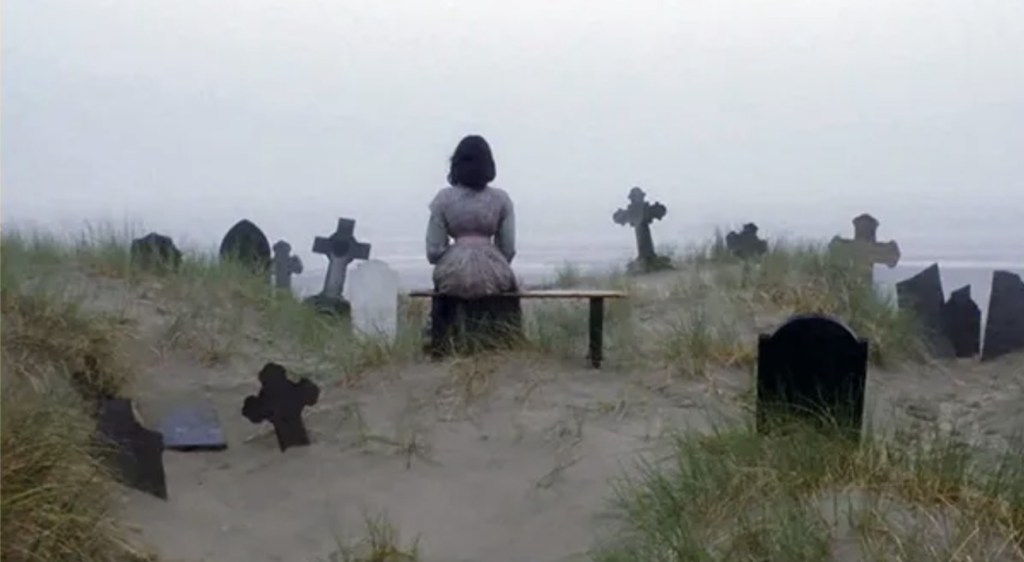
However, both Adjani and Herzog manage to build on the role of Lucy to the extent that her climactic sacrifice becomes genuinely moving as she puts everything on the line to save her husband ably played by a similarly hypnotised looking Bruno Ganz.
Forgoing such easy crutches as gore or conventional performances, Herzog instead forges on with unforgettable images that sink their fangs into the psyche and refuse to lose their grip. Probably the most noticable of these is the movie’s copious use of rats that seem to swarm in their literal hundreds in the wake of the titular vamp and the sight of a family, dressed in their finest while eating one last meal in the rat infested streets as they wait for the plague to claim them may be the most under-appreciated horror image of the entire decade.
Of course, all this somehow pales in significance to probably the biggest casting coup of the 70s as Herzog recuits legendary lunatic and frequent nemesis Klaus Kinski to embody the role that Nax Schreck made iconic fifty seven years earlier. However, while Kinski certainly had more than his fair share of demons, he wisely manages to put a fair few of them on the screen as he gives us the type of vampire portrayal rarely seen back in 1979. Bald, pallid as fuck and featuring buck tooth fangs and bat like ears that give him a decidedly rodent appearance, this Dracula is less of a malevolent gargoyle like Count Orlock and instead is a soft voiced, malformed loner, fashioned into an awkward and miserable creature due to God knows how many years he’s been alone in his castle. It’s a fascinating look at a creature that – at that time – wer usually portrayed as confident, malevolent and seductive beings and the whole reason this Dracula wants to move to Germany in the first place seems to be in order to be close to humanity again, even if it means his very presence will eventually kill the entire town.

Add to this a new, downbeat ending that seals that nihilistic tone that Herzog is shooting for and you have a remake that really should get more plaudits than it does. It tells a pre-existing story that not only honors the concept of the original but adds a whole new spin to a classic that gives it a whole new lease on life. Monstrous, beautiful and featuring enough rats to make Indiana Jones’ father instantly lose control of his bladder, Nosferatu The Vampyre proves that the union of Herzog and Kinski could be as magical as it was destructive.
🌟🌟🌟🌟

 We Have Issues
A great one that needs more love.
LikeLiked by 1 person