
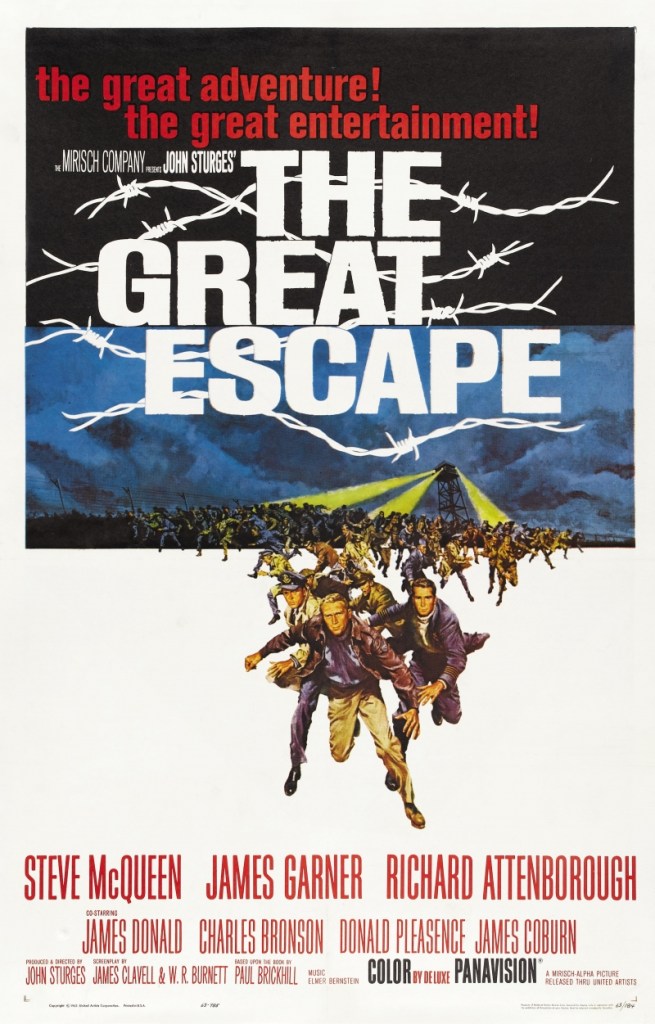
You can hear it right now, can’t you? The very second you read that title, I’m willing to bet folding money that Elmer Bernstein’s transcendent theme has suddenly entered your head like a virulent mind worm and has you whistling the most insanely jaunty tune ever to emerge from a movie about the Second World War. I am, of course, referring to John Sturges masterful ensemble wartime thriller, The Great Escape, which has anointed itself as possibly the greatest “dad movie” of an entire generation that stands proudly alongside the likes of Goldfinger and The Good, The Bad And The Ugly as the film du jour for overfed patriarchs to fall asleep to at Christmas or various bank holidays.
However, to those of a generation who thinks that yearly watches of a movie set in a German POW camp sounds more than a little odd, it might be time to visit a movie made during a simpler time that fuses an immaculate tone with a collection of thespian to die for. And if nothing else, you’ll be whistling that theme tune for the rest of the day…
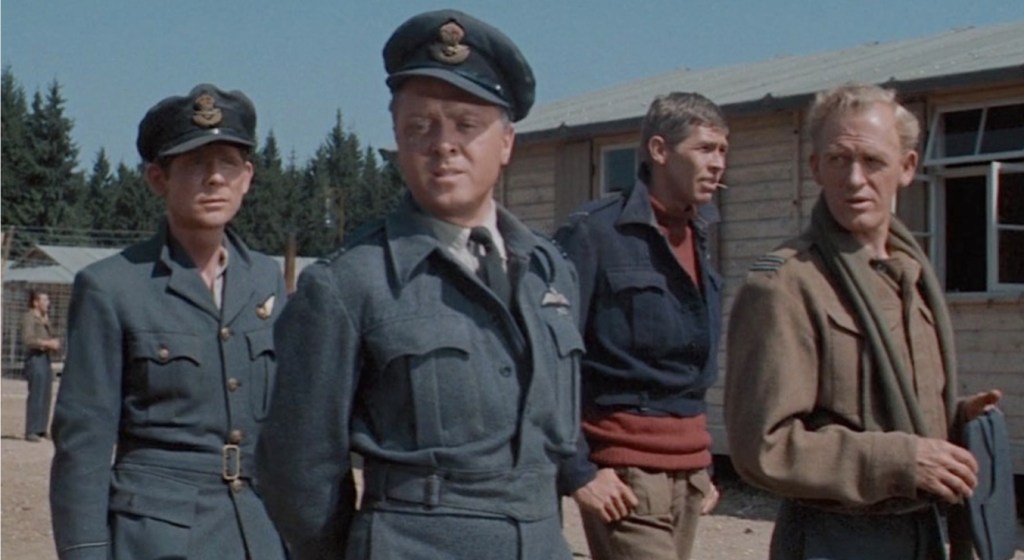
It’s 1943 and in an effort to keep escape happy prisoners of war from repeatedly gumming up the works, the Nazis have created a special camp to “put all their rotten eggs in one basket”. The aim it to keep all the repeat escape artists and trouble makers in one place where it’s going to be easier to keep them in check and hopefully keep them occupied with hobbies and sports so everyone can wait out the rest of the war in relative comfort. However, it soon becomes apparent that the new inmates have other plans. You see, it is the expected duty of any captured POW to be as big a pain in the britches to the Germans as they possibly can be by either trying to escape or just being as difficult as they can be and barely hours after being first admitted, prisoners are testing for blind spots in the watch towers or trying to get a ride out in the back of trucks under cover of trees. However, the repeated acts of defiance by various men prove to fail before they can even begin – but that’s fine, because RAF Squadron Leader Roger Bartlett has something of an audacious plan.
Roping together any many experts in all aspects of subterfuge that he can, Bartlett put in action a ploy to have three separate tunnels dug to escape (each dubbed Tom, Dick and Harry) in order to try and smuggle out 250 men in the hope that even if they don’t all escape, valuable German resources will be tied up trying to recapture them.
From there, this band of mismatched tunnel diggers, scroungers, forgers and engineers, attempt.to outwit their captors at every turn, planning to stage a mass exodus on a night where the moon won’t be an issue, but even if they manage to avoid the guards, there’s a tunnel digger with claustrophobia and a near-blind forger to contend with – and even if they can compensate for that, if the Luftwaffe fail in their duties, the Gestapo will be more than happy to intervene…
When it came to staging complex ensemble pieces that were deceptively fun despite having a darker edge lurking in the wings that seemed like a rollocking good time thanks to a Elmer Bernstein score that pretty much encapsulated an entire genre, John Sturges had pretty much already cracked the code by making the offensively enjoyable The Magnificent Seven back in 1960. To say that he just duplicated the formula and switched genres to war in order to make The Great Escape may sound a little cynical, but even though the films simply couldn’t be a straight swap, he carried over enough of the good stuff to create arguably one of the most beloved WWII movies ever to grace a screen.
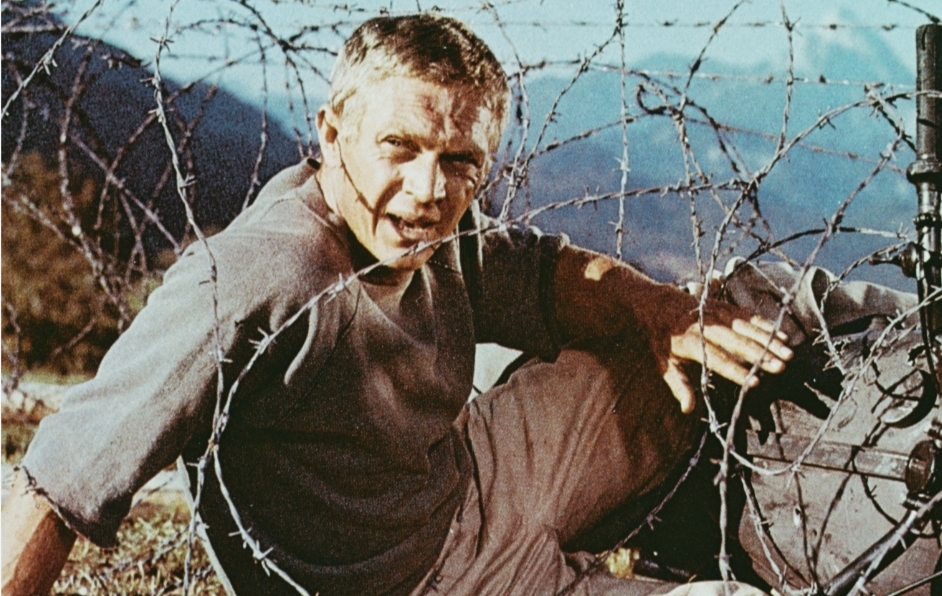
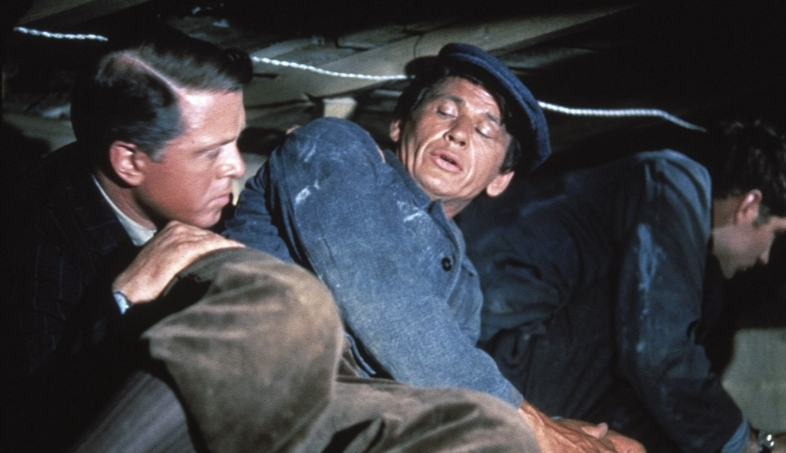
The secret, Cast and tone and to accurately do justice to the raft of talent the movie lines up would take up an entire article of its own, so I’ll breeze through as best I can. Obviously there’s the swaggering cool of Steve McQueen’s Hilts, effortlessly iconic whether nonchalantly bouncing his baseball of the wall of his solitary confinement as he plots another caper or attempting to jump a fence on a motorcycle after leading German troops on a merry chase. Then there’s Richard Attenborough as Bartlett, tense and controlled, the weight of the war still on his shoulders as he believes its his total duty to be a constant wrench in the works of the German war machine any way he can even if it means the Gestapo will finally come knocking. And still it goes on – Charles Bronson’s tortured Polish tunnel digger, James Garner’s charming scrounger, James Coburn’s highly questionable Australian accent, Donald Pleasence’s tragic forger, Gordon Jackson’s dependable second in command, David McCallum’s selfless sacrifice – all of them have something to offer, be it the talents their characters possess or the presence they bring to their individual cogs which all turn together to make the machine run. Virtually no one is wasted and all are so likable that once the lucky few managed to break for the trees during the chaotic breakout, you are insanely invested in seeing them succeed.
There’s that tone too. Ably bolstered by the gumption of that theme, the movie catches you off guard with a strangely carefree and endlessly cheerful tone that almost has you fooled into thinking that this is just a goofy telling of Hogan’s Heroes. The German guards are strict and they do machine gun down one poor sod who breaks and tries to climb the barbwire, but most of the time, the POWs almost act like naughty schoolboys with the Nazis being no more inhuman than a stern disciplinarian. However, this is Sturges just leading you into the final third, just like he did with anyone who thought that The Magnificent Seven was simply a great film about male bonding.
During its miraculously zippy 173 minutes, the first section introduces you to the boys, the second has them cooking up and executing their plan in a surprising amount of detail; however the third is where shit gets real and the movie continuously reminds you that you are, in fact, still watching a movie set during the Second World War that can, and does, have fatal ramifications for a lot of the cast. But by then it’s too late. You’re all in for the likes of Barlett, Hilts, Danny, Blythe, Hendly and the rest of the gang try to make it to safely and what follows is the equivalent of watching Michael Fassbender holding up the wrong three fingers in Inglorious Basterds on repeat as testicle shrinking slip ups and cruel acts of fate conspire to aid the Germans in their task.
Quite how Sturges can balance such a cheerful, upbeat movie with moments of legitimate tragedy and still have you walking out with a spring in your step and a whistle on your lips should probably be studied for the betterment of mankind, but the indomitable will to keep fighting, even when you’re apparently out of the game, somehow pushes through the rather grim ending that a lot of the characters face to create something that is unabashedly upbeat and therefore even more touching.
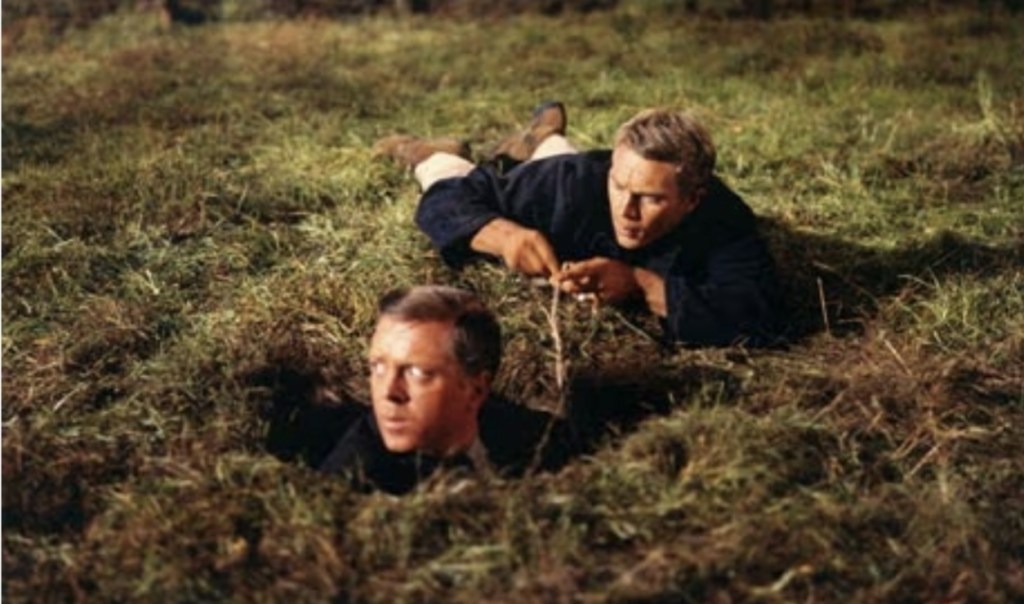
Virtually homaged into oblivion and often underestimated due to its reputation as a movie your dad watches, you’d do well to remember that The Great Escape is precisely that; it’s an escape where the horrors of war aren’t quite so horrible – and it’s also bloody great to boot.
Play us out Bernstein, from the top.
🌟🌟🌟🌟🌟
 We Have Issues