

If you needed an example of the random craziness of the chaotic, virtually lawless world of the Italian film industry, a perfect microcosm might actually be the lesser known, gunslinging, Sabata franchise that saw a hero blessed with a biblical sense of prep time while he battled with fat cats over stolen gold. In the first film, Sabata was played by walking perma-squint Lee Van Cleef as he employed his array of gadgets and eccentric friends to win the day without barely breaking a sweat. However, in the sequel, not only is Sabata suddenly a more virtuous individual who is trying to score money for a monastery instead of filling his own pockets, but he’s now played by the more lithe form of Yul Brynner who blatantly seems to be playing a different character.
The reason? Well, in an example of typically Italian movie making, the character Brynner was supposed to be playing was Indio Black, but his named was altered to Sabata to form an official sequel. However, if this was the case, why on earth was he surrounded by actors cast in the previous movie playing variations of the exact same character that came directly from a Sabata film? I swear, the more I find out about the Italian film industry, the less I actually know…

Anyway, we rejoin “Sabata” as he is about to embark on yet another gold hunt under the orders of guerrilla leader Señor Ocaño in order to stick it to the Austrian army and in particular, the sadistic Colonel Skimmel, whose interests include shooting Mexicans with his superior marksman skills and wearing the shit out of monocles. However, despite seemingly being intelligent to the point of being omnipotent, Sabata is once again teamed up with a gaggle of eccentric looneys who all believe in the cause. First there’s the barrel chested Escudo, the over emotive revolutionary leader whose mood swings are only matched by his booming laugh and he’s joined by mute, flamenco dancing acrobat Gitano and the similarly silent José, whose weapon of choice is to use his tricked out shoes to hurl ball bearings at his foes with a powerful kick.
While you’re trying to process a Western that apparently thinks that putting the type of people you’d find in a Roger Moore Bond movie is perfectly normal, the waters are muddied further by the presence of charismatic dandy, Balantine, whose weapons grade charm, flashing smile and desire to lay his hands on the gold by any means necessary makes him both a valuable ally and someone you don’t take your eyes off. Emboldened by more self confidence than the West can safely hold, the group sets out to foil Skimmel and make off with the precious metals the man and his army have hidden away somewhere.
Can this ragtag group of – oh why am I wasting time? It’s a Sabata film for Christ’s sake, the dude has practically won before the film’s even started and anyone who saw the first film must already know that despite dressing in an open black shirt, more tassels than is strictly necessary and a medallion like he’s about to get down and boogie to Apache by The Sugarhill Gang, he’s always an infinite number of steps ahead.
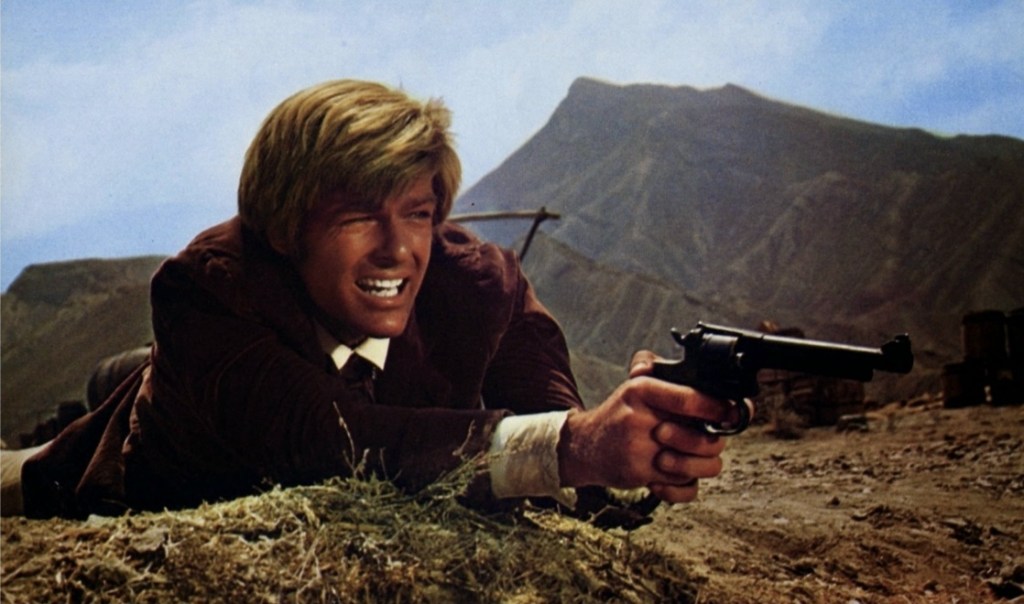
So, to get to the point as early as possible, Adiós Sabata isn’t exactly a good Western, but it is a fun one. The unpredictable proclivities of the Italian film industry aside, there’s a lot of weird shit going on here and any attempt to compare it with its peers can only end a sense that Sabata is simply too ludicrous to even remotely be taken seriously. Take the bar scene, which not only suggests that Sabata is proficient at tinkling a bit of Schubert on the ivories, but is able to outshoot an aggressor who seemingly gotten the drop on him by causing his fancy rifle to fall over and shoot the guy for him. It’s not just Sabata who has bizarre, plot helpful talents either as the character of Balantine played Dean Reed (the American communist crooner from the 60s dubbed the Red Elvis) not only can play classical tunes on the old Joanna, but is an extraordinarily talented portrait artist for no other reason than it helps him get close to the villain. Elsewhere, Gitano have an utterly bonkers execution ritual dubbed the “Flamenco of Death” which sees the athletic mute entrance the man about to die with his dancing skills until Escudo simply just shoots them.
However, as deranged as all this is, if you treat the whole ridiculous enterprise as a comedy, Adiós Sabata actually emerges as impressively watchable if you can find the sense of humour in writing so audacious is borderlines on lazy, then you’ll probably have a ball laughing in disbelief at the type of shit the film expects you to swallow next.
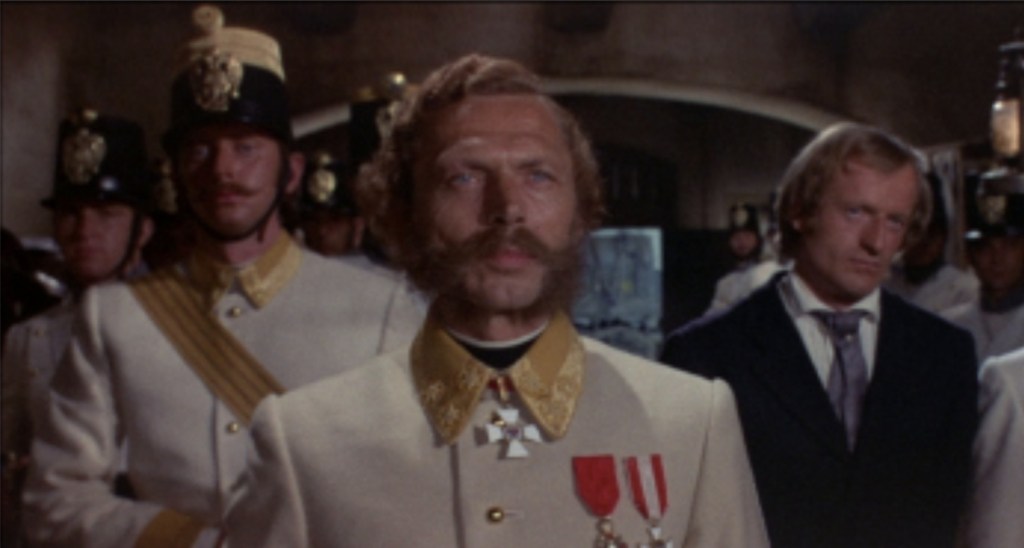
For example, Van Cleef may be temporarily out (a fact made even more ironic when you realise he later covered for Brynner in a Magnificent Seven sequel) but Sabata is still surrounded by a Mexican Falstaff-style blowhard once again portrayed by Ignazio Spalla and a silent mute who recklessly bounces about the place like an unsupervised child at a trampoline park. But once you accept that Sabata has aspirations to be the Western equivalent of a Bond flick, the weird abilities and confounding gadgets and boobytraps almost start to make perverse amount of sense.
OK, so the basic plot is essentially Spaghetti Western 101 with the usual villains, goals and confusing double crosses that comes with the dusty territory, but while the sequel doesn’t manage to balance the insanity anywhere close to how well the first film did, it’s certainly more handsomely mounted with the production values doing a lot of the hard work that Brynner’s unmoving features are simply unwilling to do.
It’s not that Brynner doesn’t do what required of him as he casts an impassive eye while wearing one of the more outlandish costumes the genre has ever seen (the tassels, people. Dear god, the tassels!), but while Van Cleef’s devilish, almost rodent-like grin added to the punchline that he was one step ahead of everyone all along, Brynner’s vacant expression just seems like he’s merely oblivious to everything that’s going on around him. It’s funnier, but it isn’t effective and while the original movie teetered on that tightrope between cool and stupid, Adiós Sabata tumbles into the bottomless void of the later the minute the movie starts.

With no tension, no stakes and a frighteningly tenuous grasp on anything remotely resembling a point, Adiós, Sabata manages to counteract its failings by being almost endearingly stupid as our heroes stride through the chaos and repel anything that stands in their way with a minimum of effort. However, when it comes to such things as Sabata’s trick rifle (which actually looks a nightmare to fire) or the Flamenco Of Death that grows progressively more ludicrous the more you see it, mileage may very well vary.
Lee Van Cleef may return, but from here it’s adiós Brynner and a hefty cheerio to common sense.
🌟🌟🌟
 We Have Issues