

During the 1990s, Martin Scorsese crafted a gangster movie that became embraced as one of – if not the – greatest mob movie ever made. Whether or not it managed to eclipse Francis Ford Coppola’s towering The Godfather is a matter for another time, but where the operatic story of the Corleone family was slow, measured and deliberate, Scorsese’s movie was fast, freewheeling and continously bowled us off our feet as it plowed through decades of real life happenings like the filmmakers were snorting as much coke as the gangsters were. The film was fast, fantastic and virtually flawless and it absolutely was not Casino.
Obviously the film I was discussing was 1990s Goodfellas which is undeniably a superlative slice of cinema, but when Scorsese released Casino five years later it wasn’t awarded quite the same reaction as it was denounced as a simple retread of what it’s spiritual predecessor had already achieved. But even though the creative team of Scorsese, Nicholas Pileggi, Robert De Niro and Joe Pesci seemed to be walking a very familiar path, a closer look at the glitzy razzmatazz reveals something of a winning hand.
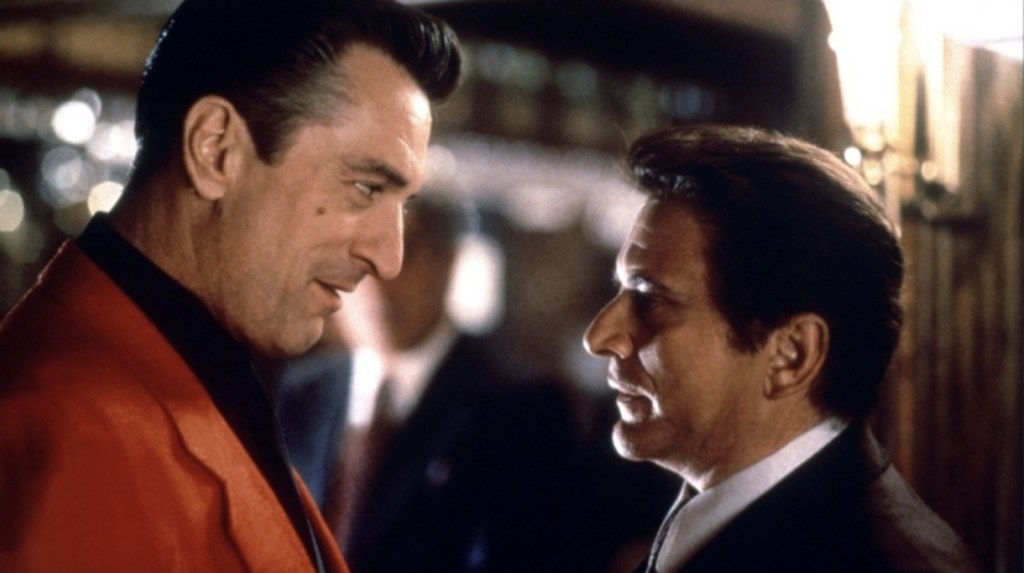
Eyeing the city of Las Vegas as fertile ground to hoover up untold amounts of dough, professional gambler and Mafia stooge Sam “Ace” Rothstein is sent by the mob to run the Tangiers Casino in the year 1973 and because the guy eats, sleeps and breathes gambling, soon he’s raking in a tidy amount of profit for his bosses back in Chicago. In fact, he does so well that he decides to send Sam’s childhood buddy and ruthless mob enforcer, Nicky Santoro, to protect their golden goose as he keeps that all-important green coming in at a relentless pace.
Business continues and we get a chance to dig deep into the unfeasibly crooked dealings that go on behind the flashing lights and feathery showgirls that surround the place like a blinding spell. However, the blinding sheen of Vegas starts to flicker when con artist and former prostitute Ginger McKenna enters the picture and things start to go awry when she steals Sam’s heart as effortlessly as she swipes gambling chips. Very soon (actually, too soon), Sam and Ginger have a kid and marry meaning that the blushing bride gets all the lush jewelry and spendable cash she could hope for; but the fact that she just can’t shake the connection between herself and her sleazy, former pimp means that Ginger soon starts treating her husband for a fool.
With Ginger’s erratic behavior living rent free in his head, Sam’s earning power soon starts to drop and worse yet, after Nicky realises that there’s no real mob influence out in Vegas, he starts treating the place like his own personal Wild West which only results in effecting the cash flow even more. If there’s one thing the mob can’t stand, it’s losing money and while the house may always win in Vegas, no one takes a dip in funds more seriously than a pack of wise guys.
It may be time to deal out…

It is impossible to deny that both Goodfellas and Casino share a great many similarities that go even beyond its director, cast and origins, it’s also baffling to me that some considered a movie that was a brasher, louder and more flaboyant younger brother to the previous flick a negative thing. After all, is getting more of the same so bad when what you got in the first place was so damn good in the first place? Maybe I’m just thinking too much like the greed sodden characters in the film, but if Scorsese us going to give me mire or the good stuff, then my eyeballs is going to shoot it, spend it or snort it as hungrily as I can and not spare a second thought that it’s “too similar” to something that I also absolutely adored.
OK, so there are admittedly a lot of similarities here with the most glaringly obvious is that De Niro and Pesci are playing characters that, at first glance, seem unreasonably alike that of Jimmy Conway and Tommy DeVito, but when you take a closer look, you’ll see that Sam Rothstein and Nicky Santoro are actually subtly different and far more flawed. For example, while De Niro gave both characters an icy inflexibility, Sam isn’t a high functioning psycho and actually is a normal and fairly reasonable guy compared to most of the people you find in these sorts of films. In fact, it’s his overriding humanity which causes the cracks to appear in this perfect life as Sharon Stone’s wildly erratic and selfish Ginger seems to be Sam’s glaring blind spot and it’s fascinating that such a meticulous man could get emotionally pole axed by a woman he knew to be fairly shifty right from the off. Of course, if De Niro could be accused of playing to type, then surely Pesci is guilty also, but again, while it seems that on the surface, the actor is playing yet another pocket-sized psycho, once again there are quite a few differences to take in.
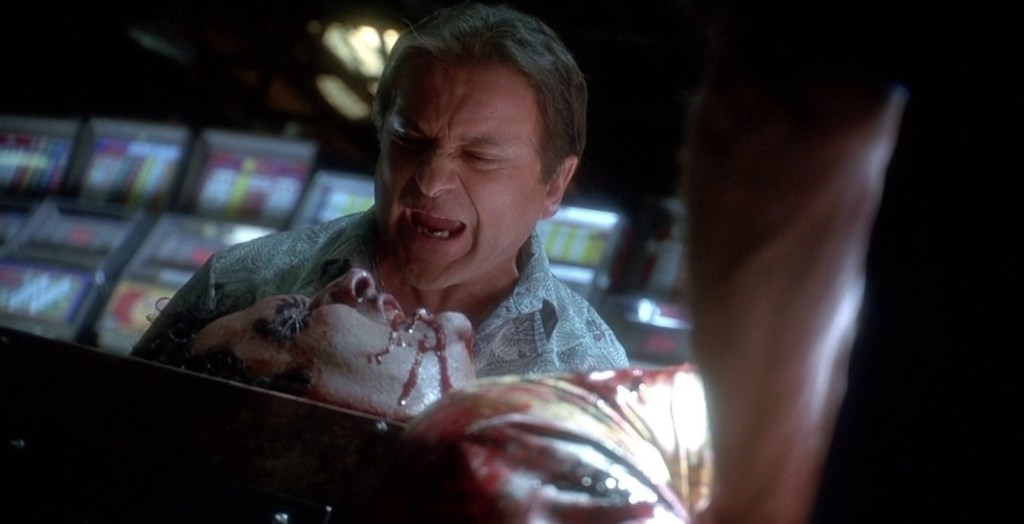
Sure, Tommy in Goodfellas was utterly terrifying, but he did have rules (sort of), Nicky on the other hand simply doesn’t give a fuck about anything and will do whatever it is he wants to do – be it stab a man in the neck with a pen for a minor indiscretion or bone Sam’s wife – whenever he wants to do it. The twisted joke of the film is that despite these people supposedly being adults, they manage to bring down an entire kingdom between the three of them by all being horrendously spiteful children despite money and people’s lives being at stake.
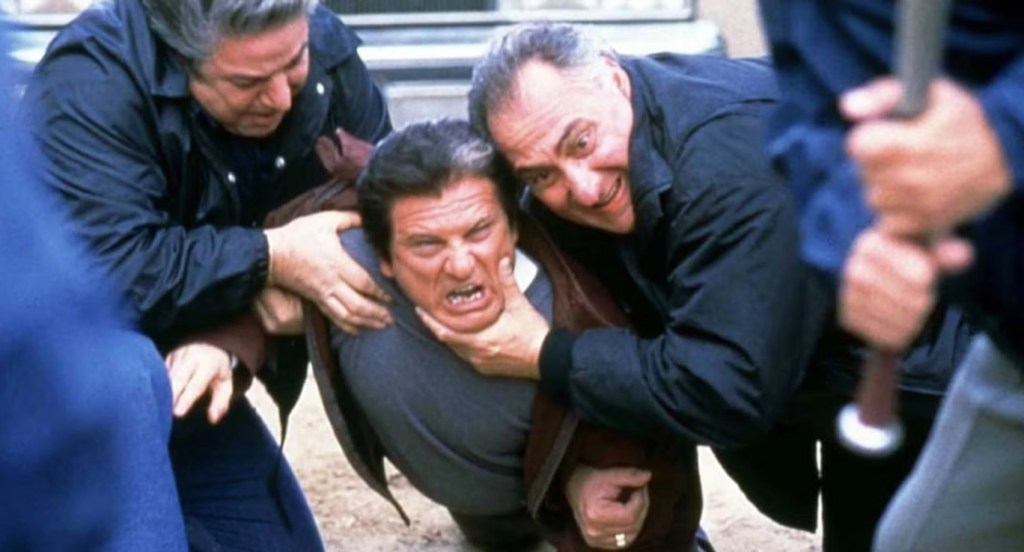
Scorsese tackles this world of glitz, glamour and murder with even more visual verve that he supplied for Goodfellas, using the pulse of Sin City as its beating heart to deliver yet another movie that moves like grease lightning and doesn’t much care if you keep up. Utilising overlapping voice overs from duelling narrators to continually keep you abreast of what is going on, the movie is equally as intrigued about detailing out every little scam and rule as it does following the actual plot. Of course, when the director isn’t having his whirling camera explain the inner workings of the casino, or the latest illegal idea that enters Santoro’s head, it’s laying out some pretty shocking violence that somehow puts Goodfellas to shame. In fact, the infamous scenes that see a man have his head compacted in a vice to eye-popping effect and one containing a lot of aluminium baseball bats and a shallow grave remain as two of the most brutal moments of the entire decade.
All of this is whipped up with yet another amazing soundtrack which mercilessly delivers hit song after hit song to set the scene perfectly alongside the oversized sunglasses and lavish furs and when you consider that the film also underuses the likes of Don Rickles, James Woods and Kevin Pollack simply because it can, there’s a swaggering, but flawed confidence to Casino that matches its tone as perfectly as three aligning jackpot signs on a gambling machine. So who cares if Casino is technically inferior to its big brother; an awesome movie is an awesome movie and if it helps, just think of it as a spiritual sequel that does the same thing as its predecessor, but slightly different.
Worth a gamble.
🌟🌟🌟🌟🌟

 We Have Issues
Worth watching most of all for Sharon’s Oscar-nominated performance. Thank you for your review.
LikeLiked by 1 person