
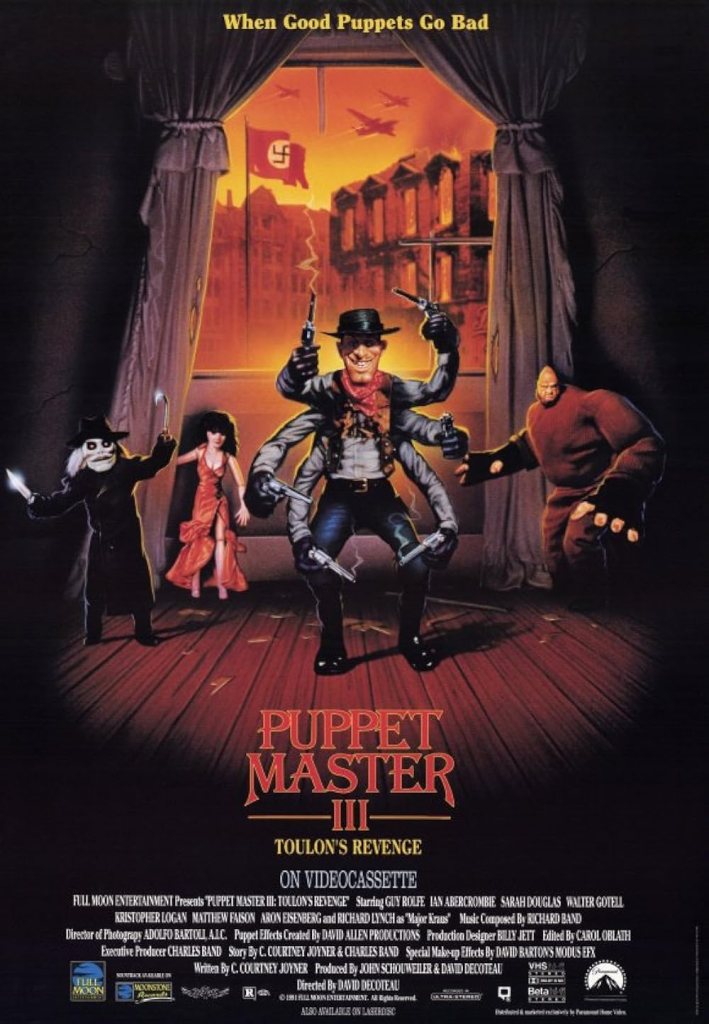

There comes a time when a franchise must realise that once it has “perfected” it’s basic premise (or at least has taken it as far as it can go), it has to think outside the box and expand the sandpit in the hope to retain any lingering freshness. With this in mind, one franchise you wouldn’t expect to care about changing things up us the Puppet Master movies and after the second movie kind of perfected the killer puppets running around a hotel vibe, it apparently was time to do something different.
Thus the series went all prequely with Puppet Master III, and went back and explored the origins of the mishapen marionettes and their creator, Andre Toulon, during the Second World War in Berlin. Although we didn’t realise it at the time, the period of Nazi occupation would prove to rather fertile ground for the franchise as later installments also choose to pit the puppets against the might of Hitler’s forces. But did we get The Dirty Dozen with dolls or something far less pulpy?
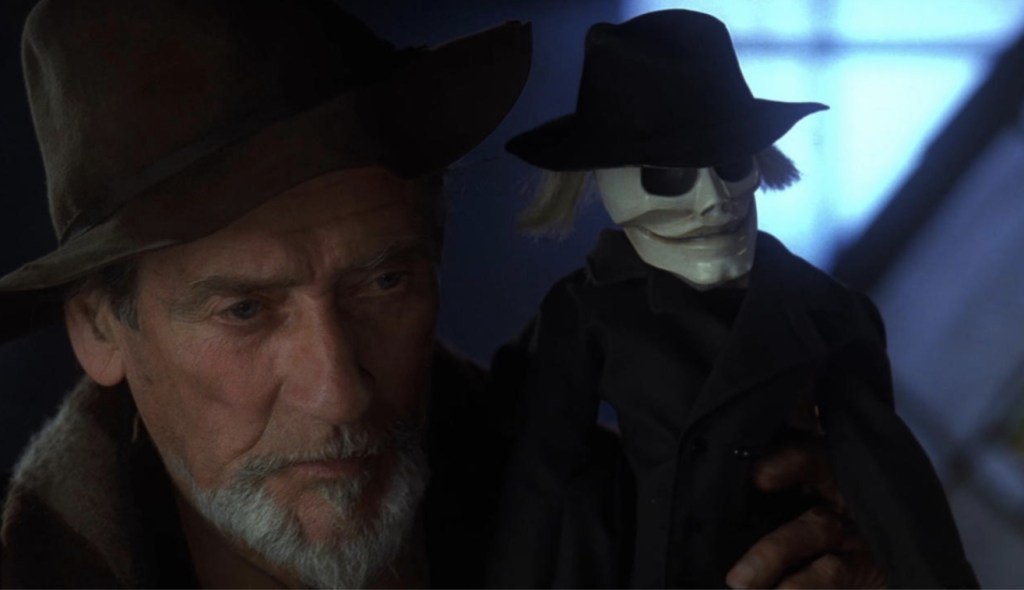
The year is 1941 and even though the Nazis have Berlin locked down pretty tight due to the cruel actions of Major Kraus of the Gestapo, kindly puppeteer, André Toulon and his wife, Elsa, put on satirical shows for children that feature a Puppet Fuhrer getting shot to death by a six-armed cowboy puppet named Six-Shooter. Unfortunately, the show is attended by Lieutenant Eric Stein who not only is a puppet enthusiast, but is Kraus’ driver – but before he rushes back to his boss to grass Toulon up to his sadistic boss, his spying also uncovers that the dollmaker’s cadre of puppets are actually alive after being “fed” a green, liquid elixir.
This is a fairly important detail because Kraus is currently overseeing a secret project run by Dr. Hess that hopes to reanimate dead soldiers in order to try and use them as human shields at the Eastern Front and try and control the losses they’re experiencing. Hess immediately thinks that this is the breakthrough he’s been waiting for and implores Kraus to take a softly softly approach with the matter – however, subtle isn’t exactly the Gestapo’s style and the callous Major has Toulon arrested while giving Elsa a literal parting shot just for good measure.
However, as we well know from the past (future?) adventures of Toulon’s puppets, this isn’t the kind of shit they usually take lying down and the team of Pinhead, Tunneler and Jester head out to free their creator. But after they do and they all go into hiding, he starts plotting revenge against those that wronged him that his puppets gleefully carry out. But as Toulon swells his ranks with the creation of more of his lethal, wooden children, is a multi-limbed cowboy and a puppet with big hands actually going to be enough against the might – or at least a small sub-section – of the German military machine?
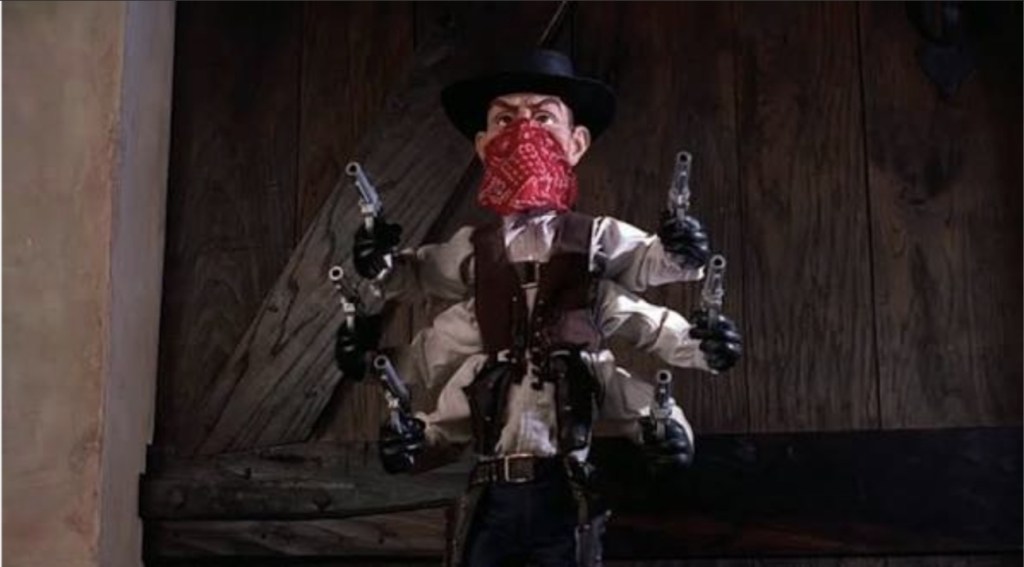
First things first – the fact that a franchise as silly as Puppet Master can display enough self awareness to do something markedly different from what’s come before really does deserve to be vigorously saluted (the normal kind, of course – not the Hitler kind). After all, there really wasn’t anywhere for the franchise to go after two whole movies featured the puppets in question scampering around the corridors of the same hotel, killing paranormal investigators. I guess that it also helped that David Allen’s Puppet Master II sort of crystallised exactly what the franchise is with a genuinely arresting tone that evoked the days of 30s horror, meaning that the franchise simply couldn’t go back to the Bodega Bay Inn even if it wanted too. However, choosing to take the route of a Workd War II movie is actually somewhat inspired, not only because the first movie established that William Hickey’s version of the character was on the run from the Nazis before taking his life rather confusingly in 1939 (are we truly surprised that the Puppet Master franchise has continuity issues), but the idea of the gang taking on the Nazis genuinely sounds like an utter hoot.
However, while Toulon’s Revenge is certainly better than the first film, it’s rather sluggish pace and (understandably) small scope means that it doesn’t quite capture those deranged, pulp qualities that the synopsis seems to be teasing. Yes, the idea is insanely ambitious, but your average Charles Band budget can only stretch it so far and constant falls back on gloomy alleyways any time the film requires it’s action to head outside. Additionally, while director David DeCoteau (the man who made Creepozoids) eventually became something of a caretaker of the franchise after going on to make three more installments, he infuses what could have been an exciting story with virtually no urgency whatsoever as everyone just plods from one scene to the next despite the fact that we’re supposed to be on the run from the Nazis.
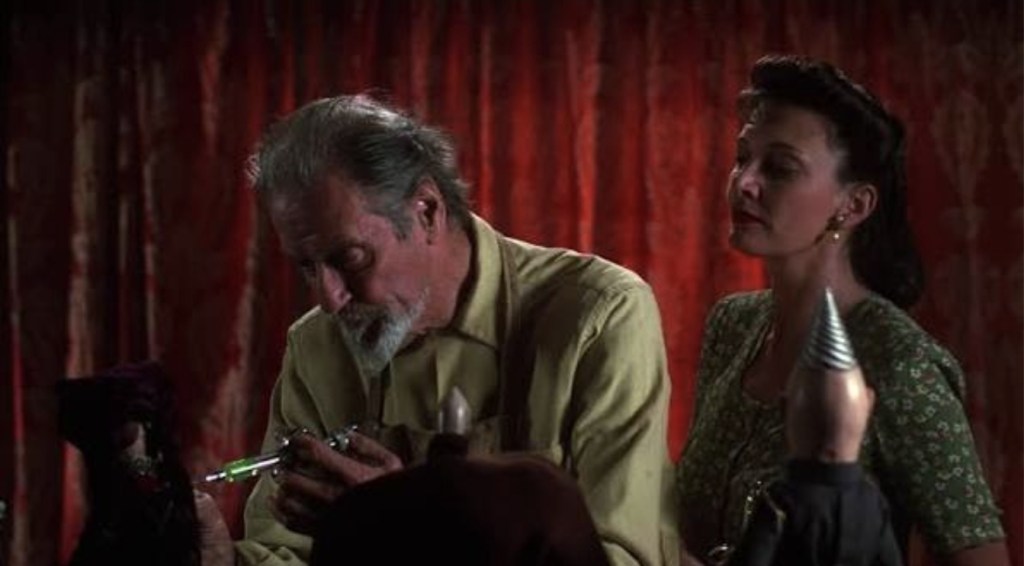
Another issue is that in its attempts to do something different, Puppet Master III falls into the usual traps associated with crafting a prequel. We’ve already covered that the franchise has already got its dates mixed up after only three films, but beyond that, the rather sweet revelation that Toulon based his puppets after real people who were killed by the Nazis gets a little weird when Leech Woman and Blade are introduced. If you want to remember your dead wife by injecting her essence into one of your dolls, why would you give her the extra ability to throw up leeches? Also, if Leech Woman is a tribute to his beloved Elsa, a zombie Toulon didn’t seem overly upset when she’s burnt to death in Puppet Master II. Conversely, if these puppets really do contain the essence of the people there honouring, why the fuck would you “punish” Major Kraus by creating Blade in his image – isn’t that something of a slap in the wooden face of all the other puppets who are effigies of some of his Jewish victims?
However, pesky inconsistencies aside, not only do the puppets acquit themselves as usual and Six-Shooter is a fun (if utterly illogical) creation, but the human cast is actually made of some nicely familiar faces. Guy Rolf (who was also in Stuart Gordon’s Dolls) is an appropriately kind Toulon while Superman II’s Sarah Douglas plays his doomed wife. However, on the Nazi side, Walter Gotell (General Golgol from the Bond movies) seems to have signed on exclusively because he gets to be in the same room as Michelle Bauer’s boobies and then shot out of a window by a 23 inch tall cowboy – but the crowning jewel is Richard Lynch’s thoroughly hissable Major Kraus who not only suffers the dubious affliction of looking like he was born to wear a Gestapo uniform, but lives up to it by being the most sinister bastard he can be.

While Puppet Master III is an admitted step down from part II, it’s nevertheless deserves praise for opening up the franchise in numerous ways. Not only did the WWII setting prove to be a spiritual home for the lore of the puppets, but it got revisited years later in the Axis trilogy and similarly, as I previously stated, David DeCoteau returned to Jester, Blade and the gang three more times. However, it’s with this film that the Puppets made the switch from antagonists to protagonists thanks to all the strangling, stabbing, shooting and drilling that goes on. I mean, if murdering Nazis isn’t the quickest and easiest way to make a squad of villainous dolls into a bunch of whitehats, I don’t know what is.
🌟🌟
 We Have Issues