
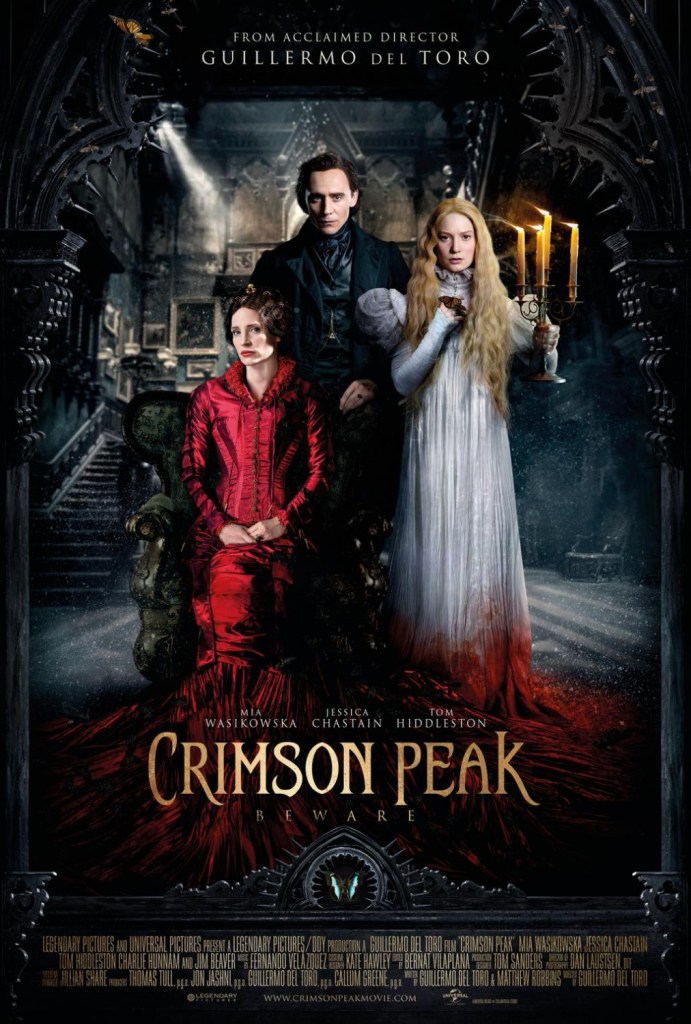

Guillermo Del Toro is no stranger to ghost stories, and he’s certainly no stranger to gothic ambience, and yet it’s kind of weird that Crimson Peak is the first, classic ghost story that he’s made. Oh sure, he crafted haunted orphanage fable, The Devil’s Backbone back in 2001, but while that film was a more intimate, Spanish look at the supernatural, Crimson Peak was his balls out, unabashed ode to horror films of the past that hoovered up nods to such things as F. W. Murnau’s Nosferatu and Hammer horror and splurged them all over the screen with maximum lushness.
However, this was still in that pre-Oscars era when the director was still making up for lost time thanks to being on the directorial shelf thanks to the torturous pre-production on his ill-fated Hobbit movies and like with the similarly full-bloodied Pacific Rim, there was a sense that raw, frustrated creativity was in danger of threatening to overwhelm the actual story. So which was it – measured ghost story or an explosion of style over substance? Well, when you’re dealing with Del Toro, both usually prove to be a bonus.
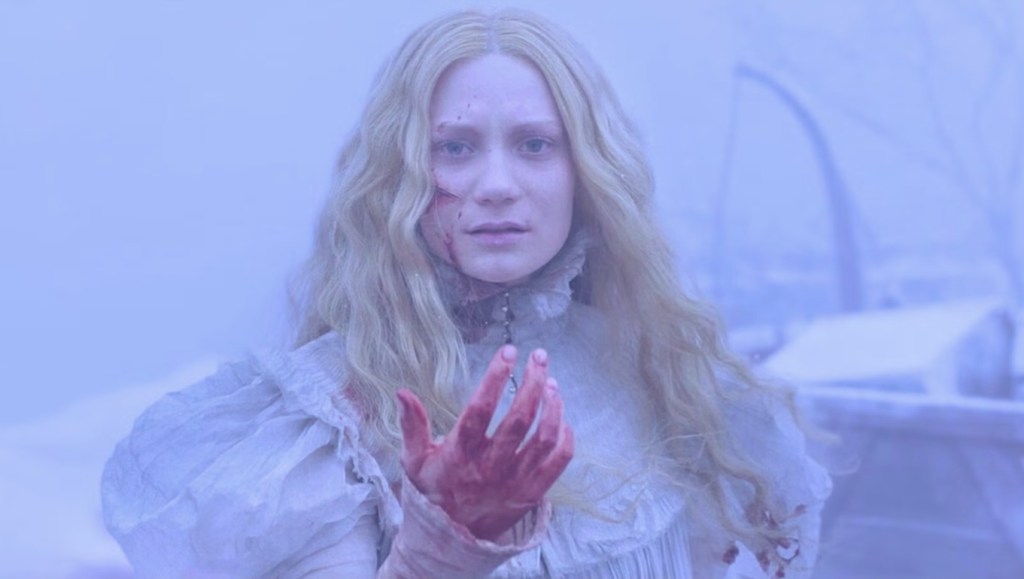
As a child, Edith Cushing became aware that ghosts existed thanks to her mother returning from death to offer up an otherworldly warning from the great beyond: “Beware of Crimson Peak”. Years later, in the year 1901, we find that she’s matured into a budding author who faces the usual scorn of male publishers when she bumbs into dashing baronet, Sir Thomas Sharpe who has come to Buffalo New York in search of investors. Sharpe needs capital to fund an invention that with aid with the digging of his family’s clay mines that will hopefully restore the flagging fortunes of both him and his sister, Lucille – but while he fails to concise Edith’s father to invest, he manages to win her heart much to the dismay of her patriarch and a potential suitor, Dr. Alan McMichael.
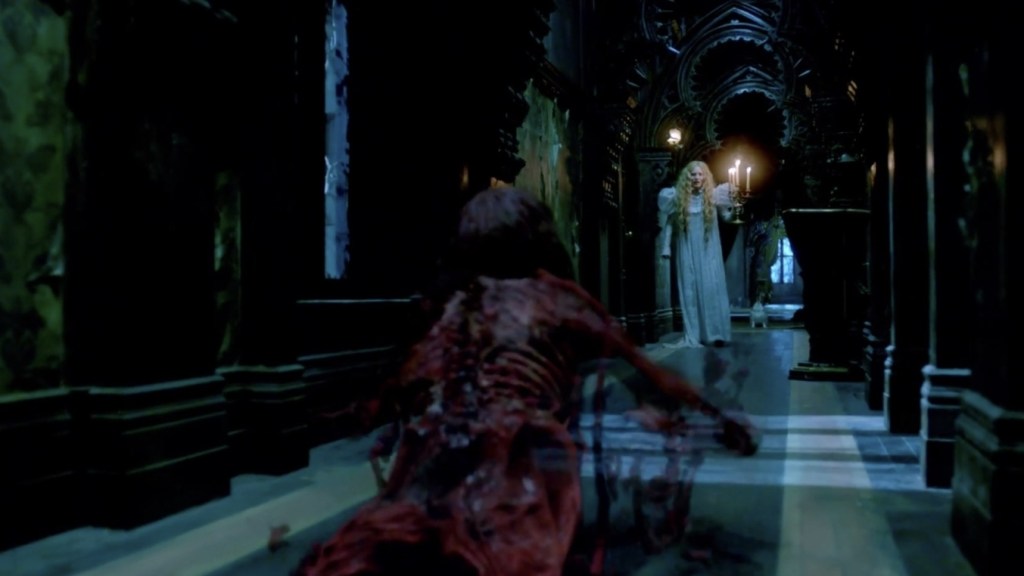
However, after taking steps to try and break up their relationship, Edith’s father finds that his opinion is rendered horrifically moot when he’s brutally murdered and before you know it, Edith and Thomas have reconciled and she’s been whisked away to the dilapidated Sharpe estate in Cumberland in the west of England. But while she attempts to settle in, Edith soon notices many strange things about the place that go far beyond the red clay that seeps up through the ground like blood. For one thing, Thomas is strangely reluctant to consulate their union and many mornings Edith wakes to find his side of the bed empty; and then there’s the galacial reception of the icy Lucille who seems to have some mysterious issues with her new sister-in-law. However, the mist alarming thing about Edith’s new home is that it seems to be the stomping ground for the spirits of numerous mangled women whose twisted bodies have all been stained a horrible crimson. As foreboding as all this is, matters get even worse when she discover the nickname the locals have for the Sharpe estate – do you want to chance as guess as to what it is…?
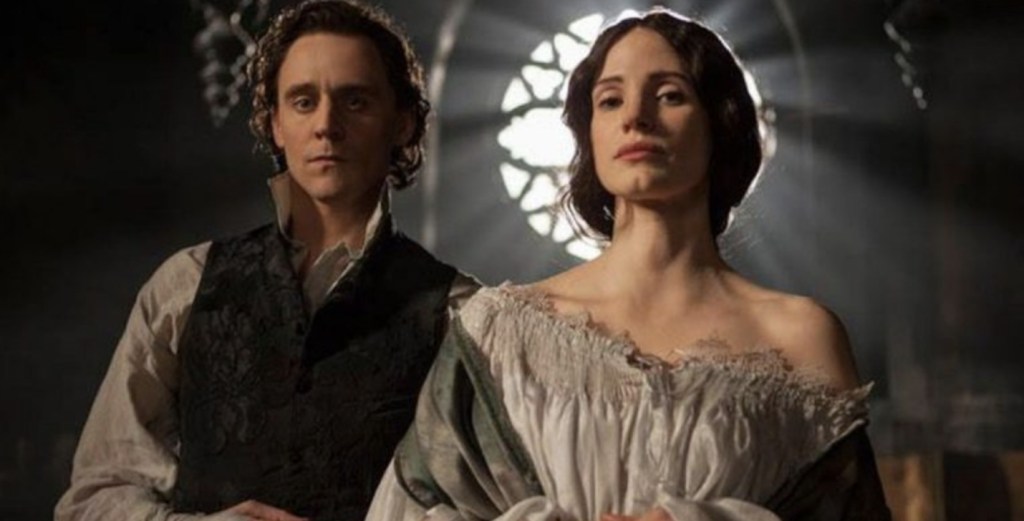
While Del Toro was hardly a slouch when it came to visuals before, it really did seem that the director, post Hobbit, felt like he had some sort of point to make. I mean, if it wasn’t for the existence of Blade II, would you have thought the man who made Pan’s Labyrinth also gave us the kaiju blow out, Pacific Rim? But while the sight of giant, bioluminescent monsters duking it out with elaborately named robots may have been a gloriously unsubtle love letter to Japanese creature features, Crimson Peak actually pulls off a similar trick by doing the exact same thing with gothic horror. Now, at first glance, the sight of Tom Hiddleston framed by a gorgeously designed mansion may be an image a billion miles away from a mecha belting a giant salamander in the face with an oil tanker, but both are actually examples of Del Toro cannonballing his way through versions of beloved genres that, may not contain the most innovative of plots, but make up for it with visual chutzpah.
If there’s any doubt of this, know that I don’t say this lightly: Crimson Peak may actually be the best looking film that the director has ever made primarily because any plot holes you may think you’re seeing are pretty much patched up nicely by the fact that thecscript seems only to be a launching pad for some truly stunning set design. Take Allerdale Hall for example, aka. the Crimson Peak of the title – the building makes no sense whatsoever with its massive central staircase, moth infested hallways and a bloody great hole in the roof that seems to let in picturesque leaves and snow all year round to make a little mound in the great hall, but the filmmaker makes it feel like a living organism without resorting to audio tricks like breathing.
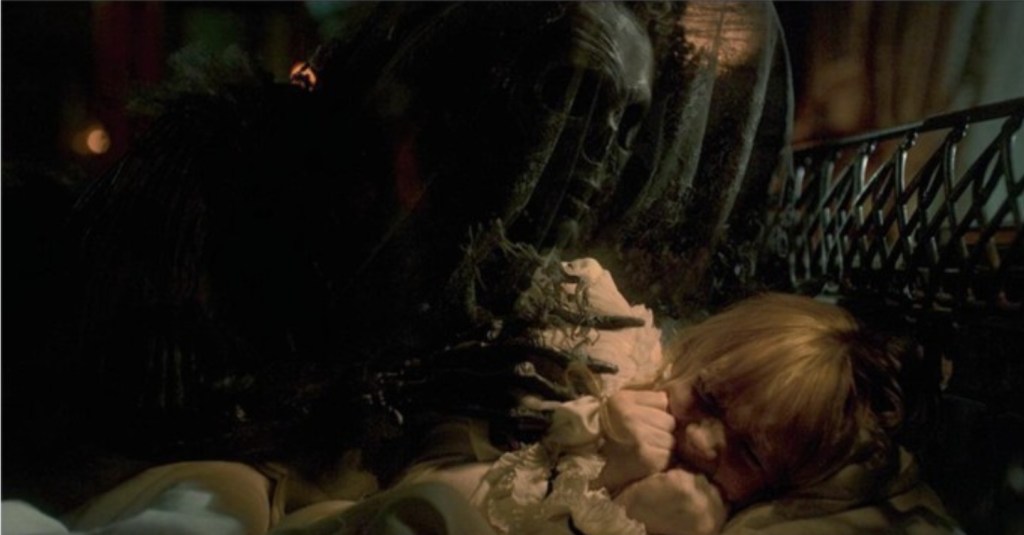
When the characters go into the lower floors where the red clay oozes out of the walks like grimson gore, it really does feel as if they’ve walked into the hollowed out chest cavity of a great living beast. Similarly, the ghosts that float and flop around on the floors tell you everything you need to know about them if you can bare to stare at their dyed red bodies long enough – this isn’t a film that’s overly concerned about the mechanics of its own plot (there’s not a twist here you haven’t already predicted within the first thirty minutes) when it can be far more interested in being a visual museum of classic horror that lashes the eyeballs with terrible beauty (one character’s surname is Cushing for pete’s sake).
As a result, some of the cast could feel more like gorgeously attired mannequins at Del Toro moves them around the set like meticulously crafted dolls in a rediculously sumptuous doll house. However, thankfully the actors manage to hold their own against flawless set design and freakish ghost effects by simply being the most gothic cast Tim Burton had wished he’d assembled. Hiddleson could blatently do this thing in his damn sleep, but thankfully is shamelessly dashing enough to evoke empathy, while Mia Wasikowska is frankly born for this sort of thing the way Kiera Knightly was born for period dramas. Elsewhere we may find that Jessica Chastain starts of slow, letting that immaculate bone structure do most of the work, but later in the film she gets to drop the restrained act and really get some dirt under her nails. In fact, the only one here who looks out of place is Charlie Hunnam and his impressively unplacable accent, but not even he can throw of the movie’s most important weapon – a thick sense of gothic ambience that you could chew on like anxiety-flavoured candy floss.
Maybe not one of Del Toro strongest efforts from a plot perspective, when it comes to gasp inducing twists you’d already predicted; lashings of spilt (poisoned) tea and creature designs that straddle the line between horrific and beautiful, it’s actually tough to fault the director when you realise his intent. Those expecting the auteur to break out a ruthless fear campaign along the lines of the fast growing examples of “elevated horror” that was blooming at the time may have been disappointed. However, taken on its own merits, Crimson Peak proves that it’s a fitting slice of Chills & Boon.
🌟🌟🌟🌟
 We Have Issues