
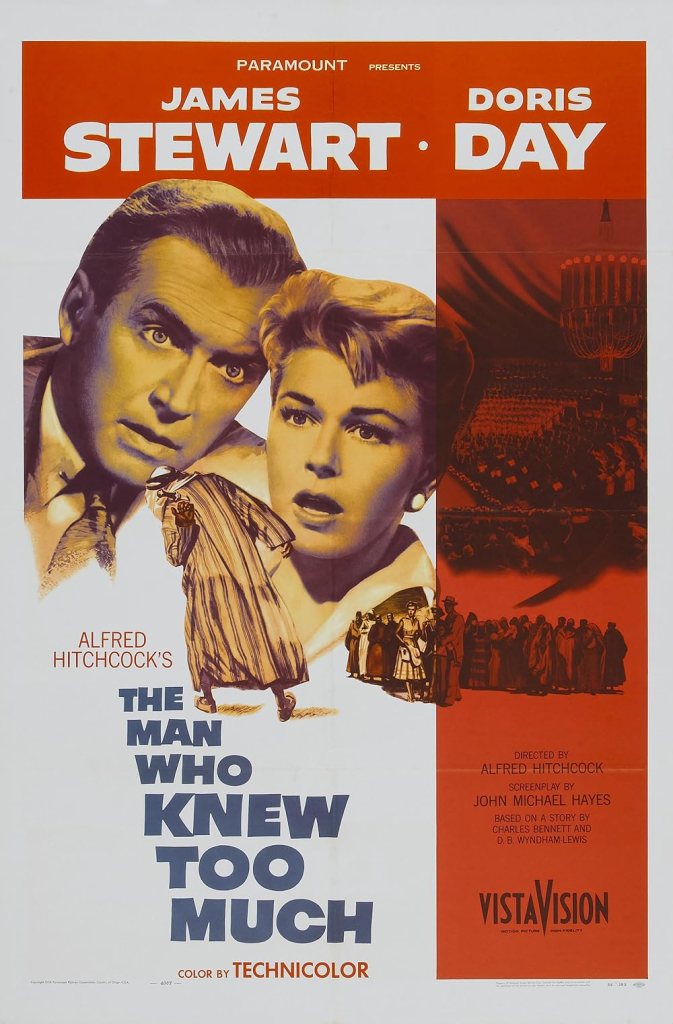

No one in the movie business is above tackling a remake. Be it Steven Spielberg altering the likes of A Guy Like Joe, or redoing West Side Story, Martin Scorsese reworking Cape Fear or Infernal Affairs, or even David Fincher turning his attention to The Girl With The Dragon Tattoo, even the most decorated cinematic legends sometimes feel the urge to try to update an older movie wired into their own sensibilities. However, the act of someone choosing to remake one of their own films is something else entirely and while it could be described as either extremely ballsy or creatively destitute, it’s probably Alfred Hitchcock who described it best when asked by François Truffaut about his greatly expanded, 1956 remake of of his earlier film, The Man Who Knew Too Much. “Let’s say the first version is the work of a talented amateur and the second was made by a professional.” theorised Hitch in that distinctive voice of his, and he wasn’t wrong – but not only did he update his earlier thriller for the glossier, Hollywood crowd, he also managed to fashion some of those trademark setpieces that are still riffed on to this day.
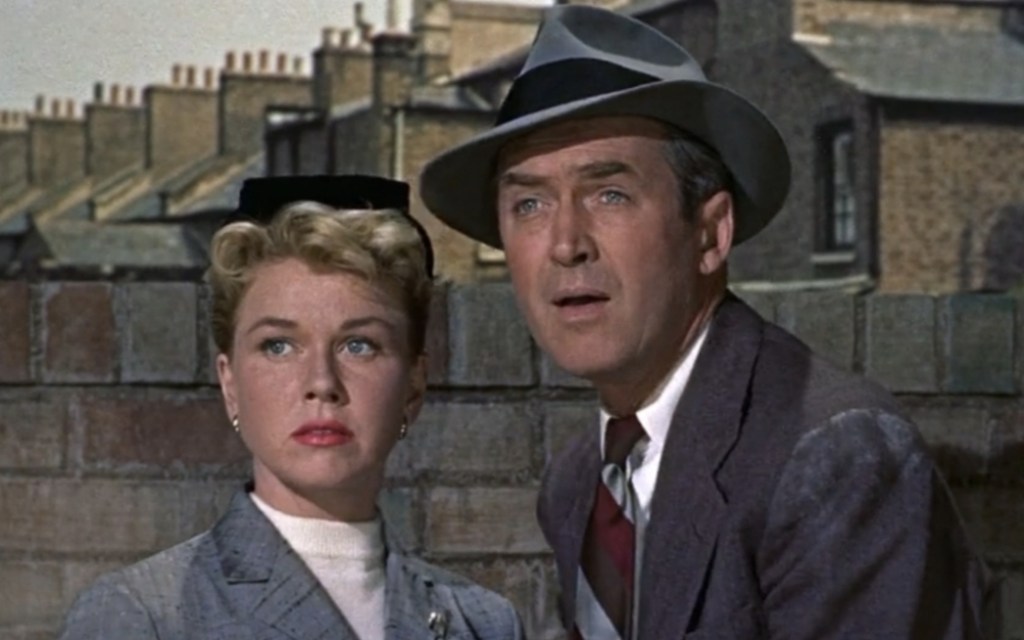
The McKennas – an all-American family that comprises of doctor Ben, popular singer Jo and their young son Ben – are holidaying in French Morocco as they travel from Casablanca to Marrakesh and after a spot of bother during a bus trip, they meet enigmatic Frenchman Louis Bernard who helps straighten their little cultural snafu out. As a result, polite conversation is had, but while Ben is happy to virutally lay out his entire life story to this total stranger, the more suspicious Jo notices that Bernard seems to be probing her husband for details while remaining noticably cagey about his own business. Still, after agreeing to meet for dinner that night, their surprised when he cancels and instead are drawn to the Draytons, a friendly English couple who recognise Jo from her singing days.
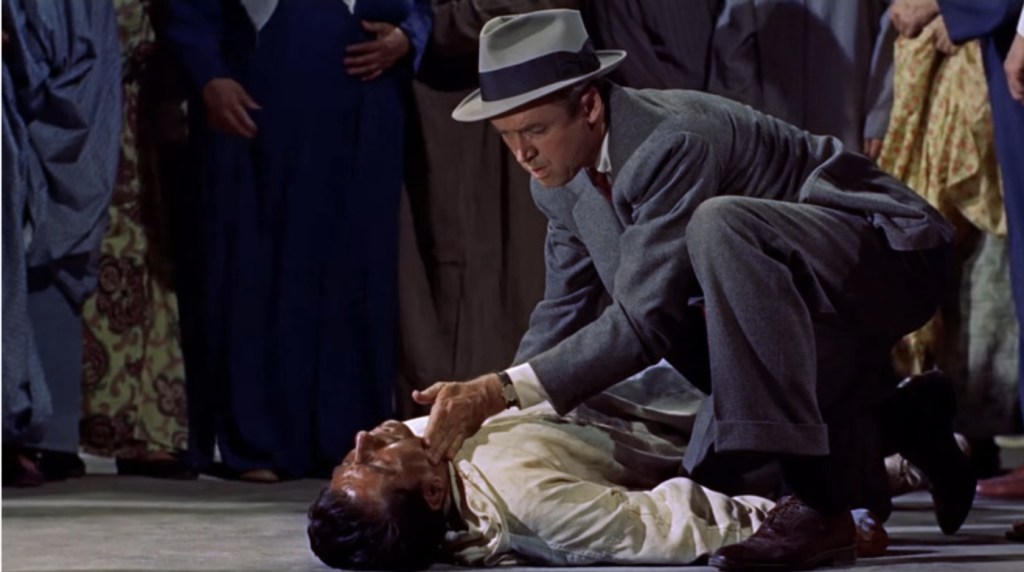
However, things suddenly go a bit iffy when the two families are out at a marketplace when they witness a police chase that ends dramatically in a stabbing. Worse yet, the fatally wounded party turns out to be Bernard in disguise and as he expires in Ben’s arms, he whispers some rather alarming words that only the doctor can hear.
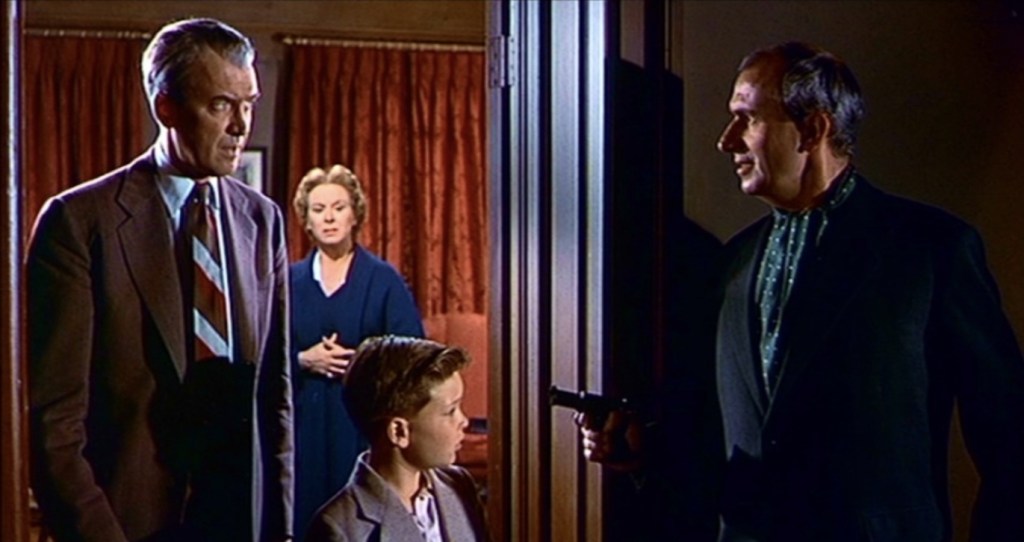
It seems that Bernard was a French intelligence agent and he’d gotten wind of an assassination of a foreign statesman that’s due to occur in London in a matter of days, but after recieving this information, Ben tries to keep things close to his chest while the highly suspicious authorities question him. However, the ones who are planning this political murder aren’t about to take any chances and in an attempt to keep the McKennas under their heel, kidnap their son.
Realising that the only way they’re ever going to see their child again, the couple travel to London and attempt to figure out this conspiracy on their own.
Regardless of your personal feelings on remakes, you can’t deny that Hitchcock delivered a sizable, favorable argument by taking apart and reconfiguring his earlier, 1934 movie from a tight thriller to a much bigger and grander extravaganza with big stars, glamorous locations and a much more confident gasp on some truly world class set pieces. Debating which is better is not unlike comparing Andrew Lau and Alan Mak’s Infernal Affairs and Martin Scorsese’s The Departed: both are great movies based on the same, basic story but are told with very different brush strokes that provide impressively different experiences. As a result, The Man Who Knew Too Much 2.0 is a sweeping adventure thriller more in the vein of Rear Window or North By Northwest rather than the more twisted and darker likes of The Birds or Psycho.
With such vibrant escapism comes huge stars and you don’t get much bigger than the sight of James Stewart and Doris Day swapping sparky banter as they stare at rear projected acrobats at a Morrocan marketplace. Of course, old Jimmy Stewart had pulled his everyman routine for Hitchcock before in Rear Window and then would famously subvert it a couple of years later with Vertigo, but the real surprise here is the presence of Day who, thanks to the likes of Calamity Jane was more known for perky musicals rather than desperately trying to untangle international intrigue, but amusingly, even though Hitchcock wasn’t exactly famous for allowing his leading blondes to be particularly outgoing, it’s fun to see how many times the movie eagerly takes the opportunity to hinge entire plot points on the fact that she can belt out a tune.
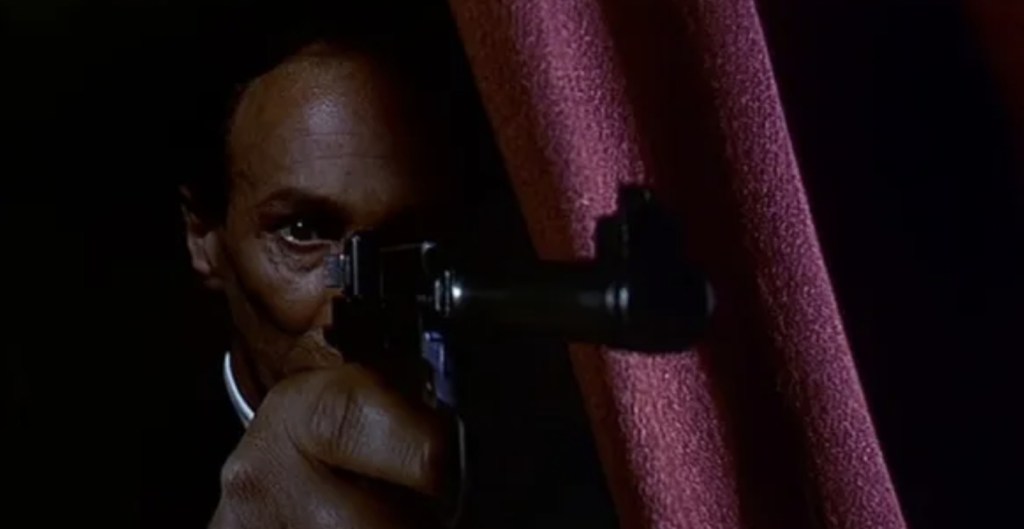
However, while the film manages to contain some all time stunning moments within itself, I have to say that I’ve always seen The Man Who Knew Too Much more as Hitchcock having a little fun refining an old work rather than him going full speed ahead and it comes mostly from the fact that he seems more than happy to let the crackling charisma of his leads carry the first half while he saves himself for the second. Watching Stewart and Day alternate between being the happy couple and display some very real fractures in their armour when it comes to Jo having to abandon her singing career in favour of being a doctor’s wife in Indiana makes the McKennas seem endearingly vulnerable as they stumble over eating customs and air their dirty laundry over dinner. However, after the rather slow first half sets everything up, Hitchcock turns the key in that mischievous brain of his and unleashes some truly fantastical moments that bore themselves into the consciousness. Remember that old trope where an assasin is supposed to shoot someone at the opera once a certain note is reached (Mission: Impossible: Rogue Nation paid homage to it most recently)? Well, Hitch ramps up the tension by drowning out the ambient sound and we whiten our knuckles as the McKennas scramble around the Royal Albert Hall with the sound of The Storm Clouds Cantata drowning out the panicked dialogue. Later still, in an attempt to discover if their missing son is being held in a foreign embassy, Jo sings a song only he would know and as her desperate tones float out into the hall and up the stairs, we wait in anticipation to see if the audacious plan works.
However, as near flawless as these moments are and as lush as the production values gleam, I’ve never found The Man Who Knew Too Much to be as innovative and nerve wrackingly ruthless as some of Hitch’s other films despite the stakes being unfeasibly high for the McKennas. Even the fact that the couple aren’t clean cut, goodie two shoes aren’t enough to erase some of the “safe” glibness that come with the film’s personality (is it really ethical for Ben to be sedating his wife like that?) – but then, even a Hitchcock who is indulging himself in something of a victory lap still has more iconic moments than a lot of other directors working at full strength.
Fun and frothy thriller that manages to turn the screws while still making light of child kidnapping and political assassination, The Man Who Knew Too Much is undoubtedly a hoot and a holler. However, it’s missing that classic, sadistic, twisted eye that Hitch managed to infuse in his mite off-beat works.
Que sera sera, I guess…
🌟🌟🌟🌟
 We Have Issues